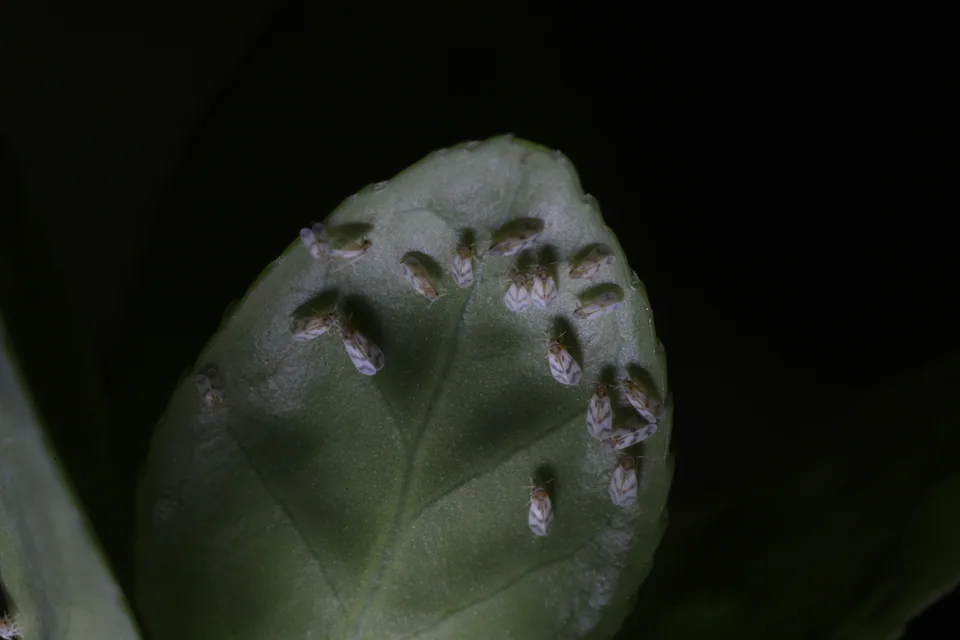
Insect
Whiteflies
Aleyrodidae
Written by Emilio Marruso
Classification: Arthropoda › Hexapoda › Insecta › Hemiptera › Sternorrhyncha
Plants it attacks
Plants in our guide where this problem is reported. Open a plant to see the sources.
- Sunset Huskmallow
Symptom: Listed as possible plant problems.
- Chenille Plant
Symptom: Can be a problem on a plant that otherwise has few pests.
- Lemon Verbena
Symptom: Occasional pest problems; no serious problems otherwise.
- Cape Mallow
Symptom: Watch for aphids, spider mites, and whiteflies
- Oregon Grape
Symptom: Pests to watch for.
- Chinese Mahonia
Symptom: Aphids, scale and whiteflies to watch for
- American Butterfly Bush
Symptom: Not described in source
- Calendula
Symptom: Small white flies that hide and feed on the underside of leaves.
- Aji
Symptom: Common pests of peppers
- Mouseear Chickweed
Symptom: Not described in source
- Areca Palm
Symptom: Listed as a pest to which the plant is susceptible
- Cinnamon
Symptom: Issues are possible.
Also reported on: African Daisy, Amethyst Flower, Angel's Trumpet, Arrowleaf Sage, Baby Rubber Plant, Bacopa, Barberton Daisy, Basil, Bitter Melon, Black pepper, Black-eyed Susan Vine, Blushing Philodendron, Bog Sage, Brazilian joyweed, Brunfelsia, Cabbage, Cape Honeysuckle, Cape plumbago, Cassava, Catnip, Celery, Chastetree, Chilean Glory Flower, Chinese Trumpet Creeper, Coleus, Confederate Rose, Creeping Gloxinia, Creeping Zinnia, Dixie Iris, Downy Thorn-Apple, Dwarf Papyrus, False Heather, Fatsia, Fever Tree, Firebush, Flowering Tobacco, Gardenia, Golden Dewdrop, Hardy Fushia, Heliotrope, Henry Anise Tree, Indigo, Jimsonweed, Lantana, Lion's Tail, Mealycup Sage, Mediterranean Redbud, Mexican groundcherry, Mexican Petunia, Mind-Your-Own-Business, Ming Aralia, Monstera, Morinda citrifolia, Nasturtium, Nettleleaf Sage, Okra, Pineapple Sage, Poinsettia, Polka Dot Plant, Pomegranate, Primrose, Princess Flower, Privet, Privet, Purple Bell Vine, Red Ruellia, Rose of Sharon, Rosemary, Rue, Sacred Datura, Sweet Potato, Tea Camellia, Tomato, Trailing Lantana, Tree tomato, Trumpet Vine, Trumpetbush, Watermelon, Wax Plant, White Poplar, Yellow Crownbeard, Zinnia
Remedies
What our plant sheets report, with the outcome checked against official sources. Traditional remedies without an official source are flagged.
Treat
insecticidal soap spray Works
How: Spray with insecticidal soap.
Reported for 16 plants: Okra, Chinese Trumpet Creeper, Trumpet Vine, Watermelon, Tree tomato, Downy Thorn-Apple
insecticidal soap Works
How: under stressed conditions these pests can be managed with a strong spray of water or insecticidal soap
Reported for 6 plants: Sacred Datura, African Daisy, Firebush, Wax Plant, Privet, Mexican Petunia
insecticidal soap or horticultural oil spray Works
How: Sapone insetticida o olio orticolo ultrafine sul lato inferiore delle foglie.
neem oil spray Works
How: Azadirachtin (neem), directed to the undersides of the leaves, can also be used; repeat applications will probably be needed.
Reported for 2 plants: Trumpet Vine, Watermelon
sticky traps Works
How: Hang sticky traps in the tree.
Reported for 2 plants: Tree tomato, Cassava
hard stream of water Works
How: Whiteflies are easily controlled by a hard stream of water or by regular applications of insecticidal soap.
Reported for 1 plant: Calendula
yellow sticky traps Partly works
How: Make sticky traps from yellow cardboard or construction paper and place them near the plants.
Reported for 5 plants: Poinsettia, Hardy Fushia, Flowering Tobacco, Purple Bell Vine, Pineapple Sage
neem oil Partly works
How: Aphids and whiteflies attracted to new growth can be managed with insecticidal soap or neem oil.
Reported for 4 plants: Firebush, Polka Dot Plant, Catnip, Chastetree
insecticidal soap Partly works
How: Spray on the undersides of the leaves; repeat applications will probably be needed.
Reported for 3 plants: Hardy Fushia, Creeping Gloxinia, Nettleleaf Sage
insecticidal soap spray Partly works
How: Use insecticidal soaps or oils such as neem oil if you choose to use insecticides.
Reported for 3 plants: Chilean Glory Flower, Gardenia, Blushing Philodendron
black soap and oil spray Partly works
How: Spray a solution of black soap and water with a bit of vegetable oil.
Reported for 1 plant: Black-eyed Susan Vine
horticultural oil Partly works
How: Ultra-fine horticultural oil sprayed on the undersides of the leaves; repeat applications will probably be needed.
Reported for 1 plant: Hardy Fushia
insecticidal soap Official source, not independently tested
How: Spray insecticidal soaps or oils such as neem oil; good coverage, including the underside of leaves, is essential and repeat applications might be required.
Reported for 2 plants: Henry Anise Tree, Arrowleaf Sage
neem Official source, not independently tested
How: Direct the neem spray to the undersides of the leaves.
Reported for 2 plants: Arrowleaf Sage, Nettleleaf Sage
pruning infested parts Official source, not independently tested
How: Prune off the infested parts for short-term control and fix the underlying stress such as heat-related wilting.
Reported for 2 plants: Bitter Melon, Black pepper
yellow sticky traps Official source, not independently tested
How: Hang yellow sticky traps to monitor whitefly populations; they may reduce minor infestations.
Reported for 2 plants: Mealycup Sage, Arrowleaf Sage
avoid introducing infested plants Official source, not independently tested
How: Avoid introducing infested plants into your nursery or farm.
Reported for 1 plant: Morinda citrifolia
hand removal of leaves Official source, not independently tested
How: Hand removal of leaves heavily infested with the nonmobile nymphal and pupal stages.
Reported for 1 plant: Henry Anise Tree
yellow sticky traps Not verified
How: Yellow sticky traps can help monitor and reduce their numbers.
Reported for 8 plants: Celery, Cabbage, Barberton Daisy, Confederate Rose, Rose of Sharon, Indigo
handheld vacuum Not verified
How: Use a handheld vacuum to remove the pests.
Reported for 3 plants: Okra, Brazilian joyweed, Sweet Potato
insecticidal soap Not verified
How: Coat the plant, especially the undersides of the leaves, so the soap makes direct contact with the whiteflies; several rounds of treatment are needed.
Reported for 2 plants: Heliotrope, Red Ruellia
neem oil Not verified
How: Coat the plant, especially the undersides of the leaves, so the oil makes direct contact with the whiteflies.
Reported for 2 plants: Heliotrope, Princess Flower
sticky traps Not verified
How: Introduce natural predators like ladybugs into the garden; sticky traps can also help control whitefly populations.
Reported for 2 plants: Amethyst Flower, Mexican Petunia
vacuuming adults Not verified
How: Use a small handheld vacuum to suck up the adults.
Reported for 2 plants: Monstera, Blushing Philodendron
dish soap spray Not proven
How: Squirt dish soap into a gallon of water and spray in the evening, three times about once a week, when temperatures are below 90 degrees Fahrenheit.
Reported for 1 plant: Privet
50 more remedies are reported in single plant sheets.
Where it is found
No distribution data.