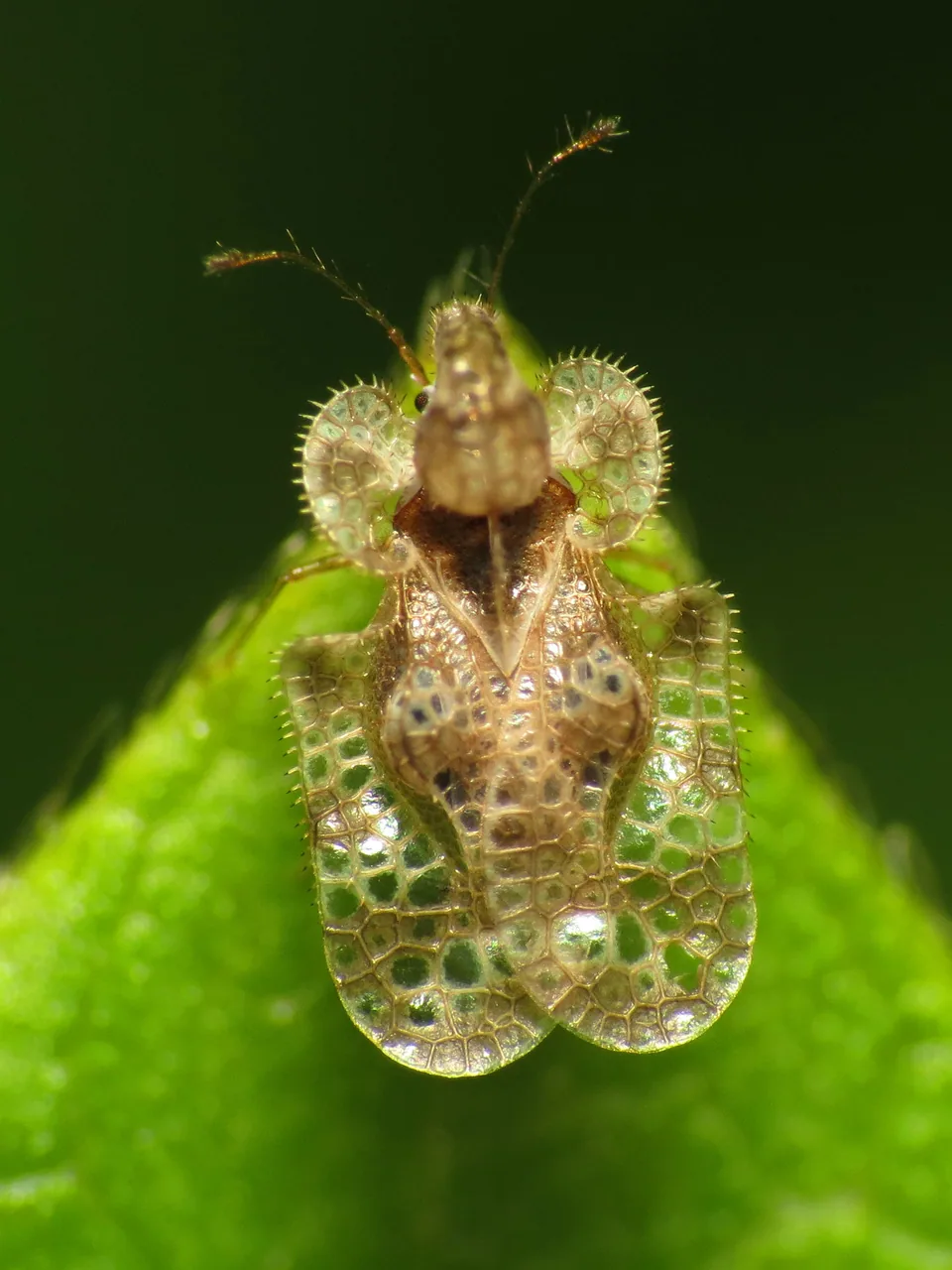
Insect
Lace bugs
Tingidae
Written by Emilio Marruso
Classification: Arthropoda › Hexapoda › Insecta › Hemiptera › Heteroptera
Plants it attacks
Plants in our guide where this problem is reported. Open a plant to see the sources.
- Bearberry Cotoneaster
Symptom: Prone to attack by lace bugs; spider mites can occur in dry conditions; scale and fireblight can also affect the plant
Also reported on: Aromatic Aster, Aster, Blue Wood Aster, Catawba Rhododendron, Coastal Azalea, Creeping Cotton Easter, Doghobble, Dwarf Purple Rhododendron, Early Azalea, Eastern Silvery Aster, Flame Azalea, Formosa Pyracantha, Georgia Aster, Goldenrod, Goldenrod, Green Hawthorn, Hawthorn, Hawthorn, Hawthorn, Hawthorn, Hawthorn, Hawthorn, Heath Aster, Honeysuckle Azalea, Korean Rhododendron, Lantana, Largeflower Aster, Laurel, Mayhaw, Nuttall Oak, Oaks, Oaks, Parney Cotoneaster, Piedmont Rhododendron, Pieris, Pinkshell Azalea, Pinxterbloom Azalea, Rhododendron ponticum, Rockspray, Rosebay Rhododendron, Royal Azalea, Sand Myrtle, Sandhill Oak, Sheep Laurel, Smooth Azalea, Southern Indian Azalea, Spreading Aster, Spreading Cotoneaster, Swamp Azalea, Torch Azalea, Trailing Lantana, Yaku Rhododendron
Remedies
What our plant sheets report, with the outcome checked against official sources. Traditional remedies without an official source are flagged.
Treat
insecticidal soap spray Works
How: Applied the last week in May and just after eggs have hatched, directed from the bottom of the plant upward.
Reported for 10 plants: Bearberry Cotoneaster, Hawthorn, Sheep Laurel, Trailing Lantana, Pieris, Nuttall Oak
insecticidal soap Works
How: Spray insecticidal soap on the undersides of the leaves, from the bottom of the plant upward, the last week in May and just after eggs have hatched.
Reported for 7 plants: Spreading Cotoneaster, Hawthorn, Smooth Azalea, Catawba Rhododendron, Torch Azalea, Goldenrod
horticultural oil Works
How: Horticultural oils act against the nymphs and need direct contact.
Reported for 5 plants: Hawthorn, Formosa Pyracantha, Sandhill Oak, Smooth Azalea, Torch Azalea
strong jet of water Works
How: Spray the young nymphs off the leaves with a strong jet of water from a garden hose in spring.
Reported for 3 plants: Spreading Cotoneaster, Smooth Azalea, Yaku Rhododendron
high-pressure water spray Works
How: use high-pressure water to knock the insects off plants
horticultural oil spray Works
How: Spray must directly coat the lace bugs; soap and oil sprays have no residual effect.
Reported for 2 plants: Korean Rhododendron, Pinkshell Azalea
insecticidal soap Partly works
How: Use insecticidal soap at the first sign of damage, spraying the undersides of the leaves; test on a small area first and repeat if lace bugs reappear.
Reported for 7 plants: Mayhaw, Coastal Azalea, Dwarf Purple Rhododendron, Honeysuckle Azalea, Swamp Azalea, Yaku Rhododendron
insecticidal soap spray Partly works
How: Use insecticidal soap at the first sign of damage, spraying the undersides of the leaves; test the spray on a small area first.
Reported for 5 plants: Rosebay Rhododendron, Rhododendron ponticum, Blue Wood Aster, Heath Aster, Aster
horticultural oil Partly works
How: Spray horticultural oil so that it makes direct contact with the nymphs on the leaf undersides.
Reported for 3 plants: Mayhaw, Yaku Rhododendron, Aromatic Aster
hand removal Partly works
How: Remove adults and nymphs by hand on a regular basis.
Reported for 2 plants: Catawba Rhododendron, Rosebay Rhododendron
insecticidal soaps Partly works
How: Apply insecticidal soap; repeat applications at about 2-week intervals.
Reported for 2 plants: Early Azalea, Largeflower Aster
clean up plant debris Partly works
How: Thoroughly clean up plant debris around plants that had outbreaks, to limit the overwintering adults.
Reported for 1 plant: Blue Wood Aster
insecticidal soap Official source, not independently tested
How: Apply insecticidal soap where nymphs are feeding during the last week in May, just after eggs have hatched.
Reported for 5 plants: Doghobble, Piedmont Rhododendron, Goldenrod, Eastern Silvery Aster, Georgia Aster
horticultural oil Official source, not independently tested
How: Thoroughly spray the undersides of the leaves as soon as nymphs appear in mid-May.
Reported for 4 plants: Piedmont Rhododendron, Goldenrod, Goldenrod, Spreading Aster
insecticidal soap spray Official source, not independently tested
How: Applied the last week in May and just after eggs have hatched; direct the spray from the bottom of the plant upward.
Reported for 3 plants: Hawthorn, Green Hawthorn, Sand Myrtle
water spray Official source, not independently tested
How: Spray nymphs and adults with heavy streams of water, directing the spray to the upper and underside of the leaves.
Reported for 2 plants: Goldenrod, Georgia Aster
clean up plant debris Official source, not independently tested
How: Around plants that have had outbreaks, a thorough clean-up of plant debris may help to limit the overwintering population.
Reported for 1 plant: Aromatic Aster
cut heavily damaged plants back Official source, not independently tested
How: If plants are too heavily damaged, cut the plants back drastically; they should regrow, and this reduces the lace bug population without spraying.
Reported for 1 plant: Aromatic Aster
crushing by hand Not verified
How: Crush the bugs by drawing the leaves between your thumb and forefinger.
Reported for 2 plants: Parney Cotoneaster, Rockspray
hard jet of water Not verified
How: Spray the underside of the leaves with a hard jet of water from a garden hose, dislodging adult bugs and possibly killing the immature ones.
Reported for 1 plant: Trailing Lantana
pruning off affected foliage Not verified
How: Prune off the affected foliage.
Reported for 1 plant: Pieris
raking away leaves and debris Not verified
How: Keep the soil bare under plants, raking away leaves or debris to remove overwintering adults or eggs.
Reported for 1 plant: Mayhaw
homemade dish soap and oil spray Harmful
How: Mix 1 tablespoon liquid dish soap with 1 cup of oil; to apply, mix 1 to 2 1/2 teaspoons of this blend with 1 cup of water and spray the undersides of the leaves.
Reported for 1 plant: Rosebay Rhododendron
41 more remedies are reported in single plant sheets.
Where it is found
No distribution data.