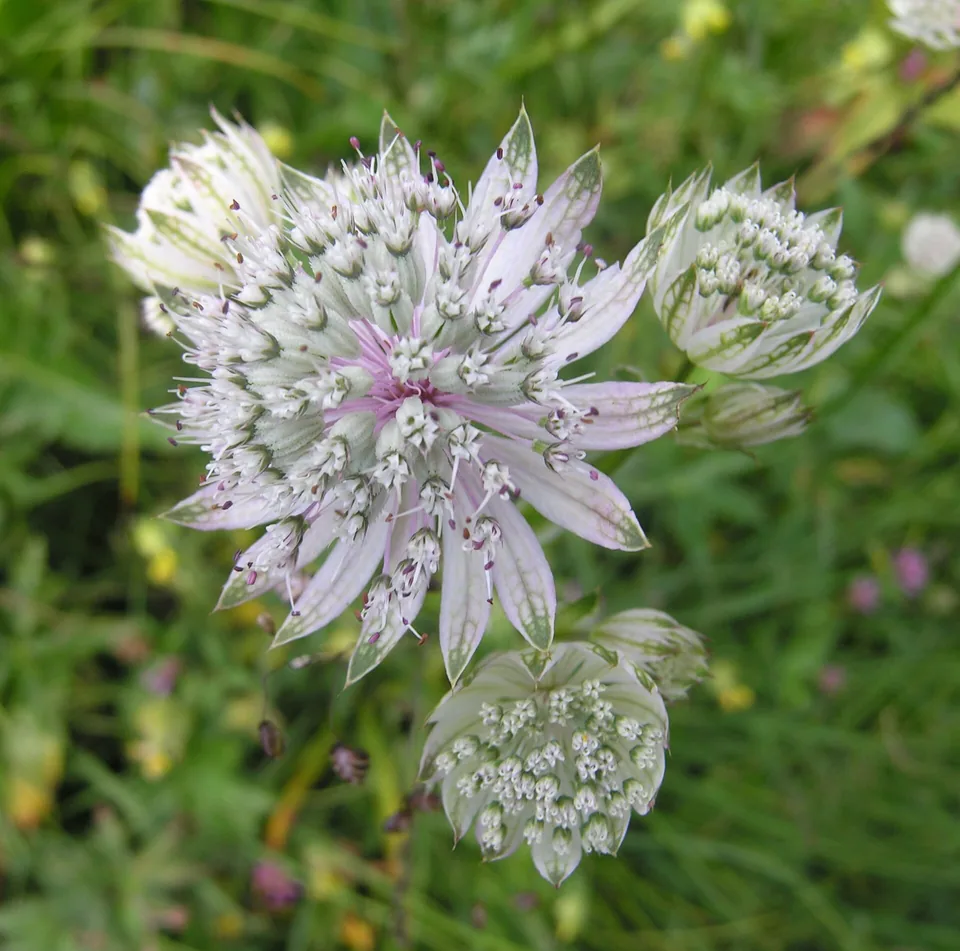
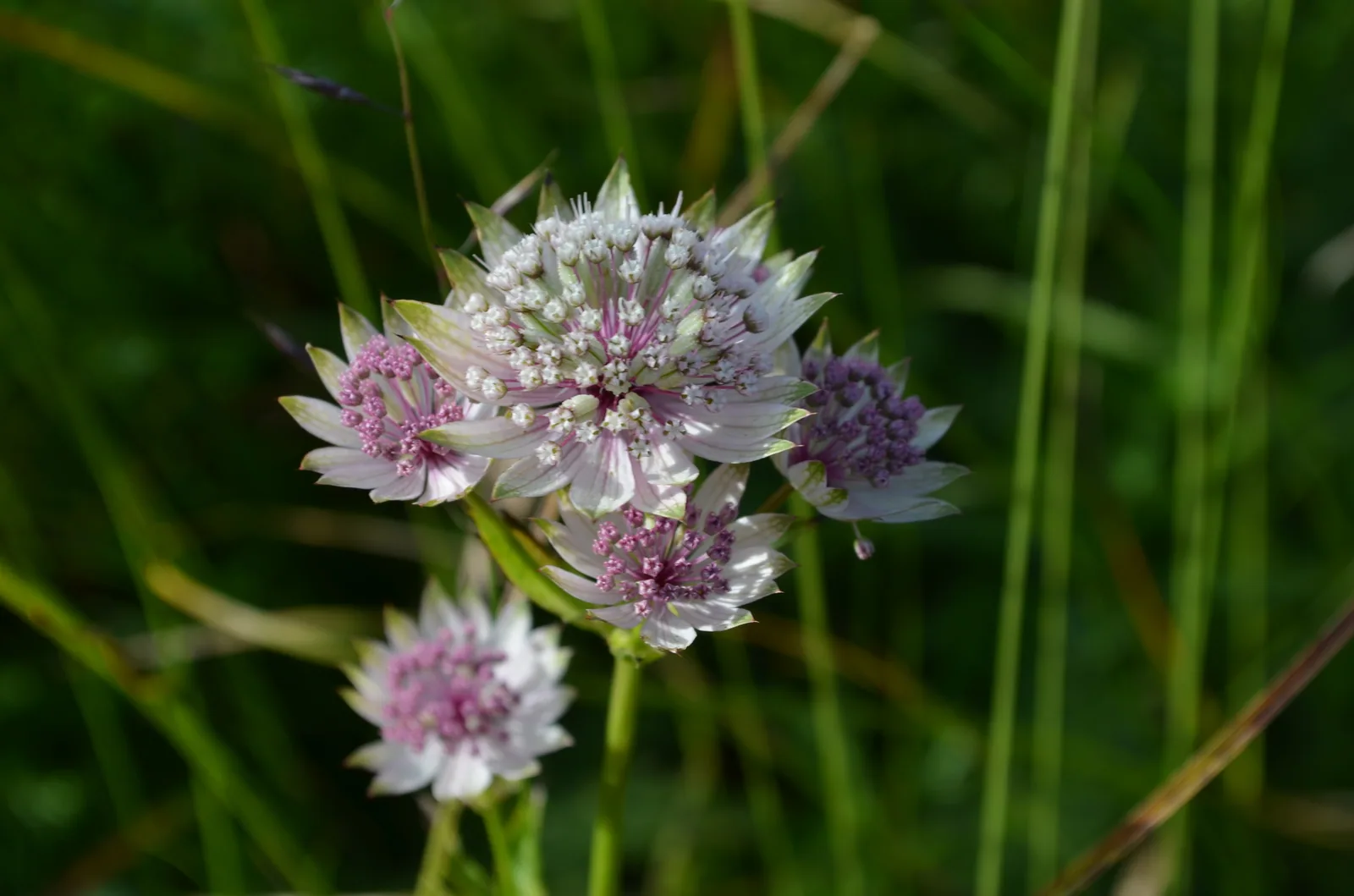

How to Grow and Care for Great masterwort
Astrantia major
Written by Emilio Marruso · last checked
At a glance
Astrantia is a charming perennial for part shade, happiest in soil that stays moist all the time; it even tolerates some standing water. It stays compact, up to 1½ ft tall, and grows in containers too. Feed it in early spring and again at midsummer, then divide established plants in early spring or fall to make more.
- Sun
Part shade
What the sources say (1)
Light: Part shade
Astrantia grows best in part shade in fertile, continuously moist soil with plenty of organic material.
— Astrantia, Astrantia major – Wisconsin Horticulture [1] - Water
Keep the soil moist all the time; water if rain isn't enough. It tolerates some standing water
What the sources say (2)
Watering: Keep soil continuously moist; irrigate if rain is insufficient
This species does not tolerate dry soil, so must be irrigated if rain is insufficient to keep the soil moist.
— Astrantia, Astrantia major – Wisconsin Horticulture [1] Watering notes: Tolerates some standing water
It is fairly adaptable, and will even tolerate some standing water, so could be included on the edge of a bog garden.
— Astrantia, Astrantia major – Wisconsin Horticulture [1] - Cold
Survives winters down to −30 °F (−34.4 °C)
Very hardy · USDA 4a · RHS H7 · Z4
What the sources say (2)
Hardiness, coldest zone: 4a [winter low −34.4 to −31.7 °C (−30 to −25 °F)]
this herbaceous perennial is hardy in zones 4a to 7b
— Astrantia, Astrantia major – Wisconsin Horticulture [1] Hardiness, warmest zone: 7b [winter low −15 to −12.2 °C (5 to 10 °F)]
this herbaceous perennial is hardy in zones 4a to 7b
— Astrantia, Astrantia major – Wisconsin Horticulture [1] - Feeding
Feed in early spring and again at midsummer; not needed in fertile soil
What the sources say (2)
When: Early spring and again at midsummer; not needed in fertile soils
Plants can be fertilized in early spring and again at mid-summer, but is usually not necessary in fertile soils.
— Astrantia, Astrantia major – Wisconsin Horticulture [1] How often: Up to twice a year
Plants can be fertilized in early spring and again at mid-summer, but is usually not necessary in fertile soils.
— Astrantia, Astrantia major – Wisconsin Horticulture [1] - Pruning
In fall, cut back spent leaves and flower stems, or leave them through winter
What the sources say (1)
Pruning: Fall (spent foliage and flower stems; or leave through winter)
The spent foliage and flower stems can be cut back in fall or left for interest through the winter.
— Astrantia, Astrantia major – Wisconsin Horticulture [1] - Pests
Watch for aphids and slugs
What the sources say (1)
Pests: aphids, slugs
This plant has few pest problems but may be attacked by aphids or slugs.
— Astrantia, Astrantia major – Wisconsin Horticulture [1] - Size
Up to 1½ ft tall
What the sources say (1)
Mature height: up to 45 cm (1½ ft)
Plants grow in mounded clumps up to 1½ feet high and spread by stolons.
— Astrantia, Astrantia major – Wisconsin Horticulture [1] - Propagation
Fresh seed after 2–3 months of cold and moisture, or divide established plants in early spring or fall
What the sources say (1)
Propagation: Fresh seed (after 2 to 3 months of cold, moist stratification); division of established plants in early spring or fall
Propagate astrantia from fresh seed or divide established plants in early spring or fall.
— Astrantia, Astrantia major – Wisconsin Horticulture [1] - Sowing
Sow in the garden in early fall, or indoors 6 months before planting out after the last frost
What the sources say (1)
Sowing: Early fall (directly in the garden); or indoors about 6 months before transplanting after the last frost
This is most easily accomplished by sowing directly in the garden in early fall, although they can be started indoors about 6 months before transplanting outdoors after the last frost.
— Astrantia, Astrantia major – Wisconsin Horticulture [1] - Containers
Grows in containers too
What the sources say (1)
In containers: Yes
It also grows well in containers, but it needs protection over the winter if left above ground.
— Astrantia, Astrantia major – Wisconsin Horticulture [1]
Overview
Great masterwort is a herbaceous perennial garden ornamental forming mounded clumps. [1] It grows best in part shade in fertile, continuously moist soil. [1] It is propagated from fresh seed or by division. [1]
Great masterwort care
How to water Great masterwort
Watering
Keep soil continuously moist; irrigate if rain is insufficient
What the sources say (1)
This species does not tolerate dry soil, so must be irrigated if rain is insufficient to keep the soil moist.Watering notes
Tolerates some standing water
What the sources say (1)
It is fairly adaptable, and will even tolerate some standing water, so could be included on the edge of a bog garden.How much light Great masterwort needs
Part shade
What the sources say (1)
Astrantia grows best in part shade in fertile, continuously moist soil with plenty of organic material.How much cold Great masterwort can take
Hardiness, coldest zone
4a [winter low −34.4 to −31.7 °C (−30 to −25 °F)]
What the sources say (1)
this herbaceous perennial is hardy in zones 4a to 7bHardiness, warmest zone
7b [winter low −15 to −12.2 °C (5 to 10 °F)]
What the sources say (1)
this herbaceous perennial is hardy in zones 4a to 7bWhere to grow Great masterwort
Yes
What the sources say (1)
It also grows well in containers, but it needs protection over the winter if left above ground.How to propagate Great masterwort
Fresh seed (after 2 to 3 months of cold, moist stratification); division of established plants in early spring or fall
What the sources say (1)
Propagate astrantia from fresh seed or divide established plants in early spring or fall.How to grow Great masterwort
The plant
Life cycle
perennial
What the sources say (1)
With a common name of masterwort (also the common name for Peucedanum ostruthium ) or great masterwort, or just astrantia, this herbaceous perennial is hardy in zones 4a to 7bFamily
Apiaceae
What the sources say (1)
Astrantia is a genus of 8 or 9 species in the carrot family (Apiaceae). One of the most commonly available as a garden ornamental is A. major , native to mountain meadowsMature height
up to 45 cm (1½ ft)
What the sources say (1)
Plants grow in mounded clumps up to 1½ feet high and spread by stolons.Pests and diseases
Pests
aphids, slugs
What the sources say (1)
This plant has few pest problems but may be attacked by aphids or slugs.Fertilizing
When
Early spring and again at midsummer; not needed in fertile soils
What the sources say (1)
Plants can be fertilized in early spring and again at mid-summer, but is usually not necessary in fertile soils.How often
Up to twice a year
What the sources say (1)
Plants can be fertilized in early spring and again at mid-summer, but is usually not necessary in fertile soils.Great masterwort pests and problems
Aphids and slugs
Symptom: Attacked by aphids or slugs
What the sources say (1)
This plant has few pest problems but may be attacked by aphids or slugs.
— Astrantia, Astrantia major – Wisconsin Horticulture [1]
Remedies
The sources we checked give no remedies for this plant.
Calendar
Sowing
Early fall (directly in the garden); or indoors about 6 months before transplanting after the last frost
What the sources say (1)
This is most easily accomplished by sowing directly in the garden in early fall, although they can be started indoors about 6 months before transplanting outdoors after the last frost.Pruning
Fall (spent foliage and flower stems; or leave through winter)
What the sources say (1)
The spent foliage and flower stems can be cut back in fall or left for interest through the winter.Months as given by the sources, which are mostly from the United States (northern hemisphere). In the southern hemisphere they shift by about six months.
Indicative values
Values from a secondary source, not checked word for word like the rest of this page. Use them as a starting point.
- Hours of sun
- 4-6 hoursIndicative value, adapt it to your climate · Secondary source
- Soil
- Well-drainedIndicative value, adapt it to your climate · Secondary source
- Soil pH
- 5.5-7Indicative value, adapt it to your climate · Secondary source
- Care level
- MediumIndicative value, adapt it to your climate · Secondary source
- Growth rate
- HighIndicative value, adapt it to your climate · Secondary source
Similar plants
- Angelica Angelica archangelica
- Appalachian Angelica Angelica triquinata
- Asiatic pennywort Centella asiatica
- Bishop's Weed Ammi majus
- Cow Parsley Anthriscus sylvestris
- Eryngo Eryngium aquaticum
- Golden Alexander Zizia trifoliata
- Golden Alexanders Zizia aurea
Sources
Every value above is quoted from these documents. Links lead to the original publisher.
- Astrantia, Astrantia major – Wisconsin Horticulture · hort.extension.wisc.edu, consulted
Written by Emilio Marruso · last checked