
How to Grow and Care for Western sweetshrub
Calycanthus occidentalis
Written by Emilio Marruso · last checked
Toxic to: Cattle, Sheep, Livestock, People · Why
At a glance
This generous shrub grows up to 12 ft tall and just as wide, and it is happy anywhere from full sun to light shade. Give it moist soil and, once it settles in, it shrugs off seasonal dry spells. Its bark is so fragrant that, dried, it has been used in place of cinnamon and allspice.
- Sun
Full sun to light shade
What the sources say (2)
- Water
Keep the soil moist; once settled it handles seasonal dry spells, but a spot too dry burns the leaves
What the sources say (3)
Watering: Moist soil; tolerant of seasonal drought once established
Soil Moisture: Moist
— Lady Bird Johnson Wildflower Center - The University of Texas at Austin [4] Although tolerant of seasonal drought once established, its natural distribution reflects a preference for sites with at least intermittent moisture.
— Calycanthus occidentalis - Trees and Shrubs Online [2] Watering notes: Leaf burn develops if the planting site is too dry
Conditions Comments: Will develop leaf burn if planting site is too dry.
— Lady Bird Johnson Wildflower Center - The University of Texas at Austin [4] - Cold
Survives winters down to −10 °F (−23.3 °C)
Very hardy · USDA 6 · RHS H7 · Z6
What the sources say (2)
Hardiness, coldest zone: 6 [winter low −23.3 to −17.8 °C (−10 to 0 °F)]
USDA Hardiness Zone  6-7
— Calycanthus occidentalis - Trees and Shrubs Online [2] Hardiness, warmest zone: 7 [winter low −17.8 to −12.2 °C (0 to 10 °F)]
USDA Hardiness Zone  6-7
— Calycanthus occidentalis - Trees and Shrubs Online [2] - Harvest
The dried, fragrant bark has been used in place of cinnamon and allspice
- Size
Up to 12 ft tall and 12 ft wide
What the sources say (2)
Mature height: 365.76 cm (12 ft)
In ideal conditions plants can reach 12 feet in height and width, and will continue blooming throughout the summer months.
— July 2019 Plant Profile: Calycanthus occidentalis [1] Mature width: 365.76 cm (12 ft)
In ideal conditions plants can reach 12 feet in height and width, and will continue blooming throughout the summer months.
— July 2019 Plant Profile: Calycanthus occidentalis [1] - Propagation
From seed, softwood cuttings, dividing the clump, or layering in spring
What the sources say (2)
- Sowing
Sow as soon as the seed is ripe, in a cold frame
What the sources say (1)
Sowing: As soon as the seed is ripe (cold frame)
Seed - best sown in a cold frame as soon as it is ripe.
— Calycanthus occidentalis - Useful Temperate Plants [3] - Safety
Toxic to people and livestock; the seeds have been linked to poisoning in cattle and sheep
Overview
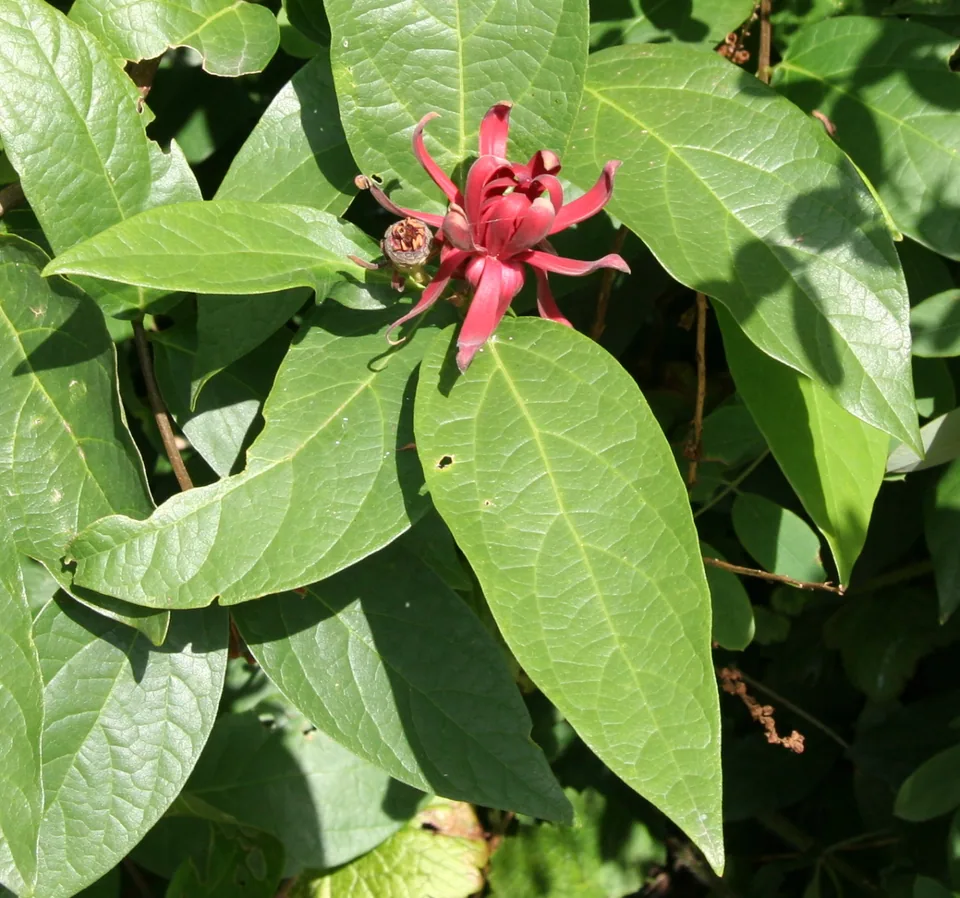
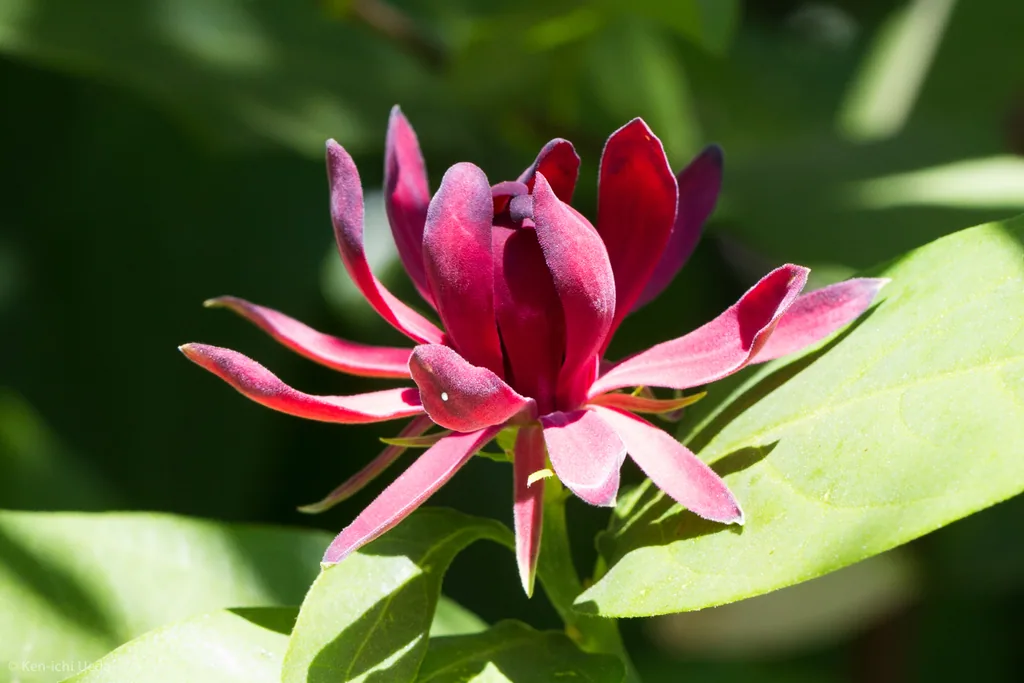
Calycanthus occidentalis is a deciduous shrub native to California, growing on moist canyon slopes and along creeks. [1] It prefers full sun or light shade and moist soil. [1][4] The plant contains toxic alkaloids including calycanthine, concentrated in the seeds. [1]
This record is incomplete: the sources we read do not cover every field yet.
Not yet covered by our sources: Pruning
Western sweetshrub care
How to water Western sweetshrub
Watering
Moist soil; tolerant of seasonal drought once established
What the sources say (2)
Soil Moisture: MoistAlthough tolerant of seasonal drought once established, its natural distribution reflects a preference for sites with at least intermittent moisture.Watering notes
Leaf burn develops if the planting site is too dry
What the sources say (1)
Conditions Comments: Will develop leaf burn if planting site is too dry.How much light Western sweetshrub needs
Full sun to light shade
How much cold Western sweetshrub can take
Hardiness, coldest zone
6 [winter low −23.3 to −17.8 °C (−10 to 0 °F)]
What the sources say (1)
USDA Hardiness Zone  6-7Hardiness, warmest zone
7 [winter low −17.8 to −12.2 °C (0 to 10 °F)]
What the sources say (1)
USDA Hardiness Zone  6-7How to propagate Western sweetshrub
How to grow Western sweetshrub
The plant
Family
Calycanthaceae
What the sources say (1)
Family: Calycanthaceae
Genus: Calycanthus
Species: occidentalis
Origin: California to southern OregonMature height
365.76 cm (12 ft)
What the sources say (1)
In ideal conditions plants can reach 12 feet in height and width, and will continue blooming throughout the summer months.Mature width
365.76 cm (12 ft)
What the sources say (1)
In ideal conditions plants can reach 12 feet in height and width, and will continue blooming throughout the summer months.Remedies
The sources we checked give no remedies for this plant.
Is Western sweetshrub toxic to pets?
Reported by the source, quoted verbatim. This is not medical or veterinary advice: if a person or an animal may have eaten this plant, contact a poison control centre or a veterinarian.
there are some historic reports of cattle and sheep poisonings after ingestion of the seeds.
[1]- Poisonous parts
The toxin is concentrated in the seeds of the plant
[1]- Toxic principle
Deer avoid Calycanthus occidentalis , likely because the plant contains toxic alkaloids including calycanthine.
[1]- Symptoms
Calycanthine is a stimulant of the central nervous system, and if ingested can cause painful muscle contractions or tetanic seizures.
[1]
Calycanthus contains calycanthine, an alkaloid similar to strychnine, and it is toxic to humans and livestock
[3]- Toxic principle
Calycanthus contains calycanthine, an alkaloid similar to strychnine
[3]
Calendar
Sowing
As soon as the seed is ripe (cold frame)
What the sources say (1)
Seed - best sown in a cold frame as soon as it is ripe.Pruning
Not stated in the sources we read.
Months as given by the sources, which are mostly from the United States (northern hemisphere). In the southern hemisphere they shift by about six months.
Edibility
Reported by the source, quoted verbatim. Do not eat a plant on the basis of this page alone: identification mistakes can be dangerous.
The aromatic bark is dried and used as a substitute for cinnamon and all spice
[3]
Indicative values
Values from a secondary source, not checked word for word like the rest of this page. Use them as a starting point.
- Life cycle
- PerennialIndicative value, adapt it to your climate · Secondary source
- Drought tolerant
- yesIndicative value, adapt it to your climate · Secondary source
- Soil pH
- 5.5-7.5Indicative value, adapt it to your climate · Secondary source
- Care level
- MediumIndicative value, adapt it to your climate · Secondary source
- Growth rate
- LowIndicative value, adapt it to your climate · Secondary source
- Pruning
- February, March, AprilIndicative value, adapt it to your climate · Secondary source
Similar plants
- Carolina Allspice Calycanthus floridus
- Chinese Sweetshrub Calycanthus chinensis
- Wintersweet Chimonanthus praecox
- Abies grandis Abies grandis
- Abraham Trachystemon orientalis
- Abyssinian banana Ensete ventricosum
- Acacia longifolia Acacia longifolia
- Acanthus hungaricus Acanthus hungaricus
Sources
Every value above is quoted from these documents. Links lead to the original publisher.
- July 2019 Plant Profile: Calycanthus occidentalis · botanicgardens.uw.edu, consulted
- Calycanthus occidentalis - Trees and Shrubs Online · treesandshrubsonline.org, consulted
- Calycanthus occidentalis - Useful Temperate Plants · temperate.theferns.info, consulted
- Lady Bird Johnson Wildflower Center - The University of Texas at Austin · wildflower.org, consulted
Written by Emilio Marruso · last checked