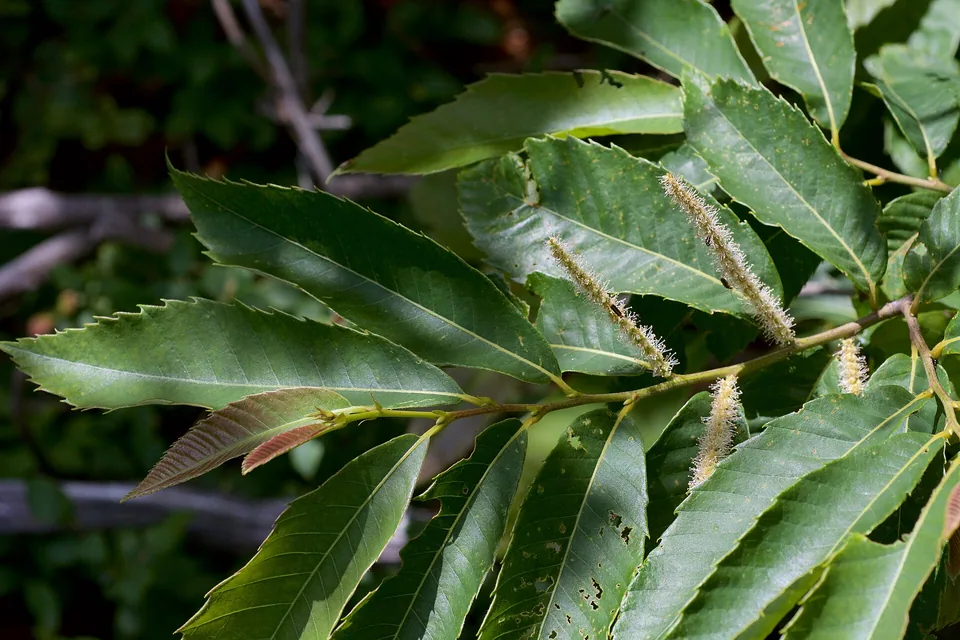

How to Grow and Care for Ozark chinkapin
Castanea ozarkensis
Written by Emilio Marruso · last checked
At a glance
This chestnut has a tasty reward: in fall, spiny burs the size of a golf ball appear, each holding a small but tasty brown nut you can eat raw or cooked. Give it full sun or light shade and well-drained soil, and once it settles in, it handles dry spells with ease.
- Sun
Full sun; light shade is OK too
What the sources say (1)
Light: Full sun; tolerates light shade
Light full sun Shade tolerance light shade Water moderate
— Ozark Chinkapin (Castanea ozarkensis) — Practical Plants [3] - Water
Moderate watering; very drought tolerant once established
What the sources say (2)
Watering: Moderate; very drought tolerant once established
Shade tolerance light shade Water moderate Hardiness Zone 6+
— Ozark Chinkapin (Castanea ozarkensis) — Practical Plants [3] Once established, it is very drought tolerant [1] [3] [7] . Very tolerant of highly acid, infertile dry sands
— Ozark Chinkapin (Castanea ozarkensis) — Practical Plants [3] - Cold
Survives winters down to −10 °F (−23.3 °C)
Very hardy · USDA 6 · RHS H7 · Z6
What the sources say (1)
Hardiness, coldest zone: 6 [winter low −23.3 to −17.8 °C (−10 to 0 °F)]
Water moderate Hardiness Zone 6+ Soil textures sandy, loamy, clay
— Ozark Chinkapin (Castanea ozarkensis) — Practical Plants [3] - Soil
Well-drained soil; dry soils are fine too
What the sources say (1)
Watering notes: Prefers well-drained soil; also succeeds in dry soils
Prefers a good well-drained slightly acid loam but it also succeeds in dry soils
— Ozark Chinkapin (Castanea ozarkensis) — Practical Plants [3] - Planting
Plant potted trees in summer or fall
What the sources say (1)
Planting: Summer or autumn (pot-grown plants)
If grown in pots, the plants can be put out into their permanent positions in the summer or autumn
— Ozark Chinkapin (Castanea ozarkensis) — Practical Plants [3] - Harvest
In fall, spiny burs hold a small, tasty brown nut to eat raw or cooked
- Pests
Chestnut blight can kill the top; new shoots can regrow from the base
What the sources say (1)
Diseases: chestnut blight
The disease attacks the cambium region of the tree, killing the top completely but allowing trunk suckers to regrow from the base
— Ozark Chinquapin [1] - Propagation
Grows from seed
What the sources say (1)
Propagation: Seed
Seed - where possible sow the seed as soon as it is ripe in a cold frame or in a seed bed outdoors
— Ozark Chinkapin (Castanea ozarkensis) — Practical Plants [3] - Sowing
Sow the seeds as soon as they are ripe
What the sources say (1)
Sowing: As soon as the seed is ripe
sow the seed as soon as it is ripe in a cold frame or in a seed bed outdoors
— Ozark Chinkapin (Castanea ozarkensis) — Practical Plants [3]
Overview
Ozark chinquapin is a deciduous tree, occasionally a shrub, native to the Ozark and Ouachita regions, whose burs contain an edible nut. [2][1] Because of chestnut blight most specimens are now rarely more than 10 metres [32.8 ft] tall, mostly resprouting. [2] It prefers well-drained, slightly acid loam and is very drought tolerant once established. [3]
This record is incomplete: the sources we read do not cover every field yet.
Not yet covered by our sources: Harvest, Spacing
Ozark chinkapin care
Measurements in square brackets are our conversion into the other unit system; the quoted text is unchanged.
How to water Ozark chinkapin
Watering
Moderate; very drought tolerant once established
What the sources say (2)
Shade tolerance
light shade
Water
moderate
Hardiness
Zone 6+Once established, it is very drought tolerant [1] [3] [7] . Very tolerant of highly acid, infertile dry sandsWatering notes
Prefers well-drained soil; also succeeds in dry soils
What the sources say (1)
Prefers a good well-drained slightly acid loam but it also succeeds in dry soilsHow much light Ozark chinkapin needs
Full sun; tolerates light shade
What the sources say (1)
Light
full sun
Shade tolerance
light shade
Water
moderateHow much cold Ozark chinkapin can take
6 [winter low −23.3 to −17.8 °C (−10 to 0 °F)]
What the sources say (1)
Water
moderate
Hardiness
Zone 6+
Soil textures
sandy, loamy, clayWhere to grow Ozark chinkapin
Not stated in the sources we read.
How to propagate Ozark chinkapin
Seed
What the sources say (1)
Seed - where possible sow the seed as soon as it is ripe in a cold frame or in a seed bed outdoorsHow to grow Ozark chinkapin
Pests and diseases
Diseases
chestnut blight
What the sources say (1)
The disease attacks the cambium region of the tree, killing the top completely but
allowing trunk suckers to regrow from the baseOzark chinkapin pests and problems
Chestnut blight
Symptom: Attacks the cambium region of the tree, killing the top completely but allowing trunk suckers to regrow from the base
What to do: Breeding with resistant Chinese and Japanese species has been ongoing for almost a century; no completely satisfactory replacement found to date.
What the sources say (2)
The disease attacks the cambium region of the tree, killing the top completely but allowing trunk suckers to regrow from the base
— Ozark Chinquapin [1] Breeding efforts using the functionally resistant Chinese and Japanese species in combination with the susceptible American species have been ongoing for almost a century
— Ozark Chinquapin [1]
Remedies
The sources we checked give no remedies for this plant.
Calendar
Sowing
As soon as the seed is ripe
What the sources say (1)
sow the seed as soon as it is ripe in a cold frame or in a seed bed outdoorsPlanting
Summer or autumn (pot-grown plants)
What the sources say (1)
If grown in pots, the plants can be put out into their permanent positions in the summer or autumnHarvest
Not stated in the sources we read.
Months as given by the sources, which are mostly from the United States (northern hemisphere). In the southern hemisphere they shift by about six months.
Edibility
Reported by the source, quoted verbatim. Do not eat a plant on the basis of this page alone: identification mistakes can be dangerous.
Indicative values
Values from a secondary source, not checked word for word like the rest of this page. Use them as a starting point.
- Life cycle
- PerennialIndicative value, adapt it to your climate · Secondary source
- Mature height
- 1219.2-1828.8 cm (40-60 ft)Indicative value, adapt it to your climate · Secondary source
- Hours of sun
- 6-8 hoursIndicative value, adapt it to your climate · Secondary source
- Soil pH
- 5.5-6.5Indicative value, adapt it to your climate · Secondary source
- Care level
- MediumIndicative value, adapt it to your climate · Secondary source
- Growth rate
- LowIndicative value, adapt it to your climate · Secondary source
- Pruning
- February, March, April, March, April, May, June, July, August, SeptemberIndicative value, adapt it to your climate · Secondary source
Similar plants
- American chestnut Castanea dentata
- Sweet chestnut Castanea sativa
- Afghan Cherry Prunus jacquemontii
- American Plum Prunus americana
- Apple Malus sylvestris
- Apple Rose Rosa villosa
- Apricot Prunus armeniaca
- Asian Pear Pyrus pyrifolia
Sources
Every value above is quoted from these documents. Links lead to the original publisher.
- Ozark Chinquapin · uaex.uada.edu, consulted
- Castanea ozarkensis - Useful Temperate Plants · temperate.theferns.info, consulted
- Ozark Chinkapin (Castanea ozarkensis) — Practical Plants · practicalplants.org, consulted
- Ozark Chinquapin (Castanea ozarkensis) - Arkansas Department of Agriculture · agriculture.arkansas.gov, consulted
- PRELIMINARY REPORT · tacf.org, consulted
Written by Emilio Marruso · last checked