
How to Grow and Care for Painted Lady
Echeveria derenbergii
Written by Emilio Marruso · last checked
Not toxic to cats and dogs, according to the sources · Sources
At a glance
This easygoing plant is a gentle first choice: it needs very little water and grows happily anywhere from full sun to partial shade. It thrives in pots, even indoors, and it is safe around cats and dogs. Best of all, you can make new plants for free from offsets, stem cuttings or even a single leaf.
- Sun
Full sun to partial shade
What the sources say (2)
Light: Full sun to partial shade
This plant thrives in full sun to partial sun
— Echeveria derenbergii (Blue Echeveria, Copper Rose, Maroon Chenille Plant, Painted Lady, Painted-Lady, Plush Plant, Wax Rosette) | North Carolina Extension Gardener Plant Toolbox [1] Light: Full sun (6 or more hours of direct sunlight a day) Partial Shade (Direct sunlight only part of the day, 2-6 hours)
— Echeveria derenbergii (Blue Echeveria, Copper Rose, Maroon Chenille Plant, Painted Lady, Painted-Lady, Plush Plant, Wax Rosette) | North Carolina Extension Gardener Plant Toolbox [1] - Water
Very little water, and lukewarm: cold water can make the leaves drop
What the sources say (2)
Watering: Requires very little water; avoid overwatering
Painted lady requires very little water, and it is important to avoid overwatering.
— Echeveria derenbergii (Blue Echeveria, Copper Rose, Maroon Chenille Plant, Painted Lady, Painted-Lady, Plush Plant, Wax Rosette) | North Carolina Extension Gardener Plant Toolbox [1] Watering notes: Use tepid water; cold water can cause leaf drop. Overwatering can cause yellowing, mushy leaves, and root rot
Overwatering can cause yellowing, mushy leaves, and root rot. Use tepid water when watering; cold water can cause leaf drop.
— Echeveria derenbergii (Blue Echeveria, Copper Rose, Maroon Chenille Plant, Painted Lady, Painted-Lady, Plush Plant, Wax Rosette) | North Carolina Extension Gardener Plant Toolbox [1] - Cold
Survives winters down to 20 °F (−6.7 °C)
Hardy in average winters · USDA 9a · RHS H4 · Z9
What the sources say (2)
Hardiness, coldest zone: 9a [winter low −6.7 to −3.9 °C (20 to 25 °F)]
USDA Plant Hardiness Zone: 9a, 9b, 10a, 10b, 11a, 11b, 12a, 12b
— Echeveria derenbergii (Blue Echeveria, Copper Rose, Maroon Chenille Plant, Painted Lady, Painted-Lady, Plush Plant, Wax Rosette) | North Carolina Extension Gardener Plant Toolbox [1] Hardiness, warmest zone: 12b [winter low 12.8 to 15.6 °C (55 to 60 °F)]
USDA Plant Hardiness Zone: 9a, 9b, 10a, 10b, 11a, 11b, 12a, 12b
— Echeveria derenbergii (Blue Echeveria, Copper Rose, Maroon Chenille Plant, Painted Lady, Painted-Lady, Plush Plant, Wax Rosette) | North Carolina Extension Gardener Plant Toolbox [1] - Pests
Mealybugs and aphids; remove dead leaves to keep them away
What the sources say (1)
Pests: mealybugs, aphids
Insects, Diseases, and Other Plant Problems: No significant problems. Mealybugs and aphids may be seen.
— Echeveria derenbergii (Blue Echeveria, Copper Rose, Maroon Chenille Plant, Painted Lady, Painted-Lady, Plush Plant, Wax Rosette) | North Carolina Extension Gardener Plant Toolbox [1] - Watch out
Too much water turns the leaves yellow and mushy and rots the roots
What the sources say (2)
Watering notes: Use tepid water; cold water can cause leaf drop. Overwatering can cause yellowing, mushy leaves, and root rot
Overwatering can cause yellowing, mushy leaves, and root rot. Use tepid water when watering; cold water can cause leaf drop.
— Echeveria derenbergii (Blue Echeveria, Copper Rose, Maroon Chenille Plant, Painted Lady, Painted-Lady, Plush Plant, Wax Rosette) | North Carolina Extension Gardener Plant Toolbox [1] Diseases: root rot
Overwatering can cause yellowing, mushy leaves, and root rot.
— Echeveria derenbergii (Blue Echeveria, Copper Rose, Maroon Chenille Plant, Painted Lady, Painted-Lady, Plush Plant, Wax Rosette) | North Carolina Extension Gardener Plant Toolbox [1] - Propagation
New plants from offsets, stem cuttings or leaf cuttings
What the sources say (1)
Propagation: Offsets, stem cuttings, leaf cuttings
Propagated by offsets in the spring, and they may also be propagated by stem or leaf cuttings.
— Echeveria derenbergii (Blue Echeveria, Copper Rose, Maroon Chenille Plant, Painted Lady, Painted-Lady, Plush Plant, Wax Rosette) | North Carolina Extension Gardener Plant Toolbox [1] - Containers
Grows well in pots, indoors too
What the sources say (3)
In containers: Yes
Painted lady is often used as a houseplant or container plant.
— Echeveria derenbergii (Blue Echeveria, Copper Rose, Maroon Chenille Plant, Painted Lady, Painted-Lady, Plush Plant, Wax Rosette) | North Carolina Extension Gardener Plant Toolbox [1] Indoors: Yes
Painted lady is often used as a houseplant or container plant.
— Echeveria derenbergii (Blue Echeveria, Copper Rose, Maroon Chenille Plant, Painted Lady, Painted-Lady, Plush Plant, Wax Rosette) | North Carolina Extension Gardener Plant Toolbox [1] Indoor temperatures from 40 to 75 degrees are tolerated.
— Echeveria derenbergii (Blue Echeveria, Copper Rose, Maroon Chenille Plant, Painted Lady, Painted-Lady, Plush Plant, Wax Rosette) | North Carolina Extension Gardener Plant Toolbox [1] - Safety
Safe for cats and dogs
Overview
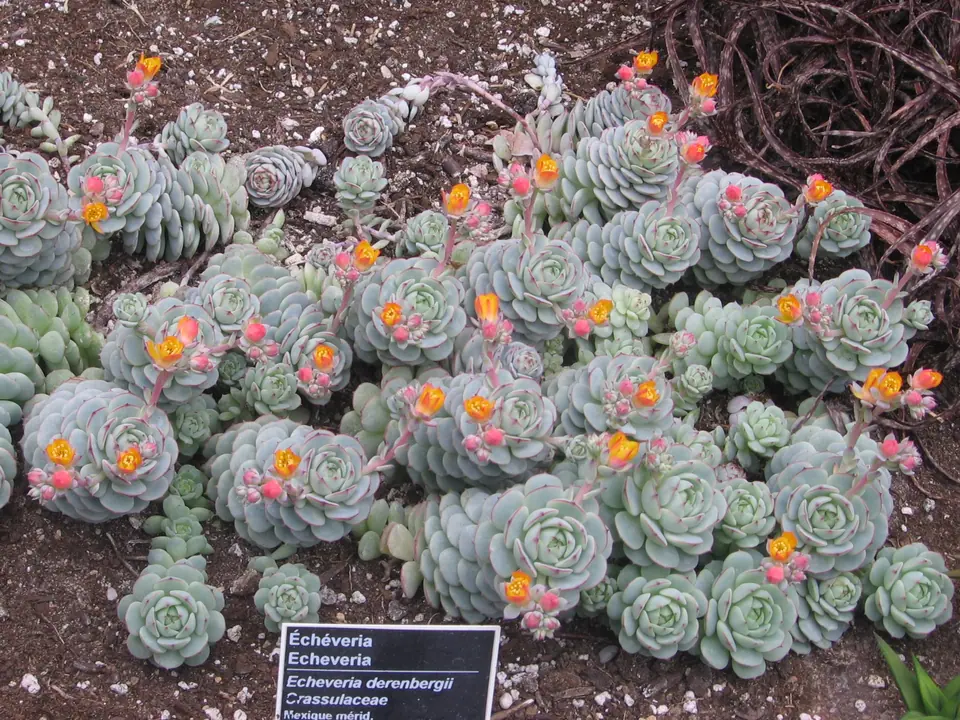
Painted lady is an evergreen succulent native to Southwest Mexico that forms dense clusters of small rosettes with blue-gray leaves edged in red. [1] It thrives in full sun to partial sun in well-drained soils or potting mix and needs very little water. [1] The listing tags it as non-toxic for cats and dogs. [1]
Painted Lady care
How to water Painted Lady
Watering
Requires very little water; avoid overwatering
What the sources say (1)
Painted lady requires very little water, and it is important to avoid overwatering.Watering notes
Use tepid water; cold water can cause leaf drop. Overwatering can cause yellowing, mushy leaves, and root rot
What the sources say (1)
Overwatering can cause yellowing, mushy leaves, and root rot. Use tepid water when watering; cold water can cause leaf drop.How much light Painted Lady needs
Full sun to partial shade
What the sources say (2)
This plant thrives in full sun to partial sunLight:
Full sun (6 or more hours of direct sunlight a day)
Partial Shade (Direct sunlight only part of the day, 2-6 hours)How much cold Painted Lady can take
Hardiness, coldest zone
9a [winter low −6.7 to −3.9 °C (20 to 25 °F)]
What the sources say (1)
USDA Plant Hardiness Zone:
9a, 9b, 10a, 10b, 11a, 11b, 12a, 12bHardiness, warmest zone
12b [winter low 12.8 to 15.6 °C (55 to 60 °F)]
What the sources say (1)
USDA Plant Hardiness Zone:
9a, 9b, 10a, 10b, 11a, 11b, 12a, 12bWhere to grow Painted Lady
Indoors
Yes
What the sources say (2)
Painted lady is often used as a houseplant or container plant.Indoor temperatures from 40 to 75 degrees are tolerated.In containers
Yes
What the sources say (1)
Painted lady is often used as a houseplant or container plant.How to propagate Painted Lady
Offsets, stem cuttings, leaf cuttings
What the sources say (1)
Propagated by offsets in the spring, and they may also be propagated by stem or leaf cuttings.How to grow Painted Lady
The plant
Life cycle
perennial
What the sources say (1)
Life Cycle: Perennial Recommended Propagation Strategy: Division Leaf CuttingFamily
Crassulaceae
What the sources say (1)
Painted lady is an evergreen succulent native to Southwest Mexico in the stonecrop family (Crassulaceae). This plant forms dense clusters of small, tight rosettesPests and diseases
Pests
mealybugs, aphids
What the sources say (1)
Insects, Diseases, and Other Plant Problems: No significant problems. Mealybugs and aphids may be seen.Diseases
root rot
What the sources say (1)
Overwatering can cause yellowing, mushy leaves, and root rot.Painted Lady pests and problems
Overwatering
Symptom: Yellowing, mushy leaves, and root rot
What to do: Avoid overwatering
What the sources say (2)
Overwatering can cause yellowing, mushy leaves, and root rot.
— Echeveria derenbergii (Blue Echeveria, Copper Rose, Maroon Chenille Plant, Painted Lady, Painted-Lady, Plush Plant, Wax Rosette) | North Carolina Extension Gardener Plant Toolbox [1] it is important to avoid overwatering.
— Echeveria derenbergii (Blue Echeveria, Copper Rose, Maroon Chenille Plant, Painted Lady, Painted-Lady, Plush Plant, Wax Rosette) | North Carolina Extension Gardener Plant Toolbox [1] Sunburn
Symptom: Leaves sunburn
What the sources say (1)
The leaves can sunburn from prolonged periods of direct sunlight.
— Echeveria derenbergii (Blue Echeveria, Copper Rose, Maroon Chenille Plant, Painted Lady, Painted-Lady, Plush Plant, Wax Rosette) | North Carolina Extension Gardener Plant Toolbox [1] Mealybugs and aphids
Symptom: Mealybugs and aphids may be seen
What to do: Remove any dead leaves to prevent insect pests
What the sources say (2)
Mealybugs and aphids may be seen.
— Echeveria derenbergii (Blue Echeveria, Copper Rose, Maroon Chenille Plant, Painted Lady, Painted-Lady, Plush Plant, Wax Rosette) | North Carolina Extension Gardener Plant Toolbox [1] It is best practice to remove any dead leaves to prevent insect pests.
— Echeveria derenbergii (Blue Echeveria, Copper Rose, Maroon Chenille Plant, Painted Lady, Painted-Lady, Plush Plant, Wax Rosette) | North Carolina Extension Gardener Plant Toolbox [1]
Remedies
Each remedy shows what official sources say about it; traditional remedies without an official source are marked as such. Harmful ones are listed so you know to avoid them.
Treating the plant
mealybugs
rubbing alcohol Works
Make sure to test the soap and alcohol mixtures on a small portion of the plant prior to full application because some plants may be sensitive to soap or alcohol.
— planttalk.colostate.edu [7] Although it may temporarily dissolve the leaves' powdery coating, I've yet to see alcohol have a lasting impact on the plant.
— debraleebaldwin.com [6] How: Treat by spraying with 70% isopropyl alcohol; 90% is too harsh. For a delicate, thin-leaved succulent dilute the alcohol half-strength with water.
Treat by spraying with 70% Isopropyl alcohol (use 70%; 90% is too harsh).
— debraleebaldwin.com [6] What the evidence says For heavy infestations, spray a mixture of 10 percent rubbing alcohol and 90 percent water directly onto the insects.
— planttalk.colostate.edu [7] cotton swab dipped in alcohol Works
How: For a small mealybug infestation, wipe them away with a cotton swab or cotton ball dipped in rubbing alcohol.
For a small mealy bug infestation, wipe them away with a cotton swab or cotton ball dipped in rubbing alcohol.
— plantcaretoday.com [8] What the evidence says Mealybugs can be managed by noticing them quickly and killing them by hand with a cotton swab dipped in alcohol or with an insecticide
— hortnews.extension.iastate.edu [9] insecticidal soap Works
Make sure to test the soap and alcohol mixtures on a small portion of the plant prior to full application because some plants may be sensitive to soap or alcohol.
— planttalk.colostate.edu [7] How: Insecticidal soap is used against Echeveria pests, as a last resort; test a small, hidden area of the plant first.
Insecticidal soaps, Neem oil sprays , or pyrethrum sprays are used against all Echeveria pests, but this should be a last resort.
— plantcaretoday.com [8] What the evidence says These pests may also be controlled with insecticidal soap.
— planttalk.colostate.edu [7] neem oil Not verified
Traditional remedy, not verified by an official source.
As with rubbing alcohol spray, you should test a small, hidden area of the plant before spraying the entire plant.
— plantcaretoday.com [8] How: Neem oil sprays are used against Echeveria pests as a last resort; test a small, hidden area of the plant first.
strong stream of water Not verified
Traditional remedy, not verified by an official source.
How: As soon as you notice them, wash the pests off with a strong stream of water.
root rot
cutting away rotted roots and repotting in dry soil Not verified
Traditional remedy, not verified by an official source.
How: Cut away any rotted roots or vegetation, let the washed, healthy plant air for twenty-four hours, then repot in fresh, dry soil.
Is Painted Lady poisonous?
Reported by the source, quoted verbatim. This is not medical or veterinary advice: if a person or an animal may have eaten this plant, contact a poison control centre or a veterinarian.
#non-toxic for cats #non-toxic for dogs
[1]The source flags the risk for this animal but does not explain why.
Similar plants
- Blue Echeveria Echeveria secunda
- Copper Rose Echeveria multicaulis
- White Mexican Rose Echeveria elegans
- Allegheny Stonecrop Hylotelephium telephioides
- Carpet Sedum Sedum lineare
- Chandelier Plant Kalanchoe delagoensis
- Evergreen Orpine Hylotelephium anacampseros
- Ghost Plant Graptopetalum paraguayense
Sources
Every value above is quoted from these documents. Links lead to the original publisher.
- Echeveria derenbergii (Blue Echeveria, Copper Rose, Maroon Chenille Plant, Painted Lady, Painted-Lady, Plush Plant, Wax Rosette) | North Carolina Extension Gardener Plant Toolbox · plants.ces.ncsu.edu, consulted
- Blue Echeveria - Echeveria derenbergii | North Carolina Extension Gardener Plant Toolbox · plants.ces.ncsu.edu, consulted
- Echeveria - Echeveria | North Carolina Extension Gardener Plant Toolbox · plants.ces.ncsu.edu, consulted
- Echeveria (Echeveria, Mexican Rosettes, Mexican Snowballs, Variegated Wax Plant) | North Carolina Extension Gardener Plant Toolbox · plants.ces.ncsu.edu, consulted
- Variegated Wax Plant - Echeveria | North Carolina Extension Gardener Plant Toolbox · plants.ces.ncsu.edu, consulted
- debraleebaldwin.com · debraleebaldwin.com
- planttalk.colostate.edu · planttalk.colostate.edu
- plantcaretoday.com · plantcaretoday.com
- hortnews.extension.iastate.edu · hortnews.extension.iastate.edu
Written by Emilio Marruso · last checked