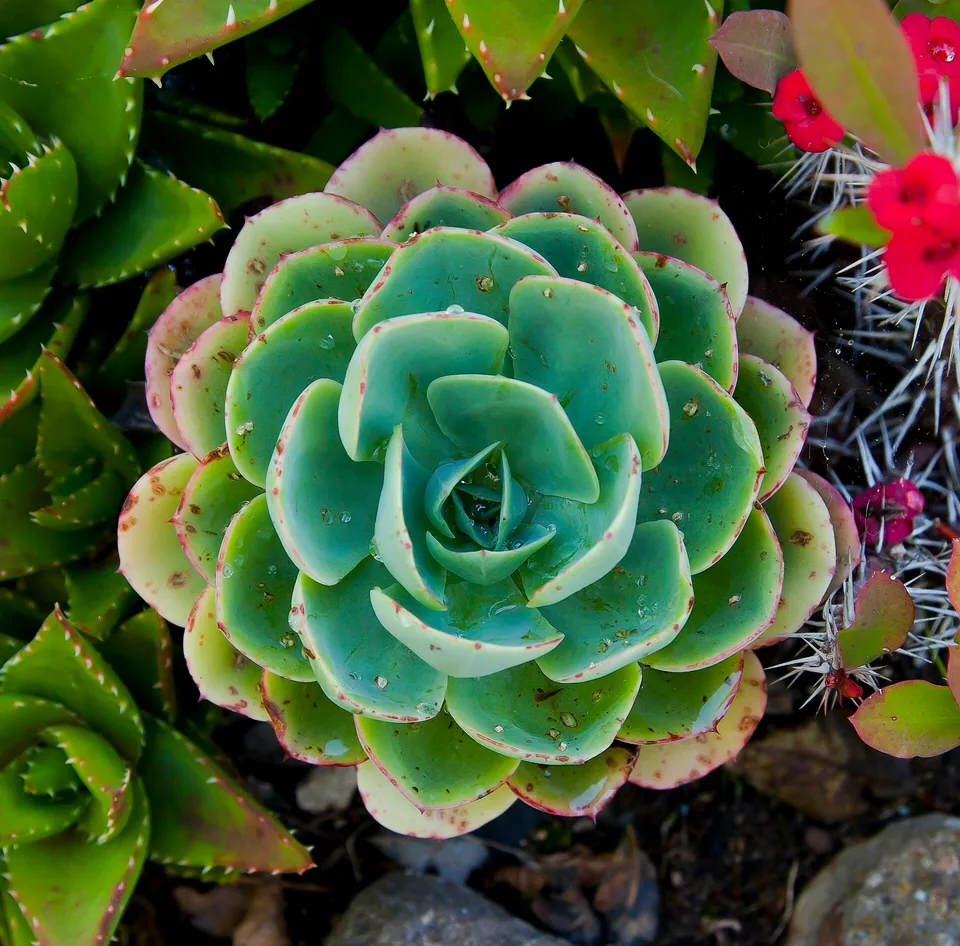


How to Grow and Care for White Mexican Rose
Echeveria elegans
Written by Emilio Marruso · last checked
Not toxic to cats and dogs, according to the sources · Sources
At a glance
This perennial is happy in full sun or partial shade, outdoors, in a pot or even indoors. It asks for very little: dry, well-drained soil and a light hand with the watering can, since too much water is its most common problem. You can also grow new plants for free from cuttings, single leaves or its little offsets.
- Sun
Full sun to partial shade
What the sources say (1)
Light: Full sun to partial shade
Echeveria plants do well in full sun to partial shade and are relatively disease-free.
— Echeveria elegans (Mexican Gem, Mexican Ghost Plant, Mexican Hens and Chicks, Mexican Snow Ball, White Mexican Rose) | North Carolina Extension Gardener Plant Toolbox [1] - Water
Water sparingly: too much water is its most common problem
What the sources say (1)
Watering: Prefers dry, well-drained soil; overwatering is the most common problem
The most common problem with these plants is overwatering as they prefer dry, well-drained soil.
— Echeveria elegans (Mexican Gem, Mexican Ghost Plant, Mexican Hens and Chicks, Mexican Snow Ball, White Mexican Rose) | North Carolina Extension Gardener Plant Toolbox [1] - Cold
Survives winters down to 20 °F (−6.7 °C)
Hardy in average winters · USDA 9a · RHS H4 · Z9
What the sources say (2)
Hardiness, coldest zone: 9a [winter low −6.7 to −3.9 °C (20 to 25 °F)]
USDA Plant Hardiness Zone: 9a, 9b, 10a, 10b, 11a, 11b
— Echeveria elegans (Mexican Gem, Mexican Ghost Plant, Mexican Hens and Chicks, Mexican Snow Ball, White Mexican Rose) | North Carolina Extension Gardener Plant Toolbox [1] Hardiness, warmest zone: 11b [winter low 7.2 to 10 °C (45 to 50 °F)]
USDA Plant Hardiness Zone: 9a, 9b, 10a, 10b, 11a, 11b
— Echeveria elegans (Mexican Gem, Mexican Ghost Plant, Mexican Hens and Chicks, Mexican Snow Ball, White Mexican Rose) | North Carolina Extension Gardener Plant Toolbox [1] - Soil
Dry, well-drained soil
What the sources say (1)
Watering: Prefers dry, well-drained soil; overwatering is the most common problem
The most common problem with these plants is overwatering as they prefer dry, well-drained soil.
— Echeveria elegans (Mexican Gem, Mexican Ghost Plant, Mexican Hens and Chicks, Mexican Snow Ball, White Mexican Rose) | North Carolina Extension Gardener Plant Toolbox [1] - Pests
Watch for mealybugs, aphids and vine weevils
What the sources say (1)
Pests: mealybugs, aphids, vine weevils
Monitor for mealybugs, aphids, and vine weevils.
— Echeveria elegans (Mexican Gem, Mexican Ghost Plant, Mexican Hens and Chicks, Mexican Snow Ball, White Mexican Rose) | North Carolina Extension Gardener Plant Toolbox [1] - Propagation
From cuttings, single leaves or by separating its offsets
What the sources say (2)
Propagation: Cuttings or leaves; division of offsets (pups)
They are easily propagated with cuttings or leaves or division of the offsets or
— Echeveria elegans (Mexican Gem, Mexican Ghost Plant, Mexican Hens and Chicks, Mexican Snow Ball, White Mexican Rose) | North Carolina Extension Gardener Plant Toolbox [1] Recommended Propagation Strategy: Division Leaf Cutting
— Echeveria elegans (Mexican Gem, Mexican Ghost Plant, Mexican Hens and Chicks, Mexican Snow Ball, White Mexican Rose) | North Carolina Extension Gardener Plant Toolbox [1] - Containers
Grows well in pots, even indoors
What the sources say (2)
In containers: Yes
The plant is also used outside in rock gardens and in containers on sunny, dry spots such as decks or patios.
— Echeveria elegans (Mexican Gem, Mexican Ghost Plant, Mexican Hens and Chicks, Mexican Snow Ball, White Mexican Rose) | North Carolina Extension Gardener Plant Toolbox [1] Indoors: Yes
Here in North Carolina, Echeveria is grown most often as a houseplant in shallow containers.
— Echeveria elegans (Mexican Gem, Mexican Ghost Plant, Mexican Hens and Chicks, Mexican Snow Ball, White Mexican Rose) | North Carolina Extension Gardener Plant Toolbox [1] - Safety
Not toxic to cats, dogs or horses
Overview
Echeveria elegans is a perennial succulent native to northeastern Mexico that grows in rosette-shaped clumps. [1] In North Carolina it is grown most often as a houseplant in shallow containers. [1] It prefers dry, well-drained soil and overwatering is the most common problem. [1]
White Mexican Rose care
How to water White Mexican Rose
Prefers dry, well-drained soil; overwatering is the most common problem
What the sources say (1)
The most common problem with these plants is overwatering as they prefer dry, well-drained soil.How much light White Mexican Rose needs
Full sun to partial shade
What the sources say (1)
Echeveria plants do well in full sun to partial shade and are relatively disease-free.How much cold White Mexican Rose can take
Hardiness, coldest zone
9a [winter low −6.7 to −3.9 °C (20 to 25 °F)]
What the sources say (1)
USDA Plant Hardiness Zone:
9a, 9b, 10a, 10b, 11a, 11bHardiness, warmest zone
11b [winter low 7.2 to 10 °C (45 to 50 °F)]
What the sources say (1)
USDA Plant Hardiness Zone:
9a, 9b, 10a, 10b, 11a, 11bWhere to grow White Mexican Rose
Indoors
Yes
What the sources say (1)
Here in North Carolina, Echeveria is grown most often as a houseplant in shallow containers.In containers
Yes
What the sources say (1)
The plant is also used outside in rock gardens and in containers on sunny, dry spots such as decks or patios.How to propagate White Mexican Rose
Cuttings or leaves; division of offsets (pups)
What the sources say (2)
They are easily propagated with cuttings or leaves or division of the offsets orRecommended Propagation Strategy:
Division
Leaf CuttingHow to grow White Mexican Rose
The plant
Life cycle
perennial
What the sources say (1)
White Mexican Rose is a perennial succulent in the Crassulaceae family that is native to Northeastern MexicoFamily
Crassulaceae
What the sources say (1)
White Mexican Rose is a perennial succulent in the Crassulaceae family that is native to Northeastern MexicoPests and diseases
Pests
mealybugs, aphids, vine weevils
What the sources say (1)
Monitor for mealybugs, aphids, and vine weevils.White Mexican Rose pests and problems
Overwatering
Symptom: Overwatering is the most common problem.
What to do: Keep to dry, well-drained soil.
What the sources say (1)
The most common problem with these plants is overwatering as they prefer dry, well-drained soil.
— Echeveria elegans (Mexican Gem, Mexican Ghost Plant, Mexican Hens and Chicks, Mexican Snow Ball, White Mexican Rose) | North Carolina Extension Gardener Plant Toolbox [1] Insect pests
Symptom: Mealybugs, aphids, and vine weevils.
What to do: Monitor for them; no significant diseases.
What the sources say (1)
Monitor for mealybugs, aphids, and vine weevils. No significant diseases.
— Echeveria elegans (Mexican Gem, Mexican Ghost Plant, Mexican Hens and Chicks, Mexican Snow Ball, White Mexican Rose) | North Carolina Extension Gardener Plant Toolbox [1]
Remedies
Each remedy shows what official sources say about it; traditional remedies without an official source are marked as such. Harmful ones are listed so you know to avoid them.
Treating the plant
mealybugs
rubbing alcohol spray Partly works
How: Spray 70% isopropyl alcohol directly on the mealybugs, including near the stem; repeat until they do not come back.
To kill the mealybugs with the alcohol, simply spray the alcohol directly on the mealybugs, wherever they are on the succulent.
— succulentsandsunshine.com [5] What the evidence says Spray insects with a spray bottle of rubbing alcohol or dab with a cotton swab dipped in rubbing alcohol. Multiple applications are often needed for complete control.
— yardandgarden.extension.iastate.edu [6] dish soap spray Partly works
How: Add a little dish soap to water and spray or dab it on.
I've had people suggest adding a little bit of dish soap to water and spraying or dabbing that on.
— succulentsandsunshine.com [5] What the evidence says Pesticides like Neem and insecticidal soap can be used. Apply as instructed on the label. Most infestations will take multiple applications to get complete control.
— yardandgarden.extension.iastate.edu [6]
aphids
hose with strong nozzle Not verified
Traditional remedy, not verified by an official source.
How: Wash the aphids off with a hose with a strong nozzle attachment.
root rot
letting the soil dry out Official source, not independently tested
How: Stop watering and let the soil dry thoroughly between waterings.
Allow the soil to dry thoroughly between waterings. Sometimes plants can recover from root rot when allowed to dry out.
— yardandgarden.extension.iastate.edu [6]
Is White Mexican Rose poisonous?
Reported by the source, quoted verbatim. This is not medical or veterinary advice: if a person or an animal may have eaten this plant, contact a poison control centre or a veterinarian.
Similar plants
- Blue Echeveria Echeveria secunda
- Copper Rose Echeveria multicaulis
- Painted Lady Echeveria derenbergii
- Allegheny Stonecrop Hylotelephium telephioides
- Carpet Sedum Sedum lineare
- Chandelier Plant Kalanchoe delagoensis
- Evergreen Orpine Hylotelephium anacampseros
- Ghost Plant Graptopetalum paraguayense
Sources
Every value above is quoted from these documents. Links lead to the original publisher.
- Echeveria elegans (Mexican Gem, Mexican Ghost Plant, Mexican Hens and Chicks, Mexican Snow Ball, White Mexican Rose) | North Carolina Extension Gardener Plant Toolbox · plants.ces.ncsu.edu, consulted
- Echeveria (Echeveria, Mexican Rosettes, Mexican Snowballs, Variegated Wax Plant) | North Carolina Extension Gardener Plant Toolbox · plants.ces.ncsu.edu, consulted
- Mexican Hens and Chicks - Echeveria elegans | North Carolina Extension Gardener Plant Toolbox · plants.ces.ncsu.edu, consulted
- Variegated Wax Plant - Echeveria | North Carolina Extension Gardener Plant Toolbox · plants.ces.ncsu.edu, consulted
- succulentsandsunshine.com · succulentsandsunshine.com
- yardandgarden.extension.iastate.edu · yardandgarden.extension.iastate.edu
Written by Emilio Marruso · last checked