
How to Grow and Care for Great Horsetail
Equisetum telmateia
Written by Emilio Marruso · last checked
At a glance
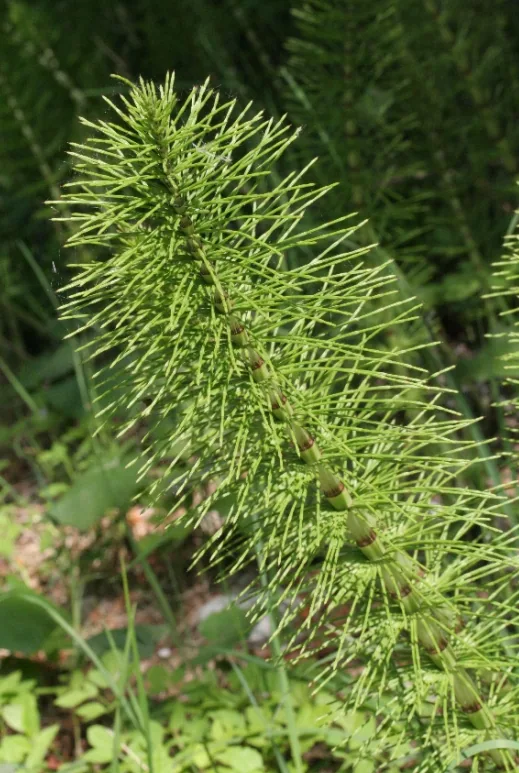
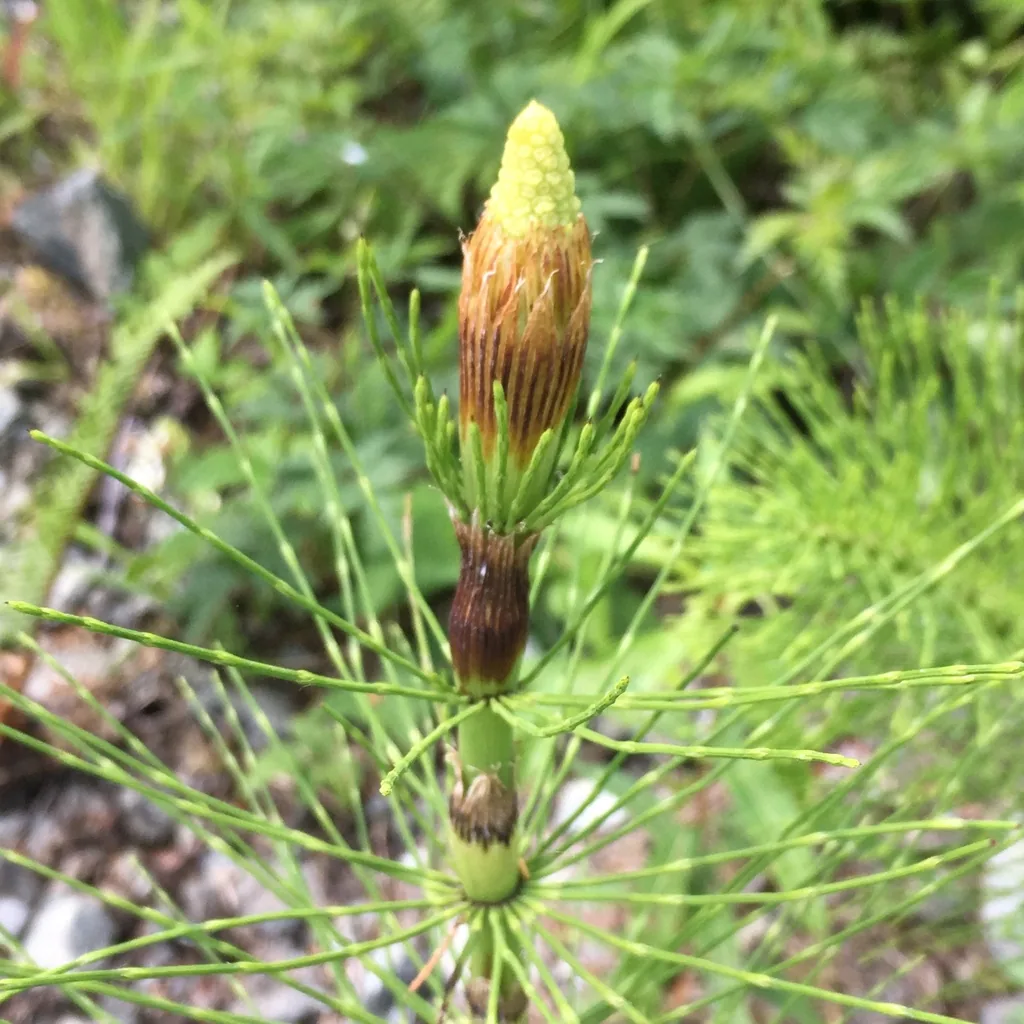
Giant horsetail is a striking plant that loves moist soil and grows up to 4 ft tall. Give it a spot that stays damp, in soil with a pH of 6.5–7.5, and it will feel right at home. It even has a place at the table: its fertile spring shoots are edible, and Native North Americans once ate the very young green shoots.
- Water
Likes soil that stays moist
What the sources say (1)
Watering: Prefers a moist soil
Prefers a moist soil with a pH between 6.5 and 7.5
— Equisetum telmateia - Useful Temperate Plants [5] - Soil
Neutral soil, pH 6.5–7.5
- Harvest
Fertile spring shoots are edible; green shoots too, raw or cooked, but only when very young
- Size
Grows up to 4 ft tall
What the sources say (1)
Mature height: 120 cm (1.2 m)
E. telmateia: hasta de 1,2 m, tallos con 14-30 surcos poco visibles, los estériles de color marfil y manchas negras, con muchas ramas cortas de 3-6 cm, los fértiles simples y color marrón
—  [4]
Overview
Great horsetail is described in a university botanical garden as generally an invasive, aggressive weed. [1] It lives near canals and torrents in very shady, moist places. [3] It grows at spring lines where lime-rich water emerges, in wet woodlands and marshes. [2] It prefers moist soil with a pH between 6.5 and 7.5 and has a deep, penetrating root system that can be invasive. [5]
This record is incomplete: the sources we read do not cover every field yet.
Not yet covered by our sources: Light, Hardiness, coldest zone, Hardiness, warmest zone, Propagation
Great Horsetail care
How to water Great Horsetail
Prefers a moist soil
What the sources say (1)
Prefers a moist soil with a pH between 6.5 and 7.5How much light Great Horsetail needs
Not stated in the sources we read.
How much cold Great Horsetail can take
Hardiness, coldest zone
Not stated in the sources we read.
Hardiness, warmest zone
Not stated in the sources we read.
Best soil for Great Horsetail
Soil pH, minimum
6.5
What the sources say (1)
Prefers a moist soil with a pH between 6.5 and 7.5Soil pH, maximum
7.5
What the sources say (1)
Prefers a moist soil with a pH between 6.5 and 7.5How to propagate Great Horsetail
Not stated in the sources we read.
How to grow Great Horsetail
The plant
Family
Equisetaceae
What the sources say (1)
Family:
EQUISETACEAE
Genus:
Equisetum
Catalan common name:
Coa de cavall. Coa de rossí.Mature height
120 cm (1.2 m)
What the sources say (1)
E. telmateia: hasta de 1,2 m, tallos con 14-30 surcos poco visibles, los estériles de color marfil y manchas negras, con muchas ramas cortas de 3-6 cm, los fértiles simples y color marrónRemedies
Each remedy shows what official sources say about it; traditional remedies without an official source are marked as such. Harmful ones are listed so you know to avoid them.
Getting rid of it
horsetail infestation
hand-pulling Works
How: Completely remove the tops about 2 weeks after each emergence; continue pulling every year as horsetail re-sprouts.
Completely remove the tops about 2 weeks after each emergence. This will eventually weaken the plants.
— solvepestproblems.oregonstate.edu [7] What the evidence says Reduce horsetail infestation by hand-pulling. - Completely remove the tops about 2 weeks after each emergence. This will eventually weaken the plants.
— solvepestproblems.oregonstate.edu [7] covering with plastic or weed barrier fabric Partly works
How: Cover with inorganic mulches such as plastic, commercial weed barrier fabrics or roofing paper.
Cover with inorganic mulches such as plastic, commercial “weed barrier” fabrics or roofing paper. The horsetail cannot penetrate it, and the mulch will block sunlight.
— solvepestproblems.oregonstate.edu [7] What the evidence says Horsetail may re-sprout even after many months of being covered. These sprouts reportedly emerged after over a year of coverage with black plastic.
— solvepestproblems.oregonstate.edu [7] organic mulch (bark, wood chips) Not proven
How: Loose organic mulches such as bark or wood chips.
Organic mulches don't work. Horsetail will grow through even deep layers of loose organic mulches like bark or wood chips.
— solvepestproblems.oregonstate.edu [7] What the evidence says Organic mulches don't work. Horsetail will grow through even deep layers of loose organic mulches like bark or wood chips.
— solvepestproblems.oregonstate.edu [7] reducing irrigation and improving drainage Partly works
How: Reduce irrigation and promote drainage; inspect and fix water leaks.
Horsetail growth is reduced when water is limited. Inspect and fix water leaks. To minimize horsetail in your landscape or lawn reduce irrigation and promote drainage.
— solvepestproblems.oregonstate.edu [7] What the evidence says Horsetail growth is reduced when water is limited. Inspect and fix water leaks. To minimize horsetail in your landscape or lawn reduce irrigation and promote drainage.
— solvepestproblems.oregonstate.edu [7]
Edibility
Reported by the source, quoted verbatim. Do not eat a plant on the basis of this page alone: identification mistakes can be dangerous.
Similar plants
- Horsetail Equisetum arvense
- Scouring Rush Equisetum praealtum
- Dwarf Horsetail Equisetum scirpoides
- Abraham Trachystemon orientalis
- Acacia longifolia Acacia longifolia
- African Blue Lily Agapanthus praecox
- African lily Dietes bicolor
- African lovegrass Eragrostis curvula
Sources
Every value above is quoted from these documents. Links lead to the original publisher.
- Horsetail: Not just an invasive weed – UC Botanical Garden · botanicalgarden.berkeley.edu, consulted
- Great Horsetail | NatureSpot · naturespot.org, consulted
- Equisetum telmateia Ehrh. - Herbari Virtual del Mediterrani Occidental · herbarivirtual.uib.cat, consulted
-  · miteco.gob.es, consulted
- Equisetum telmateia - Useful Temperate Plants · temperate.theferns.info, consulted
- Search for species - Riesen-Schachtelhalm (Equisetum telmateia Ehrh.) · i-flora.com, consulted
- solvepestproblems.oregonstate.edu · solvepestproblems.oregonstate.edu
Written by Emilio Marruso · last checked