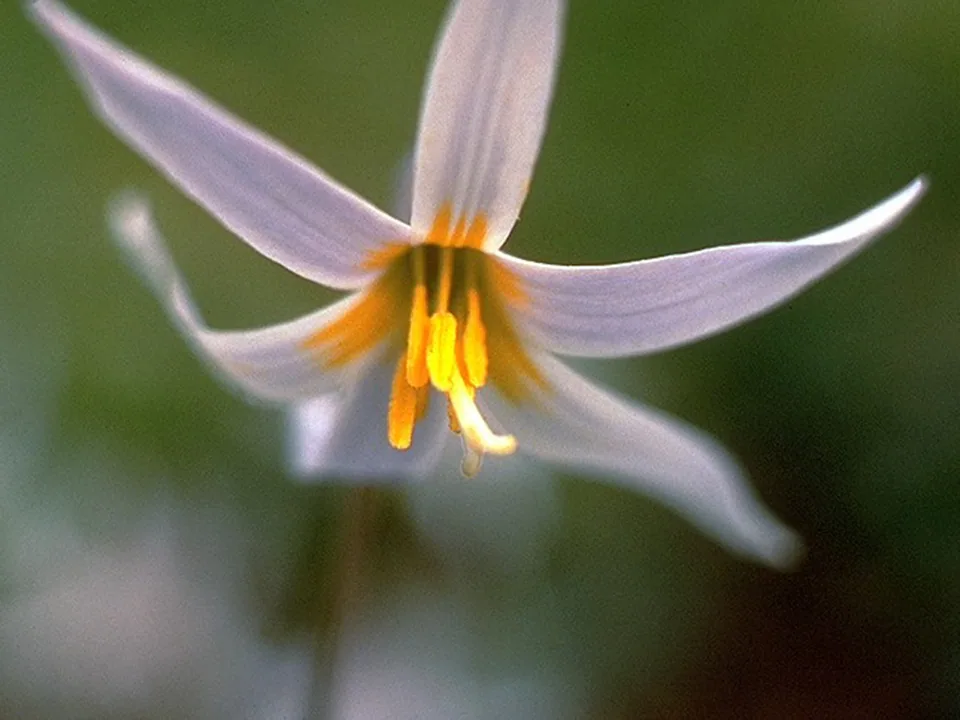
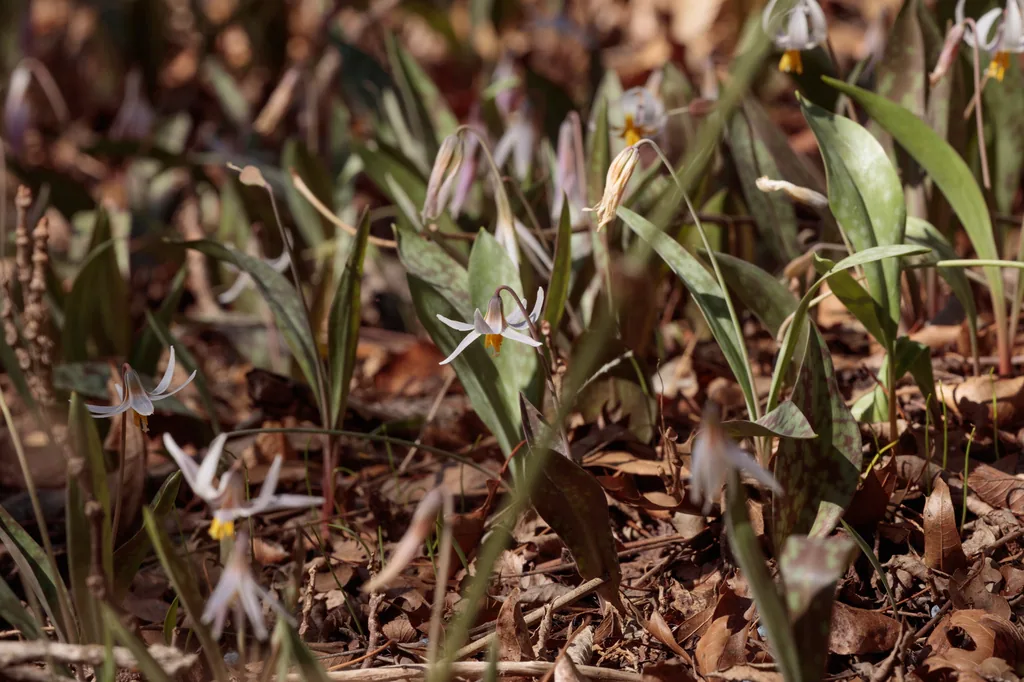

How to Grow and Care for White fawnlily
Erythronium albidum
Written by Emilio Marruso · last checked
At a glance
White trout lily is made for shady corners: it loves part shade to full shade and soil that stays moist or even wet. Plant it in late summer while it is dormant, and you'll also have a plant you can eat, since the bulb, young leaves and flowers can be eaten raw or cooked.
- Sun
Part shade to full shade
What the sources say (3)
Light: Part shade to shade
According to Chicago Botanic Garden: Exposure: Partial Shade
— Erythronium albidum | Chicago Botanic Garden [4] According to Horticulture magazine: Exposure: Shade
— White Trout Lily, a Magical Wildflower for Spring - Horticulture [7] Habitat: | part shade, shade; moist woods
— Erythronium albidum (White Trout Lily): Minnesota Wildflowers [1] - Water
Keep the soil moist, even wet
What the sources say (1)
Watering: Moist to wet soil
Site it in the shade of trees, in moist to wet soil.
— White Trout Lily, a Magical Wildflower for Spring - Horticulture [7] - Planting
Plant in late summer, while it is dormant
What the sources say (1)
Planting: Late summer, when dormant
plant them out into their permanent positions when they are dormant in late summer
— Erythronium albidum - Useful Temperate Plants [2] - Harvest
Bulb, young leaves and flowers can be eaten raw or cooked
- Propagation
From seed, or divide mature clumps in summer as the leaves die down
What the sources say (2)
Propagation: Seed; division of mature stands (summer, as the leaves die down)
Individual plants can also be divided from a mature stand and replanted.
— White Trout Lily, a Magical Wildflower for Spring - Horticulture [7] Division in summer as the leaves die down.
— Erythronium albidum - Useful Temperate Plants [2] - Sowing
Sow seed in a cold frame as soon as it is ripe; stored seed in early spring
What the sources say (2)
Sowing: As soon as the seed is ripe (cold frame); stored seed as early in spring as possible (cold frame)
Seed - best sown as soon as it is ripe in a shady position in a cold frame.
— Erythronium albidum - Useful Temperate Plants [2] Sow as early in spring as possible in a cold frame.
— Erythronium albidum - Useful Temperate Plants [2]
Overview
White trout lily is a native spring ephemeral of moist woods that forms colonies and goes dormant by midsummer. [7][1] It is grown in shade, in moist to wet soil, from seed or corms. [7] Sources disagree on the lowest hardiness zone. [4]
This record is incomplete: the sources we read do not cover every field yet.
Not yet covered by our sources: Hardiness, coldest zone, Pruning
White fawnlily care
How to water White fawnlily
Moist to wet soil
What the sources say (1)
Site it in the shade of trees, in moist to wet soil.How much light White fawnlily needs
Part shade to shade
What each source says
According to Chicago Botanic Garden: Partial Shade
According to Horticulture magazine: Shade
What the sources say (3)
According to Chicago Botanic Garden: Exposure:
Partial ShadeAccording to Horticulture magazine: Exposure: ShadeHabitat: | part shade, shade; moist woodsHow much cold White fawnlily can take
Hardiness, coldest zone
The sources give different values depending on region, zone or growing conditions.
What each source says
According to Chicago Botanic Garden: 4 [winter low −34.4 to −28.9 °C (−30 to −20 °F)]
What the sources say (1)
According to Chicago Botanic Garden: Hardiness Zone:
4 - 8Hardiness, warmest zone
8 [winter low −12.2 to −6.7 °C (10 to 20 °F)]
What the sources say (1)
Hardiness Zone:
4 - 8How to propagate White fawnlily
Seed; division of mature stands (summer, as the leaves die down)
Remedies
The sources we checked give no remedies for this plant.
Calendar
Sowing
As soon as the seed is ripe (cold frame); stored seed as early in spring as possible (cold frame)
Planting
Late summer, when dormant
What the sources say (1)
plant them out into their permanent positions when they are dormant in late summerPruning
Not stated in the sources we read.
Months as given by the sources, which are mostly from the United States (northern hemisphere). In the southern hemisphere they shift by about six months.
Edibility
Reported by the source, quoted verbatim. Do not eat a plant on the basis of this page alone: identification mistakes can be dangerous.
Indicative values
Values from a secondary source, not checked word for word like the rest of this page. Use them as a starting point.
- Life cycle
- Herbaceous PerennialIndicative value, adapt it to your climate · Secondary source
- Mature height
- 15.2-30.5 cm (0.5-1 ft)Indicative value, adapt it to your climate · Secondary source
- Hours of sun
- 5-6 hoursIndicative value, adapt it to your climate · Secondary source
- Drought tolerant
- yesIndicative value, adapt it to your climate · Secondary source
- Soil pH
- 5.5-7Indicative value, adapt it to your climate · Secondary source
- Growth rate
- LowIndicative value, adapt it to your climate · Secondary source
- Pruning
- April, MayIndicative value, adapt it to your climate · Secondary source
Similar plants
- Dog's-tooth-violet Erythronium dens-canis
- Trout Lily Erythronium americanum
- Abies grandis Abies grandis
- Acanthus hungaricus Acanthus hungaricus
- Achlys triphylla Achlys triphylla
- Aconite Aconitum napellus
- Afghan Redbud Cercis griffithii
- African Blood Lily Scadoxus multiflorus
Sources
Every value above is quoted from these documents. Links lead to the original publisher.
- Erythronium albidum (White Trout Lily): Minnesota Wildflowers · minnesotawildflowers.info, consulted
- Erythronium albidum - Useful Temperate Plants · temperate.theferns.info, consulted
- Erythronium albidum page · missouriplants.com, consulted
- Erythronium albidum | Chicago Botanic Garden · chicagobotanic.org, consulted
- White Troutlily, Erythronium albidum Nutt. · friendsofeloisebutler.org, consulted
- fawn lily | Kansas Wildflowers · kswildflower.org, consulted
- White Trout Lily, a Magical Wildflower for Spring - Horticulture · hortmag.com, consulted
Written by Emilio Marruso · last checked