
How to Grow and Care for Hamamelis japonica
Hamamelis japonica
Written by Emilio Marruso · last checked
At a glance
Japanese witch hazel holds a small surprise for curious gardeners: its seeds are edible. The one problem to keep an eye on is powdery mildew, so look over the leaves now and then and you'll spot it early. It's a lovely chance to grow something a little out of the ordinary and enjoy getting to know it.
- Harvest
The seeds are edible
- Pests
Watch for powdery mildew
What the sources say (1)
Diseases: powdery mildew
The few issues that occasionally arise, such as powdery mildew and galls, are cosmetic and do not threaten the health of the plant
— All About Witch Hazels | Yard and Garden [3]
Overview
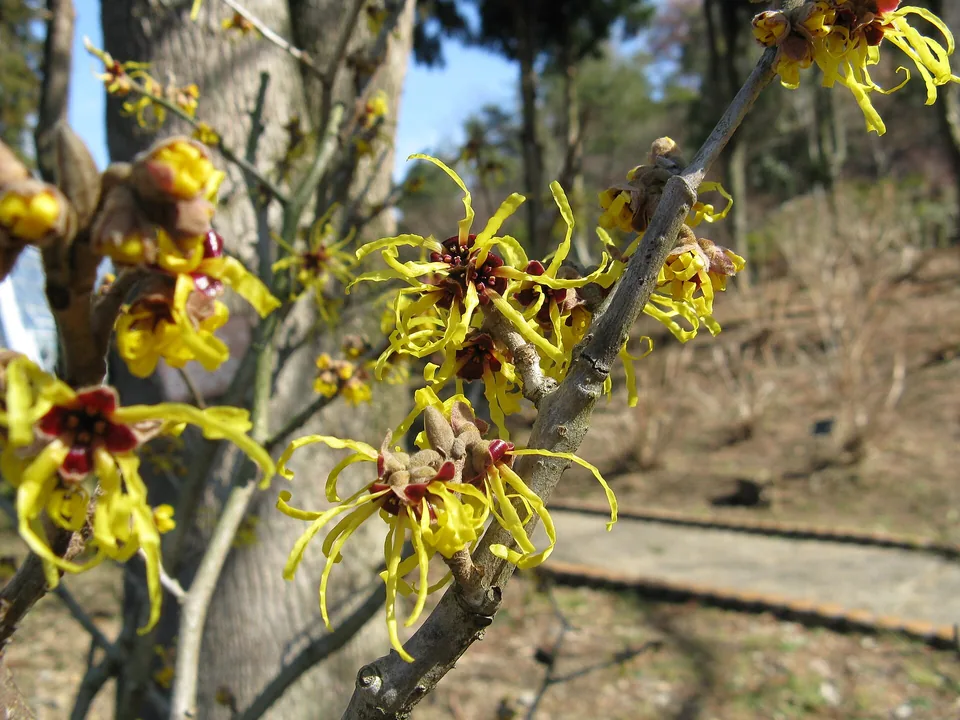
Japanese witch-hazel is a deciduous, spreading shrub or small tree native to Japan. [1] Slightly scented yellow flowers are borne in globose heads on leafless twigs in January and February. [1]
This record is incomplete: the sources we read do not cover every field yet.
Not yet covered by our sources: Watering, Light, Hardiness, coldest zone, Hardiness, warmest zone, Pruning, Propagation
Hamamelis japonica care
How to water Hamamelis japonica
Not stated in the sources we read.
How much light Hamamelis japonica needs
Not stated in the sources we read.
How much cold Hamamelis japonica can take
Hardiness, coldest zone
Not stated in the sources we read.
Hardiness, warmest zone
Not stated in the sources we read.
How to propagate Hamamelis japonica
Not stated in the sources we read.
How to grow Hamamelis japonica
Pests and diseases
Diseases
powdery mildew
What the sources say (1)
The few issues that occasionally arise, such as powdery mildew and galls, are cosmetic and do not threaten the health of the plantRemedies
The sources we checked give no remedies for this plant.
Calendar
Pruning
Not stated in the sources we read.
Months as given by the sources, which are mostly from the United States (northern hemisphere). In the southern hemisphere they shift by about six months.
Edibility
Reported by the source, quoted verbatim. Do not eat a plant on the basis of this page alone: identification mistakes can be dangerous.
It is also the active ingredient in many haemorrhoid medications. The seeds are edible.
[2]
Indicative values
Values from a secondary source, not checked word for word like the rest of this page. Use them as a starting point.
- Life cycle
- PerennialIndicative value, adapt it to your climate · Secondary source
- Mature height
- 304.8-457.2 cm (10-15 ft)Indicative value, adapt it to your climate · Secondary source
- Light
- Full sun, part shadeIndicative value, adapt it to your climate · Secondary source
- Hours of sun
- 4-6 hoursIndicative value, adapt it to your climate · Secondary source
- Watering
- AverageIndicative value, adapt it to your climate · Secondary source
- Drought tolerant
- yesIndicative value, adapt it to your climate · Secondary source
- Soil pH
- 5.5-6.5Indicative value, adapt it to your climate · Secondary source
- USDA hardiness zones
- 5-8 [winter low −28.9 to −6.7 °C (−20 to 20 °F)]Indicative value, adapt it to your climate · Secondary source
- Care level
- MediumIndicative value, adapt it to your climate · Secondary source
- Growth rate
- LowIndicative value, adapt it to your climate · Secondary source
- Pruning
- March, April, December, January, FebruaryIndicative value, adapt it to your climate · Secondary source
- Propagation
- Layering Propagation, Cutting, Grafting Propagation, Division, Seed PropagationIndicative value, adapt it to your climate · Secondary source
Similar plants
- Chinese Witchhazel Hamamelis mollis
- Ozark Witch Hazel Hamamelis vernalis
- Witch Hazel Hamamelis virginiana
- Aaron's Beard Hypericum calycinum
- Abies grandis Abies grandis
- Abraham Trachystemon orientalis
- Abyssinian banana Ensete ventricosum
- Acacia longifolia Acacia longifolia
Sources
Every value above is quoted from these documents. Links lead to the original publisher.
- Hamamelis japonica - Trees and Shrubs Online · treesandshrubsonline.org, consulted
- Denumire științifică: · gradina-botanica.unibuc.ro, consulted
- All About Witch Hazels | Yard and Garden · yardandgarden.extension.iastate.edu, consulted
- Witch-Hazels: Winter Flowers, Fall Foliage, and Lovely Form - Brooklyn Botanic Garden · bbg.org, consulted
Written by Emilio Marruso · last checked