
How to Grow and Care for Sweet-amber
Hypericum androsaemum
Written by Emilio Marruso · last checked
Toxic to: Cattle, People · Why
At a glance
This easygoing shrub is happy in full sun or partial shade, though it flowers better in sun. Keep the soil moist but never boggy; once settled in, it handles drought and even copes with dry, rocky ground. Plant it in late spring or early summer, after the last frosts, and cut it back hard each fall.
- Sun
Full sun to partial shade; it flowers better in sun
What the sources say (5)
Light: Full sun to partial shade
According to Useful Temperate Plants (Ken Fern): Succeeds in sun or semi-shade[ 1 Title RHS Dictionary of Plants plus Supplement. 1956
— Hypericum androsaemum - Useful Temperate Plants [1] According to Gardening Know How: It prefers shady to semi-shaded locations that mimic its natural positioning at the base of woods but can also thrive in sun.
— Tutsan Plant Info - Learn About The Tutsan St. John's Wort Shrub | Gardening Know How [5] likes full sun to part shade and dry, rocky soils; does better in cooler climates than southwest Missouri
— Tutsan St. John's Wort [6] Succeeds in sun or semi-shade[ 1 Title RHS Dictionary of Plants plus Supplement. 1956
— Hypericum androsaemum - Useful Temperate Plants [1] It prefers shady to semi-shaded locations that mimic its natural positioning at the base of woods but can also thrive in sun.
— Tutsan Plant Info - Learn About The Tutsan St. John's Wort Shrub | Gardening Know How [5] - Water
Keep moist but not soggy; once settled in, it handles drought
What the sources say (2)
Watering: Keep moist but not boggy; drought tolerant once established
Keep this species moist but not boggy. Rust is a common issue, but it is relatively unbothered by insects and other disease.
— Tutsan Plant Info - Learn About The Tutsan St. John's Wort Shrub | Gardening Know How [5] Succeeds in dry shade and is drought tolerant when established[ 190 Title The Dry Garden.
— Hypericum androsaemum - Useful Temperate Plants [1] - Cold
In cold areas, put 3 inches (8 cm) of mulch around it after cutting back to protect the roots
- Soil
Soil that drains well but holds some moisture; copes with dry, rocky ground
What the sources say (2)
Watering notes: Well-drained but moisture-retentive soil; tolerates dry, rocky soils
Easily grown in any reasonably good well-drained but moisture retentive soil[ 1 Title RHS Dictionary of Plants plus Supplement. 1956
— Hypericum androsaemum - Useful Temperate Plants [1] likes full sun to part shade and dry, rocky soils; does better in cooler climates than southwest Missouri
— Tutsan St. John's Wort [6] - Spacing
3 ft between plants
What the sources say (1)
Spacing: 90 cm (90cm)
Plants are best spaced about 90cm apart each way[ 208 Title Plants for Ground Cover
— Hypericum androsaemum - Useful Temperate Plants [1] - Planting
Late spring or early summer, after the last frosts
What the sources say (1)
Planting: Late spring or early summer, after the last expected frosts
Plant them out into their permanent positions in late spring or early summer, after the last expected frosts.
— Hypericum androsaemum - Useful Temperate Plants [1] - Pruning
Cut it back hard in fall
What the sources say (1)
Pruning: Fall (cut back hard)
Cut the plant back hard in fall for better spring displays. In cold regions, apply a few inches (8 cm.) of mulch around cut plants to protect roots from freezes.
— Tutsan Plant Info - Learn About The Tutsan St. John's Wort Shrub | Gardening Know How [5] - Pests
Watch for rust on the leaves
- Propagation
From seed, summer cuttings, or by dividing old shrubs while they rest
What the sources say (3)
Propagation: Seed; half-ripe cuttings with a heel in mid summer; hardwood cuttings in summer; division of old suckering shrubs in the dormant season
Cuttings of half-ripe wood 10 - 12 cm with a heel, mid summer in a frame. Plant out in the following spring[ 200 Title
— Hypericum androsaemum - Useful Temperate Plants [1] Careful division of old suckering shrubs in the dormant season. Cite as: Temperate Plants Database, Ken Fern.
— Hypericum androsaemum - Useful Temperate Plants [1] It prefers shady to semi-shaded locations that mimic its natural positioning at the base of woods but can also thrive in sun. Plant seeds in fall or take hardwood cuttings in summer.
— Tutsan Plant Info - Learn About The Tutsan St. John's Wort Shrub | Gardening Know How [5] - Safety
It tastes bad, so people rarely eat it; reports of harm to cattle are unclear
Overview
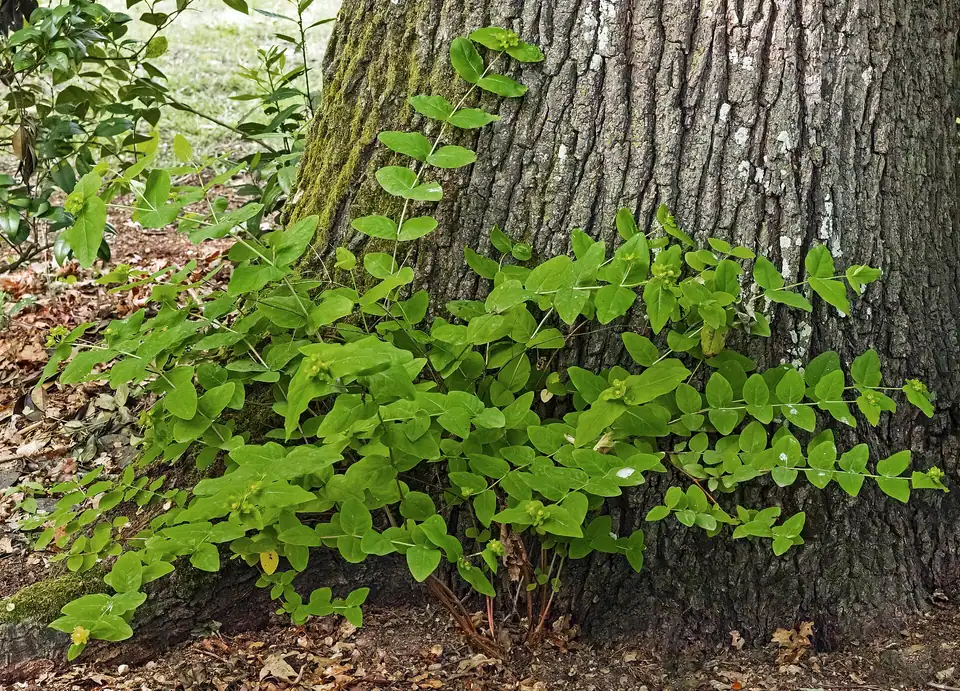
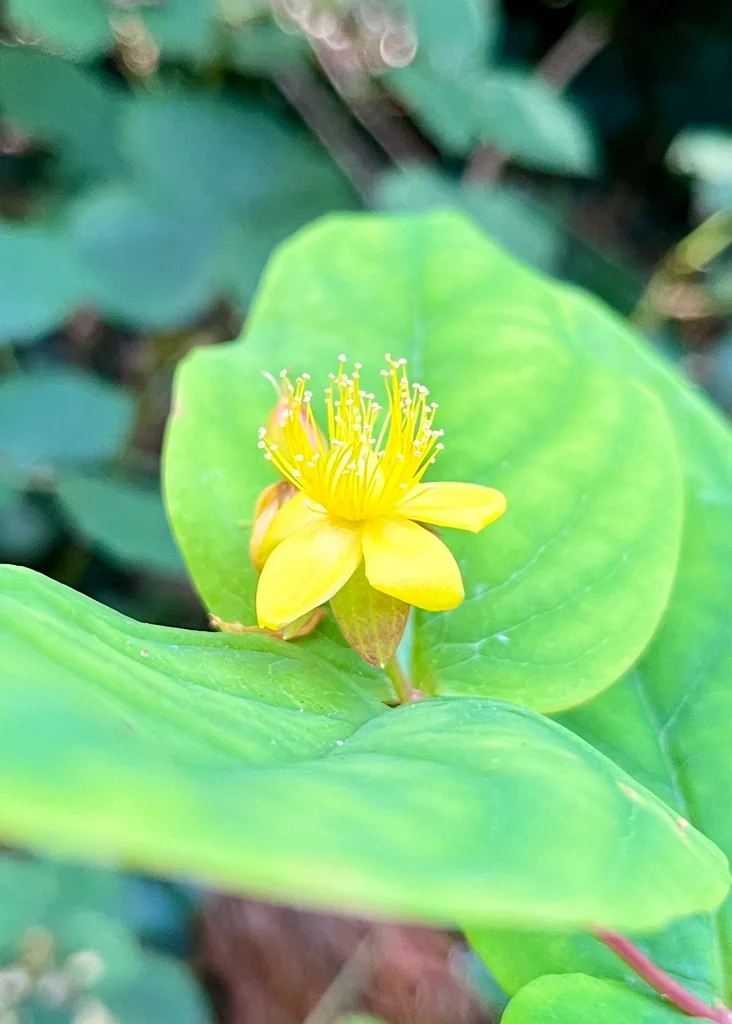
Hypericum androsaemum (tutsan) is a deciduous shrub of damp woods and hedges, native to western and southern Europe. [5][1] Its yellow flowers are followed by berry-like fruits that turn from red to black. [5] Outside its native range it has naturalised as a weed, for example in New Zealand, and is on the California Invasive Plant Council watch list. [8][2]
This record is incomplete: the sources we read do not cover every field yet.
Not yet covered by our sources: Hardiness, coldest zone, Hardiness, warmest zone
Sweet-amber care
How to water Sweet-amber
Watering
Keep moist but not boggy; drought tolerant once established
What the sources say (2)
Keep this species moist but not boggy. Rust is a common issue, but it is relatively unbothered by insects and other disease.Succeeds in dry shade and is drought tolerant when established[ 190 Title
The Dry Garden.Watering notes
Well-drained but moisture-retentive soil; tolerates dry, rocky soils
What the sources say (2)
Easily grown in any reasonably good well-drained but moisture retentive soil[ 1 Title
RHS Dictionary of Plants plus Supplement. 1956likes full sun to part shade and dry, rocky soils; does better in cooler climates
than southwest MissouriHow much light Sweet-amber needs
Full sun to partial shade
What each source says
According to Useful Temperate Plants (Ken Fern): Sun or semi-shade; flowers better in sun
According to Gardening Know How: Shade to semi-shade preferred; also thrives in sun
What the sources say (5)
According to Useful Temperate Plants (Ken Fern): Succeeds in sun or semi-shade[ 1 Title
RHS Dictionary of Plants plus Supplement. 1956According to Gardening Know How: It prefers shady to semi-shaded locations that mimic its natural positioning at the base of woods but can also thrive in sun.likes full sun to part shade and dry, rocky soils; does better in cooler climates
than southwest MissouriSucceeds in sun or semi-shade[ 1 Title
RHS Dictionary of Plants plus Supplement. 1956It prefers shady to semi-shaded locations that mimic its natural positioning at the base of woods but can also thrive in sun.How much cold Sweet-amber can take
Hardiness, coldest zone
Not stated in the sources we read.
Hardiness, warmest zone
Not stated in the sources we read.
Where to grow Sweet-amber
90 cm (90cm)
What the sources say (1)
Plants are best spaced about 90cm apart each way[ 208 Title
Plants for Ground CoverHow to propagate Sweet-amber
Seed; half-ripe cuttings with a heel in mid summer; hardwood cuttings in summer; division of old suckering shrubs in the dormant season
What the sources say (3)
Cuttings of half-ripe wood 10 - 12 cm with a heel, mid summer in a frame. Plant out in the following spring[ 200 TitleCareful division of old suckering shrubs in the dormant season.
Cite as: Temperate Plants Database, Ken Fern.It prefers shady to semi-shaded locations that mimic its natural positioning at the base of woods but can also thrive in sun. Plant seeds in fall or take hardwood cuttings in summer.How to grow Sweet-amber
The plant
Family
Clusiaceae (Guttiferae)
What the sources say (1)
Hypericum androsaemum L. (Clusiaceae [=Guttiferae]), novedad corológica para la provincia de Córdoba (Andalucía, España)Heat and drought
Heat
The sources give different values depending on region, zone or growing conditions.
What each source says
cultivar 'Picasso': Wilt and root rot can be a problem in hot, humid climates
What the sources say (1)
cultivar 'Picasso': Diseases, Insect Pests, and Other Plant Problems: Wilt and root rot can be a problem in hot and humid climates.Drought
The sources give different values depending on region, zone or growing conditions.
What each source says
cultivar 'Picasso': Drought-tolerant when established
What the sources say (1)
cultivar 'Picasso': The plant tolerates a wide range of pH and does well in sun or shade, but flowers better in a sunny position. It is also drought-tolerant when established.Sweet-amber pests and problems
Rust
Symptom: Rust disease
What the sources say (1)
Keep this species moist but not boggy. Rust is a common issue, but it is relatively unbothered by insects and other disease.
— Tutsan Plant Info - Learn About The Tutsan St. John's Wort Shrub | Gardening Know How [5] Winter cold
Symptom: Roots damaged by freezes after cutting back
What to do: Apply about 8 cm of mulch around cut plants in cold regions
What the sources say (1)
Cut the plant back hard in fall for better spring displays. In cold regions, apply a few inches (8 cm.) of mulch around cut plants to protect roots from freezes.
— Tutsan Plant Info - Learn About The Tutsan St. John's Wort Shrub | Gardening Know How [5]
Remedies
Each remedy shows what official sources say about it; traditional remedies without an official source are marked as such. Harmful ones are listed so you know to avoid them.
Treating the plant
frost damage to roots
mulch around cut plants Not verified
Traditional remedy, not verified by an official source.
How: In cold regions, after cutting the plant back hard in fall, apply a few inches (8 cm) of mulch around the cut plants to protect roots from freezes.
Getting rid of it
invasive spread
hand pulling or digging out roots Works
Any pulled, dug or cut plant material with semi-ripe or ripe fruit should be disposed of safely.
— weeds.org.au [12] How: Hand pull small plants, or dig out the entire plant including roots, all year round; dispose of plants with seeds at a refuse transfer station, burn, or bury deeply.
Physical removal - Hand pull small plants, or dig out entire plant including roots (all year round): Dispose of plants with seeds at a refuse transfer station, burn, or bury deeply.
— weedbusters.org.nz [10] What the evidence says Roots are shallow and small plants can be pulled out easily. Larger plants can be dug out, though ensure that all the roots are removed to prevent regrowth.
— weeds.dpi.nsw.gov.au [11] ploughing and cultivation Official source, not independently tested
How: In degraded pastures with dense infestations, plough large patches in autumn and cultivate again when new growth appears; sow a new pasture the following autumn.
In degraded pastures with dense infestations, plough large patches of tutsan in autumn and cultivate again when new growth appears. Sow a new pasture the following autumn.
— weeds.dpi.nsw.gov.au [11]
Is Sweet-amber toxic to pets?
Reported by the source, quoted verbatim. This is not medical or veterinary advice: if a person or an animal may have eaten this plant, contact a poison control centre or a veterinarian.
Animals
Dubious toxicity suggesting skin disease. Reported to have killed cattle in Auckland, but feeding trials produced no signs. May contain hypericin, but reports are contradictory.
[7]
People
The plant is not palatable and rarely ingested. ## Species affected Cattle and humans.
[7]
Calendar
Sowing
The sources give different values depending on region, zone or growing conditions.
What each source says
According to Useful Temperate Plants (Ken Fern): Spring, in a greenhouse
According to Gardening Know How: Fall
What the sources say (2)
According to Useful Temperate Plants (Ken Fern): Seed - sow spring in a greenhouse and only just cover the seed. The seed usually germinates in 1 - 3 months at 10°c.According to Gardening Know How: It prefers shady to semi-shaded locations that mimic its natural positioning at the base of woods but can also thrive in sun. Plant seeds in fall or take hardwood cuttings in summer.Planting
Late spring or early summer, after the last expected frosts
What the sources say (1)
Plant them out into their permanent positions in late spring or early summer, after the last expected frosts.Pruning
Fall (cut back hard)
What the sources say (1)
Cut the plant back hard in fall for better spring displays. In cold regions, apply a few inches (8 cm.) of mulch around cut plants to protect roots from freezes.Months as given by the sources, which are mostly from the United States (northern hemisphere). In the southern hemisphere they shift by about six months.
Similar plants
- Atlantic St. John's Wort Hypericum tenuifolium
- Bedstraw Hypericum galioides
- Bushy St. John's Wort Hypericum densiflorum
- Cedarglade St. Johnswort Hypericum frondosum
- Common St. John's-wort Hypericum perforatum
- Kalm's St. John's Wort Hypericum kalmianum
- Mount Olympus St. John's Wort Hypericum olympicum
- Shrubby St. John's Wort Hypericum prolificum
Sources
Every value above is quoted from these documents. Links lead to the original publisher.
- Hypericum androsaemum - Useful Temperate Plants · temperate.theferns.info, consulted
- Hypericum androsaemum Profile – California Invasive Plant Council · cal-ipc.org, consulted
- Hypericum androsaemum [L. ] · hypericum.myspecies.info, consulted
- J. López Tirado. Hypericum androsaemum en la provincia de Córdoba 325 · dialnet.unirioja.es, consulted
- Tutsan Plant Info - Learn About The Tutsan St. John's Wort Shrub | Gardening Know How · gardeningknowhow.com, consulted
- Tutsan St. John's Wort · ag.missouristate.edu, consulted
- tutsan · poisonousplants.massey.ac.nz, consulted
- Flora of New Zealand | Taxon Profile | Hypericum androsaemum · nzflora.info, consulted
- plants.ces.ncsu.edu · plants.ces.ncsu.edu
- weedbusters.org.nz · weedbusters.org.nz
- weeds.dpi.nsw.gov.au · weeds.dpi.nsw.gov.au
- weeds.org.au · weeds.org.au
Written by Emilio Marruso · last checked