
How to Grow and Care for Shrimpplant
Justicia brandegeeana
Written by Emilio Marruso · last checked
At a glance
The shrimp plant is an easygoing companion that grows happily in full sun or partial shade, in the garden, in a container or even indoors. Keep the soil evenly moist, watering when the surface feels dry, and once settled it handles short dry spells. A shaping in early spring and a trim when blooming slows keep it looking its best.
- Sun
Full sun to partial shade
What the sources say (3)
Light: Full sun to partial shade
While they will grow in full sun to partial shade, growing shrimp plants where they receive morning sun is ideal.
— Growing Shrimp Plants: How To Care For A Shrimp Plant | Gardening Know How [4] Light Preference | Full Sun | Water Preference | Moderate Water
— NParks | Justicia brandegeeana [1] Exposure: | Full sun, part shade | Soil pH: | 6.0-7.0
— How to Grow and Care for Shrimp Plants | Gardener’s Path [6] - Water
Water when the soil surface feels dry; mulch to keep moisture, but never let roots sit in water
What the sources say (6)
Watering: Evenly moist soil; water when the surface of the soil feels dry; established plants tolerate short periods of drought; moderate water preference
Like most members of the Acanthaceae family, shrimp plants prefer to sit in evenly-moist soils.
— How to Grow and Care for Shrimp Plants | Gardener’s Path [6] Mature plants can withstand short periods of drought, but will not tolerate saline soils.
— NParks | Justicia brandegeeana [1] Well rooted plants are fairly drought tolerant, but like most tropicals, they thrive in high humidity.
— Growing Shrimp Plants: How To Care For A Shrimp Plant | Gardening Know How [4] Light Preference | Full Sun | Water Preference | Moderate Water
— NParks | Justicia brandegeeana [1] Watering notes: Mulch to maintain soil moisture; does not tolerate wet feet
Mulch plants to help maintain soil moisture. It can be grown indoors if provided direct sunlight.
— NParks | Justicia brandegeeana [1] It does best in loamy or sandy soil that is well drained. It doesn't do well with wet feet.
— Growing Shrimp Plants: How To Care For A Shrimp Plant | Gardening Know How [4] - Soil
Slightly acidic to neutral soil, pH 6.0–7.0
- Spacing
1 to 5 ft between plants
What the sources say (1)
Spacing: 30.5-152.4 cm (1-5 ft)
Spacing: | 1-5 feet | Attracts: | Butterflies, hummingbirds | Planting Depth: | Depth of root system
— How to Grow and Care for Shrimp Plants | Gardener’s Path [6] - Pruning
Shape it in spring before growth starts; trim it when blooming begins to slow
What the sources say (2)
Pruning: Before the growing season begins in spring (shaping); when blooming begins to slow (trimming)
A more dedicated pruning session for shaping the plant how you like should take place before the growing season begins in spring.
— How to Grow and Care for Shrimp Plants | Gardener’s Path [6] The best time to trim and prune is when blooming begins to slow.
— Growing Shrimp Plants: How To Care For A Shrimp Plant | Gardening Know How [4] - Pests
Caterpillars outdoors; whiteflies and spider mites indoors
- Propagation
Divide clumps, root stem cuttings or sow seed
What the sources say (3)
Propagation: Division of clumps; stem cuttings; seed
Division of clumps is the best method for outdoor plantings.
— Growing Shrimp Plants: How To Care For A Shrimp Plant | Gardening Know How [4] Cuttings are the easiest method of shrimp plant propagation.
— Growing Shrimp Plants: How To Care For A Shrimp Plant | Gardening Know How [4] Diseases | caterpillars, whiteflies, spider mites | Propagation Method | Stem Cutting, Division
— NParks | Justicia brandegeeana [1] - Containers
Grows well in containers and indoors too
What the sources say (2)
In containers: Yes
planting shrimp plant in pots can give you the same tropical effect as your southern neighbors
— Growing Shrimp Plants: How To Care For A Shrimp Plant | Gardening Know How [4] Indoors: Yes
It can be grown indoors if provided direct sunlight.
— NParks | Justicia brandegeeana [1]
Overview
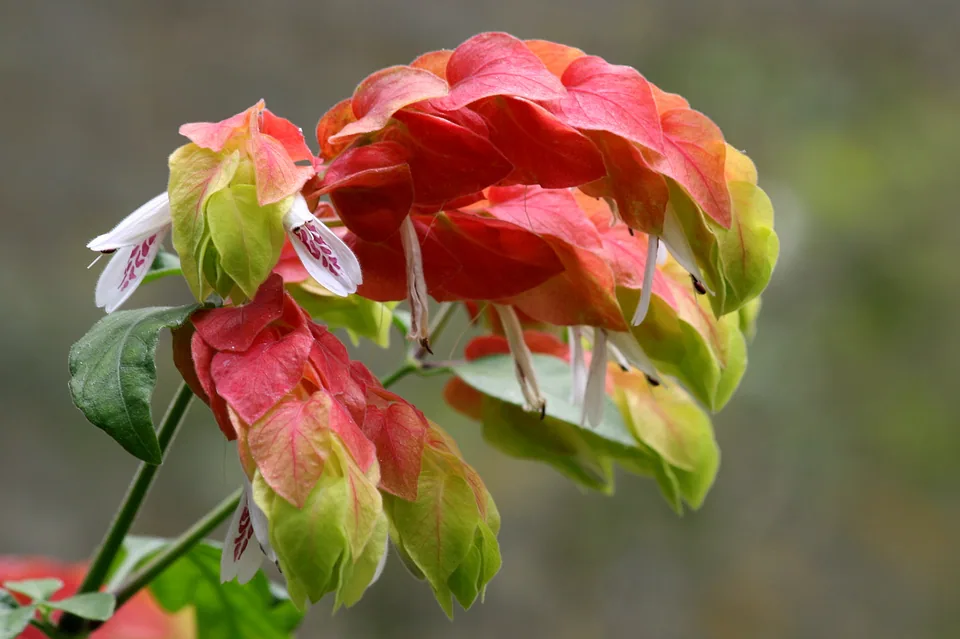
Shrimp plant is an evergreen ornamental shrub grown for its long-lasting colourful bracts. [1] It grows in full sun to partial shade in well-drained soil and can be grown in pots or indoors. [4][1]
Shrimpplant care
How to water Shrimpplant
Watering
Evenly moist soil; water when the surface of the soil feels dry; established plants tolerate short periods of drought; moderate water preference
What the sources say (4)
Like most members of the Acanthaceae family, shrimp plants prefer to sit in evenly-moist soils.Mature plants can withstand short periods of drought, but will not tolerate saline soils.Well rooted plants are fairly drought tolerant, but like most tropicals, they thrive in high humidity.Light Preference
| Full Sun
| Water Preference
| Moderate WaterWatering notes
Mulch to maintain soil moisture; does not tolerate wet feet
What the sources say (2)
Mulch plants to help maintain soil moisture. It can be grown indoors if provided direct sunlight.It does best in loamy or sandy soil that is well drained. It doesn't do well with wet feet.How much light Shrimpplant needs
Full sun to partial shade
What the sources say (3)
While they will grow in full sun to partial shade, growing shrimp plants where they receive morning sun is ideal.Light Preference
| Full Sun
| Water Preference
| Moderate WaterExposure: | Full sun, part shade | Soil pH: | 6.0-7.0How much cold Shrimpplant can take
Hardiness, coldest zone
The sources give different values depending on region, zone or growing conditions.
What each source says
According to Gardening Know How: 8 [winter low −12.2 to −6.7 °C (10 to 20 °F)]
According to Gardener's Path: 9 [winter low −6.7 to −1.1 °C (20 to 30 °F)]
What the sources say (2)
According to Gardening Know How: in USDA plant hardiness zones 8-11 growing shrimp plants in gardensAccording to Gardener's Path: Hardy in USDA Zones 9 to 11, shrimp plantsHardiness, warmest zone
11 [winter low 4.4 to 10 °C (40 to 50 °F)]
Best soil for Shrimpplant
Soil pH, minimum
6.0
What the sources say (1)
well-draining and fertile, with a pH of 6.0 to 7.0.Soil pH, maximum
7.0
What the sources say (1)
well-draining and fertile, with a pH of 6.0 to 7.0.Where to grow Shrimpplant
Indoors
Yes
What the sources say (1)
It can be grown indoors if provided direct sunlight.In containers
Yes
What the sources say (1)
planting shrimp plant in pots can give you the same tropical effect as your southern neighborsSpacing
30.5-152.4 cm (1-5 ft)
What the sources say (1)
Spacing: | 1-5 feet | Attracts: | Butterflies, hummingbirds
| Planting Depth: | Depth of root systemHow to propagate Shrimpplant
Division of clumps; stem cuttings; seed
What the sources say (3)
Division of clumps is the best method for outdoor plantings.Cuttings are the easiest method of shrimp plant propagation.Diseases
| caterpillars, whiteflies, spider mites
| Propagation Method
| Stem Cutting, DivisionHow to grow Shrimpplant
The plant
Family
Acanthaceae
What the sources say (1)
Family
ACANTHACEAE
Genus
Justicia
Species
Justicia brandegeeana Wassh. & L.B.Sm.Shrimpplant pests and problems
Caterpillars, whiteflies and spider mites
Symptom: Prone to attack by caterpillars outdoors; whiteflies and spider mites may be a problem indoors
What the sources say (1)
This species is prone to attack by caterpillars when grown outdoors, while whiteflies and spider mites may be a problem when plants are grown indoors.
— NParks | Justicia brandegeeana [1]
Remedies
Each remedy shows what official sources say about it; traditional remedies without an official source are marked as such. Harmful ones are listed so you know to avoid them.
Treating the plant
spider mites
strong water spray Works
How: Strong sprays of water can physically knock the pests off of surfaces.
Strong sprays of water can physically knock the pests off of surfaces, while applications of horticultural oil or insecticidal soap will actually smother them.
— How to Grow and Care for Shrimp Plants | Gardener’s Path [6] What the evidence says If plants are infested, apply a water spray or mist to the undersides of leaves at least once a day.
— ipm.ucanr.edu [7] horticultural oil Not verified
Traditional remedy, not verified by an official source.
How: applications of horticultural oil or insecticidal soap will actually smother them
insecticidal soap Works
How: applications of horticultural oil or insecticidal soap will actually smother them
Strong sprays of water can physically knock the pests off of surfaces, while applications of horticultural oil or insecticidal soap will actually smother them.
— How to Grow and Care for Shrimp Plants | Gardener’s Path [6] What the evidence says If an insecticide is needed, use an insecticidal oil or insecticidal soap (or a combination of the two). Completely cover the undersides of leaves.
— ipm.ucanr.edu [7]
whiteflies
yellow sticky traps Not verified
Traditional remedy, not verified by an official source.
How: Upon their detection, whiteflies can be caught with yellow sticky traps, repelled with reflective mulch, or consumed by beneficial insects such as ladybugs, lacewings, and parasitic wasps
root rot
reducing irrigation and improving drainage Not verified
Traditional remedy, not verified by an official source.
How: When root rot first becomes apparent, it’s essential to reduce irrigation and/or improve drainage, whichever is necessary.
leaf spot
pruning and destroying heavily spotted leaves Not verified
Traditional remedy, not verified by an official source.
How: Lightly spotted leaves can be left alone, while heavily spotted ones should be pruned and destroyed promptly.
Calendar
Pruning
Before the growing season begins in spring (shaping); when blooming begins to slow (trimming)
What the sources say (2)
A more dedicated pruning session for shaping the plant how you like should take place before the growing season begins in spring.The best time to trim and prune is when blooming begins to slow.Months as given by the sources, which are mostly from the United States (northern hemisphere). In the southern hemisphere they shift by about six months.
Indicative values
Values from a secondary source, not checked word for word like the rest of this page. Use them as a starting point.
- Life cycle
- PerennialIndicative value, adapt it to your climate · Secondary source
- Mature height
- 30.5-91.4 cm (1-3 ft)Indicative value, adapt it to your climate · Secondary source
- Hours of sun
- 4-6 hoursIndicative value, adapt it to your climate · Secondary source
- Care level
- MediumIndicative value, adapt it to your climate · Secondary source
- Growth rate
- LowIndicative value, adapt it to your climate · Secondary source
Similar plants
- Justicia adhatoda Justicia adhatoda
- American Water-willow Dianthera americana
- Bear's Breeches Acanthus mollis
- Bear's Breeches Acanthus spinosus
- Bengal clock vine Thunbergia grandiflora
- Black-eyed Susan Vine Thunbergia alata
- Dicliptera Dicliptera squarrosa
- Fringe-Leaf Wild Petunia Ruellia humilis
Sources
Every value above is quoted from these documents. Links lead to the original publisher.
- NParks | Justicia brandegeeana · nparks.gov.sg, consulted
- Justicia brandegeeana - Botany Brisbane · botanybrisbane.com, consulted
- Justicia brandegeeana / [Species detail] / Plant Atlas · florida.plantatlas.usf.edu, consulted
- Growing Shrimp Plants: How To Care For A Shrimp Plant | Gardening Know How · gardeningknowhow.com, consulted
- Justicia brandegeeana - Monaco Nature Encyclopedia · monaconatureencyclopedia.com, consulted
- How to Grow and Care for Shrimp Plants | Gardener’s Path · gardenerspath.com, consulted
- ipm.ucanr.edu · ipm.ucanr.edu
Written by Emilio Marruso · last checked