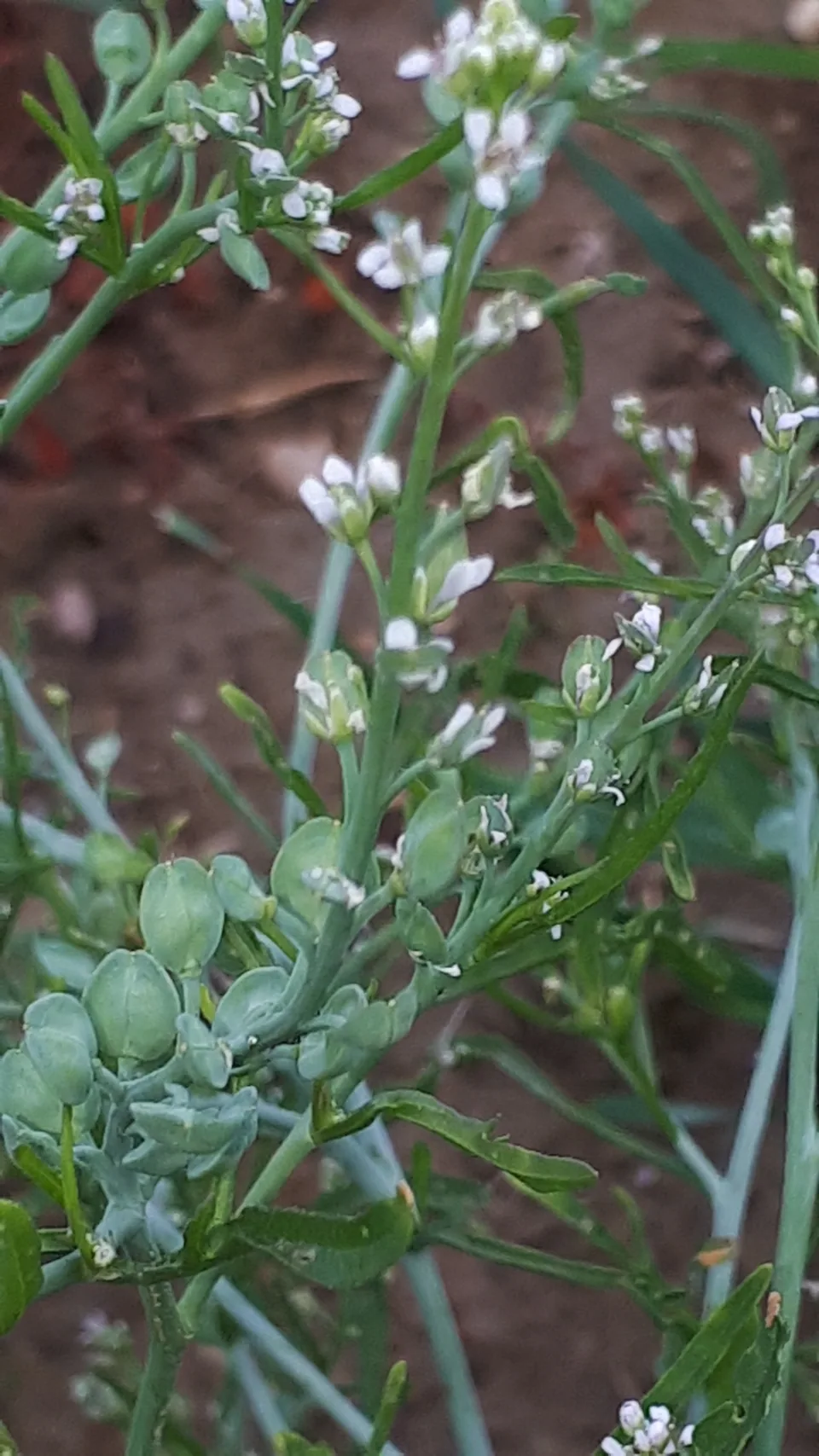
How to Grow and Care for Gardencress pepperweed
Lepidium sativum
Written by Emilio Marruso · last checked
Toxic to: People · Why
At a glance
Garden cress is an easy annual you grow from seed, even indoors or in a container. Every part of the plant is edible, seeds included, and the young leaves are lovely raw or cooked. Give it soil that stays evenly moist, never letting the roots dry out, and you'll have fresh greens close at hand.
- Water
Keep the soil evenly moist; never let the roots dry out
What the sources say (2)
Watering: Keep the soil evenly moist; do not let the roots dry out
Garden cress plant care is relatively easy as long as the soil is kept evenly moist.
— Garden Cress Vegetables - Learn To Grow And Care For Garden Cress | Gardening Know How [7] Avoid letting the roots dry out and always keep the soil rich by adding aged compost or fertilizer.
— How to Grow Cress in your Garden | Gardeners HQ Growing Guide [6] - Soil
Slightly acidic soil, pH 6.0–6.8
- Harvest
The whole plant is edible, seeds too; eat the young leaves raw or cooked
- Pests
Flea beetles: grow it under a cover at first, then remove it when the weather warms
- Watch out
It often escapes from the garden and becomes a weed
- Propagation
An annual you grow from seed
What the sources say (2)
Propagation: Seed
Seed plant garden cress by randomly scattering or placing them in rows.
— Garden Cress Vegetables - Learn To Grow And Care For Garden Cress | Gardening Know How [7] Life cycle: annual
The native range of this species is Europe to Central Asia and Himalaya, Arabian Peninsula. It is an annual and grows primarily in the temperate biome.
— Lepidium sativum L. | Plants of the World Online | Kew Science [1] - Containers
Grows in containers and indoors too
What the sources say (2)
In containers: Yes
It can be grown in containers, making it perfect for small spaces or windowsill gardens.
— How to Grow Cress in your Garden | Gardeners HQ Growing Guide [6] Indoors: Yes
Cress ( Lepidium sativum ) is an easy and quick crop to grow indoors at any time of year.
— How To Grow Cress | BBC Gardeners World Magazine [5] - Safety
No known hazards
Overview
Garden cress is a fast-growing edible herb related to mustard and watercress. [6] It can be grown indoors at any time of year and in containers. [5][6] It often escapes from cultivation and becomes a weed. [2]
This record is incomplete: the sources we read do not cover every field yet.
Not yet covered by our sources: Sowing / Planting, Harvest
Gardencress pepperweed care
How to water Gardencress pepperweed
Keep the soil evenly moist; do not let the roots dry out
What the sources say (2)
Garden cress plant care is relatively easy as long as the soil is kept evenly moist.Avoid letting the roots dry out and always keep the soil rich by adding aged compost or fertilizer.How much light Gardencress pepperweed needs
The sources give different values depending on region, zone or growing conditions.
What each source says
According to Horticulture Magazine: Cool and shady spot
According to Gardening Know How: Full sun
According to Gardener's HQ: Partial shade to full sun
According to Harvest to Table: Shade or semi-shade
What the sources say (4)
According to Horticulture Magazine: If you’ve decided to grow outside, cress likes a cool and shady spot.According to Gardening Know How: Garden cress requires organic-rich soil and full sun in order to thrive.According to Gardener's HQ: Cress prefers a moist well-drained soil, and can grow in partial shade to full sun.According to Harvest to Table: Plant cress in the shade or semi-shade.Best soil for Gardencress pepperweed
Soil pH, minimum
6.0
Where to grow Gardencress pepperweed
Indoors
Yes
What the sources say (1)
Cress ( Lepidium sativum ) is an easy and quick crop to grow indoors at any time of year.In containers
Yes
What the sources say (1)
It can be grown in containers, making it perfect for small spaces or windowsill gardens.Spacing
The sources give different values depending on region, zone or growing conditions.
What each source says
According to Gardening Know How: 20.5-30.5 cm (8-12 in)
According to Horticulture Magazine: A couple of centimetres
What the sources say (2)
According to Gardening Know How: it is best to thin them 8-12 inches (20.5 to 30.5 cm.) apartAccording to Horticulture Magazine: you should thin them out, leaving the strongest plants a couple of centimetres from each otherHow to propagate Gardencress pepperweed
Seed
What the sources say (1)
Seed plant garden cress by randomly scattering or placing them in rows.How to grow Gardencress pepperweed
The plant
Life cycle
annual
What the sources say (1)
The native range of this species is Europe to Central Asia and Himalaya, Arabian Peninsula. It is an annual and grows primarily in the temperate biome.Family
Brassicaceae
What the sources say (1)
Brassicaceae
Lepidium
## Lepidium sativum L.Gardencress pepperweed pests and problems
Flea beetles
Symptom: Flea beetles can affect garden cress.
What to do: Grow under cover first, then remove the cover when the weather warms.
What the sources say (1)
Sometimes Flea beetles can affect garden cress, these can be prevented by initially growing cress under cover and then removing the cover when the weather warms up.
— How to Grow Cress in your Garden | Gardeners HQ Growing Guide [6]
Remedies
Each remedy shows what official sources say about it; traditional remedies without an official source are marked as such. Harmful ones are listed so you know to avoid them.
Treating the plant
flea beetles
row covers Works
If you decide to use row covers, be sure to set them up just before the crop emerges or immediately after transplanting to prevent flea beetles from getting in.
— hort.extension.wisc.edu [9] How: Cover the plants with row covers.
If Flea Beetles or other pests are bothering your plants try using [row covers
— smartgardener.com [8] What the evidence says When growing susceptible crops, floating row covers can prevent adults from feeding on leaves and laying eggs around plants.
— hort.extension.wisc.edu [9]
Is Gardencress pepperweed poisonous?
Reported by the source, quoted verbatim. This is not medical or veterinary advice: if a person or an animal may have eaten this plant, contact a poison control centre or a veterinarian.
Lepidium sativum often escapes from cultivation and becomes a weed. ## Known Hazards None known
[2]
Calendar
Sowing
The sources give different values depending on region, zone or growing conditions.
What each source says
According to Harvest to Table: Early spring and again mid to late summer
What the sources say (1)
According to Harvest to Table: Sow garden cress in early spring and again in mid to late summer for a fall harvest.Planting
Not stated in the sources we read.
Harvest
Not stated in the sources we read.
Months as given by the sources, which are mostly from the United States (northern hemisphere). In the southern hemisphere they shift by about six months.
Edibility
Reported by the source, quoted verbatim. Do not eat a plant on the basis of this page alone: identification mistakes can be dangerous.
Similar plants
- Broadleaved pepperweed Lepidium latifolium
- American Yellow Rocket Barbarea orthoceras
- Bittercress Cardamine hirsuta
- Black Mustard Brassica nigra
- Brown Mustard Brassica juncea
- Cabbage Brassica oleracea
- Crested wartycabbage Bunias erucago
- Cultivated radish Raphanus sativus
Sources
Every value above is quoted from these documents. Links lead to the original publisher.
- Lepidium sativum L. | Plants of the World Online | Kew Science · powo.science.kew.org, consulted
- Lepidium sativum - Useful Temperate Plants · temperate.theferns.info, consulted
- How To Grow Cress - Perfect For Children's Activities Or A Windowsill Salad Crop | Horticulture.co.uk · horticulture.co.uk, consulted
- How to Plant, Grow, and Harvest Cress - Harvest to Table · harvesttotable.com, consulted
- How To Grow Cress | BBC Gardeners World Magazine · gardenersworld.com, consulted
- How to Grow Cress in your Garden | Gardeners HQ Growing Guide · gardenershq.com, consulted
- Garden Cress Vegetables - Learn To Grow And Care For Garden Cress | Gardening Know How · gardeningknowhow.com, consulted
- smartgardener.com · smartgardener.com
- hort.extension.wisc.edu · hort.extension.wisc.edu
Written by Emilio Marruso · last checked