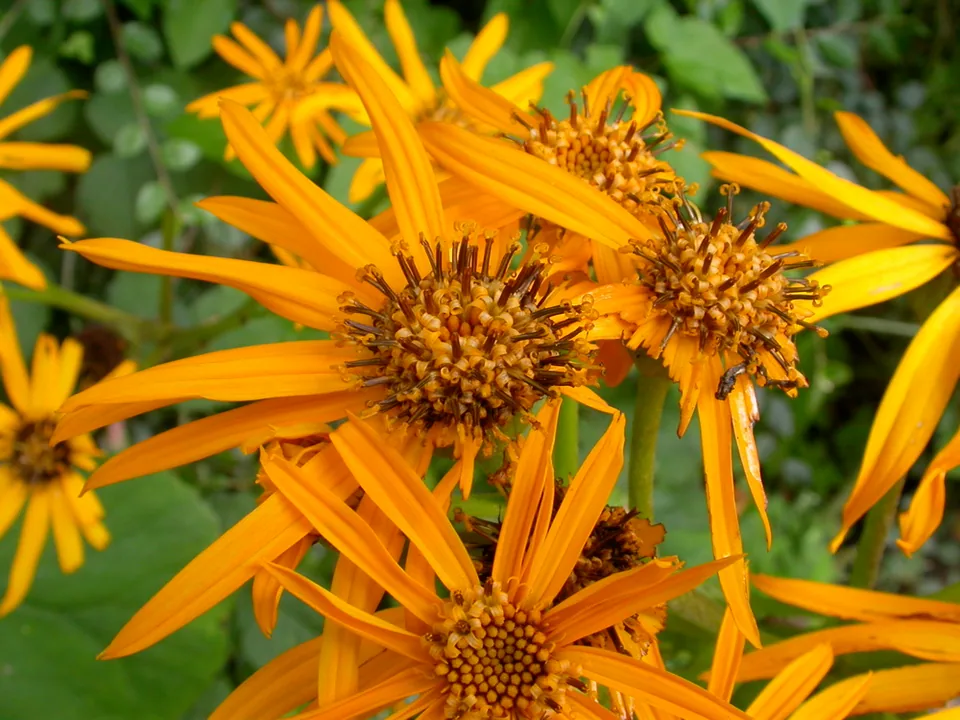
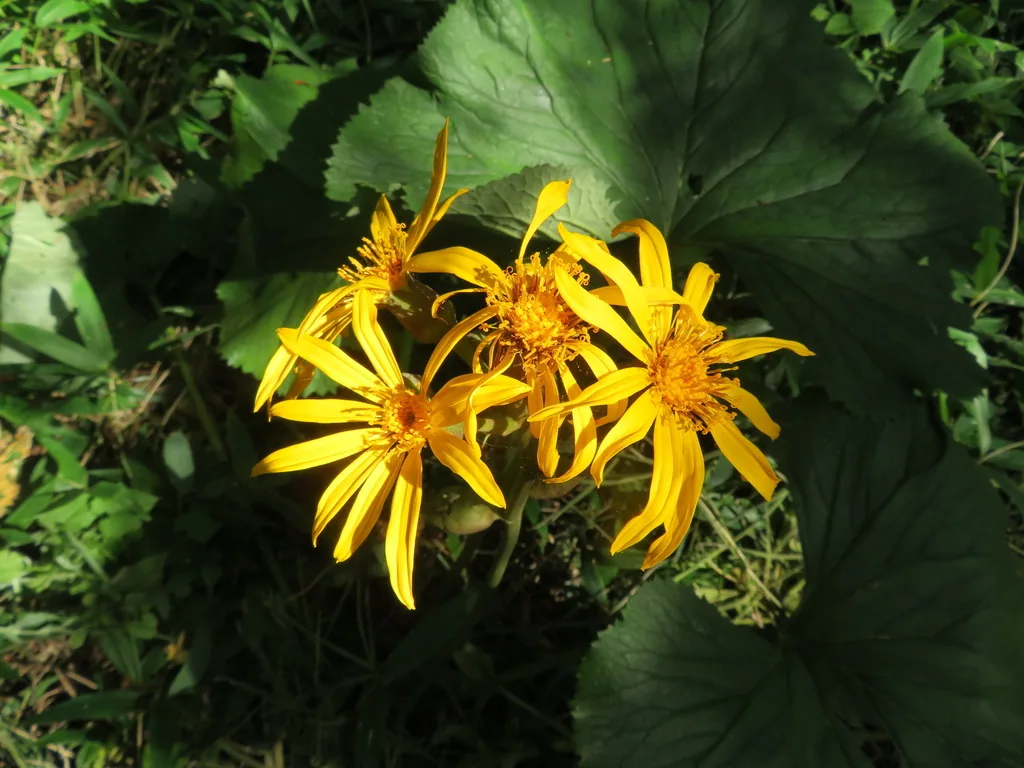

How to Grow and Care for Summer ragwort
Ligularia dentata
Written by Emilio Marruso · last checked
At a glance
Ligularia is a gift for the shady corners of your garden, happy in partial to full shade. Give it regular water and a layer of mulch so the soil never dries out, and it will settle in nicely. Plant it in spring or fall, in the ground or in a container, and later you can share it by dividing the clumps.
- Sun
Partial to full shade
What the sources say (1)
Light: Partial to full shade
Ligularia dentata thrives best in partial to full shade and moist, humus-rich, well-drained soil.
— Ligularia dentata | Leopard Plant Growing Guide [2] - Water
Water regularly and never let it dry out; mulch helps keep the soil moist
What the sources say (2)
Watering: Regular watering; not drought-tolerant, do not allow to dry out
Ligularia dentata is not drought-tolerant and thus requires regular watering. This is especially so during dry periods.
— Ligularia dentata | Leopard Plant Growing Guide [2] Watering notes: Mulch around the plant to retain moisture
Mulch around the plant to help retain moisture.
— Ligularia dentata | Leopard Plant Growing Guide [2] - Cold
Survives winters down to −30 °F (−34.4 °C)
Very hardy · USDA 4 · RHS H7 · Z4
What the sources say (2)
Hardiness, coldest zone: 4 [winter low −34.4 to −28.9 °C (−30 to −20 °F)]
Growing Zone (USA / UK Hardiness) : USDA Zones: 4-8. RHS H6, Hardy in Northern Europe.
— Ligularia dentata | Leopard Plant Growing Guide [2] Hardiness, warmest zone: 8 [winter low −12.2 to −6.7 °C (10 to 20 °F)]
Growing Zone (USA / UK Hardiness) : USDA Zones: 4-8. RHS H6, Hardy in Northern Europe.
— Ligularia dentata | Leopard Plant Growing Guide [2] - Spacing
2–3 ft between plants
What the sources say (1)
Spacing: 61-91 cm (2-3 ft)
Sowing, planting : Plant in spring, spacing 2-3 ft apart.
— Ligularia dentata | Leopard Plant Growing Guide [2] - Planting
Plant in spring or fall
What the sources say (1)
Planting: Spring or fall
Plant out during the spring or fall.
— Ligularia dentata | Leopard Plant Growing Guide [2] - Pruning
Cut it back in fall, after flowering
What the sources say (1)
Pruning: Autumn, after flowering (cut back)
Plant Care : Water regularly, do not allow to dry out; cut back in autumn after flowering.
— Ligularia dentata | Leopard Plant Growing Guide [2] - Pests
Slugs and snails; keep the area around the plant clean
- Propagation
Divide the clumps or grow from seed
- Containers
Grows in containers too
What the sources say (1)
In containers: Yes
Growing in pots and containers : Possible, but will require regular watering.
— Ligularia dentata | Leopard Plant Growing Guide [2]
Overview
Ligularia dentata is a perennial grown for its large leaves and tall spikes of daisy-like flowers. [2] It prefers moist, well-drained soil and part shade. [2]
Summer ragwort care
How to water Summer ragwort
Watering
Regular watering; not drought-tolerant, do not allow to dry out
What the sources say (1)
Ligularia dentata is not drought-tolerant and thus requires regular watering. This is especially so during dry periods.Watering notes
Mulch around the plant to retain moisture
What the sources say (1)
Mulch around the plant to help retain moisture.How much light Summer ragwort needs
Partial to full shade
What the sources say (1)
Ligularia dentata thrives best in partial to full shade and moist, humus-rich, well-drained soil.How much cold Summer ragwort can take
Hardiness, coldest zone
4 [winter low −34.4 to −28.9 °C (−30 to −20 °F)]
What the sources say (1)
Growing Zone (USA / UK Hardiness) : USDA Zones: 4-8. RHS H6, Hardy in Northern Europe.Hardiness, warmest zone
8 [winter low −12.2 to −6.7 °C (10 to 20 °F)]
What the sources say (1)
Growing Zone (USA / UK Hardiness) : USDA Zones: 4-8. RHS H6, Hardy in Northern Europe.Where to grow Summer ragwort
In containers
Yes
What the sources say (1)
Growing in pots and containers : Possible, but will require regular watering.Spacing
61-91 cm (2-3 ft)
What the sources say (1)
Sowing, planting : Plant in spring, spacing 2-3 ft apart.How to propagate Summer ragwort
Summer ragwort pests and problems
Slugs and snails
What to do: Keeping the area around the plant clean can help to prevent these pests.
What the sources say (1)
Keeping the area around the plant clean can help to prevent these pests.
— Ligularia dentata | Leopard Plant Growing Guide [2]
Remedies
Each remedy shows what official sources say about it; traditional remedies without an official source are marked as such. Harmful ones are listed so you know to avoid them.
Treating the plant
slugs and snails
torchlight hand-picking Official source, not independently tested
How: Carry out torchlight searches on mild evenings, especially when the weather is damp, hand-picking slugs and snails into a container.
Torchlight searches can be carried out on mild evenings, especially when the weather is damp, hand-picking slugs and snails into a container.
— rhs.org.uk [5] beer or fruit-skin traps Official source, not independently tested
How: Lay scooped-out half orange, grapefruit or melon skins cut side down, or sink jars part-filled with beer into the soil near vulnerable plants.
Traps , such as scooped-out half orange, grapefruit, or melon skins, can be laid out cut side down or jars part-filled with beer and sunk into the soil near vulnerable plants.
— rhs.org.uk [5] early-morning watering Official source, not independently tested
How: Water in the early morning rather than the evening.
Water in the early morning rather than the evening as evening watering provide ideal conditions for them to move around at night
— rhs.org.uk [5] rough or sharp barriers Official source, not independently tested
How: Rough or sharp textured mulches and distasteful or strong smelling substances are thought to repel slugs.
Barriers , thought to repel slugs, include rough or sharp textured mulches and substances considered distasteful or strong smelling but many of these do not have any scientific evidence to prove they are effective.
— rhs.org.uk [5]
Calendar
Planting
Spring or fall
What the sources say (1)
Plant out during the spring or fall.Pruning
Autumn, after flowering (cut back)
What the sources say (1)
Plant Care : Water regularly, do not allow to dry out; cut back in autumn after flowering.Months as given by the sources, which are mostly from the United States (northern hemisphere). In the southern hemisphere they shift by about six months.
Indicative values
Values from a secondary source, not checked word for word like the rest of this page. Use them as a starting point.
- Life cycle
- Herbaceous PerennialIndicative value, adapt it to your climate · Secondary source
- Mature height
- 91.4-121.9 cm (3-4 ft)Indicative value, adapt it to your climate · Secondary source
- Hours of sun
- 4-6 hoursIndicative value, adapt it to your climate · Secondary source
- Soil
- Humus richIndicative value, adapt it to your climate · Secondary source
- Soil pH
- 5.5-7Indicative value, adapt it to your climate · Secondary source
- Care level
- MediumIndicative value, adapt it to your climate · Secondary source
- Growth rate
- HighIndicative value, adapt it to your climate · Secondary source
- Pests
- Slugs, snails, Wilt, Pest resistant, Disease resistant, Deer resistantIndicative value, adapt it to your climate · Secondary source
Similar plants
- Ligularia Ligularia stenocephala
- Ligularia przewalskii Ligularia przewalskii
- Abraham Trachystemon orientalis
- African Marigold Tagetes erecta
- Alabama Croton Croton alabamensis
- Alpine Currant Ribes alpinum
- Alpine violet Viola labradorica
- Alumroot Heuchera americana
Sources
Every value above is quoted from these documents. Links lead to the original publisher.
- How to Grow Ligularia - Golden Ray · harvesttotable.com, consulted
- Ligularia dentata | Leopard Plant Growing Guide · gardenershq.com, consulted
- Flora of New Zealand | Taxon Profile | Ligularia dentata · nzflora.info, consulted
- Summer Ragwort (Ligularia dentata) - bplant.org · bplant.org, consulted
- rhs.org.uk · rhs.org.uk
Written by Emilio Marruso · last checked