
How to Grow and Care for Bog-myrtle
Myrica gale
Written by Emilio Marruso · last checked
Toxic to: People · Why
At a glance
Sweet gale loves the damp spots where other plants struggle: give it moist to wet, acidic soil and sun or part shade. Its aromatic leaves and fruits can flavor soups and stews, fresh or dried. Sow the seeds in autumn as soon as they ripen, or start new plants from cuttings, suckers or layering.
- Sun
Sun to part shade
What the sources say (2)
Light: Sun to part shade
Most reports say that it prefers a moist soil and that it grows well in an open position in a well-drained soil in sun or light shade.
— Myrica gale - Useful Temperate Plants [5] Light Requirement: Sun , Part Shade , Shade
— Lady Bird Johnson Wildflower Center - The University of Texas at Austin [7] - Water
Likes moist to wet soil: never let it dry out
What the sources say (2)
Watering: Prefers moist to wet soil
Most reports say that it prefers a moist soil and that it grows well in an open position in a well-drained soil in sun or light shade.
— Myrica gale - Useful Temperate Plants [5] Soil Moisture: Moist , Wet
— Lady Bird Johnson Wildflower Center - The University of Texas at Austin [7] - Soil
Acidic soil, pH 3.5–6
- Harvest
Aromatic leaves and fruits, fresh or dried, flavor soups and stews; leaves make a tea
- Propagation
From seed, cuttings, suckers or layering
What the sources say (5)
Propagation: Seed; cuttings of half-ripe wood; cuttings of mature wood; division of suckers; layering
Seed - best sown as soon as it is ripe in the autumn in a cold frame.
— Myrica gale - Useful Temperate Plants [5] Cuttings of half-ripe wood, 5 - 8cm with a heel, mid summer in a frame.
— Myrica gale - Useful Temperate Plants [5] Cuttings of mature wood in late autumn in a frame.
— Myrica gale - Useful Temperate Plants [5] Division of suckers in the dormant season.
— Myrica gale - Useful Temperate Plants [5] Propagated from seeds or by layering.
— Lady Bird Johnson Wildflower Center - The University of Texas at Austin [7] - Sowing
Sow in autumn as soon as the seeds are ripe, in a cold frame
What the sources say (1)
Sowing: As soon as ripe, in autumn, in a cold frame
Seed - best sown as soon as it is ripe in the autumn in a cold frame.
— Myrica gale - Useful Temperate Plants [5] - Safety
Not for pregnant women; the leaves hold a poisonous oil, so use them with care
Overview
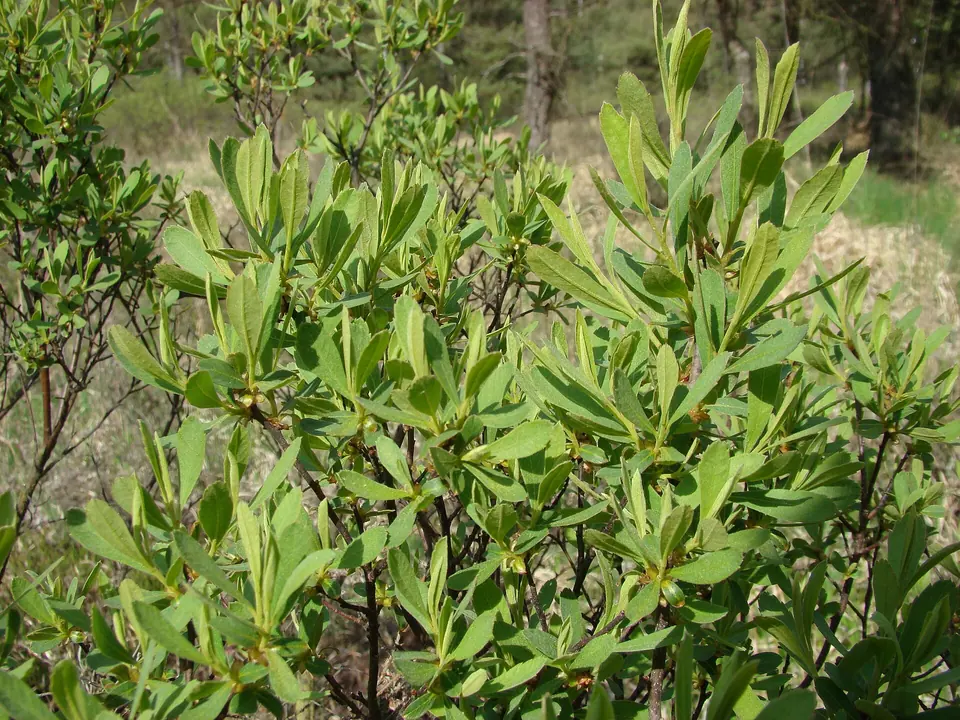
Sweet gale is a small fragrant shrub of bogs, peatlands and swamps that forms a nitrogen-fixing partnership with bacteria. [1] It prefers a moist soil and grows well in sun or light shade. [5] Seed is best sown as soon as it is ripe in autumn in a cold frame. [5]
This record is incomplete: the sources we read do not cover every field yet.
Not yet covered by our sources: Hardiness, coldest zone, Hardiness, warmest zone, Pruning
Bog-myrtle care
How to water Bog-myrtle
Prefers moist to wet soil
What the sources say (2)
Most reports say that it prefers a moist soil and that it grows well in an open position in a well-drained soil in sun or light shade.Soil Moisture: Moist , WetHow much light Bog-myrtle needs
Sun to part shade
What the sources say (2)
Most reports say that it prefers a moist soil and that it grows well in an open position in a well-drained soil in sun or light shade.Light Requirement: Sun , Part Shade , ShadeHow much cold Bog-myrtle can take
Hardiness, coldest zone
Not stated in the sources we read.
Hardiness, warmest zone
Not stated in the sources we read.
Best soil for Bog-myrtle
Soil pH, minimum
3.5
What the sources say (1)
In the wild it is usually found in soils with a pH between 3.5 and 6Soil pH, maximum
6
What the sources say (1)
In the wild it is usually found in soils with a pH between 3.5 and 6How to propagate Bog-myrtle
Seed; cuttings of half-ripe wood; cuttings of mature wood; division of suckers; layering
What the sources say (5)
Seed - best sown as soon as it is ripe in the autumn in a cold frame.Cuttings of half-ripe wood, 5 - 8cm with a heel, mid summer in a frame.Cuttings of mature wood in late autumn in a frame.Division of suckers in the dormant season.Propagated from seeds or by layering.Remedies
The sources we checked give no remedies for this plant.
Is Bog-myrtle poisonous?
Reported by the source, quoted verbatim. This is not medical or veterinary advice: if a person or an animal may have eaten this plant, contact a poison control centre or a veterinarian.
Calendar
Sowing
As soon as ripe, in autumn, in a cold frame
What the sources say (1)
Seed - best sown as soon as it is ripe in the autumn in a cold frame.Pruning
Not stated in the sources we read.
Months as given by the sources, which are mostly from the United States (northern hemisphere). In the southern hemisphere they shift by about six months.
Edibility
Reported by the source, quoted verbatim. Do not eat a plant on the basis of this page alone: identification mistakes can be dangerous.
Indicative values
Values from a secondary source, not checked word for word like the rest of this page. Use them as a starting point.
- Life cycle
- PerennialIndicative value, adapt it to your climate · Secondary source
- Hours of sun
- 6-8 hoursIndicative value, adapt it to your climate · Secondary source
- Soil
- Sandy, Loamy, ClayIndicative value, adapt it to your climate · Secondary source
- Care level
- MediumIndicative value, adapt it to your climate · Secondary source
- Growth rate
- HighIndicative value, adapt it to your climate · Secondary source
- Pruning
- February, March, April, MayIndicative value, adapt it to your climate · Secondary source
Similar plants
- Bayberry Myrica pensylvanica
- Abies grandis Abies grandis
- Acanthus hungaricus Acanthus hungaricus
- Achlys triphylla Achlys triphylla
- Aconite Aconitum napellus
- Afghan Redbud Cercis griffithii
- African Blood Lily Scadoxus multiflorus
- African lily Dietes bicolor
Sources
Every value above is quoted from these documents. Links lead to the original publisher.
- Sweet gale - Cooperative Extension: Maine Wild Blueberries - University of Maine Cooperative Extension · extension.umaine.edu, consulted
- Firefox http://depts.washington.edu/propplnt/Plants/Myrica gale.htm · courses.washington.edu, consulted
- Myrica gale - FNA · floranorthamerica.org, consulted
- Myrica gale - Trees and Shrubs Online · treesandshrubsonline.org, consulted
- Myrica gale - Useful Temperate Plants · temperate.theferns.info, consulted
- Myrica gale (sweetgale): Go Botany · gobotany.nativeplanttrust.org, consulted
- Lady Bird Johnson Wildflower Center - The University of Texas at Austin · wildflower.org, consulted
-  · cbnbrest.fr, consulted
Written by Emilio Marruso · last checked