
How to Grow and Care for Tobacco
Nicotiana glauca
Written by Emilio Marruso · last checked
Toxic to: Cats, Dogs, Horses, Cattle, People · Why
At a glance
Tree tobacco is a tough perennial that can reach 9 ft tall, happy in full sun or partial shade and resistant to drought in soil that drains well. Start the seeds on the soil surface in a warm greenhouse 10 weeks before the last spring frost, then plant out once the frosts are over. Grow it with care: it is highly poisonous.
- Sun
Full sun to partial shade
What the sources say (1)
Light: Full sun to partial shade
Light: Full sun (6 or more hours of direct sunlight a day) Partial Shade (Direct sunlight only part of the day, 2-6 hours)
— Nicotiana glauca (Nicotiana, Tobacco, Tree Tobacco) | North Carolina Extension Gardener Plant Toolbox [1] - Water
Handles drought well, but never let water sit around the roots
What the sources say (3)
Watering: Well-drained, moist soil; drought resistant
Tree Tobacco does best in well-drained, moist soil sited in full sun.
— Nicotiana glauca (Nicotiana, Tobacco, Tree Tobacco) | North Carolina Extension Gardener Plant Toolbox [1] It is frost tender, drought resistant, tolerant of a wide range of soil conditions
— Nicotiana glauca (Nicotiana, Tobacco, Tree Tobacco) | North Carolina Extension Gardener Plant Toolbox [1] Watering notes: Does not tolerate waterlogging
No aguanta el encharcamien-to.
— Atlas de las Plantas Alóctonas Invasoras en España [7] - Soil
Moist soil that drains well
What the sources say (2)
Watering: Well-drained, moist soil; drought resistant
Tree Tobacco does best in well-drained, moist soil sited in full sun.
— Nicotiana glauca (Nicotiana, Tobacco, Tree Tobacco) | North Carolina Extension Gardener Plant Toolbox [1] It is frost tender, drought resistant, tolerant of a wide range of soil conditions
— Nicotiana glauca (Nicotiana, Tobacco, Tree Tobacco) | North Carolina Extension Gardener Plant Toolbox [1] - Planting
Plant out after the last frosts
What the sources say (1)
Planting: After the last expected frosts
planting them out after the last expected frosts.
— Nicotiana glauca - Useful Temperate Plants [4] - Watch out
Invasive: it can spread and crowd out native plants
- Size
Up to 9 ft tall
What the sources say (1)
Mature height: 274.32 cm (9 ft)
at maturity, will typically reach a height of 9 feet and an equal spread.
— Nicotiana glauca (Nicotiana, Tobacco, Tree Tobacco) | North Carolina Extension Gardener Plant Toolbox [1] - Propagation
Grows from seed
What the sources say (1)
Propagation: Seed
Recommended Propagation Strategy: Seed
— Nicotiana glauca (Nicotiana, Tobacco, Tree Tobacco) | North Carolina Extension Gardener Plant Toolbox [1] - Sowing
Sow on the soil surface in a warm greenhouse 10 weeks before the last spring frost
What the sources say (1)
Sowing: About 10 weeks before the last expected spring frosts (surface sow in a warm greenhouse)
Seed - surface sow in a warm greenhouse about 10 weeks before the last expected spring frosts.
— Nicotiana glauca - Useful Temperate Plants [4] - Safety
Highly poisonous to people, cats, dogs, horses and cattle
Overview
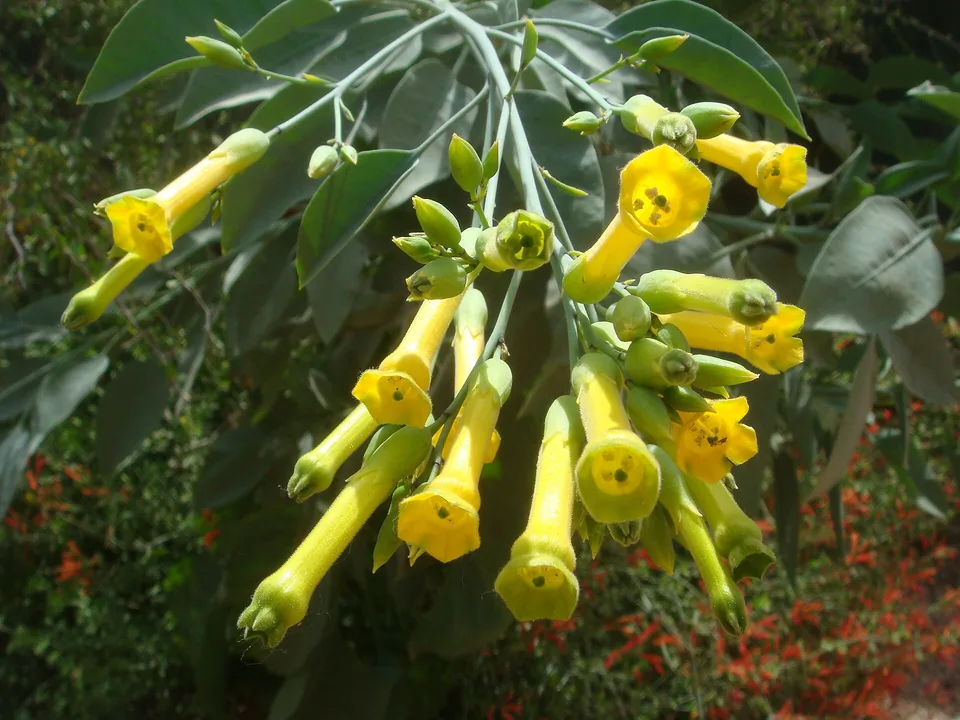
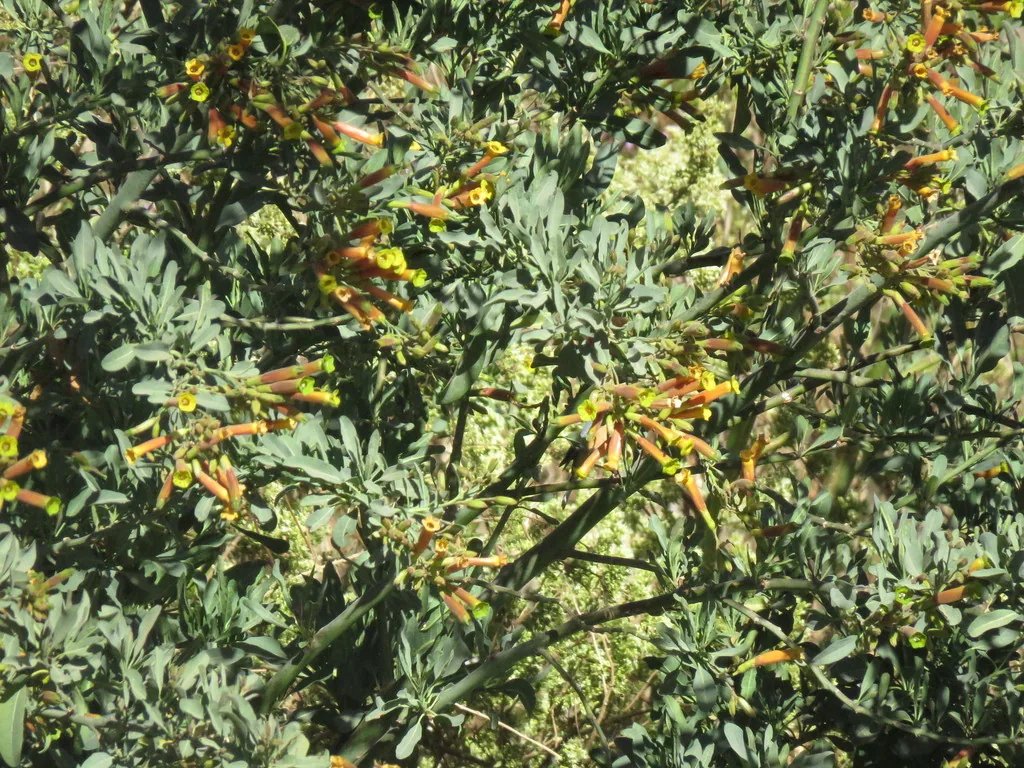
Tree tobacco is a shrub or small tree native to South America, naturalized in Mediterranean countries and invasive in many parts of the world. [1] It does best in well-drained, moist soil in full sun and is frost tender. [1] All parts of the plant are toxic year-round, to people and to livestock. [3][1]
This record is incomplete: the sources we read do not cover every field yet.
Not yet covered by our sources: Hardiness, coldest zone, Pruning
Tobacco care
How to water Tobacco
Watering
Well-drained, moist soil; drought resistant
What the sources say (2)
Tree Tobacco does best in well-drained, moist soil sited in full sun.It is frost tender, drought resistant, tolerant of a wide range of soil conditionsWatering notes
Does not tolerate waterlogging
What the sources say (1)
No aguanta el encharcamien-to.How much light Tobacco needs
Full sun to partial shade
What the sources say (1)
Light:
Full sun (6 or more hours of direct sunlight a day)
Partial Shade (Direct sunlight only part of the day, 2-6 hours)How much cold Tobacco can take
Hardiness, coldest zone
Not stated in the sources we read.
Hardiness, warmest zone
10b [winter low 1.7 to 4.4 °C (35 to 40 °F)]
What the sources say (1)
USDA Plant Hardiness Zone:
7a, 7b, 8a, 8b, 9a, 9b, 10a, 10bHow to propagate Tobacco
Seed
What the sources say (1)
Recommended Propagation Strategy:
SeedHow to grow Tobacco
The plant
Life cycle
perennial
What the sources say (1)
Tree Tobacco is a herbaceous perennial in the nightshade family and native to the central regions of South America.Mature height
274.32 cm (9 ft)
What the sources say (1)
at maturity, will typically reach a height of 9 feet and an equal spread.Tobacco pests and problems
Invasiveness
Symptom: Forms mono-specific stands that out-compete native vegetation
What the sources say (1)
often out competes native vegetation. It often forms mono-specific stands
— Nicotiana glauca (Nicotiana, Tobacco, Tree Tobacco) | North Carolina Extension Gardener Plant Toolbox [1]
Remedies
Each remedy shows what official sources say about it; traditional remedies without an official source are marked as such. Harmful ones are listed so you know to avoid them.
Treating the plant
tobacco hornworm
handpicking Official source, not independently tested
How: Handpicking is more effective in gardens when the larvae are larger and more obvious.
rarely abundant enough to require more than handpicking in gardens. Their abundant natural enemies usually regulate the population.
— portal.ct.gov [8]
Getting rid of it
invasive tree tobacco
hand pulling or weed wrench Official source, not independently tested
All plant parts are extremely poisonous.
— Nicotiana glauca (Nicotiana, Tobacco, Tree Tobacco) | North Carolina Extension Gardener Plant Toolbox [1] How: Hand pulling for smaller saplings; weed wrench for larger shrubs.
Hand pulling for smaller saplings; weed wrench for larger shrubs
— ceb.bio.uci.edu [9]
Is Tobacco toxic to pets?
Reported by the source, quoted verbatim. This is not medical or veterinary advice: if a person or an animal may have eaten this plant, contact a poison control centre or a veterinarian.
Animals
Problem for Cats
[1]The source flags the risk for this animal but does not explain why.
Problem for Dogs
[1]The source flags the risk for this animal but does not explain why.
Problem for Horses
[1]The source flags the risk for this animal but does not explain why.
In Texas, cattle and horses are most frequently poisoned.
[3]
People
This plant has high severity poison characteristics.
[1]
Calendar
Sowing
About 10 weeks before the last expected spring frosts (surface sow in a warm greenhouse)
What the sources say (1)
Seed - surface sow in a warm greenhouse about 10 weeks before the last expected spring frosts.Planting
After the last expected frosts
What the sources say (1)
planting them out after the last expected frosts.Pruning
Not stated in the sources we read.
Months as given by the sources, which are mostly from the United States (northern hemisphere). In the southern hemisphere they shift by about six months.
Edibility
Reported by the source, quoted verbatim. Do not eat a plant on the basis of this page alone: identification mistakes can be dangerous.
The leaves have been made into a drink
[4]
Similar plants
- Flowering Tobacco Nicotiana sylvestris
- Jasmine Tobacco Nicotiana alata
- Abies grandis Abies grandis
- Abraham Trachystemon orientalis
- Abyssinian banana Ensete ventricosum
- Acacia longifolia Acacia longifolia
- Acanthus hungaricus Acanthus hungaricus
- Achlys triphylla Achlys triphylla
Sources
Every value above is quoted from these documents. Links lead to the original publisher.
- Nicotiana glauca (Nicotiana, Tobacco, Tree Tobacco) | North Carolina Extension Gardener Plant Toolbox · plants.ces.ncsu.edu, consulted
- Nicotiana glauca Profile – California Invasive Plant Council · cal-ipc.org, consulted
- Plants of Texas Rangelands » Tree tobacco · rangeplants.tamu.edu, consulted
- Nicotiana glauca - Useful Temperate Plants · temperate.theferns.info, consulted
- Tree Tobacco (Nicotiana glauca) — Practical Plants · practicalplants.org, consulted
- Nicotiana glauca - Trees and Shrubs Online · treesandshrubsonline.org, consulted
- Atlas de las Plantas Alóctonas Invasoras en España · miteco.gob.es, consulted
- portal.ct.gov · portal.ct.gov
- ceb.bio.uci.edu · ceb.bio.uci.edu
Written by Emilio Marruso · last checked