
How to Grow and Care for Water snowflake
Nymphoides indica
Written by Emilio Marruso · last checked
At a glance
This water plant roots in shallow water, loves full sun or partial shade, and grows best with its roots under 1–2 ft of water. Its young leaves, stems, flower buds and fruits can all be eaten cooked. Handle it with care: it spreads into dense mats on the water, so clean boats and gear when moving between bodies of water.
- Sun
Full sun to partial shade
What the sources say (1)
Light: Full sun to partial shade
Succeeds in full sun and partial shade
— Nymphoides indica - Useful Tropical Plants [4] - Water
Lives in water: keep the roots under 1–2 ft of water
What the sources say (2)
Watering: Lots of water (aquatic plant rooted in shallow water)
Water Preference | Lots of Water
— NParks | Nymphoides indica [3] Watering notes: Plants grow best when the roots are submerged in 30-60 cm [12–24 in] of water
Plants grow best when the roots are submerged in 30 - 60cm of water
— Nymphoides indica - Useful Tropical Plants [4] - Harvest
Young leaves, stems, flower buds and fruits are eaten cooked
- Watch out
Forms dense mats that crowd out other plants; don't buy it for ponds or aquariums
- Propagation
By seed, division, small plantlets from leaves and stems, or stem cuttings
What the sources say (1)
Propagation: Seed, division, aerial plantlets, leaf plantlets and stem cuttings
Propagation Method | Seed, Division, Aerial Plantlet
— NParks | Nymphoides indica [3]
Overview
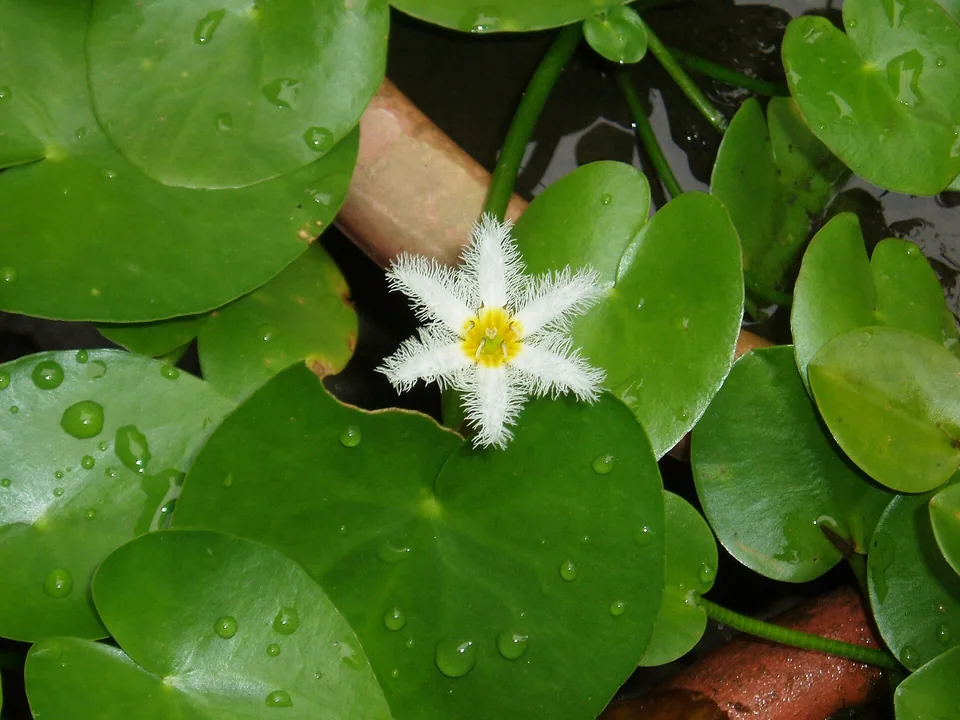
Nymphoides indica is a perennial aquatic plant with floating round leaves and white fringed flowers that last one day. [3] It is grown as a pond ornamental, but UF/IFAS lists it as nonnative and invasive in Florida, where it can form dense canopies on the water surface. [4][1] Young leaves, stems, flower buds and fruits are listed as cooked food. [4]
This record is incomplete: the sources we read do not cover every field yet.
Not yet covered by our sources: Hardiness, coldest zone, Hardiness, warmest zone, Pruning
Water snowflake care
Measurements in square brackets are our conversion into the other unit system; the quoted text is unchanged.
How to water Water snowflake
Watering
Lots of water (aquatic plant rooted in shallow water)
What the sources say (1)
Water Preference
| Lots of WaterWatering notes
Plants grow best when the roots are submerged in 30-60 cm [12–24 in] of water
What the sources say (1)
Plants grow best when the roots are submerged in 30 - 60cm of waterHow much light Water snowflake needs
Full sun to partial shade
What the sources say (1)
Succeeds in full sun and partial shadeHow much cold Water snowflake can take
Hardiness, coldest zone
Not stated in the sources we read.
Hardiness, warmest zone
Not stated in the sources we read.
How to propagate Water snowflake
Seed, division, aerial plantlets, leaf plantlets and stem cuttings
What the sources say (1)
Propagation Method
| Seed, Division, Aerial PlantletHow to grow Water snowflake
The plant
Family
Menyanthaceae
What the sources say (1)
Family: Menyanthaceae Habit: rooted in the substrate and produce leaves and flowers that float on the surface of the water.Water snowflake pests and problems
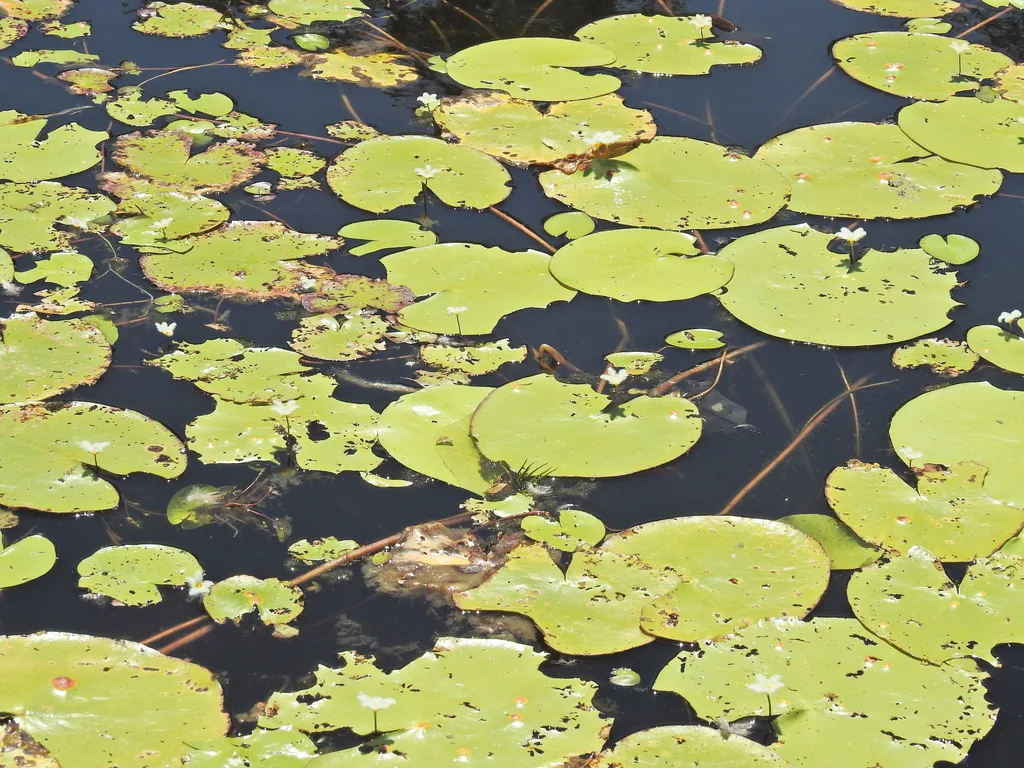
Dense mat-forming growth on the water surface
Symptom: Dense canopy excluding other plants, stagnant low-oxygen water, impeded water flow
What to do: Thoroughly clean boats, motors, and gear when moving from one water body to another; do not purchase for use in water gardens or aquariums
What the sources say (2)
Can form a dense, monotypic canopy on the water surface excluding other native plants.
— | Center for Aquatic and Invasive Plants | University of Florida, IFAS [1] Do not purchase for use in water gardens or aquariums.
— | Center for Aquatic and Invasive Plants | University of Florida, IFAS [1]
Remedies
Each remedy shows what official sources say about it; traditional remedies without an official source are marked as such. Harmful ones are listed so you know to avoid them.
Getting rid of it
aquatic weed
cut underwater Works
Thoroughly clean boats, motors, and gear when moving from one water body to another. Do not purchase for use in water gardens or aquariums.
— | Center for Aquatic and Invasive Plants | University of Florida, IFAS [1] How: cutting the plant underwater
Nymphoides indica dies when cut underwater, while N. cristata grows back rapidly.
— usgs.gov [8] What the evidence says Nymphoides indica dies when cut underwater, while N. cristata grows back rapidly.
— usgs.gov [8]
Calendar
Pruning
Not stated in the sources we read.
Months as given by the sources, which are mostly from the United States (northern hemisphere). In the southern hemisphere they shift by about six months.
Edibility
Reported by the source, quoted verbatim. Do not eat a plant on the basis of this page alone: identification mistakes can be dangerous.
Indicative values
Values from a secondary source, not checked word for word like the rest of this page. Use them as a starting point.
- Life cycle
- Herbaceous PerennialIndicative value, adapt it to your climate · Secondary source
- Mature height
- 7.6-15.2 cm (0.25-0.5 ft)Indicative value, adapt it to your climate · Secondary source
- Hours of sun
- 6-8 hoursIndicative value, adapt it to your climate · Secondary source
- Soil pH
- 6.5-7.5Indicative value, adapt it to your climate · Secondary source
- USDA hardiness zones
- 8-11 [winter low −12.2 to 10 °C (10 to 50 °F)]Indicative value, adapt it to your climate · Secondary source
- Care level
- MediumIndicative value, adapt it to your climate · Secondary source
- Growth rate
- LowIndicative value, adapt it to your climate · Secondary source
- Pruning
- May, June, July, MayIndicative value, adapt it to your climate · Secondary source
Similar plants
- Crested Floating Heart Nymphoides cristata
- Floating Heart Nymphoides peltata
- Abies grandis Abies grandis
- Abraham Trachystemon orientalis
- Abyssinian banana Ensete ventricosum
- Acacia longifolia Acacia longifolia
- Acanthus hungaricus Acanthus hungaricus
- Achlys triphylla Achlys triphylla
Sources
Every value above is quoted from these documents. Links lead to the original publisher.
- | Center for Aquatic and Invasive Plants | University of Florida, IFAS · plant-directory.ifas.ufl.edu, consulted
- Nymphoides indica - UF/IFAS Assessment - University of Florida, Institute of Food and Agricultural Sciences · assessment.ifas.ufl.edu, consulted
- NParks | Nymphoides indica · nparks.gov.sg, consulted
- Nymphoides indica - Useful Tropical Plants · tropical.theferns.info, consulted
- Water Snowflake Information: How To Grow Snowflake Water Lily Plants | Gardening Know How · gardeningknowhow.com, consulted
- Nymphoides indica / [Species detail] / Plant Atlas · florida.plantatlas.usf.edu, consulted
- Nymphoides indica (NYPIN)[Overview]| EPPO Global Database · gd.eppo.int, consulted
- usgs.gov · usgs.gov
Written by Emilio Marruso · last checked