
How to Grow and Care for Silvervein creeper
Parthenocissus henryana
Written by Emilio Marruso · last checked
Toxic to: Cats, Birds · Why
At a glance
This tough plant is easy to please: it grows anywhere from full sun to shade, though partial shade suits it best, and it needs little water. It accepts a wide range of soils, from pH 5.0 to 8.0, and can reach 12 to 35 feet tall. Plant it between May and September, or start new plants from cuttings, layering or seed.
- Sun
Full sun to shade; partial shade is best
What the sources say (6)
Light: Full sun to shade; partial shade recommended
According to Cornell Woody Plants Database: Light: Full sun, Part shade, Shade Hardy To Zone: 6a
— Woody Plants Database [3] According to KPU Plant Database: Exposure: Full sun, Part sun/part shade, Filtered shade Soil/Growing Medium: Humus rich, Well-drained
— Henryana parthenocissus - KPU Plant DB [1] According to Gardeners World: Sun Exposure: Dappled shade, partial shade | Aspect: East facing, north facing, west facing
— Parthenocissus henryana | BBC Gardeners World Magazine [2] Light: Full sun, Part shade, Shade Hardy To Zone: 6a
— Woody Plants Database [3] Exposure: Full sun, Part sun/part shade, Filtered shade Soil/Growing Medium: Humus rich, Well-drained
— Henryana parthenocissus - KPU Plant DB [1] Grow Parthenocissus henryana in fertile, well-drained soil in partial shade.
— Parthenocissus henryana | BBC Gardeners World Magazine [2] - Water
Needs little water and handles drought; prefers soil that drains well
What the sources say (4)
Watering: Low water use; drought tolerant
Water Use: Low Landscape Uses: Arbors or trellis, Attract birds, Fall interest
— Henryana parthenocissus - KPU Plant DB [1] Pest Susceptibility: Bacterial leaf spot, Canker or sap rot, Dieback, Fungal leaf spot, Mildew, Scale insects (Pest resistant, Disease resistant, Deer resistant, Drought tolerant)
— Henryana parthenocissus - KPU Plant DB [1] Watering notes: Tolerates occasionally saturated or very wet soil; well-drained soil preferred
Moisture Tolerance: Occasionally saturated or very wet soil See graphic below ## Insect Disease
— Woody Plants Database [3] Grow Parthenocissus henryana in fertile, well-drained soil in partial shade.
— Parthenocissus henryana | BBC Gardeners World Magazine [2] - Soil
Well-drained soil, pH 5.0–8.0
What the sources say (4)
Soil pH, minimum: 5.0
Hardy To Zone: 6a Soil Ph: Can tolerate acid to alkaline soil (pH 5.0 to 8.0)
— Woody Plants Database [3] Soil pH, maximum: 8.0
Hardy To Zone: 6a Soil Ph: Can tolerate acid to alkaline soil (pH 5.0 to 8.0)
— Woody Plants Database [3] Watering notes: Tolerates occasionally saturated or very wet soil; well-drained soil preferred
Moisture Tolerance: Occasionally saturated or very wet soil See graphic below ## Insect Disease
— Woody Plants Database [3] Grow Parthenocissus henryana in fertile, well-drained soil in partial shade.
— Parthenocissus henryana | BBC Gardeners World Magazine [2] - Planting
Plant from May to September
What the sources say (1)
Planting: May-September
Oct | Nov | Dec | Sow | | | | | | | | | yes | yes | yes | | Plant | | | | | yes | yes | yes | yes | yes |
— Parthenocissus henryana | BBC Gardeners World Magazine [2] - Pests
Watch for leaf spots, canker, dieback, mildew and scale insects
- Size
12 to 35 ft tall
What the sources say (1)
Mature height: 366-1067 cm (12-35 ft)
Ornamental Characteristics Size: Vine Height: 12'-35' Leaves: Deciduous
— Woody Plants Database [3] - Propagation
From seed, cuttings or layering
What the sources say (1)
Propagation: Seed, greenwood, softwood, hardwood and leaf-bud cuttings, layering
Propagation: Seed, Greenwood cuttings, Softwood cuttings, Hardwood cuttings, Layering, Eye (leaf bud) cuttings
— Henryana parthenocissus - KPU Plant DB [1] - Sowing
Sow seeds from September to November
What the sources say (1)
Sowing: September-November
Aug | Sep | Oct | Nov | Dec | Sow | | | | | | | | | yes | yes | yes |
— Parthenocissus henryana | BBC Gardeners World Magazine [2] - Safety
No toxic effects reported for cats or birds
Overview
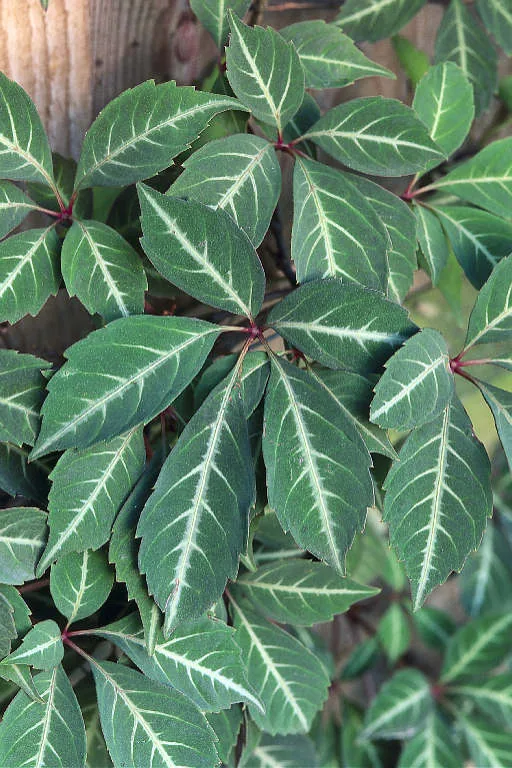
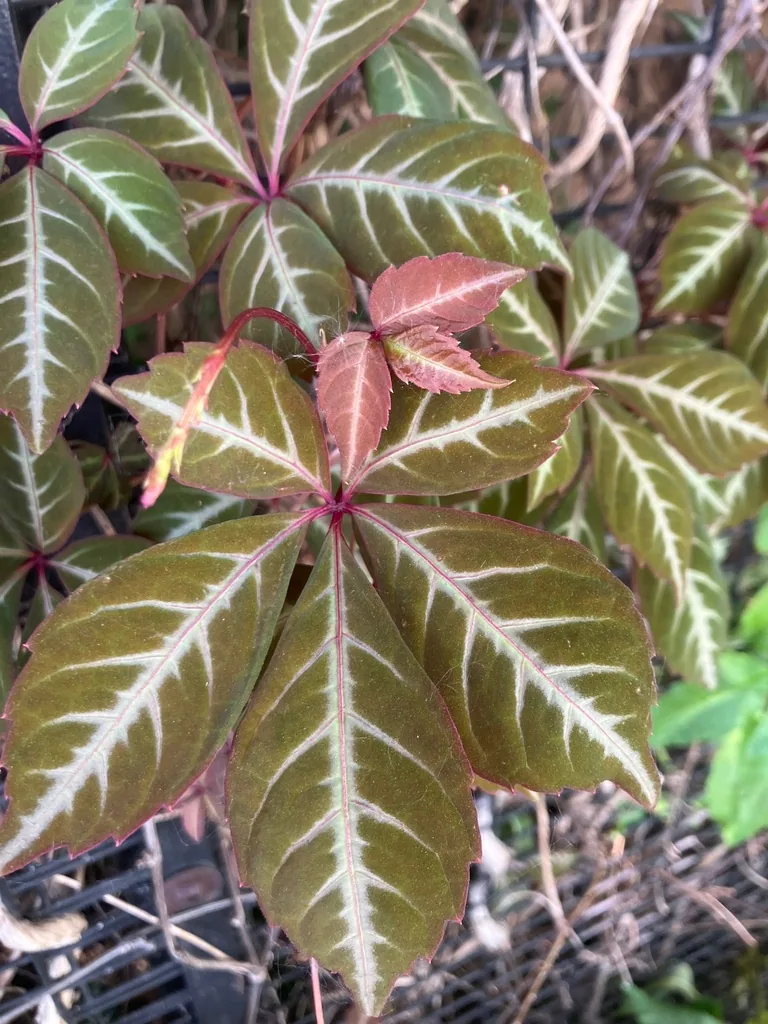
Parthenocissus henryana is a deciduous climber with silvery-veined leaves that turn red in autumn, followed by blue-black berries. [2] It is less vigorous than other Virginia creepers and can cover a north-facing wall, though its autumn colour is stronger with some sun. [2] It clings by tendrils with disk-like suckers but may need tying in to netting or trellis until established. [1][2]
This record is incomplete: the sources we read do not cover every field yet.
Not yet covered by our sources: Hardiness, warmest zone, Pruning
Silvervein creeper care
How to water Silvervein creeper
Watering
Low water use; drought tolerant
What the sources say (2)
Water Use:
Low
Landscape Uses:
Arbors or trellis, Attract birds, Fall interestPest Susceptibility:
Bacterial leaf spot, Canker or sap rot, Dieback, Fungal leaf spot, Mildew, Scale insects (Pest resistant, Disease resistant, Deer resistant, Drought tolerant)Watering notes
Tolerates occasionally saturated or very wet soil; well-drained soil preferred
How much light Silvervein creeper needs
Full sun to shade; partial shade recommended
What each source says
According to Cornell Woody Plants Database: Full sun, part shade, shade
According to KPU Plant Database: Full sun, part sun/part shade, filtered shade
According to Gardeners World: Dappled shade, partial shade
What the sources say (6)
According to Cornell Woody Plants Database: Light:
Full sun, Part shade, Shade
Hardy To Zone:
6aAccording to KPU Plant Database: Exposure:
Full sun, Part sun/part shade, Filtered shade
Soil/Growing Medium:
Humus rich, Well-drainedAccording to Gardeners World: Sun Exposure:
Dappled shade, partial shade
|
Aspect:
East facing, north facing, west facingLight:
Full sun, Part shade, Shade
Hardy To Zone:
6aExposure:
Full sun, Part sun/part shade, Filtered shade
Soil/Growing Medium:
Humus rich, Well-drainedGrow Parthenocissus henryana in fertile, well-drained soil in partial shade.How much cold Silvervein creeper can take
Hardiness, coldest zone
The sources give different values depending on region, zone or growing conditions.
What each source says
According to Cornell Woody Plants Database: 6a [winter low −23.3 to −20.6 °C (−10 to −5 °F)]
According to KPU Plant Database: 7 [winter low −17.8 to −12.2 °C (0 to 10 °F)]
What the sources say (2)
According to Cornell Woody Plants Database: Hardy To Zone:
6a
Soil Ph:
Can tolerate acid to alkaline soil (pH 5.0 to 8.0)According to KPU Plant Database: Hardiness Rating:
Zone 7: (-18 to -12 °C)
Exposure:
Full sun, Part sun/part shadeHardiness, warmest zone
Not stated in the sources we read.
Best soil for Silvervein creeper
Soil pH, minimum
5.0
What the sources say (1)
Hardy To Zone:
6a
Soil Ph:
Can tolerate acid to alkaline soil (pH 5.0 to 8.0)Soil pH, maximum
8.0
What the sources say (1)
Hardy To Zone:
6a
Soil Ph:
Can tolerate acid to alkaline soil (pH 5.0 to 8.0)How to propagate Silvervein creeper
Seed, greenwood, softwood, hardwood and leaf-bud cuttings, layering
What the sources say (1)
Propagation:
Seed, Greenwood cuttings, Softwood cuttings, Hardwood cuttings, Layering, Eye (leaf bud) cuttingsHow to grow Silvervein creeper
The plant
Mature height
366-1067 cm (12-35 ft)
What the sources say (1)
Ornamental Characteristics
Size:
Vine
Height:
12'-35'
Leaves:
DeciduousSilvervein creeper pests and problems
Leaf spots, canker, dieback, mildew and scale insects
What the sources say (1)
Pest Susceptibility: Bacterial leaf spot, Canker or sap rot, Dieback, Fungal leaf spot, Mildew, Scale insects (Pest resistant, Disease resistant, Deer resistant, Drought tolerant)
— Henryana parthenocissus - KPU Plant DB [1]
Remedies
The sources we checked give no remedies for this plant.
Is Silvervein creeper toxic to pets?
Reported by the source, quoted verbatim. This is not medical or veterinary advice: if a person or an animal may have eaten this plant, contact a poison control centre or a veterinarian.
No reported toxicity to: Is not known to attract Birds Birds Is not known to attract Cats Cats
[2]The source flags the risk for this animal but does not explain why.
Parthenocissus ‘Henryana’ has no toxic effects reported. No reported toxicity to: Is not known to attract Birds Birds
[2]The source flags the risk for this animal but does not explain why.
Calendar
September-November
What the sources say (1)
Aug | Sep | Oct | Nov | Dec
| Sow | | | | | | | | | yes | yes | yes |May-September
What the sources say (1)
Oct | Nov | Dec
| Sow | | | | | | | | | yes | yes | yes |
| Plant | | | | | yes | yes | yes | yes | yes |Not stated in the sources we read.
Months as given by the sources, which are mostly from the United States (northern hemisphere). In the southern hemisphere they shift by about six months.
Indicative values
Values from a secondary source, not checked word for word like the rest of this page. Use them as a starting point.
- Life cycle
- PerennialIndicative value, adapt it to your climate · Secondary source
- Soil
- Humus rich, Well-drainedIndicative value, adapt it to your climate · Secondary source
- Care level
- MediumIndicative value, adapt it to your climate · Secondary source
- Growth rate
- HighIndicative value, adapt it to your climate · Secondary source
- Pruning
- February, March, AprilIndicative value, adapt it to your climate · Secondary source
- Pests
- Bacterial leaf spot, Canker, sap rot, Dieback, Fungal leaf spot, Mildew, Scale insects, Pest resistant, Disease resistant, Deer resistant, Drought resistantIndicative value, adapt it to your climate · Secondary source
Similar plants
- Boston Ivy Parthenocissus tricuspidata
- Virginia Creeper Parthenocissus quinquefolia
- False virginia creeper Parthenocissus inserta
- Abies grandis Abies grandis
- Abraham Trachystemon orientalis
- Abyssinian banana Ensete ventricosum
- Acacia longifolia Acacia longifolia
- Acanthus hungaricus Acanthus hungaricus
Sources
Every value above is quoted from these documents. Links lead to the original publisher.
- Henryana parthenocissus - KPU Plant DB · plantdatabase.kpu.ca, consulted
- Parthenocissus henryana | BBC Gardeners World Magazine · gardenersworld.com, consulted
- Woody Plants Database · woodyplants.cals.cornell.edu, consulted
Written by Emilio Marruso · last checked