
How to Grow and Care for Photinia × fraseri
Photinia fraseri
Written by Emilio Marruso · last checked
At a glance
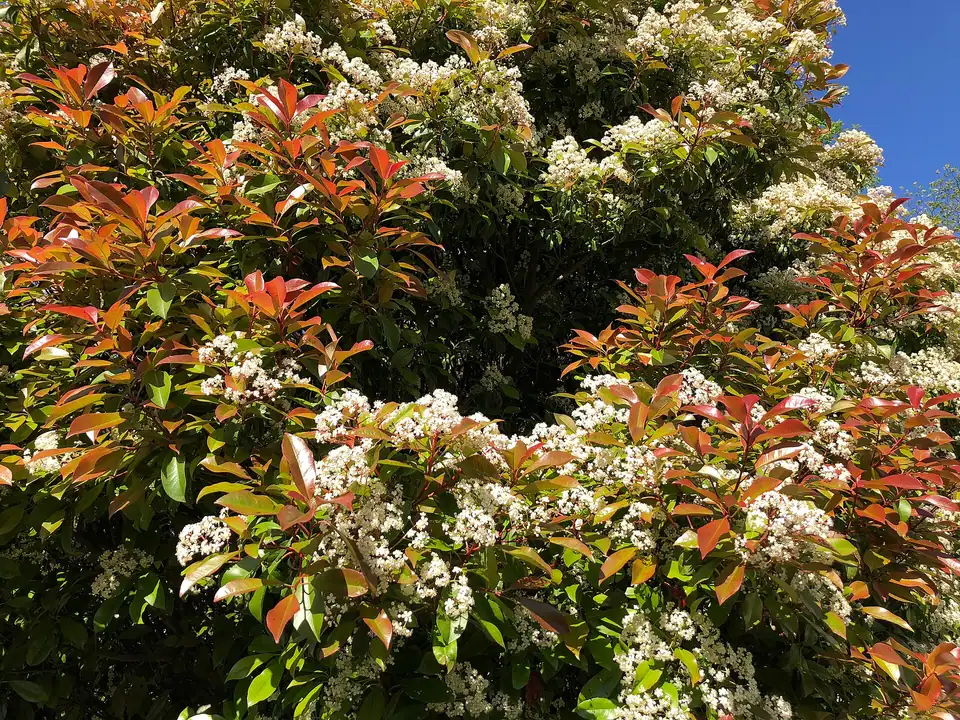
Photinia is a generous shrub that can reach 20 feet and thrives anywhere from full sun to partial shade. Prune it in late spring and it answers with fresh flushes of red new growth. Give it well-drained soil and deep but spaced-out watering, keep the leaves dry, and you can easily make new plants from cuttings.
- Sun
Full sun to partial shade
- Water
Water deeply but not often; never soggy, and keep water off the leaves
What the sources say (3)
Watering: Spaced, abundant watering; avoid excess water
Regar de manera espaciada y abundante. Evitar exceso hídrico.
— Photinia (Photinia x fraseri) [7] Watering notes: Intolerant of wet conditions; avoid getting water on the leaves; well-drained soil
It is intolerant of wet conditions and you should avoid getting water on the leaves.
— Fraser's Photinia - Photinia x fraseri | North Carolina Extension Gardener Plant Toolbox [4] Select site with well-drained soil and good air circulation.
— Fraser Photinia, Red Tip | VCE Publications | Virginia Tech [1] - Soil
Well-drained soil; handles very acidic soil, down to pH 3.7
What the sources say (3)
Soil pH, minimum: 3.7
pH Range: 3.7 to 7.3
— Fraser Photinia, Red Tip | VCE Publications | Virginia Tech [1] Watering notes: Intolerant of wet conditions; avoid getting water on the leaves; well-drained soil
It is intolerant of wet conditions and you should avoid getting water on the leaves.
— Fraser's Photinia - Photinia x fraseri | North Carolina Extension Gardener Plant Toolbox [4] Select site with well-drained soil and good air circulation.
— Fraser Photinia, Red Tip | VCE Publications | Virginia Tech [1] - Feeding
Only on poor soil or for more growth: all-purpose fertilizer in spring, at the label dose
What the sources say (3)
When: Spring or fall
on poor soils or to encourage more growth: Photinias don’t generally need additional feeding, except on poor soils or to encourage more growth. In which case, scatter a general-purpose fertiliser
— How to grow photinia / RHS Growing Guide [5] When to prune: anytime - When to fertilize: spring or fall - Suggested use: hedge or screen
— Fraser Photinia; Redtip Photinia (Photinia x fraseri) [3] Mineral fertilizers: General-purpose fertilizer scattered on the surrounding soil at the label dose, only on poor soils or to encourage more growth
Photinias don’t generally need additional feeding, except on poor soils or to encourage more growth. In which case, scatter a general-purpose fertiliser
— How to grow photinia / RHS Growing Guide [5] - Pruning
Prune in late spring for new red growth, but you will lose the flowers
What the sources say (1)
Pruning: Late spring encourages new red flushes but eliminates the flowers
Pruning in late spring may encourage new flushes of red leaves, but will also eliminate the flowers.
— Fraser's Photinia - Photinia x fraseri | North Carolina Extension Gardener Plant Toolbox [4] - Pests
Leaf spot, fireblight, powdery mildew and scale; spray the leaves in early spring against leaf spot
What the sources say (3)
Pests: scale insects
Susceptible to several problems including mildew, leaf spots, fireblight, scale insects, and a few other insects.
— Fraser Photinia, Red Tip | VCE Publications | Virginia Tech [1] Diseases: Entomosporium leaf spot, fireblight, powdery mildew
Entomosporium leaf spot is especially prevalent and injurious in spring when conditions that favor fungal growth are prevalent.
— Fraser Photinia, Red Tip | VCE Publications | Virginia Tech [1] Susceptible to leaf spot disease, particularly in areas with high humidity and moist conditions are prevalent. Fireblight and powdery mildew can also occur.
— Fraser's Photinia - Photinia x fraseri | North Carolina Extension Gardener Plant Toolbox [4] - Size
Grows to 20 ft tall
What the sources say (2)
Mature height: 609.6 cm (20 ft)
Foliage: Evergreen broadleaf Height: 20 feet Spread: 10 feet
— Fraser Photinia, Red Tip | VCE Publications | Virginia Tech [1] Fraser's Photinia is a large, broadleaf evergreen shrub or small tree in the rose family that matures up to 20 feet tall with a 15 foot spread.
— Fraser's Photinia - Photinia x fraseri | North Carolina Extension Gardener Plant Toolbox [4] - Propagation
Soft cuttings in early summer, semi-hard cuttings in fall; also from seed
What the sources say (2)
Propagation: Stem cuttings (softwood in early summer, semi-hardwood in autumn); also seed
Por esquejes de madera blanda de 8 a 10 centímetros al principio de verano o semiblanda en otoño.
— Photinia (Photinia x fraseri) [7] Recommended Propagation Strategy: Stem Cutting
— Fraser's Photinia - Photinia x fraseri | North Carolina Extension Gardener Plant Toolbox [4] - Sowing
Sow in spring after soaking the seeds for 24 to 48 hours
What the sources say (1)
Sowing: Spring (after hydrating the seed for 24 to 48 hours)
Sembrar en primavera luego de hidratar de 24 a 48 horas.
— Photinia (Photinia x fraseri) [7]
Overview
Photinia x fraseri is a large broadleaf evergreen shrub with red new foliage, widely used as a hedge. [1] It grows in full sun to partial shade in well-drained soil with good air circulation. [4][1] It is susceptible to Entomosporium leaf spot, especially where humidity is high. [1][4]
This record is incomplete: the sources we read do not cover every field yet.
Not yet covered by our sources: Hardiness, coldest zone
Photinia × fraseri care
How to water Photinia × fraseri
Watering
Spaced, abundant watering; avoid excess water
What the sources say (1)
Regar de manera espaciada y abundante. Evitar exceso hídrico.Watering notes
Intolerant of wet conditions; avoid getting water on the leaves; well-drained soil
What the sources say (2)
It is intolerant of wet conditions and you should avoid getting water on the leaves.Select site with well-drained soil and good air circulation.How much light Photinia × fraseri needs
How much cold Photinia × fraseri can take
Hardiness, coldest zone
Not stated in the sources we read.
Hardiness, warmest zone
9b [winter low −3.9 to −1.1 °C (25 to 30 °F)]
What the sources say (1)
USDA Plant Hardiness Zone:
7a, 7b, 8a, 8b, 9a, 9bBest soil for Photinia × fraseri
Soil pH, minimum
3.7
What the sources say (1)
pH Range: 3.7 to 7.3Soil pH, maximum
The sources give different values depending on region, zone or growing conditions.
What each source says
According to Virginia Cooperative Extension: 7.3
According to NC State Extension: Alkaline (>8.0)
What the sources say (2)
According to Virginia Cooperative Extension: pH Range: 3.7 to 7.3According to NC State Extension: Soil pH:
Alkaline (>8.0)How to propagate Photinia × fraseri
Stem cuttings (softwood in early summer, semi-hardwood in autumn); also seed
How to grow Photinia × fraseri
The plant
Family
Rosaceae (rose family)
What the sources say (1)
Fraser's Photinia is a large, broadleaf evergreen shrub or small tree in the rose family that matures up to 20 feet tall with a 15 foot spread.Mature height
609.6 cm (20 ft)
What the sources say (2)
Foliage: Evergreen broadleaf
Height: 20 feet
Spread: 10 feetFraser's Photinia is a large, broadleaf evergreen shrub or small tree in the rose family that matures up to 20 feet tall with a 15 foot spread.Pests and diseases
Pests
scale insects
What the sources say (1)
Susceptible to several problems including mildew, leaf spots, fireblight, scale insects, and a few other insects.Diseases
Entomosporium leaf spot, fireblight, powdery mildew
What the sources say (2)
Entomosporium leaf spot is especially prevalent and injurious in spring when conditions that favor fungal growth are prevalent.Susceptible to leaf spot disease, particularly in areas with high humidity and moist conditions are prevalent. Fireblight and powdery mildew can also occur.Fertilizing
When
Spring or fall
What each source says
on poor soils or to encourage more growth: Spring
What the sources say (2)
on poor soils or to encourage more growth: Photinias don’t generally need additional feeding, except on poor soils or to encourage more growth. In which case, scatter a general-purpose fertiliserWhen to prune: anytime
- When to fertilize: spring or fall
- Suggested use: hedge or screenHow often
The sources give different values depending on region, zone or growing conditions.
What each source says
in containers: Regular feeding
What the sources say (1)
in containers: Plants in containers need regular feeding, as most composts run out of nutrientsMineral fertilizers
General-purpose fertilizer scattered on the surrounding soil at the label dose, only on poor soils or to encourage more growth
What the sources say (1)
Photinias don’t generally need additional feeding, except on poor soils or to encourage more growth. In which case, scatter a general-purpose fertiliserPhotinia × fraseri pests and problems
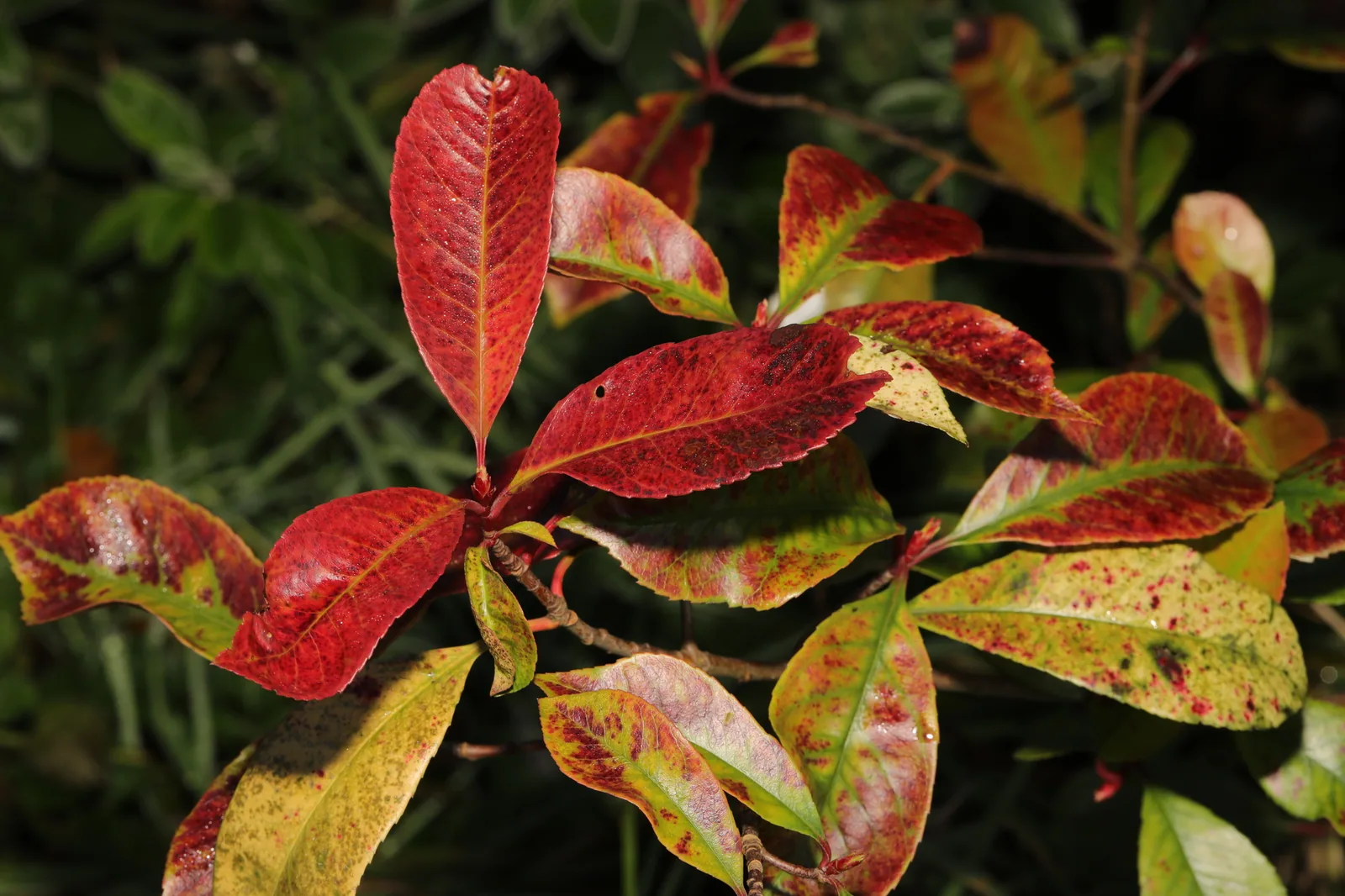
Entomosporium leaf spot
Symptom: Leaf spot disease, especially prevalent and injurious in spring when conditions favor fungal growth
What to do: Concerted foliar sprays in early spring can minimize the problem
What the sources say (2)
Entomosporium leaf spot is especially prevalent and injurious in spring when conditions that favor fungal growth are prevalent.
— Fraser Photinia, Red Tip | VCE Publications | Virginia Tech [1] Concerted foliar sprays in early spring can minimize this problem
— Fraser Photinia; Redtip Photinia (Photinia x fraseri) [3]
Remedies
Each remedy shows what official sources say about it; traditional remedies without an official source are marked as such. Harmful ones are listed so you know to avoid them.
Treating the plant
entomosporium leaf spot
pruning out infected leaves and clearing leaf debris Partly works
How: Prune out symptomatic foliage and remove leaf debris to reduce the fungal spores around the plant.
Sanitation steps such as pruning out symptomatic foliage and removal of leaf debris can help to reduce the amount of fungal spores around the plant that can reinfect new foliage.
— extension.umd.edu [9] What the evidence says Sanitation steps such as pruning out symptomatic foliage and removal of leaf debris can help to reduce the amount of fungal spores around the plant that can reinfect new foliage.
— extension.umd.edu [9] raking up fallen leaves and mulching Partly works
How: Rake up and discard fallen leaves, remove infected plant material and apply fresh mulch to cover any leaves that were missed.
Rake up and discard fallen leaves, and remove infected plant material. Apply fresh mulch around plants to cover any leaves that were missed. These practices reduce the amount of fungus present in the spring, resulting in less infection.
— hgic.clemson.edu [10] What the evidence says Rake up and discard fallen leaves, and remove infected plant material. Apply fresh mulch around plants to cover any leaves that were missed. These practices reduce the amount of fungus present in the spring, resulting in less infection.
— hgic.clemson.edu [10] watering without wetting the leaves Official source, not independently tested
How: Avoid wetting the leaves when watering.
Avoid wetting the leaves when watering. Splashing water spreads the fungus.
— hgic.clemson.edu [10]
Calendar
Sowing
Spring (after hydrating the seed for 24 to 48 hours)
What the sources say (1)
Sembrar en primavera luego de hidratar de 24 a 48 horas.Pruning
Late spring encourages new red flushes but eliminates the flowers
What the sources say (1)
Pruning in late spring may encourage new flushes of red leaves, but will also eliminate the flowers.Months as given by the sources, which are mostly from the United States (northern hemisphere). In the southern hemisphere they shift by about six months.
Indicative values
Values from a secondary source, not checked word for word like the rest of this page. Use them as a starting point.
- Life cycle
- PerennialIndicative value, adapt it to your climate · Secondary source
- Hours of sun
- 6-8 hoursIndicative value, adapt it to your climate · Secondary source
- Care level
- MediumIndicative value, adapt it to your climate · Secondary source
- Growth rate
- HighIndicative value, adapt it to your climate · Secondary source
Similar plants
- Chinese Hawthorn Photinia serratifolia
- Chinese Photinia Photinia davidiana
- Japanese Photinia Photinia glabra
- Abies grandis Abies grandis
- Abraham Trachystemon orientalis
- Abyssinian banana Ensete ventricosum
- Acacia longifolia Acacia longifolia
- Acanthus hungaricus Acanthus hungaricus
Sources
Every value above is quoted from these documents. Links lead to the original publisher.
- Fraser Photinia, Red Tip | VCE Publications | Virginia Tech · pubs.ext.vt.edu, consulted
- ENH-603 · edis.ifas.ufl.edu, consulted
- Fraser Photinia; Redtip Photinia (Photinia x fraseri) · uaex.uada.edu, consulted
- Fraser's Photinia - Photinia x fraseri | North Carolina Extension Gardener Plant Toolbox · plants.ces.ncsu.edu, consulted
- How to grow photinia / RHS Growing Guide · rhs.org.uk, consulted
- How To Grow Photinia | BBC Gardeners World Magazine · gardenersworld.com, consulted
- Photinia (Photinia x fraseri) · portal.fagro.edu.uy, consulted
- Photinia o fotinia, cura e coltivazione - Cose di Casa · cosedicasa.com, consulted
- extension.umd.edu · extension.umd.edu
- hgic.clemson.edu · hgic.clemson.edu
Written by Emilio Marruso · last checked