
How to Grow and Care for Sakhalin Spruce
Picea glehnii
Written by Emilio Marruso · last checked
At a glance
This spruce is a tree you can raise from seed and even taste. Give it full sun and plenty of moisture at the roots, then plant the young trees out in early summer of the year after sowing. Its young shoot tips make a refreshing tea rich in vitamin C, and the young male catkins can be eaten raw or cooked.
- Sun
Full sun
What the sources say (1)
Light: Full sun
Another report says that it grows wild on very alkaline soils so it might be suitable for cultivation on alkaline soils. Dislikes shade
— Picea glehnii - Useful Temperate Plants [3] - Water
Plenty of moisture at the roots; in drier areas it needs deep, moist soil
What the sources say (1)
Watering: Abundant moisture at the roots; in drier areas a deep moist soil
Likes abundant moisture at the roots, if grown in drier areas it must be given a deep moist soil
— Picea glehnii - Useful Temperate Plants [3] - Planting
Plant out in early summer of the year after sowing, while the trees are small (1–3 ft)
What the sources say (2)
Planting: Early summer of the year after sowing, when trees are small (30-90 cm)
They can be planted out into their permanent positions in early summer of the following year, or be placed in an outdoor nursery bed for a year or so to increase in size.
— Picea glehnii - Useful Temperate Plants [3] Trees should be planted into their permanent positions when they are quite small, between 30 and 90cm.
— Picea glehnii - Useful Temperate Plants [3] - Harvest
Young shoot tips make a tea rich in vitamin C; young male catkins are eaten raw or cooked
- Watch out
On shallow soil it doesn't stand up well to wind
- Propagation
From seed or from cuttings of soft, semi-ripe or mature shoot tips
What the sources say (3)
Propagation: Seed; cuttings of semi-ripe or mature terminal shoots; softwood to semi-ripe cuttings
Cuttings of semi-ripe terminal shoots, 5 - 8cm long, August in a frame. Protect from frost. Forms roots in the spring
— Picea glehnii - Useful Temperate Plants [3] Cuttings of mature terminal shoots, 5 - 10cm long, September/early autumn in a cold frame. Takes 12 months
— Picea glehnii - Useful Temperate Plants [3] Seed - stratification will probably improve germination so sow fresh seed in the autumn in a cold frame if possible
— Picea glehnii - Useful Temperate Plants [3] - Sowing
Sow fresh seed in fall in a cold frame; stored seed as early in the year as you can
What the sources say (2)
Sowing: Fresh seed in autumn in a cold frame; stored seed as early in the year as possible in a cold frame
Seed - stratification will probably improve germination so sow fresh seed in the autumn in a cold frame if possible
— Picea glehnii - Useful Temperate Plants [3] Sow stored seed as early in the year as possible in a cold frame
— Picea glehnii - Useful Temperate Plants [3]
Overview
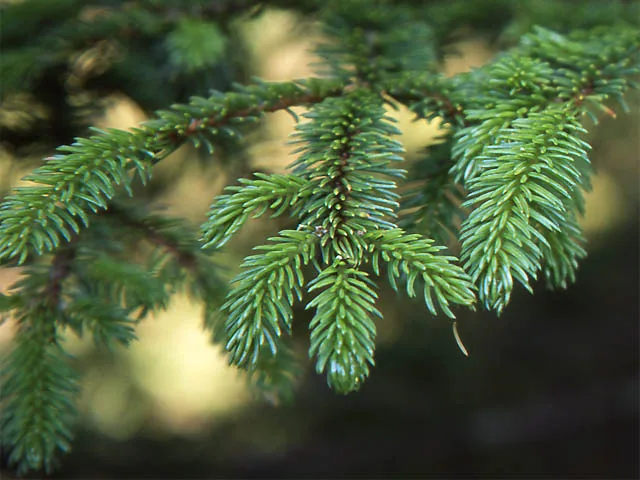
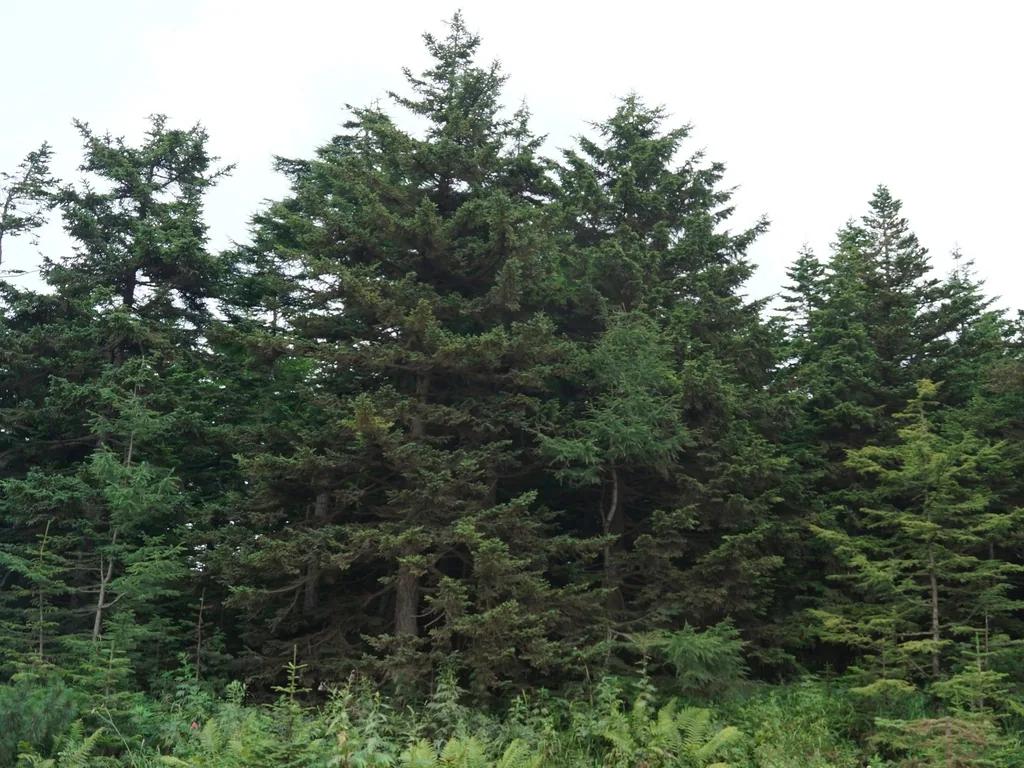
Sakhalin spruce is an evergreen coniferous tree that grows to 30 m [98.4 ft], native to southern Sakhalin, the Kuriles, Hokkaido and northern Honshu. [4][2] It has been introduced into horticulture but remains uncommon, mostly in northern botanical gardens and arboreta. [2] It likes abundant moisture at the roots and needs a deep moist soil in drier areas. [3]
This record is incomplete: the sources we read do not cover every field yet.
Not yet covered by our sources: Hardiness, warmest zone, Pruning
Sakhalin Spruce care
Measurements in square brackets are our conversion into the other unit system; the quoted text is unchanged.
How to water Sakhalin Spruce
Abundant moisture at the roots; in drier areas a deep moist soil
What the sources say (1)
Likes abundant moisture at the roots, if grown in drier areas it must be given a deep moist soilHow much light Sakhalin Spruce needs
Full sun
What the sources say (1)
Another report says that it grows wild on very alkaline soils so it might be suitable for cultivation on alkaline soils. Dislikes shadeHow much cold Sakhalin Spruce can take
Hardiness, coldest zone
The sources give different values depending on region, zone or growing conditions.
What each source says
According to American Conifer Society: 4 [winter low −34.4 to −28.9 °C (−30 to −20 °F)]
Manitoba, Canada: 3a [winter low −40 to −37.2 °C (−40 to −35 °F)]
According to The Gymnosperm Database: 4 [winter low −34.4 to −28.9 °C (−30 to −20 °F)]
What the sources say (5)
According to American Conifer Society: Hardy to USDA Zone 4 - cold hardiness limit between -30° and -20°F (-34.3° and -28.9°C).Manitoba, Canada: it is known to have survived winters in Manitoba, Canada (USDA Zone 3a) for 3 years without any problems, although plants are still small.According to The Gymnosperm Database: Hardy to Zone 4 (cold hardiness limit between -34.3°C and -28.9°C)Hardy to USDA Zone 4 - cold hardiness limit between -30° and -20°F (-34.3° and -28.9°C).Hardy to Zone 4 (cold hardiness limit between -34.3°C and -28.9°C)Hardiness, warmest zone
Not stated in the sources we read.
Best soil for Sakhalin Spruce
Soil pH, minimum
The sources give different values depending on region, zone or growing conditions.
What each source says
According to Useful Temperate Plants: 4
According to American Conifer Society: basic soil
Soil pH, maximum
The sources give different values depending on region, zone or growing conditions.
What each source says
According to Useful Temperate Plants: 6
According to American Conifer Society: basic soil
How to propagate Sakhalin Spruce
Seed; cuttings of semi-ripe or mature terminal shoots; softwood to semi-ripe cuttings
What the sources say (3)
Cuttings of semi-ripe terminal shoots, 5 - 8cm long, August in a frame. Protect from frost. Forms roots in the springCuttings of mature terminal shoots, 5 - 10cm long, September/early autumn in a cold frame. Takes 12 monthsSeed - stratification will probably improve germination so sow fresh seed in the autumn in a cold frame if possibleSakhalin Spruce pests and problems
Wind instability on shallow soils
Symptom: Not very wind-firm in shallow soils
What the sources say (1)
Succeeds in wet cold and shallow soils but is not very wind-firm in shallow soils
— Picea glehnii - Useful Temperate Plants [3]
Remedies
The sources we checked give no remedies for this plant.
Calendar
Sowing
Fresh seed in autumn in a cold frame; stored seed as early in the year as possible in a cold frame
Planting
Early summer of the year after sowing, when trees are small (30-90 cm)
What the sources say (2)
They can be planted out into their permanent positions in early summer of the following year, or be placed in an outdoor nursery bed for a year or so to increase in size.Trees should be planted into their permanent positions when they are quite small, between 30 and 90cm.Pruning
Not stated in the sources we read.
Months as given by the sources, which are mostly from the United States (northern hemisphere). In the southern hemisphere they shift by about six months.
Edibility
Reported by the source, quoted verbatim. Do not eat a plant on the basis of this page alone: identification mistakes can be dangerous.
Young male catkins - raw or cooked. Used as a flavouring
[3]Immature female cones - cooked. The central portion, when roasted, is sweet and syrupy
[3]Inner bark - dried, ground into a powder and then used as a thickener in soups etc or added to cereals when making bread
[3]A refreshing tea, rich in vitamin C, can be made from the young shoot tips
[3]
Indicative values
Values from a secondary source, not checked word for word like the rest of this page. Use them as a starting point.
- Life cycle
- PerennialIndicative value, adapt it to your climate · Secondary source
- Mature height
- 2438.4-3048 cm (80-100 ft)Indicative value, adapt it to your climate · Secondary source
- Hours of sun
- 6-8 hoursIndicative value, adapt it to your climate · Secondary source
- Drought tolerant
- yesIndicative value, adapt it to your climate · Secondary source
- Care level
- MediumIndicative value, adapt it to your climate · Secondary source
- Growth rate
- LowIndicative value, adapt it to your climate · Secondary source
- Pruning
- March, April, May, August, May, MayIndicative value, adapt it to your climate · Secondary source
Similar plants
- Black Spruce Picea mariana
- Blue spruce Picea pungens
- Dragon Spruce Picea asperata
- Himalayan Spruce Picea smithiana
- Norway Spruce Picea abies
- Oriental Spruce Picea orientalis
- Serbian Spruce Picea omorika
- Sitka Spruce Picea sitchensis
Sources
Every value above is quoted from these documents. Links lead to the original publisher.
- Picea glehnii - Trees and Shrubs Online · treesandshrubsonline.org, consulted
- Picea glehnii (アカエゾマツ) description · conifers.org, consulted
- Picea glehnii - Useful Temperate Plants · temperate.theferns.info, consulted
- Conifer Database - glehnii · conifersociety.org, consulted
- Picea glehnii - Sakhalin or Glehn spruce | Arboretum Mustila · mustila.fi, consulted
Written by Emilio Marruso · last checked