
How to Grow and Care for Douglas fir
Pseudotsuga menziesii
Written by Emilio Marruso · last checked
At a glance
The Douglas fir is a woody tree that loves full sun and can be grown right from seed. Patience pays off: after 7–10 years, your tree begins bearing seeds of its own. Spare it from drought and poor ground, because dry spells and thin soil hold back its growth and leave it open to pests.
- Sun
Full sun
What the sources say (2)
Light: Full sun
Plant it in full sun, acidic to neutral, moist, well-drained, organically rich soil.
— Pseudotsuga menziesii (Blue Douglas Fir, Doug Fir, Douglas Fir, Douglas-fir, Douglas Spruce, Douglasstree, False Spruce, Green Douglas Fir, Oregon Pine, Red Fir) | North Carolina Extension Gardener Plant Toolbox [1] Full sun; moist, well drained soil; prefers soil pH neutral to slightly acid.
— Douglasfir (Pseudotsuga menziesii)-Hort Answers - University of Illinois Extension [3] - Water
Drought and poor soil slow its growth a lot and make pest problems more likely
What the sources say (1)
Watering notes: Drought and poor soils dramatically limit growth and predispose the tree to pest problems
Stressful conditions such as drought and poor soils will dramatically limit the growth of douglasfir and predispose it to pest problems.
— Douglasfir, Pseudotsuga menziesii | VCE Publications | Virginia Tech [6] - Pests
Weevils, bark beetles, spider mites and aphids; root rot and needle cast
What the sources say (2)
Pests: weevils, bark beetles, spider mites, aphids, galls, Douglas-fir beetle
Weevils, bark beetles, spider mites, aphids, galls, and Douglas-fir beetle are potential insect pests.
— Pseudotsuga menziesii (Blue Douglas Fir, Doug Fir, Douglas Fir, Douglas-fir, Douglas Spruce, Douglasstree, False Spruce, Green Douglas Fir, Oregon Pine, Red Fir) | North Carolina Extension Gardener Plant Toolbox [1] Diseases: shoestring rot, root rot, heart rot, needle cast
Shoestring rot, root rot, Heart rot, and needle cast are occasional disease problems.
— Pseudotsuga menziesii (Blue Douglas Fir, Doug Fir, Douglas Fir, Douglas-fir, Douglas Spruce, Douglasstree, False Spruce, Green Douglas Fir, Oregon Pine, Red Fir) | North Carolina Extension Gardener Plant Toolbox [1] - Propagation
Grows from seed; the tree starts bearing seeds after 7–10 years
What the sources say (2)
Propagation: Seed
Life Cycle: Woody Recommended Propagation Strategy: Seed Country Or Region Of Origin:
— Pseudotsuga menziesii (Blue Douglas Fir, Doug Fir, Douglas Fir, Douglas-fir, Douglas Spruce, Douglasstree, False Spruce, Green Douglas Fir, Oregon Pine, Red Fir) | North Carolina Extension Gardener Plant Toolbox [1] Years to first fruit: 7-10 years (seed-bearing age)
Seed Bearing Age: 7-10 years
— Douglas Fir | Natural Resources [8]
Overview
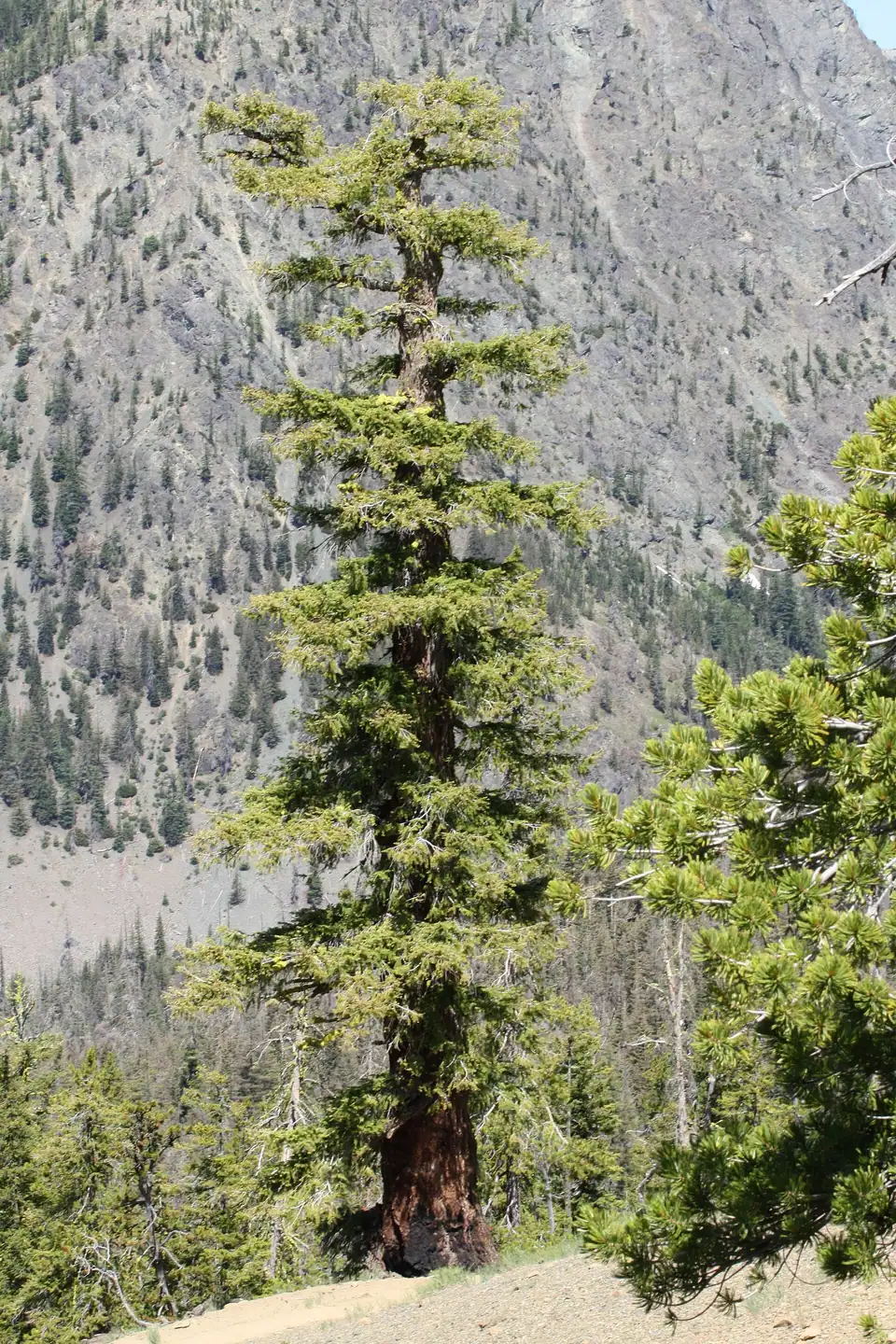
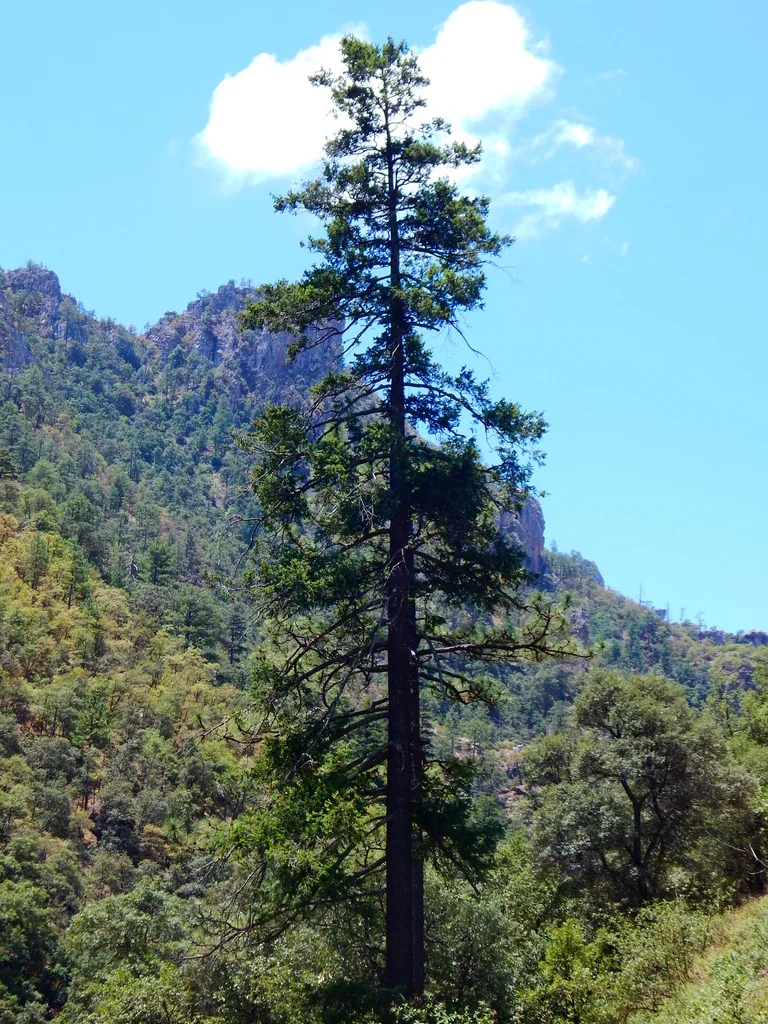
Douglas-fir is a large evergreen conifer that grows 40 to 80 feet [12.2–24.4 m] tall when cultivated. [1] It is planted in full sun in acidic to neutral, moist, well-drained, organically rich soil. [1] It is intolerant to heat, humidity and warm nights, and is grown successfully in the mountains of North Carolina. [1]
This record is incomplete: the sources we read do not cover every field yet.
Not yet covered by our sources: Pruning
Douglas fir care
Measurements in square brackets are our conversion into the other unit system; the quoted text is unchanged.
How to water Douglas fir
Watering
The sources give different values depending on region, zone or growing conditions.
What each source says
According to NC State Extension: Keep well watered; intolerant of drought
According to University of Arkansas Extension (once established): Good drought tolerance
seed from the Rocky Mountains: More drought tolerant than trees grown from Pacific Northwest seed
What the sources say (3)
According to NC State Extension: Keep it well watered since it is intolerant to drought.According to University of Arkansas Extension (once established): Once established it has good drought tolerance.seed from the Rocky Mountains: Trees grown from seed from the Rocky Mountains tend to be more drought tolerant than trees grown from seed from the Pacific Northwest.Watering notes
Drought and poor soils dramatically limit growth and predispose the tree to pest problems
What the sources say (1)
Stressful conditions such as drought and poor soils will dramatically limit the growth of douglasfir and predispose it to pest problems.How much light Douglas fir needs
Full sun
What the sources say (2)
Plant it in full sun, acidic to neutral, moist, well-drained, organically rich soil.Full sun; moist, well drained soil; prefers soil pH neutral to slightly acid.How much cold Douglas fir can take
Hardiness, coldest zone
The sources give different values depending on region, zone or growing conditions.
What each source says
According to NC State Extension: 4a [winter low −34.4 to −31.7 °C (−30 to −25 °F)]
According to Iowa State University Extension: 5 [winter low −28.9 to −23.3 °C (−20 to −10 °F)]
What the sources say (3)
According to NC State Extension: USDA Plant Hardiness Zone:
4a, 4b, 5a, 5b, 6a, 6bAccording to Iowa State University Extension: Hardiness: Zones 5 through 6USDA Plant Hardiness Zone:
4a, 4b, 5a, 5b, 6a, 6bHardiness, warmest zone
The sources give different values depending on region, zone or growing conditions.
What each source says
According to NC State Extension: 6b [winter low −20.6 to −17.8 °C (−5 to 0 °F)]
According to Virginia Cooperative Extension: 6 [winter low −23.3 to −17.8 °C (−10 to 0 °F)] (survives in zone 7 [winter low −17.8 to −12.2 °C (0 to 10 °F)] but usually struggles)
What the sources say (3)
According to NC State Extension: USDA Plant Hardiness Zone:
4a, 4b, 5a, 5b, 6a, 6bAccording to Virginia Cooperative Extension: Zone: 4 to 6 (survives in zone 7 but usually struggles)USDA Plant Hardiness Zone:
4a, 4b, 5a, 5b, 6a, 6bHow to propagate Douglas fir
Seed
What the sources say (1)
Life Cycle:
Woody
Recommended Propagation Strategy:
Seed
Country Or Region Of Origin:How to grow Douglas fir
The plant
Life cycle
woody
What the sources say (1)
Life Cycle: WoodyFamily
Pinaceae
What the sources say (1)
Family: PinaceaeMature height
Mature width
Years to first fruit
7-10 years (seed-bearing age)
What the sources say (1)
Seed Bearing Age: 7-10 yearsPests and diseases
Pests
weevils, bark beetles, spider mites, aphids, galls, Douglas-fir beetle
What the sources say (1)
Weevils, bark beetles, spider mites, aphids, galls, and Douglas-fir beetle are potential insect pests.Diseases
shoestring rot, root rot, heart rot, needle cast
What the sources say (1)
Shoestring rot, root rot, Heart rot, and needle cast are occasional disease problems.Fertilizing
When
The sources give different values depending on region, zone or growing conditions.
What each source says
Christmas tree plantations: Late winter or early spring, only if needle analysis shows low nitrogen; not in fall
Christmas tree plantations: Each spring, three weeks before bud break, from the year after planting
What the sources say (2)
Christmas tree plantations: Rather than applying fall N, growers are better served by monitoring foliar N and applying N, if needed, in winter or spring.Christmas tree plantations: Following the year of establishment, a commercial N fertilizer may be applied each spring about three weeks before bud break.How often
The sources give different values depending on region, zone or growing conditions.
What each source says
Christmas tree plantations: Once a year in spring, from the second year after planting
What the sources say (1)
Christmas tree plantations: Following the year of establishment, a commercial N fertilizer may be applied each spring about three weeks before bud break.Natural fertilizers
The sources give different values depending on region, zone or growing conditions.
What each source says
organic Christmas tree plantations: White clover as a ground cover; compost or manures
What the sources say (1)
organic Christmas tree plantations: In the case of organic Christmas trees, N fertility can be provided simply by encouraging white clover to grow as a ground cover within the plantation.
Compost or manures may also be used to augment the soil fertility program.Mineral fertilizers
The sources give different values depending on region, zone or growing conditions.
What each source says
Christmas tree plantations: Nitrogen fertilizer only when needle nitrogen is below 1.6%
Christmas tree plantations: 31 g of urea per tree, spread at the drip line
What the sources say (2)
Christmas tree plantations: Apply fertilizer N if needle N concentration is below 1.6% for Douglas-fir or 1.4% for noble fir.Christmas tree plantations: It is designed to hold 1.09 oz. (31 grams) of urea fertilizer material which would supply 0.5 oz. of N when applied around the drip line of a Christmas tree.Avoid
The sources give different values depending on region, zone or growing conditions.
What each source says
Christmas tree plantations: No nitrogen in the first growing season after planting
Christmas tree plantations: No fertilizer on the new needles just after bud break
Christmas tree plantations: Never place concentrated fertilizer within 46 cm [18 in] of the trunk
What the sources say (3)
Christmas tree plantations: Nitrogen (N) fertilizer is not recommended during the first growing season that Christmas trees are planted.Christmas tree plantations: Be especially careful when applying any material shortly after bud break. New needles lack the waxy cuticle layer that protects older needles. Thus, they are susceptible to damage from corrosive or salty materials such as fertilizersChristmas tree plantations: Applications around the drip line are more efficient for tree uptake, but the concentrated fertilizer should never be applied closer than within 18 inches of the tree trunk.Signs of deficiency
The sources give different values depending on region, zone or growing conditions.
What each source says
timber plantations on gravelly soil: Boron deficiency: swollen leaders, dieback of leaders and side shoots, curled needles in rosettes
Christmas tree plantations: Magnesium deficiency: yellowing (chlorosis) of the needles
What the sources say (2)
timber plantations on gravelly soil: Boron deficiency affects the apical or growing points of plants. Boron-deficient Douglas-fir trees exhibited swollen leaders, increased death of leaders and lateral growth, and curling and rosette growth of needles.Christmas tree plantations: Magnesium is a component of chlorophyll. Deficiencies cause chlorosis (yellowing) of needles.
Mg deficiencies have not been documented for Christmas tree production in western Oregon and WashingtonSigns of excess
The sources give different values depending on region, zone or growing conditions.
What each source says
Christmas tree plantations: Heavy nitrogen feeding lowers cold hardiness, with more needle loss in hard frosts
Christmas tree plantations: Too much fertilizer can injure or burn the trees
What the sources say (2)
Christmas tree plantations: In trials with Douglas-fir, needle loss during display was not tested. High levels of N fertilization did decrease cold hardiness, however.Christmas tree plantations: Refrain from adding “just a bit more” fertilizer, as the trees could be injured or burned from a high dose of fertilizer.Douglas fir pests and problems
Insect pests
Symptom: Weevils, bark beetles, spider mites, aphids, galls, and Douglas-fir beetle are potential insect pests.
What to do: Not given.
What the sources say (1)
Weevils, bark beetles, spider mites, aphids, galls, and Douglas-fir beetle are potential insect pests.
— Pseudotsuga menziesii (Blue Douglas Fir, Doug Fir, Douglas Fir, Douglas-fir, Douglas Spruce, Douglasstree, False Spruce, Green Douglas Fir, Oregon Pine, Red Fir) | North Carolina Extension Gardener Plant Toolbox [1] Diseases
Symptom: Shoestring rot, root rot, heart rot, and needle cast are occasional disease problems.
What to do: Not given.
What the sources say (1)
Shoestring rot, root rot, Heart rot, and needle cast are occasional disease problems.
— Pseudotsuga menziesii (Blue Douglas Fir, Doug Fir, Douglas Fir, Douglas-fir, Douglas Spruce, Douglasstree, False Spruce, Green Douglas Fir, Oregon Pine, Red Fir) | North Carolina Extension Gardener Plant Toolbox [1] Spruce gall adelgids
Symptom: Listed among pests and problems of the plant.
What to do: Not given.
What the sources say (1)
Insect Damage - Spruce Gall Adelgids ( Adelges cooleyi, Adelges abietis )
— Douglasfir (Pseudotsuga menziesii)-Hort Answers - University of Illinois Extension [3]
Remedies
Each remedy shows what official sources say about it; traditional remedies without an official source are marked as such. Harmful ones are listed so you know to avoid them.
Treating the plant
tussock-moth-caterpillars
hand-picking Not verified
Traditional remedy, not verified by an official source.
How: For small infestations, caterpillars can be hand-picked.
adelgids
horticultural oil Not verified
Traditional remedy, not verified by an official source.
How: Horticultural oils can also be applied in late winter or early spring to smother overwintering adelgid eggs before new growth emerges.
game-damage
mesh tree guards or fencing Not verified
Traditional remedy, not verified by an official source.
How: Against thrashing, a two-metre-high wire mesh fence can be erected at some distance around the tree and fastened to a pole.
Calendar
Pruning
Not stated in the sources we read.
Months as given by the sources, which are mostly from the United States (northern hemisphere). In the southern hemisphere they shift by about six months.
Indicative values
Values from a secondary source, not checked word for word like the rest of this page. Use them as a starting point.
- Hours of sun
- 14-16 hoursIndicative value, adapt it to your climate · Secondary source
- Soil
- Sandy Loamy Clay RockyIndicative value, adapt it to your climate · Secondary source
- Soil pH
- 5-6Indicative value, adapt it to your climate · Secondary source
- Care level
- MediumIndicative value, adapt it to your climate · Secondary source
- Growth rate
- ModerateIndicative value, adapt it to your climate · Secondary source
- Pruning
- February, March, AprilIndicative value, adapt it to your climate · Secondary source
Similar plants
- Abies grandis Abies grandis
- Aleppo Pine Pinus halepensis
- Alpine Fir Abies lasiocarpa
- Armand Pine Pinus armandi
- Austrian Pine Pinus nigra
- Balsam Fir Abies balsamea
- Black Spruce Picea mariana
- Blue spruce Picea pungens
Sources
Every value above is quoted from these documents. Links lead to the original publisher.
- Pseudotsuga menziesii (Blue Douglas Fir, Doug Fir, Douglas Fir, Douglas-fir, Douglas Spruce, Douglasstree, False Spruce, Green Douglas Fir, Oregon Pine, Red Fir) | North Carolina Extension Gardener Plant Toolbox · plants.ces.ncsu.edu, consulted
- Douglas-fir, Pseudotsuga menziesii | OSU Extension Service · extension.oregonstate.edu, consulted
- Douglasfir (Pseudotsuga menziesii)-Hort Answers - University of Illinois Extension · web.extension.illinois.edu, consulted
- Selecting Trees for Your Home - Douglasfir (Pseudotsuga menziesii) · web.extension.illinois.edu, consulted
- Douglas-fir | TreeBrowser | USU · extension.usu.edu, consulted
- Douglasfir, Pseudotsuga menziesii | VCE Publications | Virginia Tech · pubs.ext.vt.edu, consulted
- Fir, Douglas · uaex.uada.edu, consulted
- Douglas Fir | Natural Resources · naturalresources.extension.iastate.edu, consulted
- extension.oregonstate.edu · extension.oregonstate.edu
- njaes.rutgers.edu · njaes.rutgers.edu
Written by Emilio Marruso · last checked