
How to Grow and Care for Macarthur Palm
Ptychosperma macarthurii
Written by Emilio Marruso · last checked
Toxic to: People · Why
At a glance
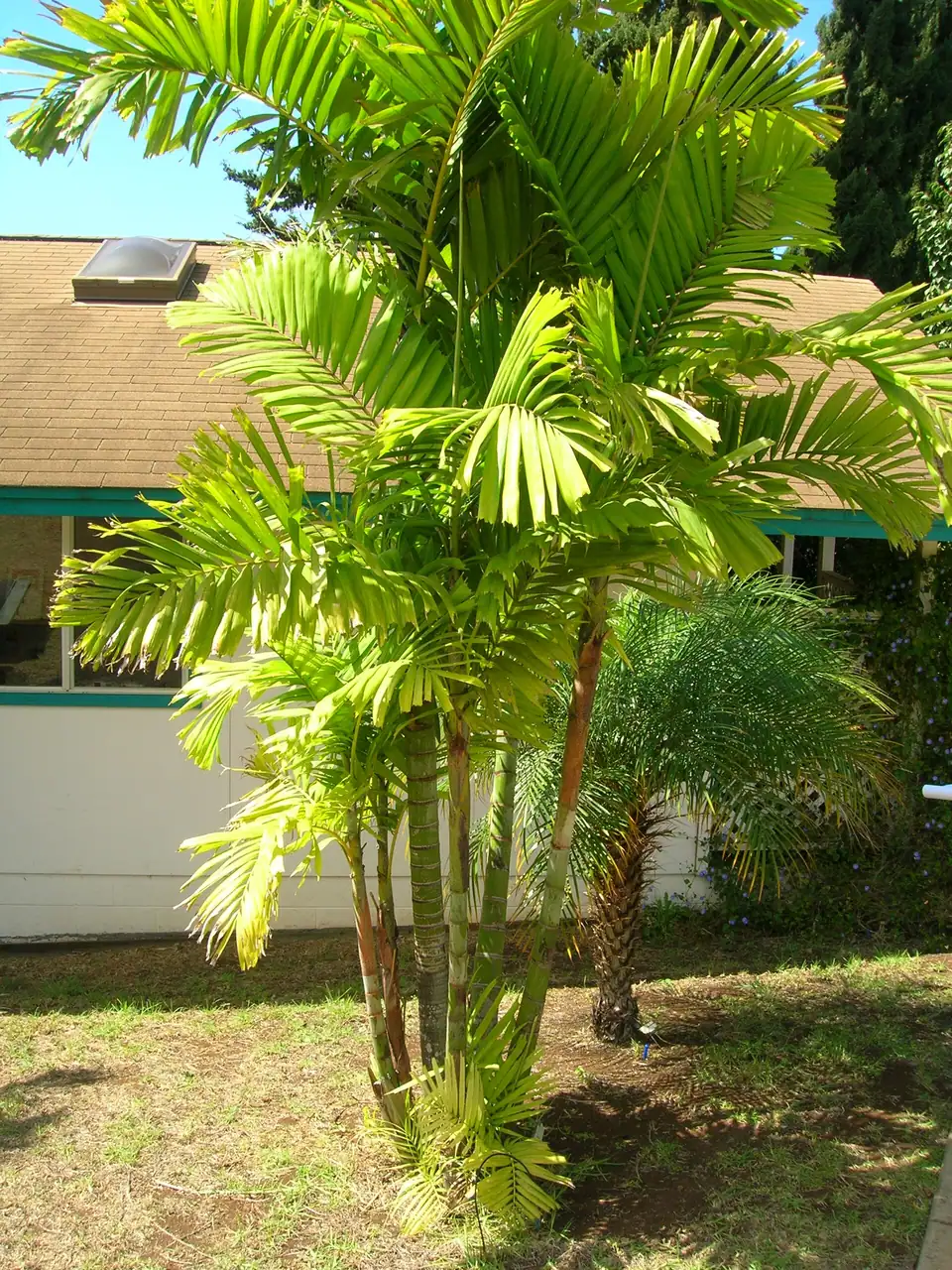
This palm grows 15 to 25 feet tall, yet it happily lives in a container or even indoors. It can handle drought, but regular watering pays off: with plenty of moisture it keeps more of its leaves. Give it moist, well-draining soil, and you can grow new plants from seed or by division.
- Water
Handles drought, but water regularly, especially in dry spells; more water means more leaves
What the sources say (4)
Watering: Drought tolerant, but best watered regularly, especially during dry spells
Though drought tolerant, it is best to water regularly, especially during dry spells.
— NParks | Ptychosperma macarthurii [5] Soil tolerances: clay; sand; loam; slightly alkaline; acidic; well-drained Drought tolerance: high
— ENH-693 [1] Watering notes: Abundant moisture keeps more leaves; prefers moist, well-draining soils
Abundant moisture will allow it to look its best because it will keep more leaves.
— ENH-693 [1] It prefers moist, well-draining soils that are rich and high in organic matter and nutrients
— NParks | Ptychosperma macarthurii [5] - Cold
Survives winters down to 35 °F (1.7 °C)
Tender: needs a frost-free greenhouse · USDA 10b · RHS H2 · Z10
What the sources say (2)
Hardiness, coldest zone: 10b [winter low 1.7 to 4.4 °C (35 to 40 °F)]
USDA hardiness zones: 10B through 11 (Figure 2) Origin: not native to North America
— ENH-693 [1] Hardiness, warmest zone: 11 [winter low 4.4 to 10 °C (40 to 50 °F)]
USDA hardiness zones: 10B through 11 (Figure 2) Origin: not native to North America
— ENH-693 [1] - Soil
Moist soil that drains well
What the sources say (2)
Watering notes: Abundant moisture keeps more leaves; prefers moist, well-draining soils
Abundant moisture will allow it to look its best because it will keep more leaves.
— ENH-693 [1] It prefers moist, well-draining soils that are rich and high in organic matter and nutrients
— NParks | Ptychosperma macarthurii [5] - Harvest
Its tender palm heart was once eaten as food
- Pests
Sooty mold sometimes coats the trunk
What the sources say (1)
Diseases: sooty mold
No pests or diseases are of major concern. This palm is lethal yellowing-resistant. Sooty mold sometimes coats the trunk.
— ENH-693 [1] - Size
15 to 25 ft tall and 6 to 10 ft wide
- Propagation
From seed or by division
- Containers
Grows in containers and indoors too
What the sources say (3)
In containers: Yes
Macarthur palm is often used in planters or urns but quickly outgrows these containers.
— ENH-693 [1] Uses: indoors; deck or patio; specimen; container or planter
— ENH-693 [1] Indoors: Yes
Uses: indoors; deck or patio; specimen; container or planter
— ENH-693 [1] - Safety
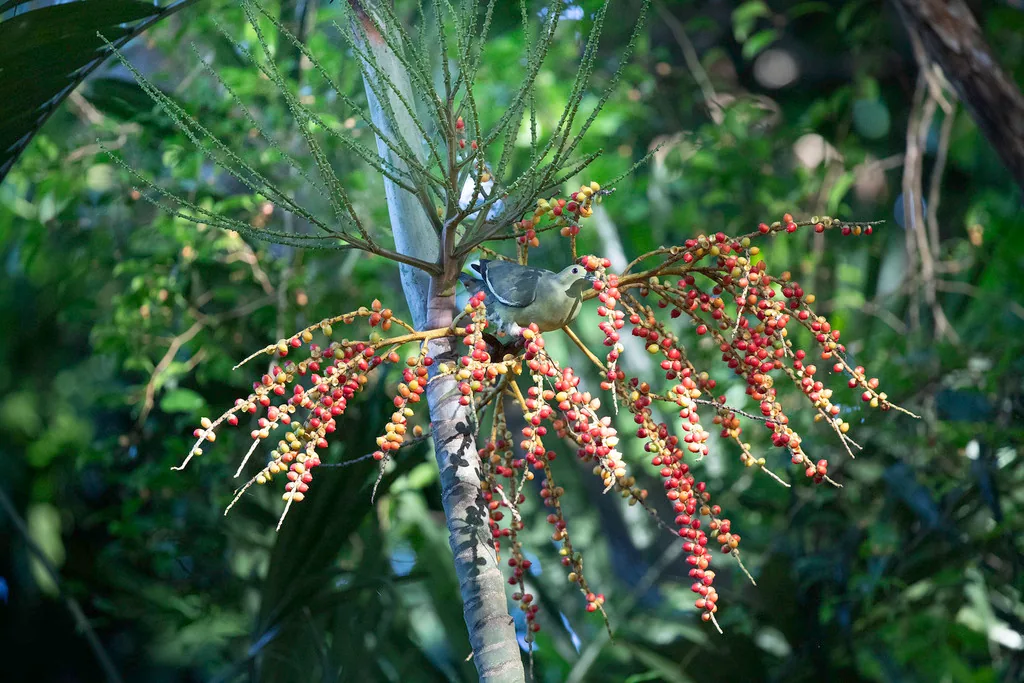
The flesh of the fruit irritates the skin of people
Overview
Macarthur palm is a small clustering palm with slender ringed grey trunks, most often 10 to 15 feet [3–4.6 m] tall. [1] It is listed for USDA zones 10B through 11 and for use indoors, on decks or patios, and in containers. [1] The fruit flesh is described as an irritant, and the species is regarded as weedy and potentially invasive in a number of tropical locations. [3]
This record is incomplete: the sources we read do not cover every field yet.
Not yet covered by our sources: Pruning
Macarthur Palm care
Measurements in square brackets are our conversion into the other unit system; the quoted text is unchanged.
How to water Macarthur Palm
Watering
Drought tolerant, but best watered regularly, especially during dry spells
Watering notes
Abundant moisture keeps more leaves; prefers moist, well-draining soils
How much light Macarthur Palm needs
The sources disagree:
Adept to a wide range of growth conditions but best grown under strong sun or partial sun.
[5]
How much cold Macarthur Palm can take
Hardiness, coldest zone
10b [winter low 1.7 to 4.4 °C (35 to 40 °F)]
What the sources say (1)
USDA hardiness zones: 10B through 11 (Figure 2) Origin: not native to North AmericaHardiness, warmest zone
11 [winter low 4.4 to 10 °C (40 to 50 °F)]
What the sources say (1)
USDA hardiness zones: 10B through 11 (Figure 2) Origin: not native to North AmericaWhere to grow Macarthur Palm
Indoors
Yes
What the sources say (1)
Uses: indoors; deck or patio; specimen; container or planterHow to propagate Macarthur Palm
How to grow Macarthur Palm
The plant
Family
Arecaceae
What the sources say (1)
Scientific name: Ptychosperma macarthurii Pronunciation: tye-koe-SPER-muh mack-ar-THUR-ee-eye Common name(s): Macarthur palm Family: ArecaceaeMature height
457 to 762 cm (15 to 25 feet)
What the sources say (1)
Height: 15 to 25 feet Spread: 6 to 10 feet Crown uniformity: irregularMature width
183 to 305 cm (6 to 10 feet)
What the sources say (1)
Height: 15 to 25 feet Spread: 6 to 10 feet Crown uniformity: irregularPests and diseases
Diseases
sooty mold
What the sources say (1)
No pests or diseases are of major concern. This palm is lethal yellowing-resistant. Sooty mold sometimes coats the trunk.Macarthur Palm pests and problems
Sooty mold
Symptom: Sooty mold sometimes coats the trunk.
What the sources say (1)
No pests or diseases are of major concern. This palm is lethal yellowing-resistant. Sooty mold sometimes coats the trunk.
— ENH-693 [1]
Remedies
Each remedy shows what official sources say about it; traditional remedies without an official source are marked as such. Harmful ones are listed so you know to avoid them.
First aid
First aid: not a substitute for a doctor
contact dermatitis
rinsing the skin with warm water and an emollient Official source, not independently tested
How: Rinse the affected skin with warm water and an emollient as soon as possible.
if you come into contact with an allergen or irritant, rinse the affected skin with warm water and an emollient as soon as possible
— nhs.uk [8]
Is Macarthur Palm poisonous?
Reported by the source, quoted verbatim. This is not medical or veterinary advice: if a person or an animal may have eaten this plant, contact a poison control centre or a veterinarian.
Calendar
Pruning
Not stated in the sources we read.
Months as given by the sources, which are mostly from the United States (northern hemisphere). In the southern hemisphere they shift by about six months.
Edibility
Reported by the source, quoted verbatim. Do not eat a plant on the basis of this page alone: identification mistakes can be dangerous.
by the Aboriginal people and was formerly a food, the tender "cabbage" being eaten.
[3]
Indicative values
Values from a secondary source, not checked word for word like the rest of this page. Use them as a starting point.
- Life cycle
- PerennialIndicative value, adapt it to your climate · Secondary source
- Drought tolerant
- yesIndicative value, adapt it to your climate · Secondary source
- Soil pH
- 6-7.5Indicative value, adapt it to your climate · Secondary source
- Care level
- MediumIndicative value, adapt it to your climate · Secondary source
- Growth rate
- LowIndicative value, adapt it to your climate · Secondary source
- Pruning
- February, March, April, March, April, May, June, July, AugustIndicative value, adapt it to your climate · Secondary source
Similar plants
- Areca Palm Chrysalidocarpus lutescens
- Bamboo Palm Chamaedorea seifrizii
- Bismark Palm Bismarckia nobilis
- California fan palm Washingtonia filifera
- Canary Island Date Palm Phoenix canariensis
- Christmas Palm Adonidia merrillii
- Cyrtostachys renda Cyrtostachys renda
- Double coconut Lodoicea maldivica
Sources
Every value above is quoted from these documents. Links lead to the original publisher.
- ENH-693 · edis.ifas.ufl.edu, consulted
- Ptychosperma macarthurii / [Species detail] / Plant Atlas · florida.plantatlas.usf.edu, consulted
- TAXON: Ptychosperma macarthurii · plantpono.org, consulted
- Ptychosperma macarthurii - Botany Brisbane · botanybrisbane.com, consulted
- NParks | Ptychosperma macarthurii · nparks.gov.sg, consulted
- MacArthur Palm - Ptychosperma macarthurii · uforest.org, consulted
- Ptychosperma macarthurii (PPMMA)[Overview]| EPPO Global Database · gd.eppo.int, consulted
- nhs.uk · nhs.uk
Written by Emilio Marruso · last checked