
How to Grow and Care for Candelabra Bush
Senna alata
Written by Emilio Marruso · last checked
Toxic to: People · Why
At a glance
This senna is a generous, easygoing shrub that grows 10–15 feet tall and just as wide. It loves full sun, handles both drought and soggy soil once established, and generally needs no fertilizer. Sow the seeds in spring once the danger of frost has passed, or start new plants from cuttings or division; it even grows in containers.
- Sun
Full sun
What the sources say (2)
- Water
Easygoing: once established it handles both drought and soggy soil
What the sources say (2)
Watering: Adaptable; drought tolerant once established; tolerates both drought and waterlogged soils
Care Instructions: Light: full sun Water: adaptable, drought tolerant once established Soil: average garden soil
— UNF: Senna alata [3] This easy-to-grow, fast-growing species is highly adaptable, tolerating both drought and waterlogged soils.
— NParks | Senna alata [4] - Cold
Survives winters down to 30 °F (−1.1 °C)
Half hardy: mild winters or an unheated greenhouse · USDA 10a · RHS H3 · Z10
What the sources say (4)
Hardiness, coldest zone: 10a [winter low −1.1 to 1.7 °C (30 to 35 °F)]
USDA hardiness zones: 10A through 11 (Figure 2)
— ENH284/ST125: Senna alata: Candlebrush [1] Family: Fabaceae Common Synonyms: Cassia alata USDA Hardiness Zone: 10a-11 Growth Habit: Shrub
— Senna alata - Florida Natural Areas Inventory [2] Hardiness, warmest zone: 11 [winter low 4.4 to 10 °C (40 to 50 °F)]
USDA hardiness zones: 10A through 11 (Figure 2)
— ENH284/ST125: Senna alata: Candlebrush [1] Family: Fabaceae Common Synonyms: Cassia alata USDA Hardiness Zone: 10a-11 Growth Habit: Shrub
— Senna alata - Florida Natural Areas Inventory [2] - Spacing
7–16 ft between plants
What the sources say (1)
Spacing: 200-500 cm (2-5 m)
Individual should be spaced 2 - 5 m apart. It tends to attract ants.
— NParks | Senna alata [4] - Feeding
Usually needs no fertilizer
What the sources say (1)
How often: Generally not needed
Candle bushes are rapid growers and generally does not need fertilizing.
— Candle Bush | GardeningSG [5] - Pests
Caterpillars can eat the leaves and flower buds
What the sources say (1)
Pests: caterpillars
Caterpillars can cause a problem for candlebrush, eating the foliage and flower buds.
— ENH284/ST125: Senna alata: Candlebrush [1] - Size
10–15 ft tall and just as wide
What the sources say (2)
Mature height: 305-457 cm (10-15 ft)
Reaching a height of 10 to 15 feet with an equal spread, candlebrush makes an attractive specimen shrub or small tree if it is properly trained.
— ENH284/ST125: Senna alata: Candlebrush [1] Mature width: 305-457 cm (10-15 ft)
Reaching a height of 10 to 15 feet with an equal spread, candlebrush makes an attractive specimen shrub or small tree if it is properly trained.
— ENH284/ST125: Senna alata: Candlebrush [1] - Propagation
From seed, cuttings or division
What the sources say (2)
- Sowing
Sow in spring, once the danger of frost has passed
What the sources say (1)
Sowing: Spring, after the danger of frost has passed
Soak seeds overnight and direct sow in the spring when chances of frost have passed.
— Candlestick Plant Info - Tips For Growing Candle Bush | Gardening Know How [6] - Containers
Grows in containers too
What the sources say (1)
In containers: Yes
Uses: specimen; container or planter; trained as a standard; deck or patio; highway median
— ENH284/ST125: Senna alata: Candlebrush [1] - Safety
The seeds are highly poisonous: keep them away from children
Overview
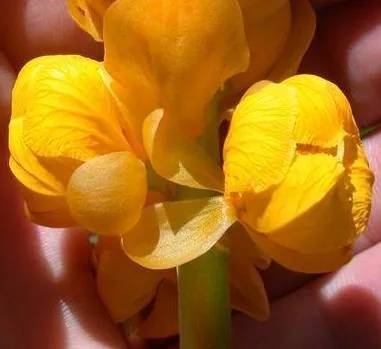
Candlebrush is a large, fast-growing shrub with showy golden-yellow flower spikes, reaching 10 to 15 feet [3–4.6 m] in height and spread. [1] It grows in full sun on a wide range of soils and is dieback-prone in frost. [1][3] It is flagged for potential invasiveness and should be managed to prevent escape. [1]
Candelabra Bush care
Measurements in square brackets are our conversion into the other unit system; the quoted text is unchanged.
How to water Candelabra Bush
Adaptable; drought tolerant once established; tolerates both drought and waterlogged soils
How much light Candelabra Bush needs
Full sun
What the sources say (2)
Light requirement: full sun
Soil tolerances: clay; sand; loam; slightly alkaline; acidic; well-drainedCare Instructions:
Light: full sun
Water: adaptable, drought tolerant once established
Soil: average garden soilHow much cold Candelabra Bush can take
Hardiness, coldest zone
10a [winter low −1.1 to 1.7 °C (30 to 35 °F)]
Hardiness, warmest zone
11 [winter low 4.4 to 10 °C (40 to 50 °F)]
Where to grow Candelabra Bush
In containers
Yes
What the sources say (1)
Uses: specimen; container or planter; trained as a standard; deck or patio; highway medianSpacing
200-500 cm (2-5 m)
What the sources say (1)
Individual should be spaced 2 - 5 m apart. It tends to attract ants.How to propagate Candelabra Bush
How to grow Candelabra Bush
The plant
Family
Fabaceae
What the sources say (1)
Common name(s): Candlebrush, candlestick plant
Family: Fabaceae
USDA hardiness zones: 10A through 11 (Figure 2)Mature height
305-457 cm (10-15 ft)
What the sources say (1)
Reaching a height of 10 to 15 feet with an equal spread, candlebrush makes an attractive specimen shrub or small tree if it is properly trained.Mature width
305-457 cm (10-15 ft)
What the sources say (1)
Reaching a height of 10 to 15 feet with an equal spread, candlebrush makes an attractive specimen shrub or small tree if it is properly trained.Pests and diseases
Pests
caterpillars
What the sources say (1)
Caterpillars can cause a problem for candlebrush, eating the foliage and flower buds.Fertilizing
How often
Generally not needed
What the sources say (1)
Candle bushes are rapid growers and generally does not need fertilizing.Candelabra Bush pests and problems
Caterpillars
Symptom: Foliage and flower buds are eaten
What the sources say (1)
Caterpillars can cause a problem for candlebrush, eating the foliage and flower buds.
— ENH284/ST125: Senna alata: Candlebrush [1]
Remedies
Each remedy shows what official sources say about it; traditional remedies without an official source are marked as such. Harmful ones are listed so you know to avoid them.
Getting rid of it
candle bush infestation
hand pulling and grubbing Official source, not independently tested
How: Weeds, including their roots, are physically pulled out of the ground by hand or using hand tools.
Weeds, including their roots, are physically pulled out of the ground by hand or using hand tools.
— nt.gov.au [9]
Is Candelabra Bush poisonous?
Reported by the source, quoted verbatim. This is not medical or veterinary advice: if a person or an animal may have eaten this plant, contact a poison control centre or a veterinarian.
Calendar
Sowing
Spring, after the danger of frost has passed
What the sources say (1)
Soak seeds overnight and direct sow in the spring when chances of frost have passed.Pruning
The sources give different values depending on region, zone or growing conditions.
What each source says
According to UF/IFAS: Spring (hard pruning)
According to Gardening Know How: After flowering (heavy pruning)
What the sources say (2)
According to UF/IFAS: Candlebrush produces the nicest flower display when it is pruned back hard in the spring prior.According to Gardening Know How: Heavy pruning when blooms are finished results in a more compact and attractive bush.Months as given by the sources, which are mostly from the United States (northern hemisphere). In the southern hemisphere they shift by about six months.
Indicative values
Values from a secondary source, not checked word for word like the rest of this page. Use them as a starting point.
- Life cycle
- PerennialIndicative value, adapt it to your climate · Secondary source
- Hours of sun
- 6-8 hoursIndicative value, adapt it to your climate · Secondary source
- Drought tolerant
- yesIndicative value, adapt it to your climate · Secondary source
- Soil pH
- 6-7.5Indicative value, adapt it to your climate · Secondary source
- Care level
- MediumIndicative value, adapt it to your climate · Secondary source
- Growth rate
- HighIndicative value, adapt it to your climate · Secondary source
Similar plants
- Maryland Senna Senna marilandica
- Sicklepod Senna obtusifolia
- Afghan Redbud Cercis griffithii
- American hogpeanut Amphicarpaea bracteata
- Amur Maackia Maackia amurensis
- Bauhinia Bauhinia blakeana
- Bicolor Lespedeza Lespedeza bicolor
- Black Locust Robinia pseudoacacia
Sources
Every value above is quoted from these documents. Links lead to the original publisher.
- ENH284/ST125: Senna alata: Candlebrush · ask.ifas.ufl.edu, consulted
- Senna alata - Florida Natural Areas Inventory · fnai.org, consulted
- UNF: Senna alata · unf.edu, consulted
- NParks | Senna alata · nparks.gov.sg, consulted
- Candle Bush | GardeningSG · gardeningsg.nparks.gov.sg, consulted
- Candlestick Plant Info - Tips For Growing Candle Bush | Gardening Know How · gardeningknowhow.com, consulted
- Senna alata - Leon Levy Native Plant Preserve · levypreserve.org, consulted
- Senna alata / [Species detail] / Plant Atlas · florida.plantatlas.usf.edu, consulted
- nt.gov.au · nt.gov.au
Written by Emilio Marruso · last checked