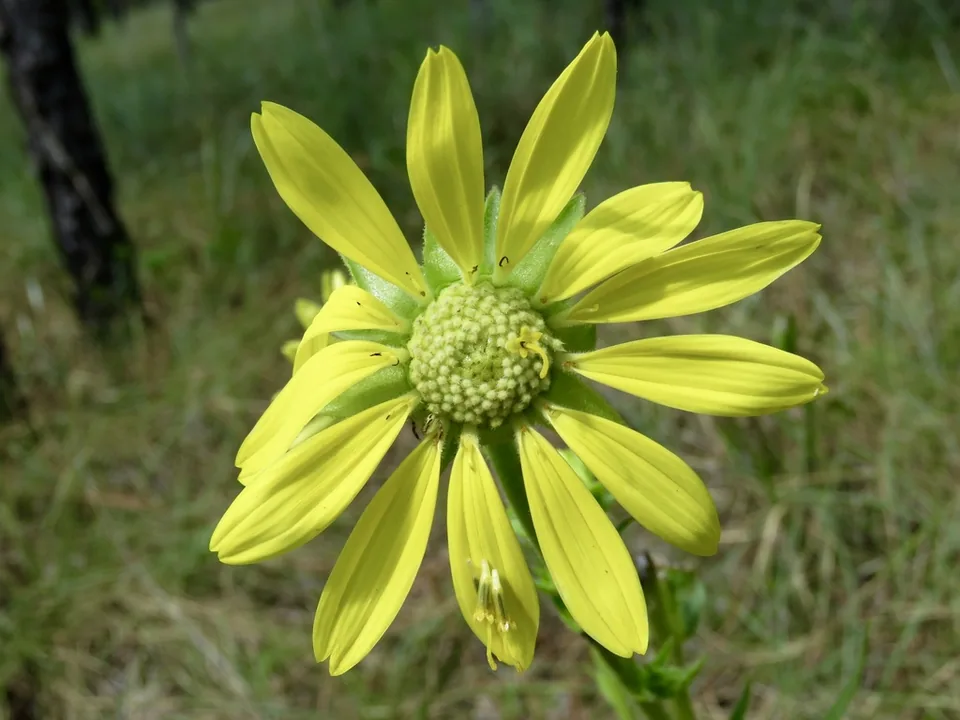
How to Grow and Care for Compassplant
Silphium laciniatum
Written by Emilio Marruso · last checked
At a glance
This towering perennial from the daisy family can grow 5 to 9 feet tall, yet it asks for very little: it is happy in dry soil and handles drought with ease. Sow the seeds in fall or early spring and watch it rise year after year. As a fun bonus, its hardened sap can be chewed like gum.
- Water
Likes dry soil and handles drought very well
- Soil
Grows in acidic to slightly alkaline soil, pH 4.5–7.5
- Harvest
Its hardened sap can be chewed like gum
- Size
5 to 9 ft tall
What the sources say (1)
Mature height: 152-274 cm (5-9 ft)
5-9 feet height, blooms summer into fall, yellow flowers.
— Silphium laciniatum | Tennessee Smart Yards [4] - Propagation
Easiest from seed; dividing it is hard because of its deep roots
What the sources say (2)
Propagation: Seed (most easily); division is difficult because of the deep roots
Most easily propagated by seed.
— Lady Bird Johnson Wildflower Center - The University of Texas at Austin [3] Deep roots make division difficult.
— Lady Bird Johnson Wildflower Center - The University of Texas at Austin [3] - Sowing
Sow in fall or early spring, 1/2 inch deep
What the sources say (2)
Overview
Compass plant is a tall, long-lived prairie perennial with a large woody taproot. [3] It is propagated most easily by seed, as deep roots make division difficult. [3]
This record is incomplete: the sources we read do not cover every field yet.
Not yet covered by our sources: Hardiness, coldest zone, Hardiness, warmest zone, Pruning
Compassplant care
Measurements in square brackets are our conversion into the other unit system; the quoted text is unchanged.
How to water Compassplant
How much light Compassplant needs
The sources disagree:
Succeeds in sun or dappled shade, preferring a shady position
[6]
How much cold Compassplant can take
Hardiness, coldest zone
Not stated in the sources we read.
Hardiness, warmest zone
Not stated in the sources we read.
Best soil for Compassplant
Soil pH, minimum
4.5
What the sources say (1)
soils with a pH range of 4.5-7.5Soil pH, maximum
7.5
What the sources say (1)
soils with a pH range of 4.5-7.5How to propagate Compassplant
Seed (most easily); division is difficult because of the deep roots
How to grow Compassplant
The plant
Life cycle
perennial
What the sources say (1)
Origin | Native | Duration | Perennial | Distribution in the U.S.Family
Asteraceae
What the sources say (1)
Species Name: Silphium laciniatum Plant Type: Forb Family Name: Asteraceae, Sunflower FamilyMature height
152-274 cm (5-9 ft)
What the sources say (1)
5-9 feet height, blooms summer into fall, yellow flowers.Remedies
The sources we checked give no remedies for this plant.
Calendar
Sowing
Spring (unstratified seed) or fall (stratified seed)
What each source says
USGS Plants of Louisiana: Fall or early spring (seed planted 1/2 inch [1.3 cm] deep)
Pruning
Not stated in the sources we read.
Months as given by the sources, which are mostly from the United States (northern hemisphere). In the southern hemisphere they shift by about six months.
Edibility
Reported by the source, quoted verbatim. Do not eat a plant on the basis of this page alone: identification mistakes can be dangerous.
Indicative values
Values from a secondary source, not checked word for word like the rest of this page. Use them as a starting point.
- USDA hardiness zones
- 3-8 [winter low −40 to −6.7 °C (−40 to 20 °F)]Indicative value, adapt it to your climate · Secondary source
- Care level
- MediumIndicative value, adapt it to your climate · Secondary source
- Growth rate
- HighIndicative value, adapt it to your climate · Secondary source
- Pruning
- March, April, May, March, April, May, March, April, MayIndicative value, adapt it to your climate · Secondary source
Similar plants
- Cup-plant Silphium perfoliatum
- Prairie-dock Silphium terebinthinaceum
- Rosinweed Silphium integrifolium
- African Daisy Dimorphotheca pluvialis
- African Marigold Tagetes erecta
- Ageratum Ageratum houstonianum
- Alpine aster Aster alpinus
- Appalachian Blazing Star Liatris squarrulosa
Sources
Every value above is quoted from these documents. Links lead to the original publisher.
- Compass Plant | Oklahoma State University · extension.okstate.edu, consulted
- Silphium laciniatum (Compass Plant): Minnesota Wildflowers · minnesotawildflowers.info, consulted
- Lady Bird Johnson Wildflower Center - The University of Texas at Austin · wildflower.org, consulted
- Silphium laciniatum | Tennessee Smart Yards · tnyards.utk.edu, consulted
- Compass Plant, Silphium laciniatum L. · friendsofeloisebutler.org, consulted
- Silphium laciniatum - Useful Temperate Plants · temperate.theferns.info, consulted
- Plants of Louisiana · warcapps.usgs.gov, consulted
Written by Emilio Marruso · last checked