
How to Grow and Care for American Mahogany
Swietenia mahagoni
Written by Emilio Marruso · last checked
At a glance
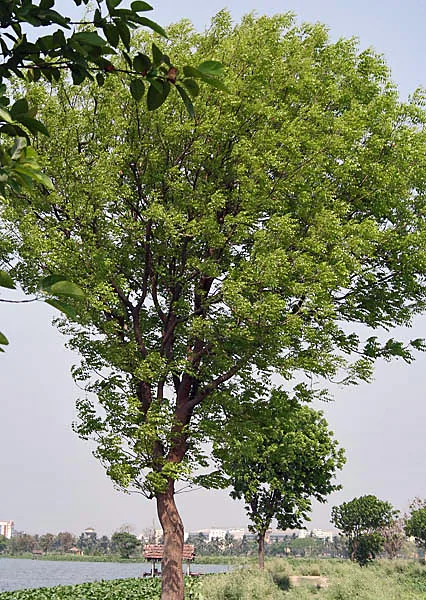
Mahogany grows into a grand tree, 40 to 60 feet tall and just as wide. It thrives in full sun to partial shade and answers regular feeding with rapid growth. Shape it while it is young, and you can even start your very own tree from seed, watching it become a proud giant in your garden.
- Sun
Full sun to partial shade
- Feeding
Feed it regularly: it answers with rapid growth
What the sources say (1)
How often: Regular fertilizing, to which the tree responds with rapid growth
Plants will respond with rapid growth to rich, well-drained soil and regular fertilizing.
— ENH-766 [1] - Pruning
Prune it while the tree is young
What the sources say (1)
Pruning: While the tree is young
Prune and train the tree while it is young to develop several major limbs
— ENH-766 [1] - Pests
Caterpillars, webworms, scale and leaf miners; borers on stressed trees; infections on branches
What the sources say (2)
Pests: tent caterpillars, tip moth, webworm, scale, leaf notcher, leaf miner, borers (on stressed trees)
Some insects can cause significant problems such as the tent caterpillars, tip moth, webworm, scale, leaf notcher, and leaf miner. Borers infest stressed trees.
— ENH-766 [1] Diseases: Nectria infections on branches
No diseases are of major concern. Nectria infections on branches are often predisposed by some other stress or any injury to the tree.
— ENH-766 [1] - Size
40 to 60 ft tall and just as wide
What the sources say (3)
Mature height: 1219-1829 cm (40 to 60 feet)
Description Height: 40 to 60 feet Spread: 40 to 60 feet Crown uniformity: symmetrical Crown shape: round
— ENH-766 [1] mahogany is fast-growing and large, generally reaching a height between 40 and 60 feet with a canopy that spreads about 50 feet wide
— Mahogany – Gardening Solutions [2] Mature width: 1219-1829 cm (40 to 60 feet)
Description Height: 40 to 60 feet Spread: 40 to 60 feet Crown uniformity: symmetrical Crown shape: round
— ENH-766 [1]
Overview
West Indian mahogany is a large tree widely planted as a landscape, shade and street tree in south Florida. [1] It grows in full sun to partial shade, is propagated by seed and needs early pruning and training to develop a strong central leader. [1]
American Mahogany care
How to water American Mahogany
The sources give different values depending on region, zone or growing conditions.
What each source says
According to UF/IFAS Extension: Highly drought tolerant
According to NParks: Lots of water, moderate water
How much light American Mahogany needs
How much cold American Mahogany can take
Hardiness, coldest zone
The sources give different values depending on region, zone or growing conditions.
What each source says
According to UF/IFAS EDIS: 10b [winter low 1.7 to 4.4 °C (35 to 40 °F)]
According to UF/IFAS Gardening Solutions: 10a [winter low −1.1 to 1.7 °C (30 to 35 °F)]
According to FNPS: 10a [winter low −1.1 to 1.7 °C (30 to 35 °F)]
What the sources say (3)
According to UF/IFAS EDIS: USDA hardiness zones: 10B through 11According to UF/IFAS Gardening Solutions: zones 10a to 11According to FNPS: Suitable to Grow In:
10A,10B,11Hardiness, warmest zone
11 [winter low 4.4 to 10 °C (40 to 50 °F)]
How to propagate American Mahogany
How to grow American Mahogany
The plant
Family
Meliaceae
What the sources say (1)
Common name(s): Mahogany, West Indies mahogany Family: Meliaceae USDA hardiness zones: 10B through 11Mature height
1219-1829 cm (40 to 60 feet)
What the sources say (2)
Description Height: 40 to 60 feet Spread: 40 to 60 feet Crown uniformity: symmetrical Crown shape: roundmahogany is fast-growing and large, generally reaching a height between 40 and 60 feet with a canopy that spreads about 50 feet wideMature width
1219-1829 cm (40 to 60 feet)
What the sources say (1)
Description Height: 40 to 60 feet Spread: 40 to 60 feet Crown uniformity: symmetrical Crown shape: roundPests and diseases
Pests
tent caterpillars, tip moth, webworm, scale, leaf notcher, leaf miner, borers (on stressed trees)
What the sources say (1)
Some insects can cause significant problems such as the tent caterpillars, tip moth, webworm, scale, leaf notcher, and leaf miner. Borers infest stressed trees.Diseases
Nectria infections on branches
What the sources say (1)
No diseases are of major concern. Nectria infections on branches are often predisposed by some other stress or any injury to the tree.Fertilizing
How often
Regular fertilizing, to which the tree responds with rapid growth
What the sources say (1)
Plants will respond with rapid growth to rich, well-drained soil and regular fertilizing.Remedies
The sources we checked give no remedies for this plant.
Calendar
Pruning
While the tree is young
What the sources say (1)
Prune and train the tree while it is young to develop several major limbsMonths as given by the sources, which are mostly from the United States (northern hemisphere). In the southern hemisphere they shift by about six months.
Indicative values
Values from a secondary source, not checked word for word like the rest of this page. Use them as a starting point.
- Life cycle
- PerennialIndicative value, adapt it to your climate · Secondary source
- Hours of sun
- 8-10 hoursIndicative value, adapt it to your climate · Secondary source
- Soil pH
- 6-7.5Indicative value, adapt it to your climate · Secondary source
- Growth rate
- HighIndicative value, adapt it to your climate · Secondary source
Similar plants
- Chinaberry Melia azedarach
- Azadirachta indica Azadirachta indica
- Abies grandis Abies grandis
- Abraham Trachystemon orientalis
- Abyssinian banana Ensete ventricosum
- Acacia longifolia Acacia longifolia
- Acanthus hungaricus Acanthus hungaricus
- Achlys triphylla Achlys triphylla
Sources
Every value above is quoted from these documents. Links lead to the original publisher.
- ENH-766 · edis.ifas.ufl.edu, consulted
- Mahogany – Gardening Solutions · gardeningsolutions.ifas.ufl.edu, consulted
- NParks | Swietenia mahagoni · nparks.gov.sg, consulted
- Swietenia mahagoni Jacq. Caoba dominicana · npn.rngr.net, consulted
- Florida Native Plant Society | Conserve, Preserve & Restore Florida's Native Plants · fnps.org, consulted
- Virginia Tech Dendrology Fact Sheet · dendro.cnre.vt.edu, consulted
- Swietenia mahagoni - Plant Detail - Tropical Plants Database - NTBG Database · ntbg.org, consulted
- Swietenia mahagoni · apps.worldagroforestry.org, consulted
Written by Emilio Marruso · last checked