
How to Grow and Care for Yellow salsify
Tragopogon dubius
Written by Emilio Marruso · last checked
At a glance
This plant grows straight from seed sown in spring right where you want it. Its fleshy root can be eaten raw or cooked, and so can the young stems when they are 2–4 inches high. In its second year it sends up tall flowering stems and fluffy seed heads that ride the wind, so pull it before the seeds ripen.
- Water
Moderate watering; it does not handle drought well
What the sources say (3)
Watering: Moderate
Light full sun Shade tolerance no shade Water moderate Hardiness Zone 5+
— Yellow Salsify (Tragopogon dubius) — Practical Plants [5] Watering notes: Drought intolerant; also described as preferring dry, open sites
Drainage well drained Tolerates Nutritionally Poor Soil No Drought intolerant
— Yellow Salsify (Tragopogon dubius) — Practical Plants [5] Yellow salsify grows in meadows, fields, and roadsides. It is especially troublesome in perennial horticultural crops. The species prefers dry, open sites.
— Ohio Weedguide [6] - Cold
Survives winters down to −20 °F (−28.9 °C)
Very hardy · USDA 5 · RHS H7 · Z5
What the sources say (1)
Hardiness, coldest zone: 5 [winter low −28.9 to −23.3 °C (−20 to −10 °F)]
Light full sun Shade tolerance no shade Water moderate Hardiness Zone 5+
— Yellow Salsify (Tragopogon dubius) — Practical Plants [5] - Harvest
Eat the fleshy root raw or cooked, plus young stems 2–4 inches high and the base of lower leaves
- Watch out
Seeds spread on the wind: pull plants before seeds ripen; 3 inches of mulch helps
- Size
12 to 39 inches tall
What the sources say (1)
Mature height: 30-100 cm (12-39 in)
Plants grow between 12 and 39 inches (30-100 cm) tall
— Tragopogon dubius [7] - Propagation
Grows from seed
What the sources say (2)
- Sowing
Sow in spring right where it will grow
What the sources say (1)
Sowing: Spring (sown in situ)
Seed - sow spring in situ. Make sure to water the seed in if the weather is dry.
— Yellow Salsify (Tragopogon dubius) — Practical Plants [5]
Overview
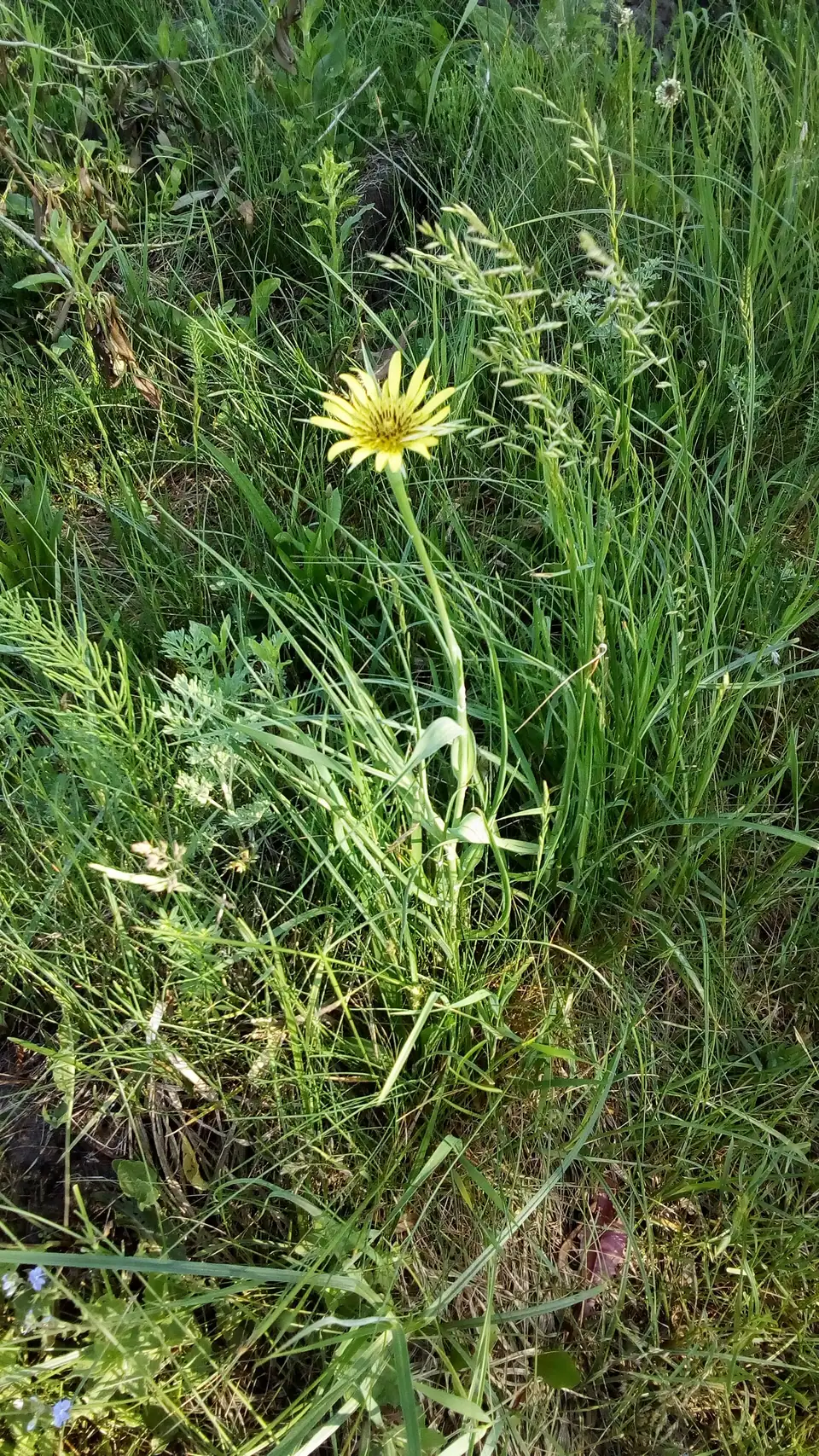
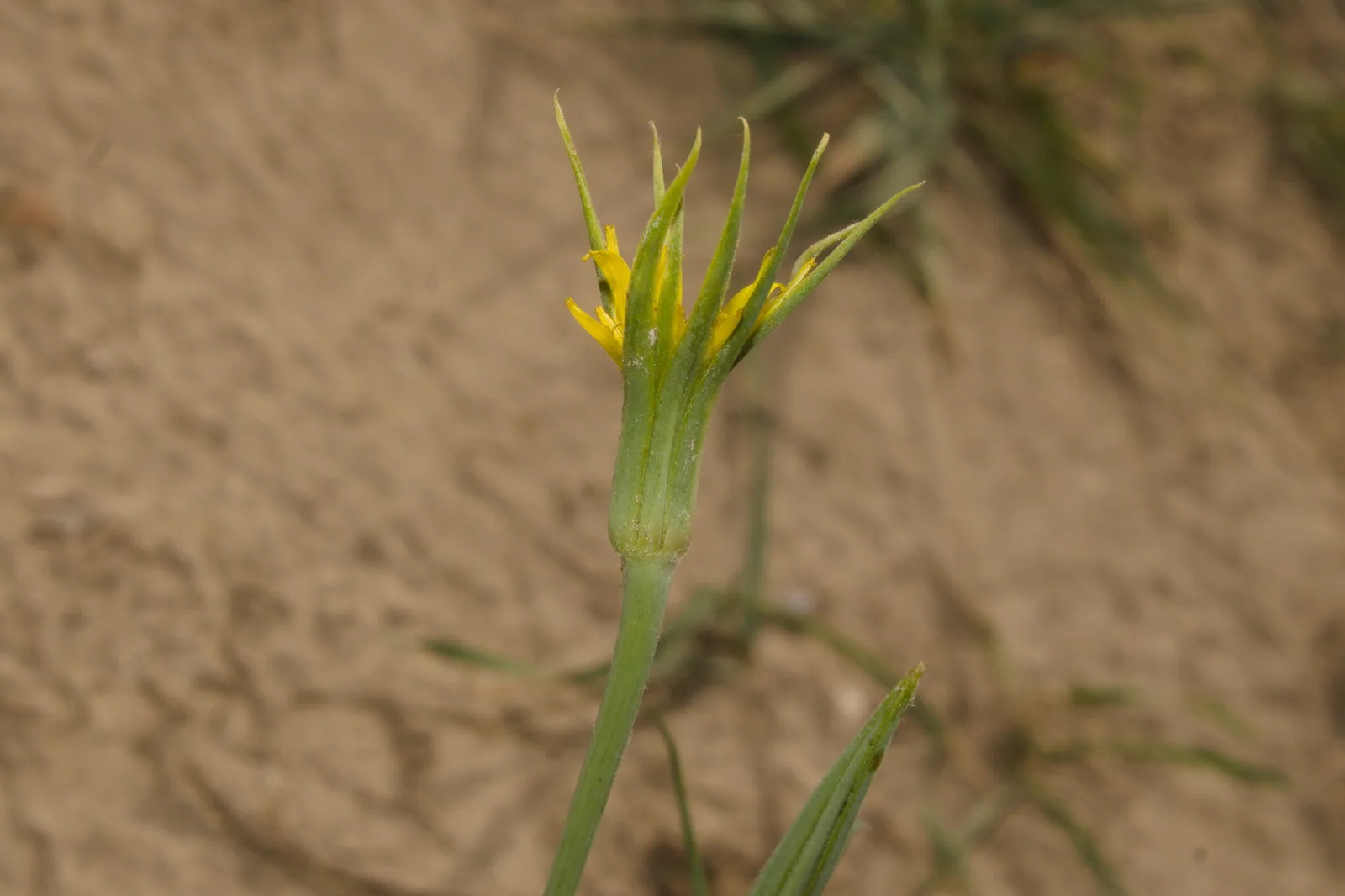
Yellow salsify is a biennial, occasionally short-lived perennial, with a grass-like rosette in the first year and flowering stems in the second. [6] Roots and young shoots are edible according to one database. [5]
This record is incomplete: the sources we read do not cover every field yet.
Not yet covered by our sources: Light, Hardiness, warmest zone
Yellow salsify care
How to water Yellow salsify
Watering
Moderate
What the sources say (1)
Light
full sun
Shade tolerance
no shade
Water
moderate
Hardiness
Zone 5+Watering notes
Drought intolerant; also described as preferring dry, open sites
What the sources say (2)
Drainage
well drained
Tolerates Nutritionally Poor Soil
No
Drought
intolerantYellow salsify grows in meadows, fields, and roadsides. It is especially troublesome in perennial horticultural crops. The species prefers dry, open sites.How much light Yellow salsify needs
Not stated in the sources we read.
How much cold Yellow salsify can take
Hardiness, coldest zone
5 [winter low −28.9 to −23.3 °C (−20 to −10 °F)]
What the sources say (1)
Light
full sun
Shade tolerance
no shade
Water
moderate
Hardiness
Zone 5+Hardiness, warmest zone
Not stated in the sources we read.
How to propagate Yellow salsify
How to grow Yellow salsify
The plant
Life cycle
annual, biennial or monocarpic perennial
What the sources say (1)
Yellow salsify grows as an annual, biennial, or monocarpic perennialFamily
Asteraceae
What the sources say (1)
The scientific name of yellow salsify is Tragopogon dubius Scop. (Asteraceae)Mature height
30-100 cm (12-39 in)
What the sources say (1)
Plants grow between 12 and 39 inches (30-100 cm) tallYellow salsify pests and problems
Weediness in planting beds
Symptom: Grass-like rosettes in the first year, then tall flowering stems and fluffy seed heads in the second year that spread by wind.
What to do: Hand-pull plants in planting beds prior to seed maturation; mulch 3 inches deep reduces seed germination.
Remedies
Each remedy shows what official sources say about it; traditional remedies without an official source are marked as such. Harmful ones are listed so you know to avoid them.
Getting rid of it
western salsify weed
hand-pulling or digging when soil is moist Official source, not independently tested
Careful digging is useful to manage weed populations. However, digging can carry undesirable weed seed to the surface and foster further germination.
— hortsense.cahnrs.wsu.edu [10] Do not let plants go to seed. Preventing seed production is essential for all biennials.
— azinvasiveplants.arizona.edu [11] How: Easy to hand-pull or dig when the soil is moist; hand-pull plants in planting beds before the seeds mature.
The plant is easy to hand-pull or dig when soil is moist.
— montana.edu [9] mowing Not proven
How: Mow when flowers first appear and repeat mowing as needed.
Mow when flowers first appear and repeat mowing as needed.
— azinvasiveplants.arizona.edu [11] What the evidence says The same research project suggested mowing was not effective, but additional research is needed.
— montana.edu [9] mulching Partly works
How: Apply a mulch layer 3 inches deep on planting beds.
Apply a mulch layer 3 inches deep on planting beds to reduce seed germination.
— Western Salsify | USU [8] What the evidence says Mulching may suppress this plant. Plant desirable native species to outcompete invasives. Frequently monitor previous infestations for new growth.
— azinvasiveplants.arizona.edu [11]
Calendar
Sowing
Spring (sown in situ)
What the sources say (1)
Seed - sow spring in situ. Make sure to water the seed in if the weather is dry.Months as given by the sources, which are mostly from the United States (northern hemisphere). In the southern hemisphere they shift by about six months.
Edibility
Reported by the source, quoted verbatim. Do not eat a plant on the basis of this page alone: identification mistakes can be dangerous.
Similar plants
- Meadow Salsify Tragopogon pratensis
- Purple Goat's Beard Tragopogon porrifolius
- American Burnweed Erechtites hieraciifolius
- Autumn Goldenrod Solidago sphacelata
- Blessed milkthistle Silybum marianum
- Blue Wood Aster Symphyotrichum cordifolium
- Brown knapweed Centaurea jacea
- Bull Thistle Cirsium vulgare
Sources
Every value above is quoted from these documents. Links lead to the original publisher.
- Tragopogon dubius - yellow salsify | Yavapai County Native and Naturalized Plants · yavapaiplants.extension.arizona.edu, consulted
- Yellow Goatsbeard, Tragopogon spp. – Wisconsin Horticulture · hort.extension.wisc.edu, consulted
- WESTERN SALSIFY (TRAGOPOGON DUBIUS), ALSO · montana.edu, consulted
- Tragopogon dubius (Yellow Goat's Beard): Minnesota Wildflowers · minnesotawildflowers.info, consulted
- Yellow Salsify (Tragopogon dubius) — Practical Plants · practicalplants.org, consulted
- Ohio Weedguide · weedguide.cfaes.osu.edu, consulted
- Tragopogon dubius · fs.usda.gov, consulted
- Western Salsify | USU · extension.usu.edu, consulted
- montana.edu · montana.edu
- hortsense.cahnrs.wsu.edu · hortsense.cahnrs.wsu.edu
- azinvasiveplants.arizona.edu · azinvasiveplants.arizona.edu
Written by Emilio Marruso · last checked