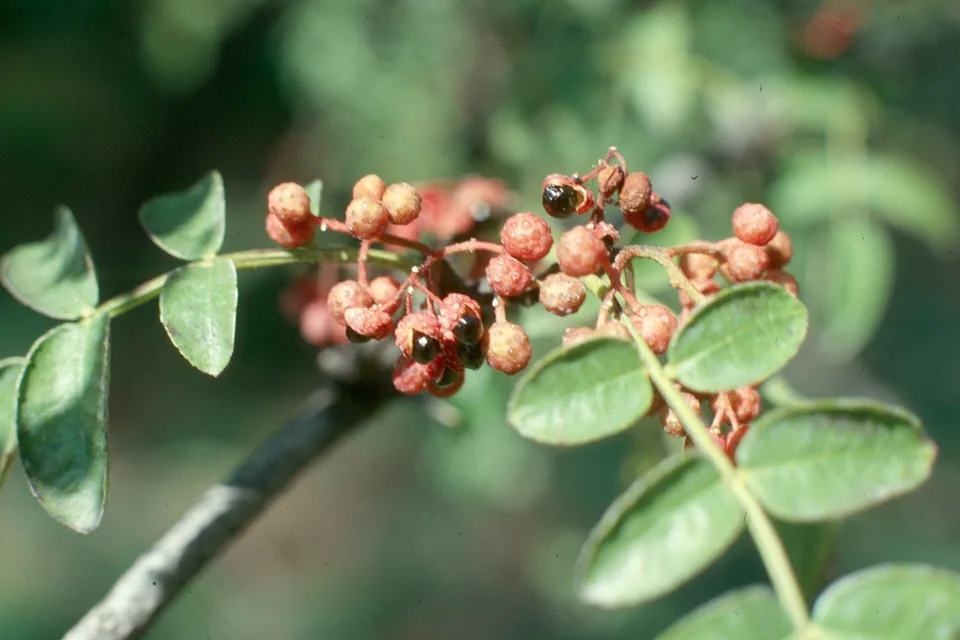

How to Grow and Care for Prickly-ash
Zanthoxylum americanum
Written by Emilio Marruso · last checked
At a glance
Prickly ash is a tough perennial that grows well even in poor soil, in full sun or partial shade. Its seeds, cooked, make a peppery seasoning, a homegrown pepper substitute. Sow fresh seed in autumn, give the seedlings a first winter in a cold frame, and plant them out in early summer.
- Sun
Full sun to partial shade
- Water
Likes soil that holds moisture but drains well
What the sources say (1)
Watering notes: Prefers a deep, well-drained, moisture-retentive soil; grows well in poor soils
Prefers a good deep well-drained moisture retentive soil in full sun or semi-shade
— Zanthoxylum americanum - Useful Temperate Plants [5] - Soil
Deep, well-drained soil; it grows well even in poor soil
What the sources say (1)
Watering notes: Prefers a deep, well-drained, moisture-retentive soil; grows well in poor soils
Prefers a good deep well-drained moisture retentive soil in full sun or semi-shade
— Zanthoxylum americanum - Useful Temperate Plants [5] - Planting
Plant seedlings out in early summer, after their first winter in a cold frame
What the sources say (1)
Planting: Early summer (seedlings, after a first winter in a cold frame)
grow them on in a cold frame for their first winter. Plant them out in early summer.
— Zanthoxylum americanum - Useful Temperate Plants [5] - Harvest
Cooked seeds are a seasoning, used in place of pepper
- Propagation
Seed, semi-ripe cuttings in midsummer, root cuttings, or suckers in late winter
What the sources say (3)
Propagation: Seed (strong dormancy; cold stratification); half-ripe cuttings in mid summer; root cuttings; suckers removed in late winter
Cuttings of half-ripe wood, mid summer in a frame.
— Zanthoxylum americanum - Useful Temperate Plants [5] Suckers, removed in late winter and planted into their permanent positions
— Zanthoxylum americanum - Useful Temperate Plants [5] Propagation by seed is possible.
— Lady Bird Johnson Wildflower Center - The University of Texas at Austin [1] - Sowing
Sow seed as soon as it ripens in autumn; it needs a cold period to sprout
What the sources say (5)
Sowing: As soon as ripe in autumn (greenhouse); stored seed in a cold frame as early in the year as possible
Seed - best sown in a greenhouse as soon as it is ripe in the autumn.
— Zanthoxylum americanum - Useful Temperate Plants [5] then sow in a cold frame as early in the year as possible.
— Zanthoxylum americanum - Useful Temperate Plants [5] Propagation: Seed (strong dormancy; cold stratification); half-ripe cuttings in mid summer; root cuttings; suckers removed in late winter
Cuttings of half-ripe wood, mid summer in a frame.
— Zanthoxylum americanum - Useful Temperate Plants [5] Suckers, removed in late winter and planted into their permanent positions
— Zanthoxylum americanum - Useful Temperate Plants [5] Propagation by seed is possible.
— Lady Bird Johnson Wildflower Center - The University of Texas at Austin [1]
Overview
Northern prickly ash is a thorny, thicket-forming deciduous shrub of eastern North America. [1] It grows in full sun to semi-shade and is not considered a desirable landscape plant except as a barrier in poor soils. [1]
This record is incomplete: the sources we read do not cover every field yet.
Not yet covered by our sources: Watering, Hardiness, coldest zone, Hardiness, warmest zone, Pruning
Prickly-ash care
How to water Prickly-ash
Watering
Not stated in the sources we read.
Watering notes
Prefers a deep, well-drained, moisture-retentive soil; grows well in poor soils
What the sources say (1)
Prefers a good deep well-drained moisture retentive soil in full sun or semi-shadeHow much light Prickly-ash needs
How much cold Prickly-ash can take
Hardiness, coldest zone
Not stated in the sources we read.
Hardiness, warmest zone
Not stated in the sources we read.
How to propagate Prickly-ash
Seed (strong dormancy; cold stratification); half-ripe cuttings in mid summer; root cuttings; suckers removed in late winter
What the sources say (3)
Cuttings of half-ripe wood, mid summer in a frame.Suckers, removed in late winter and planted into their permanent positionsPropagation by seed is possible.How to grow Prickly-ash
The plant
Life cycle
perennial
What the sources say (1)
Base Flower Color Green Duration Perennial Fruit Dehiscence NoFamily
Rutaceae
What the sources say (1)
Classification Dicots Family Rutaceae Genus Zanthoxylum Species Zanthoxylum americanum Mill.Remedies
The sources we checked give no remedies for this plant.
Calendar
Sowing
As soon as ripe in autumn (greenhouse); stored seed in a cold frame as early in the year as possible
Planting
Early summer (seedlings, after a first winter in a cold frame)
What the sources say (1)
grow them on in a cold frame for their first winter. Plant them out in early summer.Pruning
Not stated in the sources we read.
Months as given by the sources, which are mostly from the United States (northern hemisphere). In the southern hemisphere they shift by about six months.
Edibility
Reported by the source, quoted verbatim. Do not eat a plant on the basis of this page alone: identification mistakes can be dangerous.
Seed - cooked. It is used as a condiment. A pepper substitute
[5]
Indicative values
Values from a secondary source, not checked word for word like the rest of this page. Use them as a starting point.
- Mature height
- 457.2-609.6 cm (15-20 ft)Indicative value, adapt it to your climate · Secondary source
- Watering
- AverageIndicative value, adapt it to your climate · Secondary source
- Drought tolerant
- yesIndicative value, adapt it to your climate · Secondary source
- Soil pH
- 6-7.5Indicative value, adapt it to your climate · Secondary source
- USDA hardiness zones
- 3-7 [winter low −40 to −12.2 °C (−40 to 10 °F)]Indicative value, adapt it to your climate · Secondary source
- Care level
- MediumIndicative value, adapt it to your climate · Secondary source
- Growth rate
- LowIndicative value, adapt it to your climate · Secondary source
- Pruning
- March, AprilIndicative value, adapt it to your climate · Secondary source
Similar plants
- Hercules Club Zanthoxylum clava-herculis
- Szechuan Pepper Zanthoxylum simulans
- Korean pepper Zanthoxylum piperitum
- Amur Cork Tree Phellodendron amurense
- Bee-Bee Tree Tetradium daniellii
- Bitter orange Citrus × aurantium
- Dittany Dictamnus albus
- Hoptree Ptelea trifoliata
Sources
Every value above is quoted from these documents. Links lead to the original publisher.
- Lady Bird Johnson Wildflower Center - The University of Texas at Austin · wildflower.org, consulted
- Common Prickly Ash | Missouri Department of Conservation · mdc.mo.gov, consulted
- Prickly ash | Kansas Wildflowers · kswildflower.org, consulted
- Zanthoxylum americanum / Species Page / Plant Atlas · tennessee-kentucky.plantatlas.usf.edu, consulted
- Zanthoxylum americanum - Useful Temperate Plants · temperate.theferns.info, consulted
Written by Emilio Marruso · last checked