
How to Grow and Care for Korean pepper
Zanthoxylum piperitum
Written by Emilio Marruso · last checked
Toxic to: People · Why
At a glance
Japanese pepper gives you a homemade spice: its seeds, cooked and ground into a powder, make a pepper substitute, and its young leaves flavor soups and salads, raw or cooked. It grows in full sun or partial shade, in deep, well-drained soil that stays moist. Start it from seed in autumn, as soon as the seed is ripe.
- Sun
Full sun to partial shade
What the sources say (2)
Light: Full sun to semi-shade
but prefers a good deep well-drained moisture retentive soil in full sun or semi-shade
— Zanthoxylum piperitum - Useful Temperate Plants [4] Light Range: Part Sun to Full Sun pH Range: 5 to 7.5 Soil Range: Some Sand to Some Clay Water Range: Normal to Moist
— Zanthoxylum piperitum ( Japanese Prickly Ash ) - Professional Gardening Tips [5] - Water
Normal watering; it likes the soil kept moist
What the sources say (1)
Watering: Normal to moist
Light Range: Part Sun to Full Sun pH Range: 5 to 7.5 Soil Range: Some Sand to Some Clay Water Range: Normal to Moist
— Zanthoxylum piperitum ( Japanese Prickly Ash ) - Professional Gardening Tips [5] - Cold
Survives winters down to −20 °F (−28.9 °C)
Very hardy · USDA 5 · RHS H7 · Z5
What the sources say (2)
Hardiness, coldest zone: 5 [winter low −28.9 to −23.3 °C (−20 to −10 °F)]
Bloomtime Range: Early Spring to Early Spring USDA Hardiness Zone: 5 to 7 AHS Heat Zone: Not defined for this plant
— Zanthoxylum piperitum ( Japanese Prickly Ash ) - Professional Gardening Tips [5] Hardiness, warmest zone: 7 [winter low −17.8 to −12.2 °C (0 to 10 °F)]
Bloomtime Range: Early Spring to Early Spring USDA Hardiness Zone: 5 to 7 AHS Heat Zone: Not defined for this plant
— Zanthoxylum piperitum ( Japanese Prickly Ash ) - Professional Gardening Tips [5] - Soil
Deep, well-drained soil that holds moisture; pH 5.0–7.5
What the sources say (3)
Watering notes: Prefers a deep, well-drained, moisture-retentive soil
but prefers a good deep well-drained moisture retentive soil in full sun or semi-shade
— Zanthoxylum piperitum - Useful Temperate Plants [4] Soil pH, minimum: 5.0
Light Range: Part Sun to Full Sun pH Range: 5 to 7.5 Soil Range: Some Sand to Some Clay Water Range: Normal to Moist
— Zanthoxylum piperitum ( Japanese Prickly Ash ) - Professional Gardening Tips [5] Soil pH, maximum: 7.5
Light Range: Part Sun to Full Sun pH Range: 5 to 7.5 Soil Range: Some Sand to Some Clay Water Range: Normal to Moist
— Zanthoxylum piperitum ( Japanese Prickly Ash ) - Professional Gardening Tips [5] - Planting
Plant seedlings out in early summer after their first winter; suckers in late winter
What the sources say (2)
Planting: Early summer (seedlings after their first winter); late winter (suckers)
grow them on in a cold frame for their first winter. Plant them out in early summer.
— Zanthoxylum piperitum - Useful Temperate Plants [4] Suckers, removed in late winter and planted into their permanent positions
— Zanthoxylum piperitum - Useful Temperate Plants [4] - Harvest
Cooked, ground seeds replace pepper; young leaves go in soups and salads
- Propagation
By seed, stem cuttings in midsummer, root cuttings or suckers
What the sources say (3)
Propagation: Seed (needs stratifying and must not dry out); half-ripe wood cuttings in mid summer; root cuttings; suckers
Cuttings of half-ripe wood, mid summer in a frame. Root cuttings, 3cm long, planted horizontally in pots in a greenhouse.
— Zanthoxylum piperitum - Useful Temperate Plants [4] I’ve now sown the seed (they need stratifying and shouldn’t dry out before sowing) and will also try to propagate by cuttings later in the winter
— Sansho fruiting for the first time in Malvik – Edimentals ! [3] Suckers, removed in late winter and planted into their permanent positions
— Zanthoxylum piperitum - Useful Temperate Plants [4] - Sowing
Sow ripe seed in autumn in a greenhouse; seeds need a cold period and must not dry out
What the sources say (5)
Sowing: Autumn, as soon as the seed is ripe (greenhouse); stored seed as early in the year as possible (cold frame)
Seed - best sown in a greenhouse as soon as it is ripe in the autumn.
— Zanthoxylum piperitum - Useful Temperate Plants [4] Sow stored seed in a cold frame as early in the year as possible.
— Zanthoxylum piperitum - Useful Temperate Plants [4] Propagation: Seed (needs stratifying and must not dry out); half-ripe wood cuttings in mid summer; root cuttings; suckers
Cuttings of half-ripe wood, mid summer in a frame. Root cuttings, 3cm long, planted horizontally in pots in a greenhouse.
— Zanthoxylum piperitum - Useful Temperate Plants [4] I’ve now sown the seed (they need stratifying and shouldn’t dry out before sowing) and will also try to propagate by cuttings later in the winter
— Sansho fruiting for the first time in Malvik – Edimentals ! [3] Suckers, removed in late winter and planted into their permanent positions
— Zanthoxylum piperitum - Useful Temperate Plants [4] - Safety
In large amounts the fruit is toxic to the nervous system
Overview
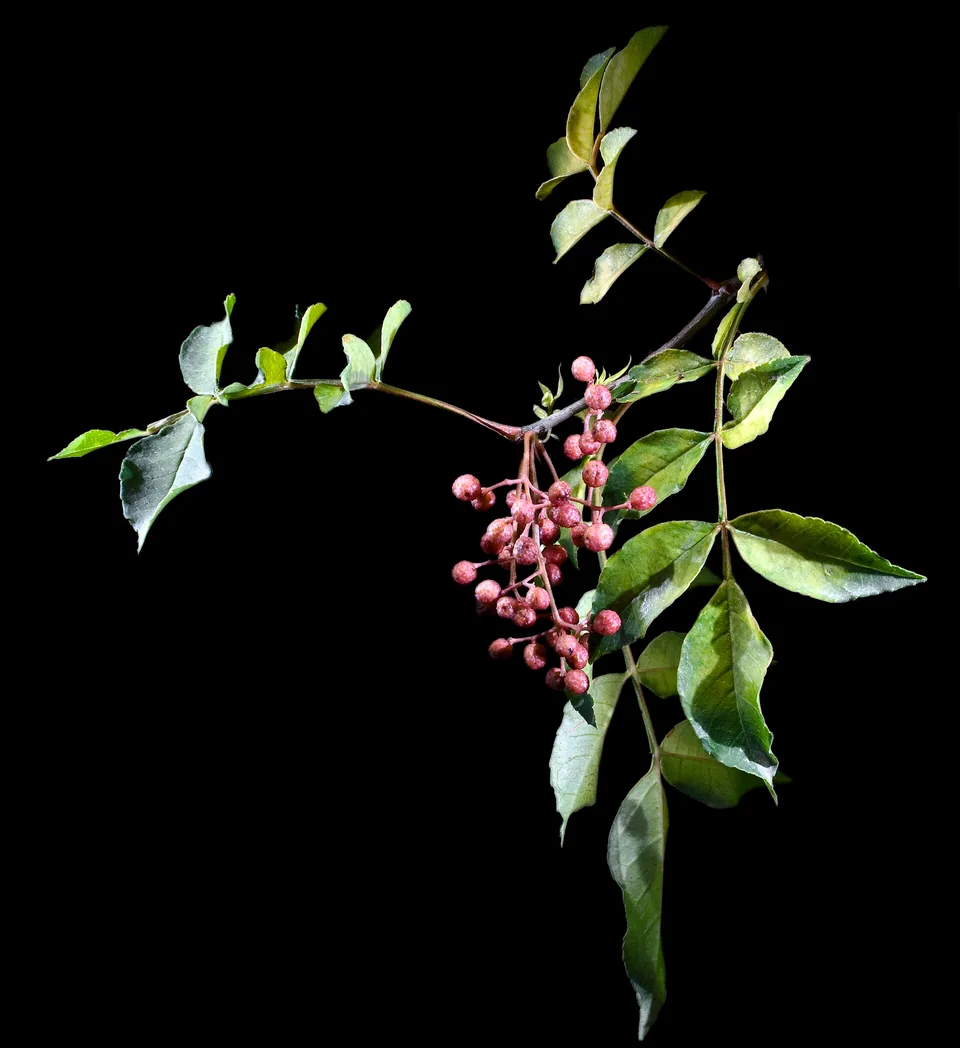
Japanese pepper is a prickly deciduous shrub grown in Japan and Korea for its fruit, used as a pepper-like flavouring. [4] The ground seed is used as a condiment and the young leaves as a flavouring. [4] It is dioecious, so both male and female plants are needed for fruit and seed. [4]
This record is incomplete: the sources we read do not cover every field yet.
Not yet covered by our sources: Harvest
Korean pepper care
How to water Korean pepper
Watering
Normal to moist
What the sources say (1)
Light Range:
Part Sun to Full Sun
pH Range:
5 to 7.5
Soil Range:
Some Sand to Some Clay
Water Range:
Normal to MoistWatering notes
Prefers a deep, well-drained, moisture-retentive soil
What the sources say (1)
but prefers a good deep well-drained moisture retentive soil in full sun or semi-shadeHow much light Korean pepper needs
Full sun to semi-shade
What the sources say (2)
but prefers a good deep well-drained moisture retentive soil in full sun or semi-shadeLight Range:
Part Sun to Full Sun
pH Range:
5 to 7.5
Soil Range:
Some Sand to Some Clay
Water Range:
Normal to MoistHow much cold Korean pepper can take
Hardiness, coldest zone
5 [winter low −28.9 to −23.3 °C (−20 to −10 °F)]
What the sources say (1)
Bloomtime Range:
Early Spring to Early Spring
USDA Hardiness Zone:
5 to 7
AHS Heat Zone:
Not defined for this plantHardiness, warmest zone
7 [winter low −17.8 to −12.2 °C (0 to 10 °F)]
What the sources say (1)
Bloomtime Range:
Early Spring to Early Spring
USDA Hardiness Zone:
5 to 7
AHS Heat Zone:
Not defined for this plantBest soil for Korean pepper
Soil pH, minimum
5.0
What the sources say (1)
Light Range:
Part Sun to Full Sun
pH Range:
5 to 7.5
Soil Range:
Some Sand to Some Clay
Water Range:
Normal to MoistSoil pH, maximum
7.5
What the sources say (1)
Light Range:
Part Sun to Full Sun
pH Range:
5 to 7.5
Soil Range:
Some Sand to Some Clay
Water Range:
Normal to MoistHow to propagate Korean pepper
Seed (needs stratifying and must not dry out); half-ripe wood cuttings in mid summer; root cuttings; suckers
What the sources say (3)
Cuttings of half-ripe wood, mid summer in a frame.
Root cuttings, 3cm long, planted horizontally in pots in a greenhouse.I’ve now sown the seed (they need stratifying and shouldn’t dry out before sowing) and will also try to propagate by cuttings later in the winterSuckers, removed in late winter and planted into their permanent positionsRemedies
The sources we checked give no remedies for this plant.
Is Korean pepper poisonous?
Reported by the source, quoted verbatim. This is not medical or veterinary advice: if a person or an animal may have eaten this plant, contact a poison control centre or a veterinarian.
Calendar
Sowing
Autumn, as soon as the seed is ripe (greenhouse); stored seed as early in the year as possible (cold frame)
Planting
Early summer (seedlings after their first winter); late winter (suckers)
Harvest
Not stated in the sources we read.
Months as given by the sources, which are mostly from the United States (northern hemisphere). In the southern hemisphere they shift by about six months.
Edibility
Reported by the source, quoted verbatim. Do not eat a plant on the basis of this page alone: identification mistakes can be dangerous.
Indicative values
Values from a secondary source, not checked word for word like the rest of this page. Use them as a starting point.
- Life cycle
- PerennialIndicative value, adapt it to your climate · Secondary source
- Drought tolerant
- yesIndicative value, adapt it to your climate · Secondary source
- Care level
- MediumIndicative value, adapt it to your climate · Secondary source
- Growth rate
- LowIndicative value, adapt it to your climate · Secondary source
- Pruning
- February, March, AprilIndicative value, adapt it to your climate · Secondary source
- Pests
- Fungal leaf spot, Mildew, Rust, Deer resistant, Rabbit resistantIndicative value, adapt it to your climate · Secondary source
Similar plants
- Hercules Club Zanthoxylum clava-herculis
- Prickly-ash Zanthoxylum americanum
- Szechuan Pepper Zanthoxylum simulans
- Abies grandis Abies grandis
- Abraham Trachystemon orientalis
- Abyssinian banana Ensete ventricosum
- Acacia longifolia Acacia longifolia
- Acanthus hungaricus Acanthus hungaricus
Sources
Every value above is quoted from these documents. Links lead to the original publisher.
- Ethnobotanical Plant Zanthoxylum piperitum | Dr. Duke's Phytochemical and Ethnobotanical Databases · phytochem.nal.usda.gov, consulted
- TAXON: Zanthoxylum piperitum (L.) · plantpono.org, consulted
- Sansho fruiting for the first time in Malvik – Edimentals ! · edimentals.com, consulted
- Zanthoxylum piperitum - Useful Temperate Plants · temperate.theferns.info, consulted
- Zanthoxylum piperitum ( Japanese Prickly Ash ) - Professional Gardening Tips · backyardgardener.com, consulted
- Japanese peppertree · hosho.ees.hokudai.ac.jp, consulted
Written by Emilio Marruso · last checked