
Cómo cultivar y cuidar Balsamorhiza sagittata
Balsamorhiza sagittata
Escrito por Emilio Marruso · última revisión
Tóxica para: Animales · Por qué
De un vistazo
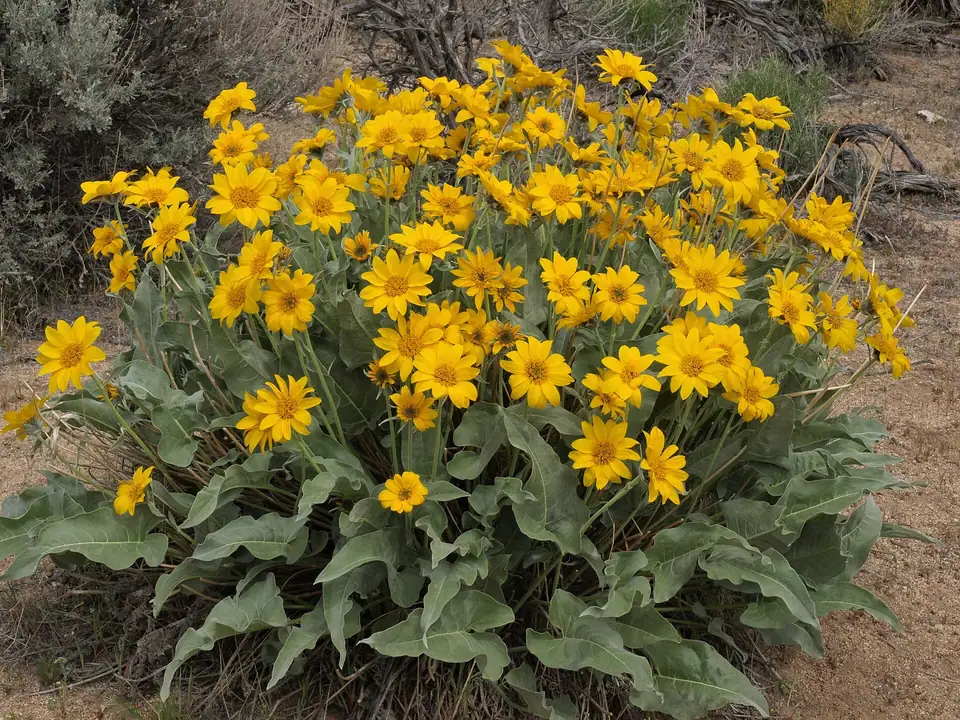
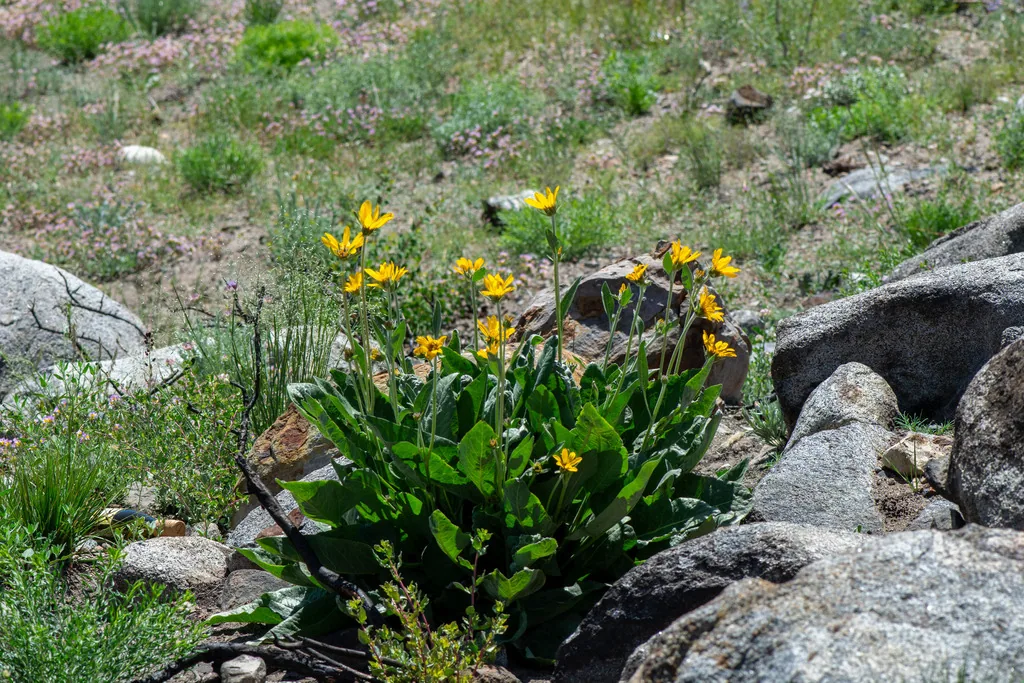
Esta vivaz resistente apenas teme la sequía: una vez asentada, necesita poco riego o ninguno. Siembra las semillas al aire libre en otoño y deja que el invierno haga el trabajo de despertarlas. Alcanza 75 cm de alto, y los pueblos nativos americanos comían sus raíces carnosas crudas o hervidas, además de sus semillas y sus brotes tiernos.
- Riego
Resiste muy bien la sequía: poco riego o ninguno una vez asentada
Qué dicen las fuentes (2)
Riego: Muy resistente a la sequía; riego moderado o nulo una vez establecido
It is strongly drought resistant, has good winter-hardiness, tolerates semi-shade, and is strongly tolerant of grazing and trampling.
— Arrowleaf Balsamroot | USU [1] Moderate to no watering after it is established.
— Plant Data Sheet [6] - Frío
Aguanta inviernos de hasta −28,9 °C (−20 °F)
Muy rústica · USDA 5 · RHS H7 · Z5
Qué dicen las fuentes (1)
Rusticidad, zona más fría: 5 [mínima invernal de −28,9 a −23,3 °C (de −20 a −10 °F)]
Hardiness Zone 5+
— Oregon Sunflower (Balsamorhiza sagittata) — Practical Plants [5] - Suelo
Suelo de ligeramente ácido a alcalino, pH 6,5–8
Qué dicen las fuentes (2)
pH del suelo, mínimo: 6.5
Plants do best in soils that are only weakly acidic or alkaline (pH 6.5–8) and have low salinity
— Western Forbs [2] pH del suelo, máximo: 8
Plants do best in soils that are only weakly acidic or alkaline (pH 6.5–8) and have low salinity
— Western Forbs [2] - Plantación
Trasplanta en verano las plántulas criadas en invernadero
Qué dicen las fuentes (1)
Plantación: Verano (plántulas criadas en invernadero)
plant them out into their permanent positions in the summer [3] .
— Oregon Sunflower (Balsamorhiza sagittata) — Practical Plants [5] - Cosecha
Las raíces carnosas se comen crudas o hervidas; también se comían semillas y brotes tiernos
- Tamaño
Alcanza 75 cm de alto
Qué dicen las fuentes (1)
Altura adulta: 75 cm (2.5 pies)
Plants are strongly tufted, densely leafy from the base, and large (up to 2.5 ft [75 cm] tall when flowering)
— Western Forbs [2] - Multiplicación
Por semilla, que necesita un largo periodo de frío y humedad; dividir la planta es muy difícil
Qué dicen las fuentes (2)
Propagación: Semilla, que requiere estratificación en frío y humedad prolongada; la división es muy difícil
The plant takes poorly to transplanting, thus seeds should be used for propagation.
— Lady Bird Johnson Wildflower Center - The University of Texas at Austin [4] Seed Treatment: Seeds require prolonged cool-moist stratification and then incubation at cold temperatures for germination.
— Lady Bird Johnson Wildflower Center - The University of Texas at Austin [4] - Siembra
Siembra al aire libre en otoño para que el invierno prepare las semillas, o en invernadero a principios de primavera
Qué dicen las fuentes (3)
Siembra: Otoño (la siembra al aire libre proporciona estratificación natural); principios de primavera en invernadero
Según USDA Forest Service (outdoors): but are less effective than fall seeding to provide natural stratification.
— Western Forbs [2] Según Plants For A Future (greenhouse): Seed - sow early spring in a greenhouse and only just cover the seed.
— Oregon Sunflower (Balsamorhiza sagittata) — Practical Plants [5] but are less effective than fall seeding to provide natural stratification.
— Western Forbs [2] - Seguridad
Tóxica para algunos animales
Resumen
La balsamroot de hoja de flecha es una hierba perenne nativa que crece a partir de una raíz principal engrosada y leñosa, y se encuentra en sitios abiertos y bastante secos. [1] Es muy resistente a la sequía y tolera mal el trasplante, por lo que se utilizan semillas para su propagación. [1][4]
Citado en inglés, como en la fuente.
Esta ficha está incompleta: las fuentes consultadas aún no cubren todos los campos.
Aún no cubierto por nuestras fuentes: Rusticidad, zona más cálida, Poda
Cuidados
Riego
Muy resistente a la sequía; riego moderado o nulo una vez establecido
Luz
Las fuentes no coinciden:
Shade tolerance no shade
[5]
Clima y frío
Rusticidad, zona más fría
5 [mínima invernal de −28,9 a −23,3 °C (de −20 a −10 °F)]
Qué dicen las fuentes (1)
Hardiness
Zone 5+Rusticidad, zona más cálida
No figura en las fuentes consultadas.
Suelo
pH del suelo, mínimo
6.5
Qué dicen las fuentes (1)
Plants do best in soils that are only weakly acidic or alkaline (pH 6.5–8) and have low salinitypH del suelo, máximo
8
Qué dicen las fuentes (1)
Plants do best in soils that are only weakly acidic or alkaline (pH 6.5–8) and have low salinityPropagación
Semilla, que requiere estratificación en frío y humedad prolongada; la división es muy difícil
Qué dicen las fuentes (2)
The plant takes poorly to transplanting, thus seeds should be used for propagation.Seed Treatment: Seeds require prolonged cool-moist stratification and then incubation at cold temperatures for germination.Cultivo
La planta
Ciclo de vida
perenne
Qué dicen las fuentes (1)
Arrowleaf balsamroot is a large, leafy, long –lived perennial with striking early season yellow flowersFamilia
Asteraceae
Qué dicen las fuentes (1)
Family Asteraceae – Aster family Genus Balsamorhiza Species sagittata NRCS Plant Code BASA3 (USDA NRCS 2024Altura adulta
75 cm (2.5 pies)
Qué dicen las fuentes (1)
Plants are strongly tufted, densely leafy from the base, and large (up to 2.5 ft [75 cm] tall when flowering) Remedios
Las fuentes consultadas no dan remedios para esta planta.
Venenosa para los animales
Según la fuente, citada textualmente. No es un consejo médico ni veterinario: si una persona o un animal pudo haber ingerido esta planta, contacta con un centro de toxicología o con un veterinario.
toxic for some animals
[3]La fuente señala el riesgo para este animal pero no explica por qué.
Calendario
Siembra
Otoño (la siembra al aire libre proporciona estratificación natural); principios de primavera en invernadero
Lo que dice cada fuente
Según USDA Forest Service (outdoors): Otoño
Según Plants For A Future (greenhouse): Principios de primavera
Qué dicen las fuentes (3)
Según USDA Forest Service (outdoors): but are less effective than fall seeding to provide natural stratification.Según Plants For A Future (greenhouse): Seed - sow early spring in a greenhouse and only just cover the seed.but are less effective than fall seeding to provide natural stratification.Plantación
Verano (plántulas criadas en invernadero)
Qué dicen las fuentes (1)
plant them out into their permanent positions in the summer [3] .Poda
No figura en las fuentes consultadas.
Meses tal como los dan las fuentes, en su mayoría de Estados Unidos (hemisferio norte). En el hemisferio sur se desplazan unos seis meses.
Comestibilidad
Según la fuente, citada textualmente. No comas una planta basándote solo en esta página: los errores de identificación pueden ser peligrosos.
Valores orientativos
Valores de una fuente secundaria, no comprobados palabra por palabra como el resto de esta página. Úselos como punto de partida.
- Resiste la sequía
- SíValor orientativo, adáptalo a tu clima · Fuente secundaria
- Suelo
- MargasValor orientativo, adáptalo a tu clima · Fuente secundaria
- Nivel de cuidado
- MedioValor orientativo, adáptalo a tu clima · Fuente secundaria
- Crecimiento
- BajoValor orientativo, adáptalo a tu clima · Fuente secundaria
- Poda
- Febrero, marzo, abrilValor orientativo, adáptalo a tu clima · Fuente secundaria
Plantas similares
- African Daisy Dimorphotheca pluvialis
- Cempasúchil Tagetes erecta
- Ageratum Ageratum houstonianum
- Alpine aster Aster alpinus
- Appalachian Blazing Star Liatris squarrulosa
- Appalachian Ironweed Vernonia glauca
- Appalachian Sunflower Helianthus atrorubens
- Aromatic Aster Symphyotrichum oblongifolium
Fuentes
Cada valor anterior se cita de estos documentos. Los enlaces llevan al editor original.
- Arrowleaf Balsamroot | USU · extension.usu.edu, consultado
- Western Forbs · fs.usda.gov, consultado
- Balsamorhiza sagittata | EcoRestore Portal · ecorestore.arizona.edu, consultado
- Lady Bird Johnson Wildflower Center - The University of Texas at Austin · wildflower.org, consultado
- Oregon Sunflower (Balsamorhiza sagittata) — Practical Plants · practicalplants.org, consultado
- Plant Data Sheet · depts.washington.edu, consultado
Escrito por Emilio Marruso · última revisión