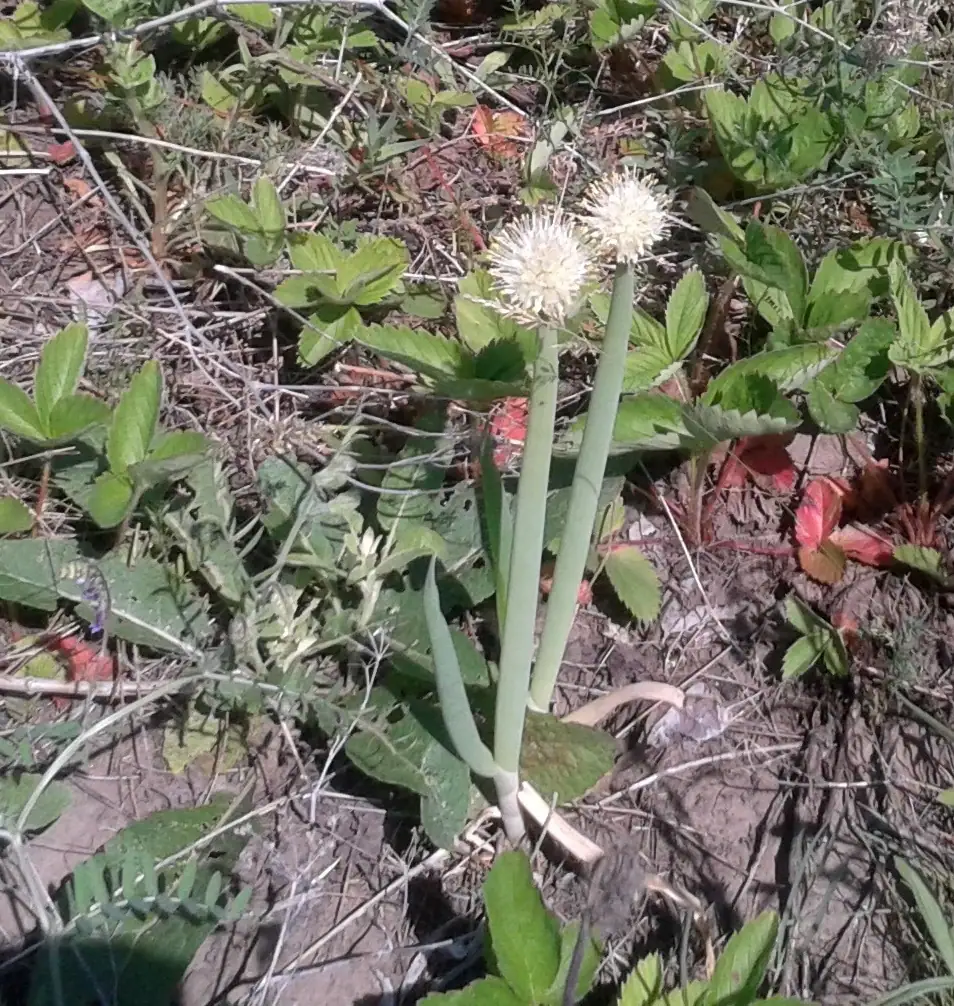
How to Grow and Care for Welsh onion
Allium fistulosum
Written by Emilio Marruso · last checked
Toxic to: Dogs · Why
At a glance
Welsh onion is a generous, easygoing crop: sow it in March, give it full sun and regular water, and you can start pulling tender green onions once they are 3–4 inches high. Snip the leaves for salads and soups as you need them, enjoy the strong onion flavor of the bulb, and even fry the young flower heads as a snack.
- Sun
Full sun; it also accepts a bit of light shade
What the sources say (3)
Light: Full sun; tolerates a bit of light shade
Full sun is best, but Welsh onion plants tolerate a bit of light shade.
— Welsh Bunching Onion Info - Caring For And Harvesting Bunching Onions | Gardening Know How [8] Welsh onions do best in full sun.
— How to Grow Welsh Onions | BBC Gardeners World Magazine [7] it prefers a sunny position in a light well-drained but moist soil
— Allium fistulosum - Useful Temperate Plants [5] - Water
Water regularly, more in hot, dry weather; never leave the soil soggy
What the sources say (5)
Watering: Regular irrigation, especially in hot, dry weather; relatively drought tolerant
According to PROSEA (South-East Asia): Welsh onion needs plenty of water. At lower elevations, it is usually grown during the rainy season. Daily irrigation is necessary during the dry season.
— Allium fistulosum (PROSEA) - Pl@ntUse [6] The plants benefit from regular irrigation , especially during hot, dry weather, but they are relatively drought tolerant.
— Welsh Bunching Onion Info - Caring For And Harvesting Bunching Onions | Gardening Know How [8] Water regularly in dry weather.
— How to Grow Welsh Onions | BBC Gardeners World Magazine [7] Watering notes: Very susceptible to waterlogging; established plants are very tolerant of moisture stress
Welsh onion is very susceptible to waterlogging, which quickly kills the active roots. Established plants are very tolerant of moisture stress and drought will rarely kill them.
— Allium fistulosum (PROSEA) - Pl@ntUse [6] Hoe between rows to keep the area free from competing weeds, and water during dry spells.
— How to Grow Welsh Onions | BBC Gardeners World Magazine [7] - Cold
Survives winters down to −10 °F (−23.3 °C)
Very hardy · USDA 6 · RHS H7 · Z6
What the sources say (2)
Hardiness, coldest zone: 6 [winter low −23.3 to −17.8 °C (−10 to 0 °F)]
Welsh onion plants are perennial in USDA plant hardiness zones 6 through 9
— Welsh Bunching Onion Info - Caring For And Harvesting Bunching Onions | Gardening Know How [8] Hardiness, warmest zone: 9 [winter low −6.7 to −1.1 °C (20 to 30 °F)]
Welsh onion plants are perennial in USDA plant hardiness zones 6 through 9
— Welsh Bunching Onion Info - Caring For And Harvesting Bunching Onions | Gardening Know How [8] - Soil
Tolerates acidic soil, down to pH 4.9
What the sources say (1)
Soil pH, minimum: 4.9
but it tolerates a pH in the range 4.9 to 8.5.
— Allium fistulosum - Useful Temperate Plants [5] - Spacing
1 ft between rows
What the sources say (1)
Row spacing: 30.48 cm (1 ft)
Set the divisions or sow the seeds in rows 1 foot apart.
— Archival copy: for current recommendations see http://edis.ifas.ufl.edu or your local extension office. [4] - Planting
Plant seedlings out once all danger of frost has passed
What the sources say (4)
Planting: After all danger of frost has passed (seedlings about a month after sowing)
According to UF/IFAS (Florida): Plant Welsh onion in the fall, winter, or spring, using seeds or divisions (transplants).
— Archival copy: for current recommendations see http://edis.ifas.ufl.edu or your local extension office. [4] South-East Asia (tillers): In South-East Asia the crop is propagated mainly using basal tillers and can be planted the whole year round.
— Allium fistulosum (PROSEA) - Pl@ntUse [6] Plant the seedlings in your garden after about a month, when all danger of frost has passed.
— Welsh Bunching Onion Info - Caring For And Harvesting Bunching Onions | Gardening Know How [8] sow into multi-celled trays and plant out after all risk of frost has passed.
— How to Grow Welsh Onions | BBC Gardeners World Magazine [7] - Harvest
Pull whole plants from 3–4 inches high, or snip leaves as needed; full harvest 4–5 months from sowing
What the sources say (4)
Harvest: 4-5 months from seeding when pulled as a green onion
According to BBC Gardeners' World: Harvest Welsh onions from June to October, when they are about as thick as a pencil and around 15cm tall.
— How to Grow Welsh Onions | BBC Gardeners World Magazine [7] Tropics (tillers): Plants are pulled out about 2½ months after planting the tillers.
— Allium fistulosum (PROSEA) - Pl@ntUse [6] If pulled as a green onion, 4-5 months are required from seeding to harvesting.
— Archival copy: for current recommendations see http://edis.ifas.ufl.edu or your local extension office. [4] How to harvest: The entire plant may be pulled and eaten like a green onion as early as when 3-4 inches [8–10 cm] high, or leaf portions may be snipped off as needed
The entire plant may be pulled and eaten like a green onion as early as when 3-4 inches high, or leaf portions may be snipped off as needed for flavoring.
— Archival copy: for current recommendations see http://edis.ifas.ufl.edu or your local extension office. [4] - Pests
Watch for purple blotch, downy mildew, white rot, thrips and slugs
- Propagation
Grow from seed or divide the clumps and side shoots
What the sources say (3)
Propagation: Seed; division of side shoots, clumps or basal tillers
Plants multiply by producing side shoots which can be divided and reset.
— Archival copy: for current recommendations see http://edis.ifas.ufl.edu or your local extension office. [4] you can easily propagate new plants by division.
— Welsh Bunching Onion Info - Caring For And Harvesting Bunching Onions | Gardening Know How [8] In South-East Asia the crop is propagated mainly using basal tillers
— Allium fistulosum (PROSEA) - Pl@ntUse [6] - Sowing
Sow from March to June
What the sources say (4)
Sowing: March
According to UF/IFAS (Florida): Plant Welsh onion in the fall, winter, or spring, using seeds or divisions (transplants).
— Archival copy: for current recommendations see http://edis.ifas.ufl.edu or your local extension office. [4] According to BBC Gardeners' World: | Sow | | | yes | yes | yes | yes | | | | | |
— How to Grow Welsh Onions | BBC Gardeners World Magazine [7] Sow Welsh onion seeds in March, into well-prepared, moist but well-drained soil.
— How to Grow Welsh Onions | BBC Gardeners World Magazine [7] Plant Welsh onion seeds indoors in March, using a regular commercial potting soil
— Welsh Bunching Onion Info - Caring For And Harvesting Bunching Onions | Gardening Know How [8] - Safety
Keep it away from dogs: eaten in large amounts, plants of this family can poison them
Overview
Welsh onion is a non-bulbing, clump-forming perennial onion grown for its mild green leaves. [7] It is frost hardy and does best in full sun in moist but well-drained soil. [4][7] It is propagated by seed or by dividing the side shoots that the plants produce. [4][8]
Welsh onion care
Measurements in square brackets are our conversion into the other unit system; the quoted text is unchanged.
How to water Welsh onion
Watering
Regular irrigation, especially in hot, dry weather; relatively drought tolerant
What each source says
According to PROSEA (South-East Asia): Needs plenty of water; daily irrigation in the dry season at lower elevations
What the sources say (3)
According to PROSEA (South-East Asia): Welsh onion needs plenty of water. At lower elevations, it is usually grown during the rainy season. Daily irrigation is necessary during the dry season.The plants benefit from regular irrigation , especially during hot, dry weather, but they are relatively drought tolerant.Water regularly in dry weather.Watering notes
Very susceptible to waterlogging; established plants are very tolerant of moisture stress
What the sources say (2)
Welsh onion is very susceptible to waterlogging, which quickly kills the active roots. Established plants are very tolerant of moisture stress and drought will rarely kill them.Hoe between rows to keep the area free from competing weeds, and water during dry spells.How much light Welsh onion needs
Full sun; tolerates a bit of light shade
What the sources say (3)
Full sun is best, but Welsh onion plants tolerate a bit of light shade.Welsh onions do best in full sun.it prefers a sunny position in a light well-drained but moist soilHow much cold Welsh onion can take
Hardiness, coldest zone
6 [winter low −23.3 to −17.8 °C (−10 to 0 °F)]
What the sources say (1)
Welsh onion plants are perennial in USDA plant hardiness zones 6 through 9Hardiness, warmest zone
9 [winter low −6.7 to −1.1 °C (20 to 30 °F)]
What the sources say (1)
Welsh onion plants are perennial in USDA plant hardiness zones 6 through 9Best soil for Welsh onion
4.9
What the sources say (1)
but it tolerates a pH in the range 4.9 to 8.5.Where to grow Welsh onion
The sources give different values depending on region, zone or growing conditions.
What each source says
According to UF/IFAS: 15.2 cm (6 in) apart in the row; rows 30.5 cm (1 ft) apart
According to Gardening Know How: 20.3 cm (8 in) between seedlings
According to BBC Gardeners' World: 23 cm (9 in) between rows
Indonesia (tillers): 20 x 25 cm [9.8 in]
What the sources say (4)
According to UF/IFAS: Set the divisions or sow the seeds in rows 1 foot apart. Space plants 6 inches apart in the row.According to Gardening Know How: Allow about 8 inches between each seedling.According to BBC Gardeners' World: Plant in drills 1.5cm (½”) deep, in rows 23cm (9”) apart in growing position.Indonesia (tillers): Planting distances are about 20 cm × 25 cm (200 000 plants per ha).How to propagate Welsh onion
Seed; division of side shoots, clumps or basal tillers
What the sources say (3)
Plants multiply by producing side shoots which can be divided and reset.you can easily propagate new plants by division.In South-East Asia the crop is propagated mainly using basal tillersHow to grow Welsh onion
Sowing and growth
Row spacing
30.48 cm (1 ft)
What the sources say (1)
Set the divisions or sow the seeds in rows 1 foot apart.Days to maturity
4-5 months from seeding to harvest as a green onion
What the sources say (1)
If pulled as a green onion, 4-5 months are required from seeding to harvesting.Harvest and storage
How to harvest
The entire plant may be pulled and eaten like a green onion as early as when 3-4 inches [8–10 cm] high, or leaf portions may be snipped off as needed
What the sources say (1)
The entire plant may be pulled and eaten like a green onion as early as when 3-4 inches high, or leaf portions may be snipped off as needed for flavoring.Welsh onion pests and problems
Purple blotch and downy mildew
Symptom: Purple blotch causes characteristic concentric spots on the leaves; downy mildew may cause severe problems
What the sources say (1)
Purple blotch ( Alternaria porri ), which causes characteristic concentric spots on the leaves, and downy mildew ( Peronospora destructor ) may cause severe problems.
— Allium fistulosum (PROSEA) - Pl@ntUse [6] White rot
Symptom: May cause serious losses under successive or repeated cropping; the pathogen is very persistent in the soil
What the sources say (2)
White rot ( Sclerotium cepivorum ) may cause serious losses under successive or repeated cropping, as the pathogen is very persistent in the soil.
— Allium fistulosum (PROSEA) - Pl@ntUse [6] Welsh onions are generally pest free but may be susceptible to onion white rot, along with slugs and snails .
— How to Grow Welsh Onions | BBC Gardeners World Magazine [7] Onion yellow dwarf virus
Symptom: Mosaic-type symptoms, including chlorotic mottling, streaking and stunting, and distorted flattening of the leaves
What the sources say (1)
It causes mosaic-type symptoms, including chlorotic mottling, streaking and stunting, and distorted flattening of the leaves.
— Allium fistulosum (PROSEA) - Pl@ntUse [6] Insect pests and slugs
Symptom: Beet army worm and American bollworm are the most serious pests; onion thrips may cause considerable damage; slugs eat the plants
Remedies
The sources we checked give no remedies for this plant.
Is Welsh onion toxic to pets?
Reported by the source, quoted verbatim. This is not medical or veterinary advice: if a person or an animal may have eaten this plant, contact a poison control centre or a veterinarian.
there have been cases of poisoning caused by the consumption, in large quantities and by some mammals, of certain members of this genus. Dogs seem to be particularly susceptible
[5]The source flags the risk for this animal but does not explain why.
Calendar
March
What each source says
According to UF/IFAS (Florida): Fall, winter or spring
According to BBC Gardeners' World: March to June
What the sources say (4)
According to UF/IFAS (Florida): Plant Welsh onion in the fall, winter, or spring, using seeds or divisions (transplants).According to BBC Gardeners' World: | Sow | | | yes | yes | yes | yes | | | | | | Sow Welsh onion seeds in March, into well-prepared, moist but well-drained soil.Plant Welsh onion seeds indoors in March, using a regular commercial potting soilAfter all danger of frost has passed (seedlings about a month after sowing)
What each source says
According to UF/IFAS (Florida): Fall, winter or spring
South-East Asia (tillers): Whole year round
What the sources say (4)
According to UF/IFAS (Florida): Plant Welsh onion in the fall, winter, or spring, using seeds or divisions (transplants).South-East Asia (tillers): In South-East Asia the crop is propagated mainly using basal tillers and can be planted the whole year round.Plant the seedlings in your garden after about a month, when all danger of frost has passed.sow into multi-celled trays and plant out after all risk of frost has passed.4-5 months from seeding when pulled as a green onion
What each source says
According to BBC Gardeners' World: June to October, when about as thick as a pencil and around 15 cm [5.9 in] tall
Tropics (tillers): About 2.5 months after planting the tillers
What the sources say (3)
According to BBC Gardeners' World: Harvest Welsh onions from June to October, when they are about as thick as a pencil and around 15cm tall.Tropics (tillers): Plants are pulled out about 2½ months after planting the tillers.If pulled as a green onion, 4-5 months are required from seeding to harvesting.Months as given by the sources, which are mostly from the United States (northern hemisphere). In the southern hemisphere they shift by about six months.
Edibility
Reported by the source, quoted verbatim. Do not eat a plant on the basis of this page alone: identification mistakes can be dangerous.
The entire plant may be pulled and eaten like a green onion as early as when 3-4 inches high, or leaf portions may be snipped off as needed for flavoring.
[4]In South-East Asia the welsh onion is mainly grown for its green leaves, which are used in salads, or as a herb to flavour soups and other dishes.
[6]A strong onion flavour, it can be used in salads, as a cooked vegetable or as a flavouring in cooked foods
[5]The young inflorescence is sometimes deep-fried and eaten as a snack.
[6]
Indicative values
Values from a secondary source, not checked word for word like the rest of this page. Use them as a starting point.
- Life cycle
- PerennialIndicative value, adapt it to your climate · Secondary source
- Mature height
- 30.5-91.4 cm (1-3 ft)Indicative value, adapt it to your climate · Secondary source
- Hours of sun
- 8-10 hoursIndicative value, adapt it to your climate · Secondary source
- Soil
- Well-drainedIndicative value, adapt it to your climate · Secondary source
- Care level
- MediumIndicative value, adapt it to your climate · Secondary source
- Growth rate
- HighIndicative value, adapt it to your climate · Secondary source
- Pruning
- February, June, July, February, March, April, June, July, March, April, May, June, July, August, SeptemberIndicative value, adapt it to your climate · Secondary source
- Pests
- Root rot, Rust, Deer resistant, Rabbit resistantIndicative value, adapt it to your climate · Secondary source
Similar plants
- Allium triquetrum Allium triquetrum
- Broadleaf wild leek Allium ampeloprasum
- Chives Allium schoenoprasum
- Cultivated garlic Allium sativum
- Field Garlic Allium vineale
- Garlic Chives Allium tuberosum
- Lily Leek Allium moly
- Onion Allium cepa
Sources
Every value above is quoted from these documents. Links lead to the original publisher.
- HS730 · journals.flvc.org, consulted
- HS730 · journals.flvc.org, consulted
- Onion, Welsh—Allium fistulosum L.: HS635/MV102, 5/2003 | EDIS · journals.flvc.org, consulted
- Archival copy: for current recommendations see http://edis.ifas.ufl.edu or your local extension office. · journals.flvc.org, consulted
- Allium fistulosum - Useful Temperate Plants · temperate.theferns.info, consulted
- Allium fistulosum (PROSEA) - Pl@ntUse · uses.plantnet-project.org, consulted
- How to Grow Welsh Onions | BBC Gardeners World Magazine · gardenersworld.com, consulted
- Welsh Bunching Onion Info - Caring For And Harvesting Bunching Onions | Gardening Know How · gardeningknowhow.com, consulted
Written by Emilio Marruso · last checked