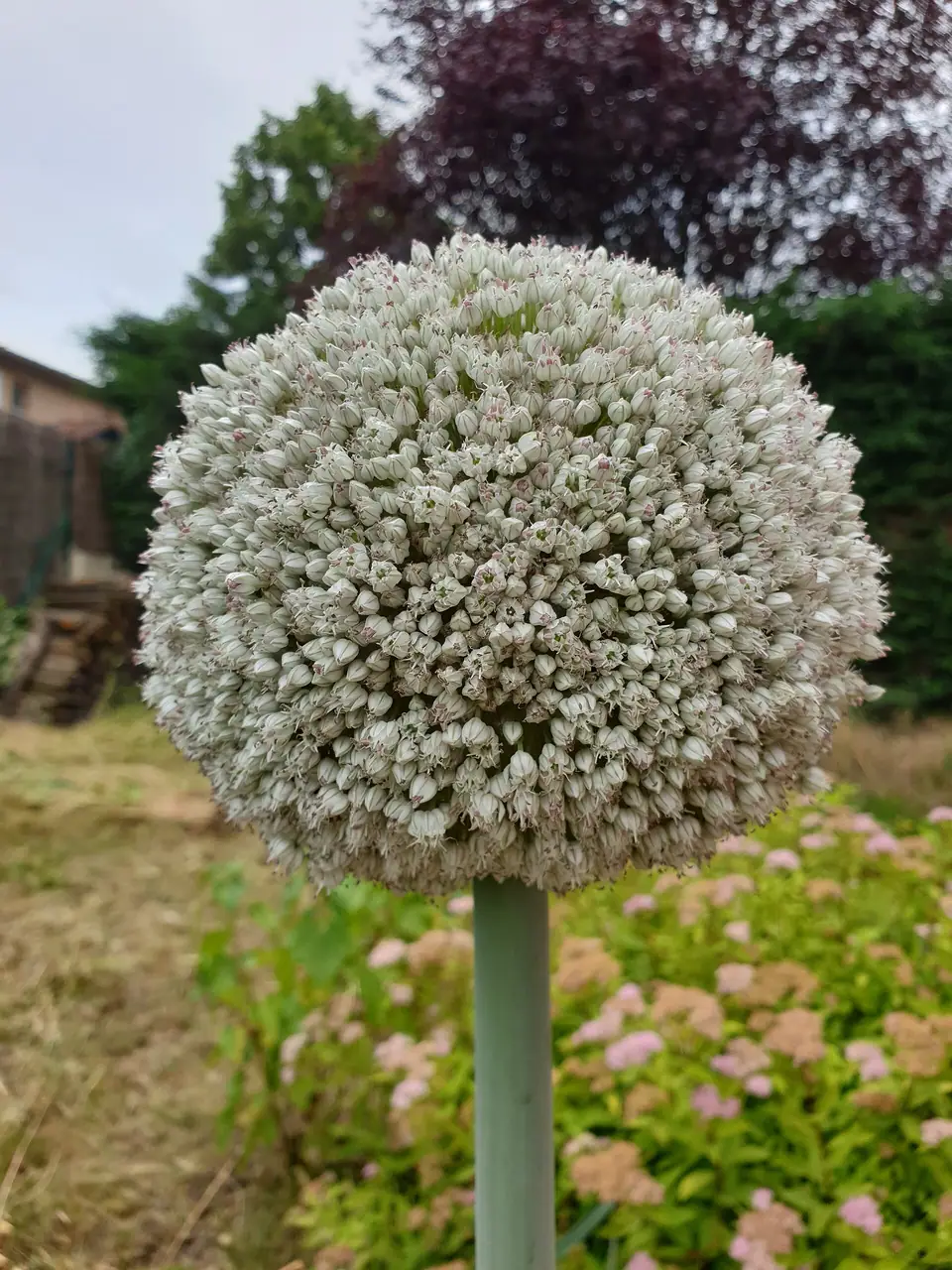

How to Grow and Care for Garden leek
Allium porrum
Written by Emilio Marruso · last checked
At a glance
Leeks are prized for their delicious mild flavor, and they ask for very little: sow them in spring, give them a sunny spot and water them only until they settle in. Pick slim baby leeks after two months or wait six months for full-sized ones, while late varieties keep the harvest going through winter into spring.
- Sun
A sunny spot
What the sources say (1)
Light: Sunny spot
Choose a sunny spot with free-draining soil
— How to grow Leeks | RHS Guide [1] - Water
Water young plants until settled, then only in long dry spells; keep the leaves dry
What the sources say (3)
Watering: Water seedlings and young plants until established; afterwards only during prolonged dry spells
Once leeks are growing strongly in their final position, weed regularly and water during prolonged dry spells.
— How to grow Leeks | RHS Guide [1] Watering notes: Avoid wetting the foliage, which can encourage fungal diseases such as leek rust; leeks in containers need regular watering across the season
Try to avoid wetting the foliage when you water, as this can encourage fungal diseases such as leek rust
— How to grow Leeks | RHS Guide [1] Leeks growing in containers need regular watering across the season
— How to grow Leeks | RHS Guide [1] - Spacing
6–8 in between plants (4 in for baby leeks), 1 ft between rows
What the sources say (2)
Spacing: 15-20 cm (6-8 in) between plants, depending on the variety; 10 cm (4 in) for baby leeks; 30 cm (1 ft) between rows
Space the holes 15–20cm (6–8in) apart, depending on the variety, or 10cm (4in) apart for baby leeks. Allow 30cm (1ft) between rows
— How to grow Leeks | RHS Guide [1] Row spacing: 30 cm (1 ft)
Space the holes 15–20cm (6–8in) apart, depending on the variety, or 10cm (4in) apart for baby leeks. Allow 30cm (1ft) between rows
— How to grow Leeks | RHS Guide [1] - Planting
Transplant at 8 in tall, eight weeks after sowing indoors, in mid to late spring
What the sources say (2)
Planting: Transplant when about 20 cm (8 in) tall, about eight weeks after indoor sowing; indoor-sown leeks go outside in mid- to late spring
Young leeks are usually ready to be planted outdoors after about eight weeks, when 20cm (8in) tall.
— How to grow Leeks | RHS Guide [1] Leeks sown indoors in late winter can be planted outside in mid- to late spring
— How to grow Leeks | RHS Guide [1] - Harvest
Baby leeks in two months, full-sized in six; lift gently with a fork
What the sources say (4)
Harvest: Baby leeks about two months, full-sized leeks about six months; usually from late summer, late varieties through winter into spring
You can harvest leeks at any size – baby leeks take only a couple of months, while full-sized leeks can take six months.
— How to grow Leeks | RHS Guide [1] Start harvesting when they’re still quite small, usually from late summer, to extend the cropping period.
— How to grow Leeks | RHS Guide [1] Late varieties can remain in the ground through winter and into spring
— How to grow Leeks | RHS Guide [1] How to harvest: Gently lift individual plants with a fork, starting when still small
Gently lift individual plants using a fork. Start harvesting when they’re still quite small, usually from late summer, to extend the cropping period.
— How to grow Leeks | RHS Guide [1] - Pests
Leek moth, onion fly, leaf miners, slugs and snails; leek rust and white rot
What the sources say (6)
Pests: allium leaf miner, leek moth, onion fly, slugs and snails
Allium leaf mining fly was first detected in Britain in 2002, it has become widespread in England and parts of Wales.
— How to grow Leeks | RHS Guide [1] Leek moth was mainly found in southern England but it is spreading north, it is not as frequently seen as the allium leaf mining fly.
— How to grow Leeks | RHS Guide [1] The maggots of onion fly can damage the roots and bulbs of onions and some related plants, sometimes killing seedlings.
— How to grow Leeks | RHS Guide [1] Slugs and snails are common garden animals, and they are well suited to the damp, mild climate of the UK.
— How to grow Leeks | RHS Guide [1] Diseases: leek rust, white rot
Leek rust is a common fungal disease of leeks and garlic, but also affects onions and chives.
— How to grow Leeks | RHS Guide [1] White rot is a serious fungal disease of onions, garlic and leeks causing yellowed, wilting foliage and decay of the roots and bulb.
— How to grow Leeks | RHS Guide [1] - Watch out
Pull off flower stalks as soon as they form, or the center turns tough
- Propagation
From seed, in a seedbed or right where they will grow
What the sources say (1)
Propagation: Seed, sown in a seedbed or in the final position and then transplanted or thinned
Leeks are usually sown straight into the ground in spring
— How to grow Leeks | RHS Guide [1] - Sowing
Outdoors in March and April, ½ inch deep; indoors from late winter
What the sources say (4)
Sowing: March and April outdoors; May and June for later-cropping varieties; indoors from late winter
The prime sowing months for leeks are March and April
— How to grow Leeks | RHS Guide [1] You can also sow later-cropping varieties in May and June, for harvesting in winter and spring
— How to grow Leeks | RHS Guide [1] They can also be sown indoors in late winter, for an earlier crop.
— How to grow Leeks | RHS Guide [1] Sowing depth: 1.5 cm [0.6 in]
about 1.5cm (¾in) deep and water along the base, then sow the seeds thinly along its length.
— How to grow Leeks | RHS Guide [1] - Containers
Grows in containers too; water them regularly all season
What the sources say (3)
In containers: Yes
Although leeks are best suited to growing in the ground, you could grow baby leeks, or even full-sized leeks, in a large, deep container.
— How to grow Leeks | RHS Guide [1] Watering notes: Avoid wetting the foliage, which can encourage fungal diseases such as leek rust; leeks in containers need regular watering across the season
Try to avoid wetting the foliage when you water, as this can encourage fungal diseases such as leek rust
— How to grow Leeks | RHS Guide [1] Leeks growing in containers need regular watering across the season
— How to grow Leeks | RHS Guide [1]
Overview
Leeks are a hardy winter vegetable grown from spring-sown seed that reaches maturity after about six months. [1] They need a sunny spot with free-draining soil and water only in prolonged dry spells once established. [1]
Garden leek care
How to water Garden leek
Watering
Water seedlings and young plants until established; afterwards only during prolonged dry spells
What the sources say (1)
Once leeks are growing strongly in their final position, weed regularly and water during prolonged dry spells.Watering notes
Avoid wetting the foliage, which can encourage fungal diseases such as leek rust; leeks in containers need regular watering across the season
How much light Garden leek needs
Sunny spot
What the sources say (1)
Choose a sunny spot with free-draining soilWhere to grow Garden leek
In containers
Yes
What the sources say (1)
Although leeks are best suited to growing in the ground, you could grow baby leeks, or even full-sized leeks, in a large, deep container.Spacing
15-20 cm (6-8 in) between plants, depending on the variety; 10 cm (4 in) for baby leeks; 30 cm (1 ft) between rows
What the sources say (1)
Space the holes 15–20cm (6–8in) apart, depending on the variety, or 10cm (4in) apart for baby leeks. Allow 30cm (1ft) between rowsHow to propagate Garden leek
Seed, sown in a seedbed or in the final position and then transplanted or thinned
What the sources say (1)
Leeks are usually sown straight into the ground in springHow to grow Garden leek
Sowing and growth
Sowing depth
1.5 cm [0.6 in]
What the sources say (1)
about 1.5cm (¾in) deep and water along the base, then sow the seeds thinly along its length.Row spacing
30 cm (1 ft)
What the sources say (1)
Space the holes 15–20cm (6–8in) apart, depending on the variety, or 10cm (4in) apart for baby leeks. Allow 30cm (1ft) between rowsDays to maturity
6 months
What the sources say (1)
They’re primarily a winter crop, reaching maturity after about six months.Harvest and storage
How to harvest
Gently lift individual plants with a fork, starting when still small
What the sources say (1)
Gently lift individual plants using a fork. Start harvesting when they’re still quite small, usually from late summer, to extend the cropping period.Pests and diseases
Pests
allium leaf miner, leek moth, onion fly, slugs and snails
What the sources say (4)
Allium leaf mining fly was first detected in Britain in 2002, it has become widespread in England and parts of Wales.Leek moth was mainly found in southern England but it is spreading north, it is not as frequently seen as the allium leaf mining fly.The maggots of onion fly can damage the roots and bulbs of onions and some related plants, sometimes killing seedlings.Slugs and snails are common garden animals, and they are well suited to the damp, mild climate of the UK.Diseases
leek rust, white rot
What the sources say (2)
Leek rust is a common fungal disease of leeks and garlic, but also affects onions and chives.White rot is a serious fungal disease of onions, garlic and leeks causing yellowed, wilting foliage and decay of the roots and bulb.Garden leek pests and problems
Bolting
Symptom: Flowering makes the centre of the leek fibrous
What to do: Remove flower stalks as soon as they start to form
What the sources say (1)
Remove any flower stalks as soon as they start to form, as flowering makes the centre of the leek fibrous.
— How to grow Leeks | RHS Guide [1] Leek rust
Symptom: Bright orange, raised spots (pustules)
What to do: Avoid wetting the foliage when watering
What the sources say (3)
Leek rust is a common fungal disease of leeks and garlic, but also affects onions and chives.
— How to grow Leeks | RHS Guide [1] The fungus causes bright orange, raised spots (pustules)
— How to grow Leeks | RHS Guide [1] Try to avoid wetting the foliage when you water, as this can encourage fungal diseases such as leek rust
— How to grow Leeks | RHS Guide [1]
Remedies
Each remedy shows what official sources say about it; traditional remedies without an official source are marked as such. Harmful ones are listed so you know to avoid them.
Treating the plant
onion thrips
strong jet of water Not verified
Traditional remedy, not verified by an official source.
How: Spray plants with a strong jet of water, encourage beneficial insects like lacewings, and use reflective mulch.
leek moth
insect netting Not verified
Traditional remedy, not verified by an official source.
How: Cover crops with insect netting, inspect plants regularly, and remove infested leaves.
allium leaf miner
row covers Not verified
Traditional remedy, not verified by an official source.
How: Use row covers during the adult flight season and rotate crops yearly.
white rot
long crop rotation Not verified
Traditional remedy, not verified by an official source.
How: Practice long crop rotations (4–5 years) and avoid planting alliums in contaminated soil.
rust
removing infected leaves Not verified
Traditional remedy, not verified by an official source.
How: Space plants for good airflow, avoid overhead watering, and remove infected leaves promptly.
slugs
handpicking at night Not verified
Traditional remedy, not verified by an official source.
How: Handpick at night, use beer traps, keep beds weed-free.
beer traps Not verified
Traditional remedy, not verified by an official source.
How: Handpick at night, use beer traps, keep beds weed-free.
Calendar
Sowing
March and April outdoors; May and June for later-cropping varieties; indoors from late winter
What the sources say (3)
The prime sowing months for leeks are March and AprilYou can also sow later-cropping varieties in May and June, for harvesting in winter and springThey can also be sown indoors in late winter, for an earlier crop.Planting
Transplant when about 20 cm (8 in) tall, about eight weeks after indoor sowing; indoor-sown leeks go outside in mid- to late spring
Harvest
Baby leeks about two months, full-sized leeks about six months; usually from late summer, late varieties through winter into spring
What the sources say (3)
You can harvest leeks at any size – baby leeks take only a couple of months, while full-sized leeks can take six months.Start harvesting when they’re still quite small, usually from late summer, to extend the cropping period.Late varieties can remain in the ground through winter and into springMonths as given by the sources, which are mostly from the United States (northern hemisphere). In the southern hemisphere they shift by about six months.
Edibility
Reported by the source, quoted verbatim. Do not eat a plant on the basis of this page alone: identification mistakes can be dangerous.
Similar plants
- Allium senescens Allium senescens
- Allium triquetrum Allium triquetrum
- Broadleaf wild leek Allium ampeloprasum
- Chives Allium schoenoprasum
- Cultivated garlic Allium sativum
- Garlic Chives Allium tuberosum
- Lily Leek Allium moly
- Onion Allium cepa
Sources
Every value above is quoted from these documents. Links lead to the original publisher.
- How to grow Leeks | RHS Guide · rhs.org.uk, consulted
Written by Emilio Marruso · last checked