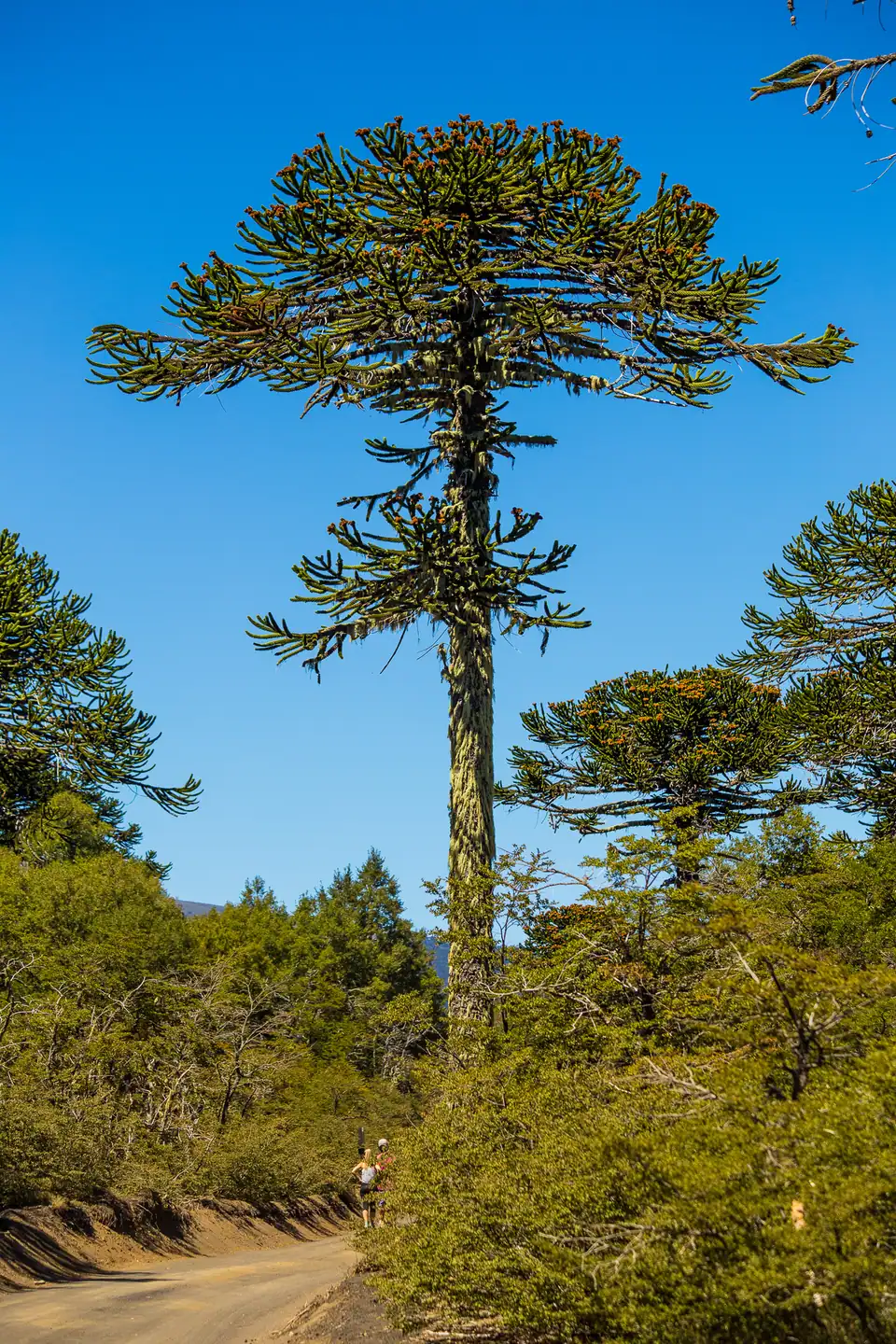


How to Grow and Care for Chilean Pine
Araucaria araucana
Written by Emilio Marruso · last checked
At a glance
This striking tree grows 50 to 80 feet tall in full sun or partial shade and settles into nearly any well-drained soil, even clay. It is a gift to the future: after 30 to 40 years it starts releasing large, nut-like seeds that are edible and taste best roasted, gathered in summer and fall.
- Sun
Full sun to partial shade
What the sources say (2)
Light: Full sun to partial shade
Full sun (6 or more hours of direct sunlight a day)
— Araucaria araucana (Chilean Pine, Chile Nut, Chile Pine, Monkey Puzzle, Monkey Puzzle Tree, Monkeypuzzle Tree, Parana Pine) | North Carolina Extension Gardener Plant Toolbox [1] Partial Shade (Direct sunlight only part of the day, 2-6 hours)
— Araucaria araucana (Chilean Pine, Chile Nut, Chile Pine, Monkey Puzzle, Monkey Puzzle Tree, Monkeypuzzle Tree, Parana Pine) | North Carolina Extension Gardener Plant Toolbox [1] - Water
Water often
What the sources say (1)
Watering: Frequent watering
This tree has few pests or diseases and thrives best with full sun, well-drained soil and frequent watering.
— Araucaria araucana (Chilean Pine, Chile Nut, Chile Pine, Monkey Puzzle, Monkey Puzzle Tree, Monkeypuzzle Tree, Parana Pine) | North Carolina Extension Gardener Plant Toolbox [1] - Cold
Survives winters down to 0 °F (−17.8 °C)
Hardy in very cold winters · USDA 7a · RHS H6 · Z7
What the sources say (2)
Hardiness, coldest zone: 7a [winter low −17.8 to −15 °C (0 to 5 °F)]
7a, 7b, 8a, 8b, 9a, 9b, 10a, 10b
— Araucaria araucana (Chilean Pine, Chile Nut, Chile Pine, Monkey Puzzle, Monkey Puzzle Tree, Monkeypuzzle Tree, Parana Pine) | North Carolina Extension Gardener Plant Toolbox [1] Hardiness, warmest zone: 10b [winter low 1.7 to 4.4 °C (35 to 40 °F)]
7a, 7b, 8a, 8b, 9a, 9b, 10a, 10b
— Araucaria araucana (Chilean Pine, Chile Nut, Chile Pine, Monkey Puzzle, Monkey Puzzle Tree, Monkeypuzzle Tree, Parana Pine) | North Carolina Extension Gardener Plant Toolbox [1] - Soil
Almost any soil, even clay, as long as it drains well
What the sources say (1)
Watering notes: Tolerates nearly any soil type, including clay, provided it is well-drained
It tolerates nearly any type of soil, including clay, provided it is well-drained.
— Araucaria araucana (Chilean Pine, Chile Nut, Chile Pine, Monkey Puzzle, Monkey Puzzle Tree, Monkeypuzzle Tree, Parana Pine) | North Carolina Extension Gardener Plant Toolbox [1] - Harvest
Edible nut-like seeds in summer and fall, best roasted; trees start giving them at 30–40 years
What the sources say (2)
Harvest: Summer, Fall
Fruit Value To Gardener: Edible Display/Harvest Time: Fall Summer
— Araucaria araucana (Chilean Pine, Chile Nut, Chile Pine, Monkey Puzzle, Monkey Puzzle Tree, Monkeypuzzle Tree, Parana Pine) | North Carolina Extension Gardener Plant Toolbox [1] Years to first fruit: 30-40 years (age at which mature trees begin to release seeds)
Mature trees release a prolific amount of seeds but cannot do so until they are 30-40 years old.
— Araucaria araucana (Chilean Pine, Chile Nut, Chile Pine, Monkey Puzzle, Monkey Puzzle Tree, Monkeypuzzle Tree, Parana Pine) | North Carolina Extension Gardener Plant Toolbox [1] - Pests
Scale insects, leaf spot, root rot and sooty mold
What the sources say (2)
Pests: scales
It is generally pest resistant but has some susceptibility to scales, leaf spot, phytophthora, root rot and sooty molds.
— Araucaria araucana (Chilean Pine, Chile Nut, Chile Pine, Monkey Puzzle, Monkey Puzzle Tree, Monkeypuzzle Tree, Parana Pine) | North Carolina Extension Gardener Plant Toolbox [1] Diseases: leaf spot, phytophthora, root rot, sooty molds
It is generally pest resistant but has some susceptibility to scales, leaf spot, phytophthora, root rot and sooty molds.
— Araucaria araucana (Chilean Pine, Chile Nut, Chile Pine, Monkey Puzzle, Monkey Puzzle Tree, Monkeypuzzle Tree, Parana Pine) | North Carolina Extension Gardener Plant Toolbox [1] - Watch out
Roots lift sidewalks and big cones fall: give it lots of space; it dislikes city pollution
- Size
50 to 80 ft tall and 20 to 30 ft wide
What the sources say (2)
Mature height: 1524-2438 cm (50 to 80 ft)
Height: 50 ft. 0 in. - 80 ft. 0 in.
— Araucaria araucana (Chilean Pine, Chile Nut, Chile Pine, Monkey Puzzle, Monkey Puzzle Tree, Monkeypuzzle Tree, Parana Pine) | North Carolina Extension Gardener Plant Toolbox [1] Mature width: 610-914 cm (20 to 30 ft)
Width: 20 ft. 0 in. - 30 ft. 0 in.
— Araucaria araucana (Chilean Pine, Chile Nut, Chile Pine, Monkey Puzzle, Monkey Puzzle Tree, Monkeypuzzle Tree, Parana Pine) | North Carolina Extension Gardener Plant Toolbox [1] - Propagation
Grows from seed
What the sources say (1)
Propagation: Seed
Life Cycle: Perennial Woody Recommended Propagation Strategy: Seed
— Araucaria araucana (Chilean Pine, Chile Nut, Chile Pine, Monkey Puzzle, Monkey Puzzle Tree, Monkeypuzzle Tree, Parana Pine) | North Carolina Extension Gardener Plant Toolbox [1]
Overview
Araucaria araucana is a large, stately evergreen conifer native to the Andes of southern Chile and western Argentina. [1] It grows best in open, full sun locations with well-drained soil and ample room for its large mature size. [1] The large nut-like seeds are edible and taste best when roasted. [1]
This record is incomplete: the sources we read do not cover every field yet.
Not yet covered by our sources: Pruning
Chilean Pine care
How to water Chilean Pine
Watering
Frequent watering
What the sources say (1)
This tree has few pests or diseases and thrives best with full sun, well-drained soil and frequent watering.Watering notes
Tolerates nearly any soil type, including clay, provided it is well-drained
What the sources say (1)
It tolerates nearly any type of soil, including clay, provided it is well-drained.How much light Chilean Pine needs
Full sun to partial shade
What the sources say (2)
Full sun (6 or more hours of direct sunlight a day)Partial Shade (Direct sunlight only part of the day, 2-6 hours)How much cold Chilean Pine can take
Hardiness, coldest zone
7a [winter low −17.8 to −15 °C (0 to 5 °F)]
What the sources say (1)
7a, 7b, 8a, 8b, 9a, 9b, 10a, 10bHardiness, warmest zone
10b [winter low 1.7 to 4.4 °C (35 to 40 °F)]
What the sources say (1)
7a, 7b, 8a, 8b, 9a, 9b, 10a, 10bHow to propagate Chilean Pine
Seed
What the sources say (1)
Life Cycle:
Perennial
Woody
Recommended Propagation Strategy:
SeedHow to grow Chilean Pine
The plant
Life cycle
perennial (woody)
What the sources say (1)
Life Cycle: Perennial WoodyFamily
Araucariaceae
What the sources say (1)
Family: AraucariaceaeMature height
1524-2438 cm (50 to 80 ft)
What the sources say (1)
Height: 50 ft. 0 in. - 80 ft. 0 in.Mature width
610-914 cm (20 to 30 ft)
What the sources say (1)
Width: 20 ft. 0 in. - 30 ft. 0 in.Years to first fruit
30-40 years (age at which mature trees begin to release seeds)
What the sources say (1)
Mature trees release a prolific amount of seeds but cannot do so until they are 30-40 years old.Pests and diseases
Pests
scales
What the sources say (1)
It is generally pest resistant but has some susceptibility to scales, leaf spot, phytophthora, root rot and sooty molds.Diseases
leaf spot, phytophthora, root rot, sooty molds
What the sources say (1)
It is generally pest resistant but has some susceptibility to scales, leaf spot, phytophthora, root rot and sooty molds.Chilean Pine pests and problems
Pests and diseases
Symptom: Some susceptibility to scales, leaf spot, phytophthora, root rot and sooty molds.
What to do: Not given beyond siting; tree does not tolerate urban pollution.
What the sources say (1)
It is generally pest resistant but has some susceptibility to scales, leaf spot, phytophthora, root rot and sooty molds.
— Araucaria araucana (Chilean Pine, Chile Nut, Chile Pine, Monkey Puzzle, Monkey Puzzle Tree, Monkeypuzzle Tree, Parana Pine) | North Carolina Extension Gardener Plant Toolbox [1] Surface roots and cone litter
Symptom: Surface roots can lift sidewalks and impede lawn mowing; large falling cones are litter.
What to do: Allow adequate space for the tree's large size at maturity.
What the sources say (1)
Siting must allow adequate space for this tree's large size at maturity as surface roots are capable of lifting sidewalks and impeding lawn mowing.
— Araucaria araucana (Chilean Pine, Chile Nut, Chile Pine, Monkey Puzzle, Monkey Puzzle Tree, Monkeypuzzle Tree, Parana Pine) | North Carolina Extension Gardener Plant Toolbox [1]
Remedies
Each remedy shows what official sources say about it; traditional remedies without an official source are marked as such. Harmful ones are listed so you know to avoid them.
Treating the plant
scale
insecticidal soap Works
For example, spraying home remedies that contain dish detergent on plants on a sunny day can injure the plant, essentially burning it.
— extension.psu.edu [7] How: Horticultural oil or insecticidal soap can be applied to manage these pests.
Horticultural oil or insecticidal soap can be applied to manage these pests.
— biologyinsights.com [5] What the evidence says For example, insecticidal soap is a safe, effective organic insecticide with minimal environmental impact.
— extension.psu.edu [6]
Calendar
Harvest
Summer, Fall
What the sources say (1)
Fruit Value To Gardener:
Edible
Display/Harvest Time:
Fall
SummerPruning
Not stated in the sources we read.
Months as given by the sources, which are mostly from the United States (northern hemisphere). In the southern hemisphere they shift by about six months.
Edibility
Reported by the source, quoted verbatim. Do not eat a plant on the basis of this page alone: identification mistakes can be dangerous.
Indicative values
Values from a secondary source, not checked word for word like the rest of this page. Use them as a starting point.
- Hours of sun
- 6-8 hoursIndicative value, adapt it to your climate · Secondary source
- Soil
- Well-drainedIndicative value, adapt it to your climate · Secondary source
- Soil pH
- 5.5-6.5Indicative value, adapt it to your climate · Secondary source
- Care level
- HighIndicative value, adapt it to your climate · Secondary source
- Growth rate
- ModerateIndicative value, adapt it to your climate · Secondary source
- Pruning
- March, April, March, AprilIndicative value, adapt it to your climate · Secondary source
Similar plants
- Norfolk Island Pine Araucaria heterophylla
- Coral Reef Araucaria Araucaria columnaris
- Wollemia Wollemia nobilis
- Abies grandis Abies grandis
- Abraham Trachystemon orientalis
- Abyssinian banana Ensete ventricosum
- Acacia longifolia Acacia longifolia
- Acanthus hungaricus Acanthus hungaricus
Sources
Every value above is quoted from these documents. Links lead to the original publisher.
- Araucaria araucana (Chilean Pine, Chile Nut, Chile Pine, Monkey Puzzle, Monkey Puzzle Tree, Monkeypuzzle Tree, Parana Pine) | North Carolina Extension Gardener Plant Toolbox · plants.ces.ncsu.edu, consulted
- Monkeypuzzle Tree - Araucaria araucana | North Carolina Extension Gardener Plant Toolbox · plants.ces.ncsu.edu, consulted
- Chile Nut - Araucaria araucana | North Carolina Extension Gardener Plant Toolbox · plants.ces.ncsu.edu, consulted
- Parana Pine - Araucaria araucana | North Carolina Extension Gardener Plant Toolbox · plants.ces.ncsu.edu, consulted
- biologyinsights.com · biologyinsights.com
- extension.psu.edu · extension.psu.edu
- extension.psu.edu · extension.psu.edu
Written by Emilio Marruso · last checked