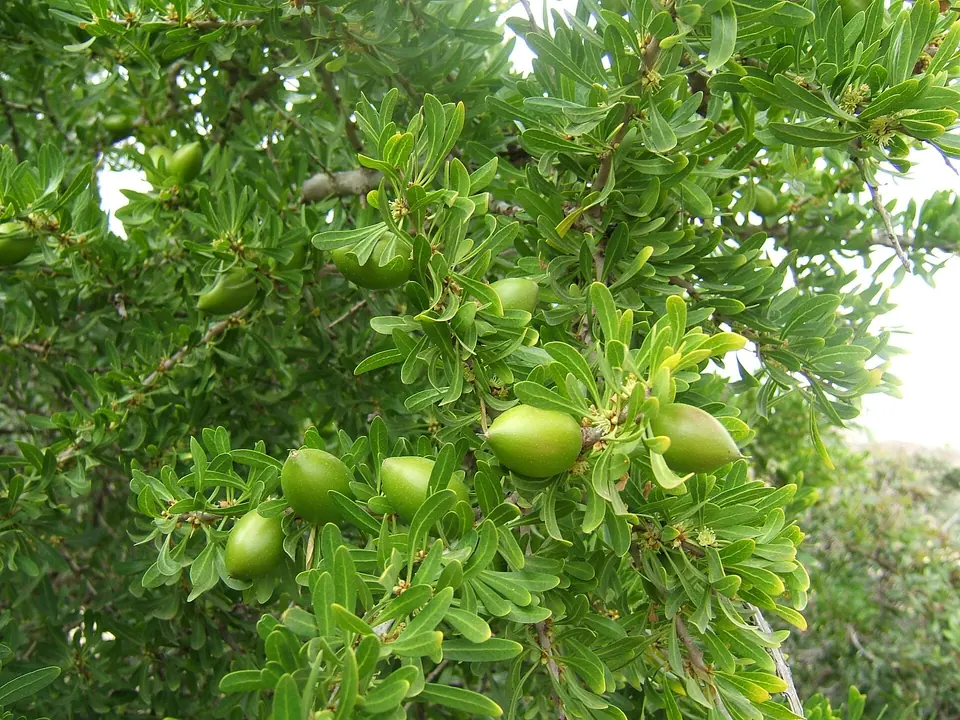
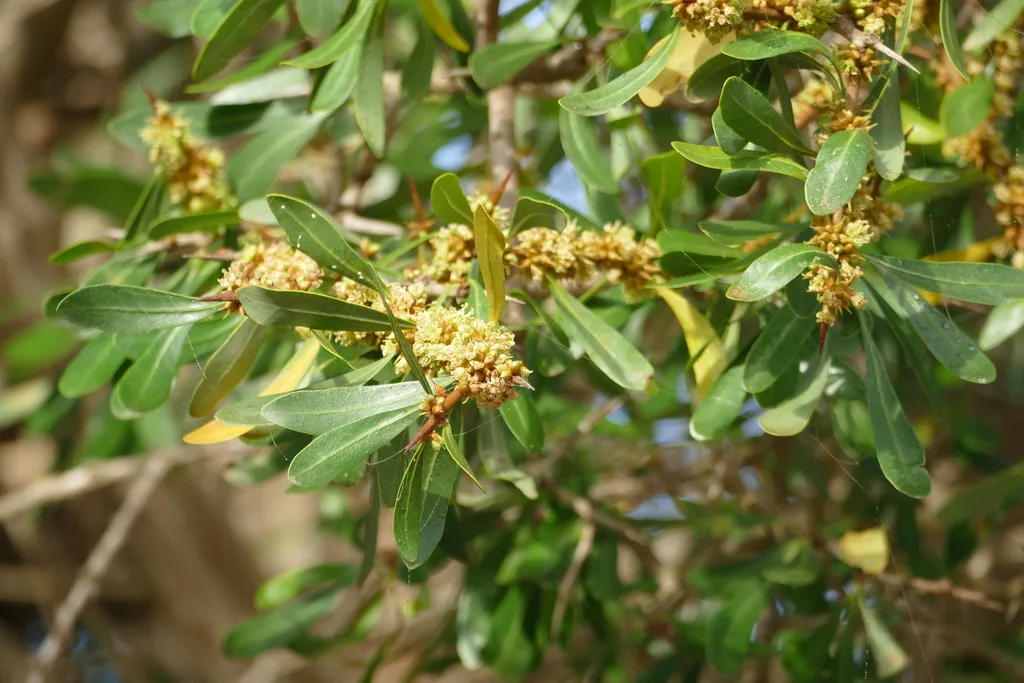

How to Grow and Care for Argania spinosa
Argania spinosa
Written by Emilio Marruso · last checked
At a glance
The argan tree loves a sunny spot and, once established, is very drought tolerant, needing summer water only if the soil risks drying out. Its seeds give an edible oil, and its fruit and leaves are a major source of forage for goats, sheep and cattle. You can start new plants from seed or cuttings.
- Sun
Give it a sunny spot
What the sources say (1)
Light: Sunny position
Requires a sunny position[ 418 Title
— Argania spinosa - Useful Tropical Plants [2] - Water
Very drought tolerant once established; water in summer only if the soil risks drying out
What the sources say (2)
Watering: Very drought tolerant once established; water in summer only if the soil is in danger of drying out
Established plants are very drought tolerant - they can shed their foliage and remain in a state of dormancy for
— Argania spinosa - Useful Tropical Plants [2] Water your argan tree during the summer if its soil is in danger of drying out. Argan trees in nature
— How to Grow an Argan Tree | Hunker [4] - Soil
Soil pH 6.0–8.0, from slightly acidic to alkaline
- Harvest
The seeds give an edible oil; fruit and leaves feed goats, sheep and cattle
- Propagation
Grow new plants from seed or cuttings
What the sources say (1)
Propagation: Seed and cuttings
Propagation is usually by seed and cuttings. Fallen fruits are
— Agroforestree Species profile [1]
Overview
Argan is an arid-zone tree of Morocco that thrives on poor soil, resists extreme heat and drought, and cannot withstand cold. [1] It requires a sunny position and succeeds in a wide range of soils but not in water-logged ones. [2] It is a local source of high-quality edible oil and is sometimes cultivated as an oil crop. [2]
This record is incomplete: the sources we read do not cover every field yet.
Not yet covered by our sources: Planting, Harvest, Spacing
Argania spinosa care
How to water Argania spinosa
Very drought tolerant once established; water in summer only if the soil is in danger of drying out
What the sources say (2)
Established plants are very drought tolerant - they can shed their foliage and remain in a state of dormancy forWater your argan tree during the summer if its soil is in danger of drying out. Argan trees in natureHow much light Argania spinosa needs
Sunny position
What the sources say (1)
Requires a sunny position[ 418 TitleBest soil for Argania spinosa
Soil pH, minimum
6.0
What the sources say (1)
Prefers a pH in the range 6.5 - 7.5, tolerating 6 - 8[ 418Soil pH, maximum
8.0
What the sources say (1)
Prefers a pH in the range 6.5 - 7.5, tolerating 6 - 8[ 418Where to grow Argania spinosa
Not stated in the sources we read.
How to propagate Argania spinosa
Seed and cuttings
What the sources say (1)
Propagation is usually by seed and cuttings. Fallen fruits areRemedies
The sources we checked give no remedies for this plant.
Calendar
Planting
Not stated in the sources we read.
Harvest
Not stated in the sources we read.
Months as given by the sources, which are mostly from the United States (northern hemisphere). In the southern hemisphere they shift by about six months.
Edibility
Reported by the source, quoted verbatim. Do not eat a plant on the basis of this page alone: identification mistakes can be dangerous.
Indicative values
Values from a secondary source, not checked word for word like the rest of this page. Use them as a starting point.
- Life cycle
- PerennialIndicative value, adapt it to your climate · Secondary source
- Mature height
- 457.2-762 cm (15-25 ft)Indicative value, adapt it to your climate · Secondary source
- Hours of sun
- 6-8 hoursIndicative value, adapt it to your climate · Secondary source
- USDA hardiness zones
- 9-11 [winter low −6.7 to 10 °C (20 to 50 °F)]Indicative value, adapt it to your climate · Secondary source
- Care level
- MediumIndicative value, adapt it to your climate · Secondary source
- Growth rate
- LowIndicative value, adapt it to your climate · Secondary source
- Pruning
- May, June, JulyIndicative value, adapt it to your climate · Secondary source
Similar plants
- Afghan Cherry Prunus jacquemontii
- Alaska blueberry Vaccinium ovalifolium
- Algerita Mahonia trifoliolata
- Allegheny Serviceberry Amelanchier laevis
- American chestnut Castanea dentata
- American Plum Prunus americana
- Apple Malus sylvestris
- Apple Rose Rosa villosa
Sources
Every value above is quoted from these documents. Links lead to the original publisher.
- Agroforestree Species profile · apps.worldagroforestry.org, consulted
- Argania spinosa - Useful Tropical Plants · tropical.theferns.info, consulted
- BOTANICAL ENCOUNTERS: The Argan Tree · sdhortnews.org, consulted
- How to Grow an Argan Tree | Hunker · hunker.com, consulted
- Argan (Argania spinosa) | Feedipedia · feedipedia.org, consulted
Written by Emilio Marruso · last checked