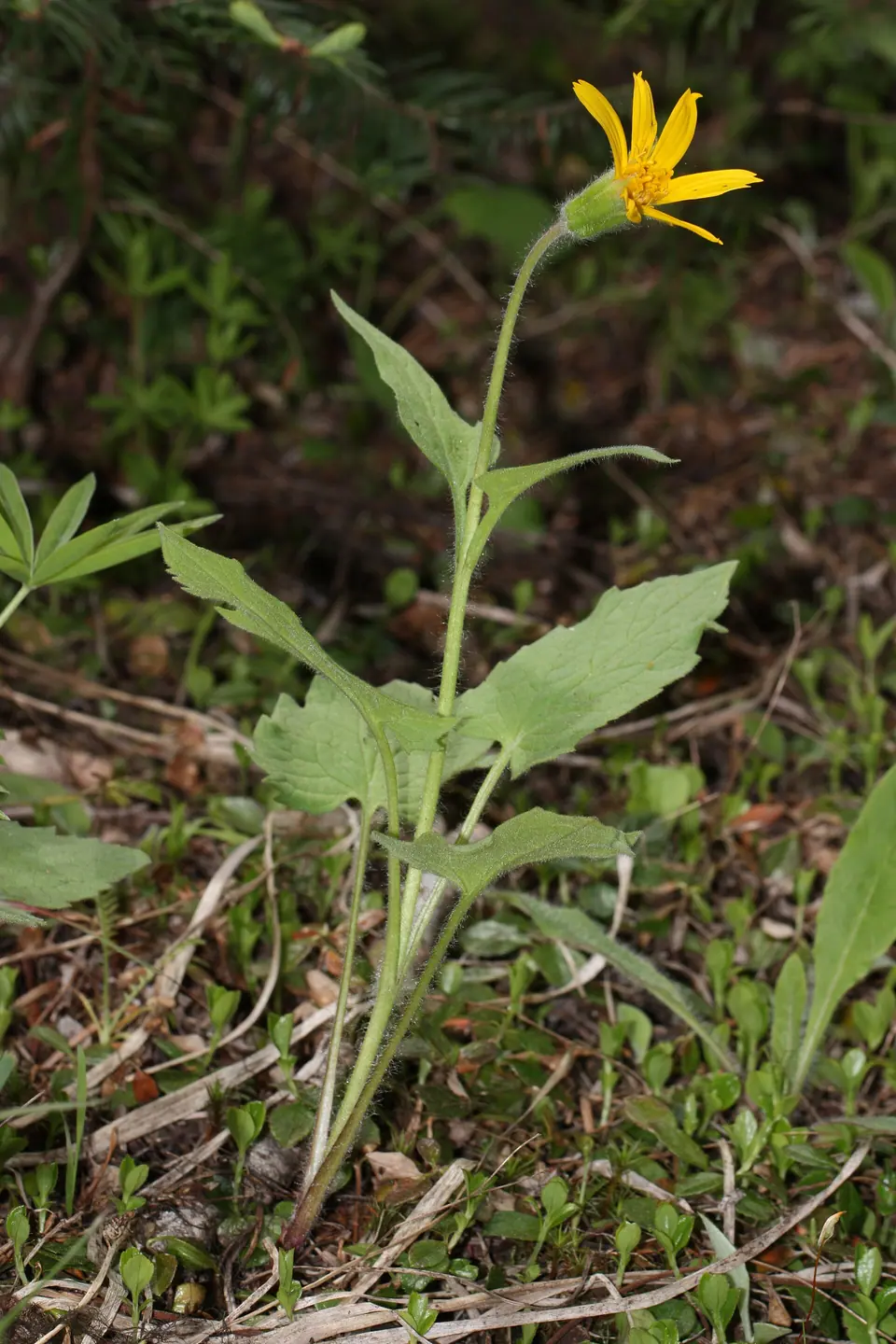
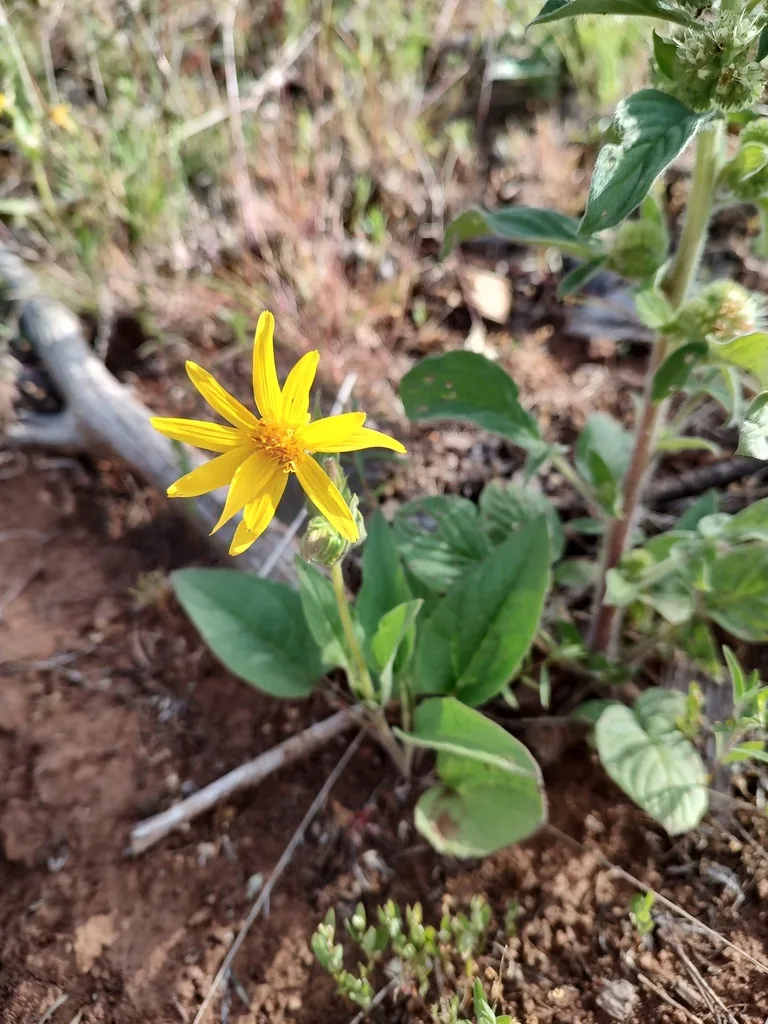

How to Grow and Care for Heart-leaf Arnica
Arnica cordifolia
Written by Emilio Marruso · last checked
Toxic to: Livestock · Why
At a glance
This hardy perennial is happy in partial shade and also tolerates both sun and shade. It loves moist, well-watered spots but can handle dry soil too, and it stays compact at 6–24 inches tall. Sow the seeds outdoors in fall or plant rhizome pieces in spring, and it will come back year after year.
- Sun
Partial shade; also tolerates sun and shade
- Water
Likes moist, well-watered soil but tolerates dry soil
What the sources say (1)
Watering: Moist sites, well-watered; tolerates dry soils
Can tolerate dry soils but grow best in moist sites that are well-watered.
— "Asteraceae : Arnica cordifolia" by R Neil Reese [3] - Cold
Survives winters down to −50 °F (−45.6 °C)
Very hardy · USDA 2 · RHS H7 · Z2
What the sources say (1)
Hardiness, coldest zone: 2 [winter low −45.6 to −40 °C (−50 to −40 °F)]
Hardiness Zone 2+
— Heartleaf Arnica (Arnica cordifolia) — Practical Plants [7] - Planting
Plant rhizome pieces in spring, seedlings in late spring or early summer
What the sources say (2)
- Size
6–24 in tall
What the sources say (2)
Mature height: 15–61 cm (6–24 in)
Heartleaf arnica grows 6 to 24 inches tall, with upright stems arising singly from long, slender, creeping rhizomes
— Heartleaf Arnica | USU [1] Arnica cordifolia is a perennial herb arising from long, creeping rhizomes, growing to 60 cm tall.
— "Asteraceae : Arnica cordifolia" by R Neil Reese [3] - Propagation
By seed after 60 days of cold, or by dividing the rhizomes in spring
What the sources say (3)
Propagation: Seed with 60-day cold treatment; rhizome sections or division in spring
Seeds need a 60-day cold treatment to break dormancy.
— "Asteraceae : Arnica cordifolia" by R Neil Reese [3] Sections of rhizomes can be transplanted in spring.
— "Asteraceae : Arnica cordifolia" by R Neil Reese [3] Division in spring
— Heartleaf Arnica (Arnica cordifolia) — Practical Plants [7] - Sowing
Sow outdoors in fall for 60 days of cold, or in early spring in a cold frame
What the sources say (3)
Sowing: Fall outdoors (meets the 60-day cold treatment), or early spring in a cold frame
Planting seeds out in the fall fulfills this requirement.
— "Asteraceae : Arnica cordifolia" by R Neil Reese [3] Seed - sow early spring in a cold frame
— Heartleaf Arnica (Arnica cordifolia) — Practical Plants [7] Saving seeds: Seeds mature in late summer into fall; collect the achenes when they begin to be released from the heads.
Seed collection: Seeds mature in late summer and into the fall. Collect the achenes when they begin to be released from the heads.
— "Asteraceae : Arnica cordifolia" by R Neil Reese [3] - Safety
May be toxic to livestock
Overview
Heartleaf arnica is a rhizomatous perennial herb of western North American forests and meadows. [3][1] It grows best in partial shade and in moist sites. [3]
This record is incomplete: the sources we read do not cover every field yet.
Not yet covered by our sources: Hardiness, warmest zone, Pruning
Heart-leaf Arnica care
How to water Heart-leaf Arnica
Moist sites, well-watered; tolerates dry soils
What the sources say (1)
Can tolerate dry soils but grow best in moist sites that are well-watered.How much light Heart-leaf Arnica needs
How much cold Heart-leaf Arnica can take
Hardiness, coldest zone
2 [winter low −45.6 to −40 °C (−50 to −40 °F)]
What the sources say (1)
Hardiness
Zone 2+Hardiness, warmest zone
Not stated in the sources we read.
How to propagate Heart-leaf Arnica
Seed with 60-day cold treatment; rhizome sections or division in spring
What the sources say (3)
Seeds need a 60-day cold treatment to break dormancy.Sections of rhizomes can be transplanted in spring.Division in springHow to grow Heart-leaf Arnica
The plant
Life cycle
perennial
Family
Asteraceae
What the sources say (1)
## Family Name Asteraceae ## Common Name Heartleaf arnica ## Description Arnica cordifolia is a perennial herbMature height
15–61 cm (6–24 in)
What the sources say (2)
Heartleaf arnica grows 6 to 24 inches tall, with upright stems arising singly from long, slender, creeping rhizomesArnica cordifolia is a perennial herb arising from long, creeping rhizomes, growing to 60 cm tall.Harvest and storage
Saving seeds
Seeds mature in late summer into fall; collect the achenes when they begin to be released from the heads.
What the sources say (1)
Seed collection: Seeds mature in late summer and into the fall. Collect the achenes when they begin to be released from the heads.Remedies
Each remedy shows what official sources say about it; traditional remedies without an official source are marked as such. Harmful ones are listed so you know to avoid them.
First aid
First aid: not a substitute for a doctor
ingestion
first aid after ingestion Official source, not independently tested
After following the above steps, always call Poison Help at 1-800-222-1222 . Do not wait for symptoms to appear.
— mnpoison.org [9] However, eating the plant, the topical creams or ointments, or the plant extracts or oils, can result in serious poisoning.
— poison.org [10] How: Remove any remaining plant material, gently wipe the mouth with a wet cloth, check for irritation, swelling or discoloration, give one glass of water if the person is awake and able to swallow.
Remove any remaining plant material or berries. - Gently wipe the mouth with a wet cloth. - Check for irritation, swelling, or discoloration. - Give one glass of water if the person is awake and able to swallow.
— mnpoison.org [9]
skin contact
first aid after skin contact Official source, not independently tested
After following the above steps, always call Poison Help at 1-800-222-1222 . Do not wait for symptoms to appear.
— mnpoison.org [9] How: Remove contaminated clothing and wash the skin thoroughly with soap and water.
Remove contaminated clothing. - Wash skin thoroughly with soap and water.
— mnpoison.org [9]
Is Heart-leaf Arnica toxic to pets?
Reported by the source, quoted verbatim. This is not medical or veterinary advice: if a person or an animal may have eaten this plant, contact a poison control centre or a veterinarian.
Reported to have poor forage value for livestock and to be potentially toxic
[5]The source flags the risk for this animal but does not explain why.
Calendar
Sowing
Fall outdoors (meets the 60-day cold treatment), or early spring in a cold frame
Planting
Spring (rhizome sections); late spring or early summer (seedlings)
Pruning
Not stated in the sources we read.
Months as given by the sources, which are mostly from the United States (northern hemisphere). In the southern hemisphere they shift by about six months.
Indicative values
Values from a secondary source, not checked word for word like the rest of this page. Use them as a starting point.
- Drought tolerant
- yesIndicative value, adapt it to your climate · Secondary source
- Soil
- Sand, LoamIndicative value, adapt it to your climate · Secondary source
- Soil pH
- 5.5-7Indicative value, adapt it to your climate · Secondary source
- Care level
- MediumIndicative value, adapt it to your climate · Secondary source
- Growth rate
- LowIndicative value, adapt it to your climate · Secondary source
- Pruning
- March, AprilIndicative value, adapt it to your climate · Secondary source
Similar plants
- Leopard's-Bane Arnica montana
- Ageratum Ageratum houstonianum
- Appalachian Blazing Star Liatris squarrulosa
- Appalachian Ironweed Vernonia glauca
- Appalachian Sunflower Helianthus atrorubens
- Aster Symphyotrichum lateriflorum
- Autumn Goldenrod Solidago sphacelata
- Barberton Daisy Gerbera jamesonii
Sources
Every value above is quoted from these documents. Links lead to the original publisher.
- Heartleaf Arnica | USU · extension.usu.edu, consulted
- Heartleaf Arnica - Cedar Breaks National Monument (U.S. National Park Service) · home.nps.gov, consulted
- "Asteraceae : Arnica cordifolia" by R Neil Reese · openprairie.sdstate.edu, consulted
- Arnica cordifolia | Heartleaf Arnica | Wildflowers of the Pacific Northwest · pnwflowers.com, consulted
- Growing and Using Native Plants in the Northern Interior of B.C. · env.gov.bc.ca, consulted
- Plant Propagation Protocol for Arnica cordofilia · courses.washington.edu, consulted
- Heartleaf Arnica (Arnica cordifolia) — Practical Plants · practicalplants.org, consulted
- Arnica cordifolia - Useful Temperate Plants · temperate.theferns.info, consulted
- mnpoison.org · mnpoison.org
- poison.org · poison.org
Written by Emilio Marruso · last checked