
How to Grow and Care for Yellow Rocket
Barbarea vulgaris
Written by Emilio Marruso · last checked
Toxic to: People · Why
At a glance
Winter cress is an easygoing plant that grows in full sun to light shade and does best in moist, well-drained soil. Its young leaves can be eaten raw or cooked, so it is a fun green to try in small amounts. It grows easily from seed and spreads by reseeding, so pull extra seedlings while they are still small.
- Sun
Full sun to light shade
What the sources say (1)
Light: Full sun to light shade
Yellow Rocket Cress does best in sun or light shade in moist, slightly acidic, well-drained soil.
— Barbarea vulgaris (Bittercress, Garden Yellowrocket, Herb Barbara, Rocketcress, Wintercress, Winter Rocket, Wound Rocket, Yellowrocket, Yellow Rocket, Yellow Rocketcress) | North Carolina Extension Gardener Plant Toolbox [1] - Water
Keep the soil moist; it grows weaker in dry spots
What the sources say (2)
Watering notes: Does best in moist, well-drained soil; growth is less robust at dry sites with poor soil
Yellow Rocket Cress does best in sun or light shade in moist, slightly acidic, well-drained soil.
— Barbarea vulgaris (Bittercress, Garden Yellowrocket, Herb Barbara, Rocketcress, Wintercress, Winter Rocket, Wound Rocket, Yellowrocket, Yellow Rocket, Yellow Rocketcress) | North Carolina Extension Gardener Plant Toolbox [1] growth is less robust at dry sites with poor soil.
— Barbarea vulgaris (Bittercress, Garden Yellowrocket, Herb Barbara, Rocketcress, Wintercress, Winter Rocket, Wound Rocket, Yellowrocket, Yellow Rocket, Yellow Rocketcress) | North Carolina Extension Gardener Plant Toolbox [1] - Cold
Survives winters down to −20 °F (−28.9 °C)
Very hardy · USDA 5a · RHS H7 · Z5
What the sources say (2)
Hardiness, coldest zone: 5a [winter low −28.9 to −26.1 °C (−20 to −15 °F)]
USDA Plant Hardiness Zone: 5a, 5b, 6a, 6b, 7a, 7b, 8a, 8b, 9a, 9b
— Barbarea vulgaris (Bittercress, Garden Yellowrocket, Herb Barbara, Rocketcress, Wintercress, Winter Rocket, Wound Rocket, Yellowrocket, Yellow Rocket, Yellow Rocketcress) | North Carolina Extension Gardener Plant Toolbox [1] Hardiness, warmest zone: 9b [winter low −3.9 to −1.1 °C (25 to 30 °F)]
USDA Plant Hardiness Zone: 5a, 5b, 6a, 6b, 7a, 7b, 8a, 8b, 9a, 9b
— Barbarea vulgaris (Bittercress, Garden Yellowrocket, Herb Barbara, Rocketcress, Wintercress, Winter Rocket, Wound Rocket, Yellowrocket, Yellow Rocket, Yellow Rocketcress) | North Carolina Extension Gardener Plant Toolbox [1] - Soil
Moist, well-drained soil; poor, dry soil gives weaker plants
What the sources say (2)
Watering notes: Does best in moist, well-drained soil; growth is less robust at dry sites with poor soil
Yellow Rocket Cress does best in sun or light shade in moist, slightly acidic, well-drained soil.
— Barbarea vulgaris (Bittercress, Garden Yellowrocket, Herb Barbara, Rocketcress, Wintercress, Winter Rocket, Wound Rocket, Yellowrocket, Yellow Rocket, Yellow Rocketcress) | North Carolina Extension Gardener Plant Toolbox [1] growth is less robust at dry sites with poor soil.
— Barbarea vulgaris (Bittercress, Garden Yellowrocket, Herb Barbara, Rocketcress, Wintercress, Winter Rocket, Wound Rocket, Yellowrocket, Yellow Rocket, Yellow Rocketcress) | North Carolina Extension Gardener Plant Toolbox [1] - Harvest
Young leaves can be eaten raw or cooked, in small amounts
- Watch out
Reseeds and can form colonies: pull extra plants by hand while small
- Size
Over 2 ft tall
What the sources say (1)
Mature height: over 61 cm (2 ft)
The flowering stems are produced during the second year and can eventually exceed two feet in height.
— Yellow Rocket [2] - Propagation
Grows from seed; older plants have a deep root and are hard to move
What the sources say (2)
Propagation: Seed
Recommended Propagation Strategy: Seed Country Or Region Of Origin: Europe, Mediterranean, Japan
— Barbarea vulgaris (Bittercress, Garden Yellowrocket, Herb Barbara, Rocketcress, Wintercress, Winter Rocket, Wound Rocket, Yellowrocket, Yellow Rocket, Yellow Rocketcress) | North Carolina Extension Gardener Plant Toolbox [1] Yellow rocket can be a winter annual or biennial and reproduces from seed.
— Yellow Rocket [2] - Safety
Eating lots of leaves can harm the kidneys; a problem for horses, safe for cats and dogs
Overview
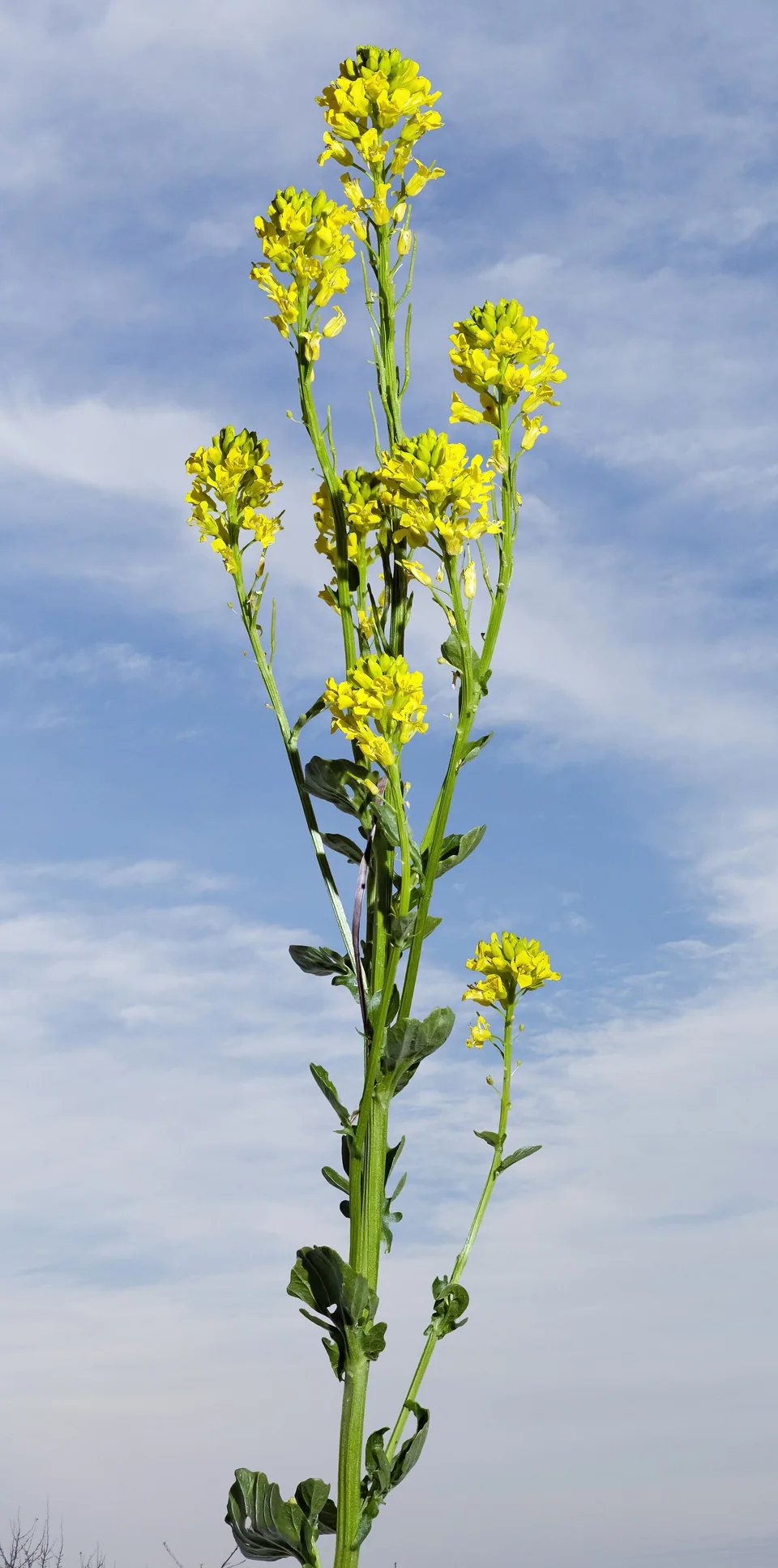
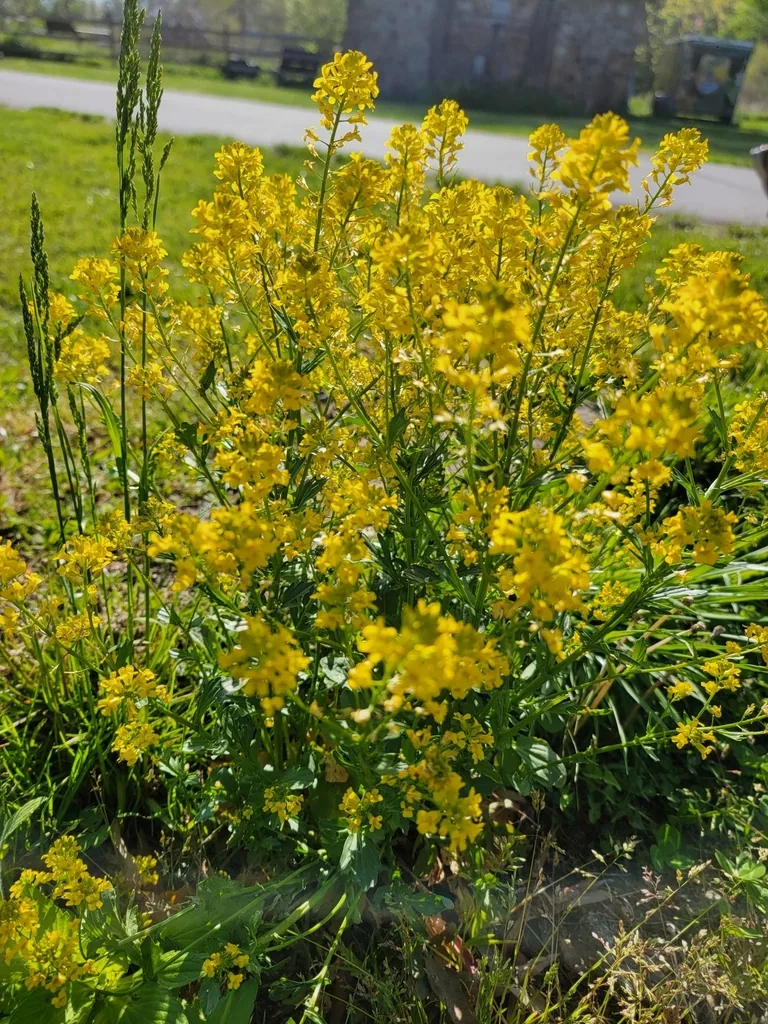
Yellow rocket is a perennial or biennial herb in the mustard family, native to Europe and Japan. [1] It forms a basal rosette in its first year and flowering stalks with yellow flowers in the next year. [1] It self-sows freely and occasionally forms colonies, and can be a problem in turf, nursery production, or the landscape. [1][2]
Yellow Rocket care
How to water Yellow Rocket
Does best in moist, well-drained soil; growth is less robust at dry sites with poor soil
What the sources say (2)
Yellow Rocket Cress does best in sun or light shade in moist, slightly acidic, well-drained soil.growth is less robust at dry sites with poor soil.How much light Yellow Rocket needs
Full sun to light shade
What the sources say (1)
Yellow Rocket Cress does best in sun or light shade in moist, slightly acidic, well-drained soil.How much cold Yellow Rocket can take
Hardiness, coldest zone
5a [winter low −28.9 to −26.1 °C (−20 to −15 °F)]
What the sources say (1)
USDA Plant Hardiness Zone:
5a, 5b, 6a, 6b, 7a, 7b, 8a, 8b, 9a, 9bHardiness, warmest zone
9b [winter low −3.9 to −1.1 °C (25 to 30 °F)]
What the sources say (1)
USDA Plant Hardiness Zone:
5a, 5b, 6a, 6b, 7a, 7b, 8a, 8b, 9a, 9bHow to propagate Yellow Rocket
Seed
What the sources say (2)
Recommended Propagation Strategy:
Seed
Country Or Region Of Origin:
Europe, Mediterranean, JapanYellow rocket can be a winter annual or biennial and reproduces from seed.How to grow Yellow Rocket
The plant
Life cycle
Family
Brassicaceae
What the sources say (2)
Yellow Rocket Cress is a perennial or biennial herb native to Europe and Japan in the mustard family.Genus:
Barbarea
Species:
vulgaris
Family:
Brassicaceae
Life Cycle:Mature height
over 61 cm (2 ft)
What the sources say (1)
The flowering stems are produced during the second year and can eventually exceed two feet in height.Yellow Rocket pests and problems
Weediness and self-seeding
Symptom: Spreads by reseeding and occasionally forms colonies; a stout taproot makes mature plants hard to transplant
What to do: Hand remove when small; there are no pre-emergent herbicides against it
What the sources say (2)
The plant has a stout taproot which can make it difficult to transplant once mature.
— Barbarea vulgaris (Bittercress, Garden Yellowrocket, Herb Barbara, Rocketcress, Wintercress, Winter Rocket, Wound Rocket, Yellowrocket, Yellow Rocket, Yellow Rocketcress) | North Carolina Extension Gardener Plant Toolbox [1] Yellow rocket produces a tap root but can be hand removed when small.
— Yellow Rocket [2]
Remedies
Each remedy shows what official sources say about it; traditional remedies without an official source are marked as such. Harmful ones are listed so you know to avoid them.
Getting rid of it
yellow rocket weed
hand removal of small plants Official source, not independently tested
How: Yellow rocket produces a tap root but can be hand removed when small.
Yellow rocket produces a tap root but can be hand removed when small. There are no pre-emergent herbicides to use against yellow rocket.
— Yellow Rocket [2]
Is Yellow Rocket poisonous?
Reported by the source, quoted verbatim. This is not medical or veterinary advice: if a person or an animal may have eaten this plant, contact a poison control centre or a veterinarian.
Animals
#problem for horses #non-toxic for dogs #non-toxic for cats
[1]The source flags the risk for this animal but does not explain why.
People
Poison Severity: Low Poison Symptoms: Consuming quantities of leaves can affect kidney function.
[1]- Poisonous parts
Poison Toxic Principle: Saponins Causes Contact Dermatitis: No Poison Part: Leaves
[1]- Toxic principle
Poison Toxic Principle: Saponins
[1]- Symptoms
Poison Symptoms: Consuming quantities of leaves can affect kidney function.
[1]- Severity
This plant has low severity poison characteristics. See below
[1]
Edibility
Reported by the source, quoted verbatim. Do not eat a plant on the basis of this page alone: identification mistakes can be dangerous.
Young leaves can be eaten raw or cooked, but there is some evidence that it can impact kidney function.
[1]
Indicative values
Values from a secondary source, not checked word for word like the rest of this page. Use them as a starting point.
- Hours of sun
- 6-8 hoursIndicative value, adapt it to your climate · Secondary source
- Watering
- FrequentIndicative value, adapt it to your climate · Secondary source
- Soil pH
- 6-7.5Indicative value, adapt it to your climate · Secondary source
- Care level
- MediumIndicative value, adapt it to your climate · Secondary source
- Growth rate
- LowIndicative value, adapt it to your climate · Secondary source
- Pruning
- February, March, AprilIndicative value, adapt it to your climate · Secondary source
Similar plants
- American Yellow Rocket Barbarea orthoceras
- Early yellowrocket Barbarea verna
- Annual Candytuft Iberis umbellata
- Basket-of-Gold Aurinia saxatilis
- Black Mustard Brassica nigra
- Broadleaved pepperweed Lepidium latifolium
- Brown Mustard Brassica juncea
- Cabbage Brassica oleracea
Sources
Every value above is quoted from these documents. Links lead to the original publisher.
- Barbarea vulgaris (Bittercress, Garden Yellowrocket, Herb Barbara, Rocketcress, Wintercress, Winter Rocket, Wound Rocket, Yellowrocket, Yellow Rocket, Yellow Rocketcress) | North Carolina Extension Gardener Plant Toolbox · plants.ces.ncsu.edu, consulted
- Yellow Rocket · extension.psu.edu, consulted
Written by Emilio Marruso · last checked