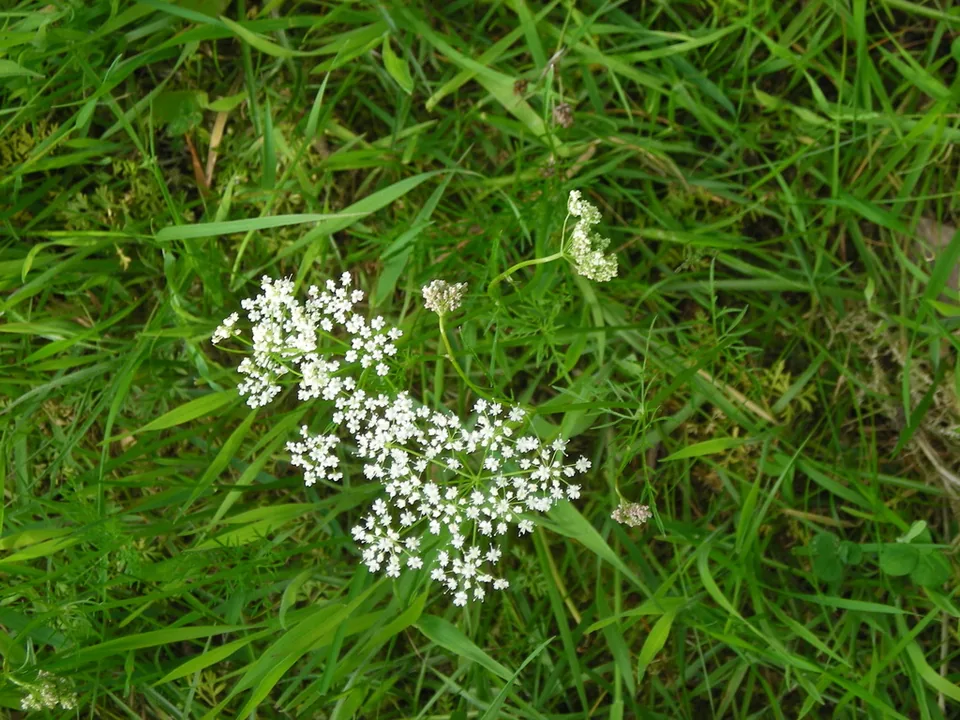
How to Grow and Care for Pignut
Conopodium majus
Written by Emilio Marruso · last checked
At a glance
Pignut hides a lovely surprise underground: small tubers you can eat raw or cooked, with a nutty flavor somewhere between sweet potato and hazelnut. Give it full sun or light shade and moderate watering, since it does not like drought. Sow in spring in a cold frame, set the seedlings out in early summer, and dig the tubers most easily in spring and summer.
- Sun
Full sun; light shade is fine too
What the sources say (1)
Light: Full sun; tolerates light shade
Light full sun Shade tolerance light shade Water moderate Soil textures sandy, loamy, clay
— Pignut (Conopodium majus) — Practical Plants [4] - Water
Moderate watering; do not let it dry out, it does not handle drought
What the sources say (2)
Watering: Moderate
Shade tolerance light shade Water moderate Soil textures sandy, loamy, clay Soil pH acid, neutral Tolerates Nutritionally Poor Soil No Drought intolerant
— Pignut (Conopodium majus) — Practical Plants [4] Watering notes: Drought intolerant
Shade tolerance light shade Water moderate Soil textures sandy, loamy, clay Soil pH acid, neutral Tolerates Nutritionally Poor Soil No Drought intolerant
— Pignut (Conopodium majus) — Practical Plants [4] - Planting
Plant the seedlings out in early summer
What the sources say (2)
Planting: Early summer (seedlings)
Seed - sow spring in a cold frame. Germination is usually quick and good[K]. Prick out the seedlings into individual pots as soon as they are large enough to handle and plant them out when in early summer.
— Pignut (Conopodium majus) — Practical Plants [4] Prick out the seedlings into individual pots as soon as they are large enough to handle and plant them out when in early summer.
— Conopodium majus - Useful Temperate Plants [3] - Harvest
Nutty tubers, raw or cooked; dig them all year, most easily in spring and summer
What the sources say (1)
Harvest: Year-round; tubers most easily collected in spring and summer
The tubers can be harvested throughout the year however they would be most easily collected in spring and summer when the plants’ above ground tissue is visible (Fairbairn 1999).
— Archaeobotany - Conopodium Majus [2] - Propagation
From seed, or divide the plant in late summer as it dies down
What the sources say (2)
Propagation: Seed (cold frame or sown in situ); division in late summer as the plant dies down
Seed - sow spring in a cold frame. Germination is usually quick and good[K]. Prick out the seedlings into individual pots as soon as they are large enough to handle and plant them out when in early summer.
— Pignut (Conopodium majus) — Practical Plants [4] It is also possible to sow in situ, though this requires a lot more seed to produce the same amount of plants from a protected sowing. Division in late summer as the plant dies down.
— Pignut (Conopodium majus) — Practical Plants [4] - Sowing
Sow in spring in a cold frame, or right where it will grow
What the sources say (3)
Sowing: Spring (in a cold frame)
Seed - sow spring in a cold frame. Germination is usually quick and good[K]. Prick out the seedlings into individual pots as soon as they are large enough to handle and plant them out when in early summer.
— Pignut (Conopodium majus) — Practical Plants [4] Propagation: Seed (cold frame or sown in situ); division in late summer as the plant dies down
Seed - sow spring in a cold frame. Germination is usually quick and good[K]. Prick out the seedlings into individual pots as soon as they are large enough to handle and plant them out when in early summer.
— Pignut (Conopodium majus) — Practical Plants [4] It is also possible to sow in situ, though this requires a lot more seed to produce the same amount of plants from a protected sowing. Division in late summer as the plant dies down.
— Pignut (Conopodium majus) — Practical Plants [4]
Overview
Pignut is a perennial of the carrot family growing from an underground globular tuber, found in woods, heaths, meadows and pastures. [5] Its single small tuber is eaten raw or cooked and is harvested from the wild for local use. [3][2] The species responds to cultivation by producing larger tubers. [3]
This record is incomplete: the sources we read do not cover every field yet.
Not yet covered by our sources: Spacing
Pignut care
How to water Pignut
Watering
Moderate
What the sources say (1)
Shade tolerance
light shade
Water
moderate
Soil textures
sandy, loamy, clay
Soil pH
acid, neutral
Tolerates Nutritionally Poor Soil
No
Drought
intolerantWatering notes
Drought intolerant
What the sources say (1)
Shade tolerance
light shade
Water
moderate
Soil textures
sandy, loamy, clay
Soil pH
acid, neutral
Tolerates Nutritionally Poor Soil
No
Drought
intolerantHow much light Pignut needs
Full sun; tolerates light shade
What the sources say (1)
Light
full sun
Shade tolerance
light shade
Water
moderate
Soil textures
sandy, loamy, clayWhere to grow Pignut
Not stated in the sources we read.
How to propagate Pignut
Seed (cold frame or sown in situ); division in late summer as the plant dies down
What the sources say (2)
Seed - sow spring in a cold frame. Germination is usually quick and good[K]. Prick out the seedlings into individual pots as soon as they are large enough to handle and plant them out when in early summer.It is also possible to sow in situ, though this requires a lot more seed to produce the same amount of plants from a protected sowing.
Division in late summer as the plant dies down.How to grow Pignut
The plant
Family
Apiaceae
What the sources say (1)
Apiaceae - Conopodium majus (Gouan) Loret subsp. majus; Pignatti 1982: n. 2452; Conopodium majus (Gouan) LoretRemedies
The sources we checked give no remedies for this plant.
Calendar
Sowing
Spring (in a cold frame)
What the sources say (1)
Seed - sow spring in a cold frame. Germination is usually quick and good[K]. Prick out the seedlings into individual pots as soon as they are large enough to handle and plant them out when in early summer.Planting
Early summer (seedlings)
What the sources say (2)
Seed - sow spring in a cold frame. Germination is usually quick and good[K]. Prick out the seedlings into individual pots as soon as they are large enough to handle and plant them out when in early summer.Prick out the seedlings into individual pots as soon as they are large enough to handle and plant them out when in early summer.Harvest
Year-round; tubers most easily collected in spring and summer
What the sources say (1)
The tubers can be harvested throughout the year however they would be most easily collected in spring and summer when the plants’ above ground tissue is visible (Fairbairn 1999).Months as given by the sources, which are mostly from the United States (northern hemisphere). In the southern hemisphere they shift by about six months.
Edibility
Reported by the source, quoted verbatim. Do not eat a plant on the basis of this page alone: identification mistakes can be dangerous.
Tubers - raw or cooked [5] [6] [3] [4] [7] [1] . A very pleasant food with a flavour somewhat between a sweet potato and hazelnuts
[4]This storage organ is edible with a nutty flavour similar to chestnut and available all year round.
[2]Pignut tubers can be eaten raw or cooked and have a nutty flavour.
[2]
Similar plants
- Alexanders Smyrnium olusatrum
- Angelica Angelica archangelica
- Coriander Coriandrum sativum
- Echinophora spinosa Echinophora spinosa
- Fennel Foeniculum vulgare
- Garden lovage Levisticum officinale
- Great pignut Bunium bulbocastanum
- Japanese Parsley Cryptotaenia japonica
Sources
Every value above is quoted from these documents. Links lead to the original publisher.
- FuD.WE.PIC. · fudwepic.unipa.it, consulted
- Archaeobotany - Conopodium Majus · sites.google.com, consulted
- Conopodium majus - Useful Temperate Plants · temperate.theferns.info, consulted
- Pignut (Conopodium majus) — Practical Plants · practicalplants.org, consulted
- Flora of the Burren and Southeast Connemara: Conopodium majus · flora-burren.linnaeus.naturalis.nl, consulted
- Seed ecology of the geophyte Conopodium majus (Apiaceae), indicator species of ancient woodland understories and oligotrophic meadows - PMC · ncbi.nlm.nih.gov, consulted
Written by Emilio Marruso · last checked