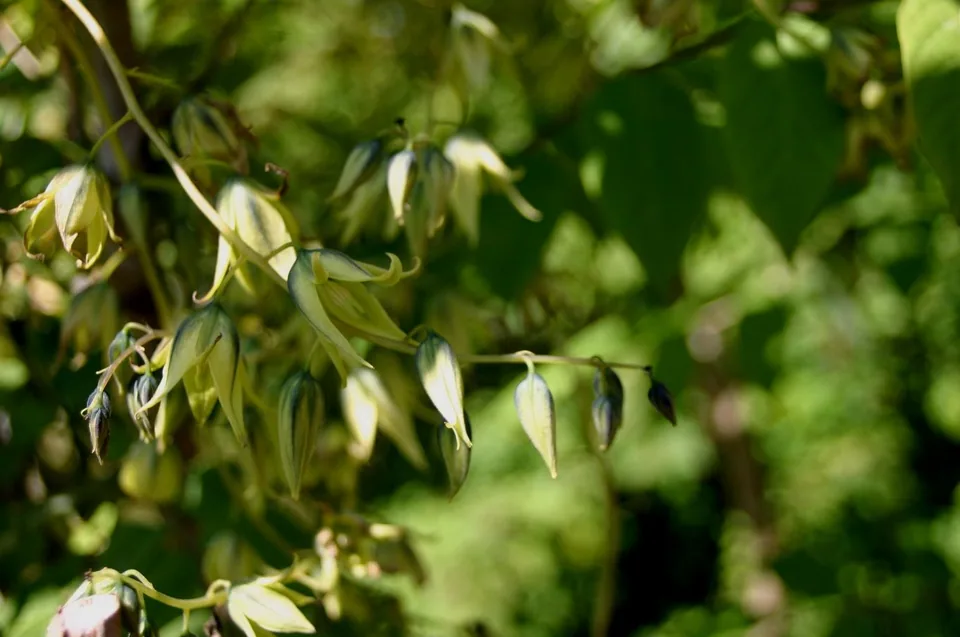

How to Grow and Care for Decaisnea fargesii
Decaisnea fargesii
Written by Emilio Marruso · last checked
Toxic to: People · Why
At a glance
This plant hides a surprise: when ripe, its pods split open to reveal an edible whitish flesh around dozens of black seeds. Give it sun or partial shade and regular watering in dry spells, since it dislikes drought, but choose a spot where water never pools. You can even start new plants from its seeds.
- Sun
Sun or partial shade
What the sources say (2)
Light: Sun or partial shade
Decaisnea fargesii loves sun or partial shade, but will thrive best in soil that’s cool, light, and well-drained.
— This shrub grows “blue sausages” you can eat—and it thrives in France - Futura-Sciences [6] Succeeds in partial shade
— Decaisnea fargesii - Useful Temperate Plants [3] - Water
Water regularly in dry spells; it dislikes drought, but plant where water cannot pool
What the sources say (3)
Watering: Water regularly during dry periods; dislikes drought
just water regularly during dry periods, and give it a light pruning to keep its shape if needed.
— This shrub grows “blue sausages” you can eat—and it thrives in France - Futura-Sciences [6] Dislikes drought
— Decaisnea fargesii - Useful Temperate Plants [3] Watering notes: Does not tolerate stagnant humidity; plant where water cannot pool
It really doesn’t like stagnant humidity, so plant it somewhere water has no chance of pooling.
— This shrub grows “blue sausages” you can eat—and it thrives in France - Futura-Sciences [6] - Harvest
When the ripe pods split open, eat the whitish pulp around the black seeds
- Propagation
Grows new plants from seed
What the sources say (1)
Propagation: Seed
It likes a rich loamy soil, and is propagated by seeds.
— Bean's Trees and Shrubs [5] - Safety
No known hazards to people
Overview
Decaisnea fargesii is a deciduous shrub of western China mountainsides, grown for its striking blue pod-like fruits. [1] It does best in sun or partial shade in light, well-drained soil where water does not pool. [6] The pulp of the ripe fruit is described as edible. [6]
This record is incomplete: the sources we read do not cover every field yet.
Not yet covered by our sources: Hardiness, coldest zone, Hardiness, warmest zone, Pruning
Decaisnea fargesii care
How to water Decaisnea fargesii
Watering
Water regularly during dry periods; dislikes drought
Watering notes
Does not tolerate stagnant humidity; plant where water cannot pool
What the sources say (1)
It really doesn’t like stagnant humidity, so plant it somewhere water has no chance of pooling.How much light Decaisnea fargesii needs
Sun or partial shade
What the sources say (2)
Decaisnea fargesii loves sun or partial shade, but will thrive best in soil that’s cool, light, and well-drained.Succeeds in partial shadeHow much cold Decaisnea fargesii can take
Hardiness, coldest zone
Not stated in the sources we read.
Hardiness, warmest zone
Not stated in the sources we read.
How to propagate Decaisnea fargesii
Seed
What the sources say (1)
It likes a rich loamy soil, and is propagated by seeds.Remedies
The sources we checked give no remedies for this plant.
Is Decaisnea fargesii poisonous?
Reported by the source, quoted verbatim. This is not medical or veterinary advice: if a person or an animal may have eaten this plant, contact a poison control centre or a veterinarian.
Known Hazards None known
[3]
Calendar
Pruning
Not stated in the sources we read.
Months as given by the sources, which are mostly from the United States (northern hemisphere). In the southern hemisphere they shift by about six months.
Edibility
Reported by the source, quoted verbatim. Do not eat a plant on the basis of this page alone: identification mistakes can be dangerous.
At maturity, the pods split open to reveal a whitish flesh that surrounds dozens of black seeds. This pulp is edible.
[6]
Indicative values
Values from a secondary source, not checked word for word like the rest of this page. Use them as a starting point.
- Life cycle
- PerennialIndicative value, adapt it to your climate · Secondary source
- Mature height
- 365.8-609.6 cm (12-20 ft)Indicative value, adapt it to your climate · Secondary source
- Hours of sun
- 4-6 hoursIndicative value, adapt it to your climate · Secondary source
- Drought tolerant
- yesIndicative value, adapt it to your climate · Secondary source
- Soil pH
- 5.5-7.5Indicative value, adapt it to your climate · Secondary source
- USDA hardiness zones
- 6-9 [winter low −23.3 to −1.1 °C (−10 to 30 °F)]Indicative value, adapt it to your climate · Secondary source
- Growth rate
- LowIndicative value, adapt it to your climate · Secondary source
- Pruning
- March, April, December, January, February, June, July, AugustIndicative value, adapt it to your climate · Secondary source
Similar plants
- Abies grandis Abies grandis
- Acanthus hungaricus Acanthus hungaricus
- Achlys triphylla Achlys triphylla
- Aconite Aconitum napellus
- Afghan Redbud Cercis griffithii
- African Blood Lily Scadoxus multiflorus
- African lily Dietes bicolor
- African Living Rock Pleiospilos bolusii
Sources
Every value above is quoted from these documents. Links lead to the original publisher.
- Exotic fruit amongst the leaf litter – Botanics Stories · stories.rbge.org.uk, consulted
- Dead Man’s Fingers | Yale Nature Walk · naturewalk.yale.edu, consulted
- Decaisnea fargesii - Useful Temperate Plants · temperate.theferns.info, consulted
- Decaisnea fargesii - Trees and Shrubs Online · treesandshrubsonline.org, consulted
- Bean's Trees and Shrubs · beanstreesandshrubs.org, consulted
- This shrub grows “blue sausages” you can eat—and it thrives in France - Futura-Sciences · futura-sciences.com, consulted
Written by Emilio Marruso · last checked