
How to Grow and Care for Great globethistle
Echinops sphaerocephalus
Written by Emilio Marruso · last checked
At a glance
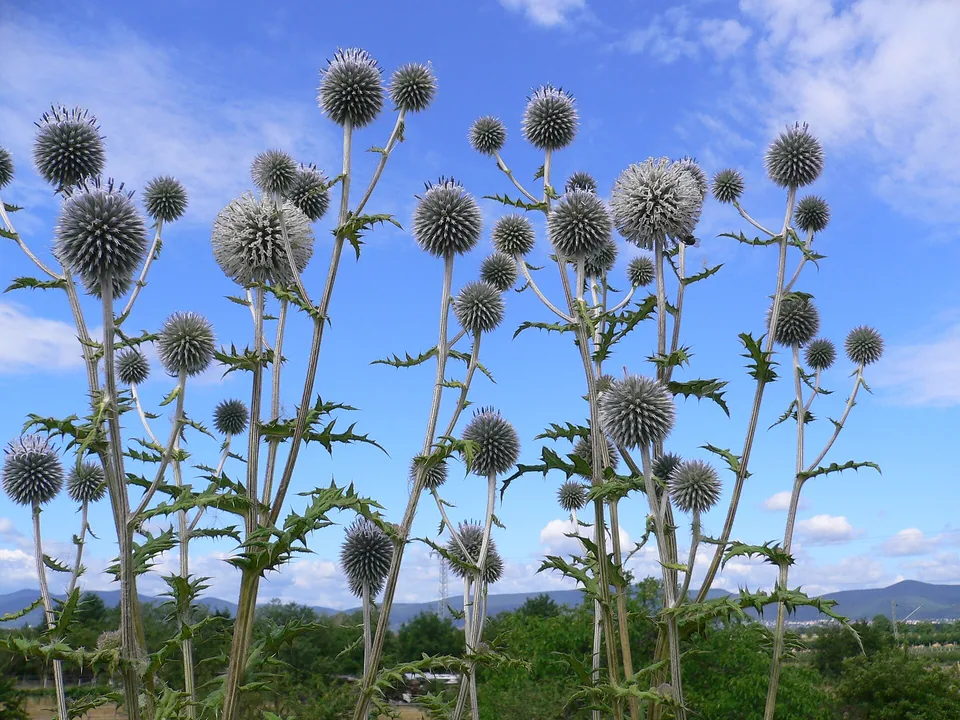
Globe thistle is a perennial from the daisy family, so it comes back year after year without replanting. Give it a sunny spot and it grows up to 7 ft tall, a true giant that brings height and drama to your garden. It's a bold, lasting choice for anyone who loves big, eye-catching plants and wants them to return every year.
- Sun
Plant it in a sunny spot
What the sources say (1)
Light: Sunny location
The plant prefers dry hard ground in a sunny location.
— Echinops sphaerocephalus page [1] - Size
Grows up to 7 ft tall
What the sources say (1)
Mature height: 200 cm (2 m)
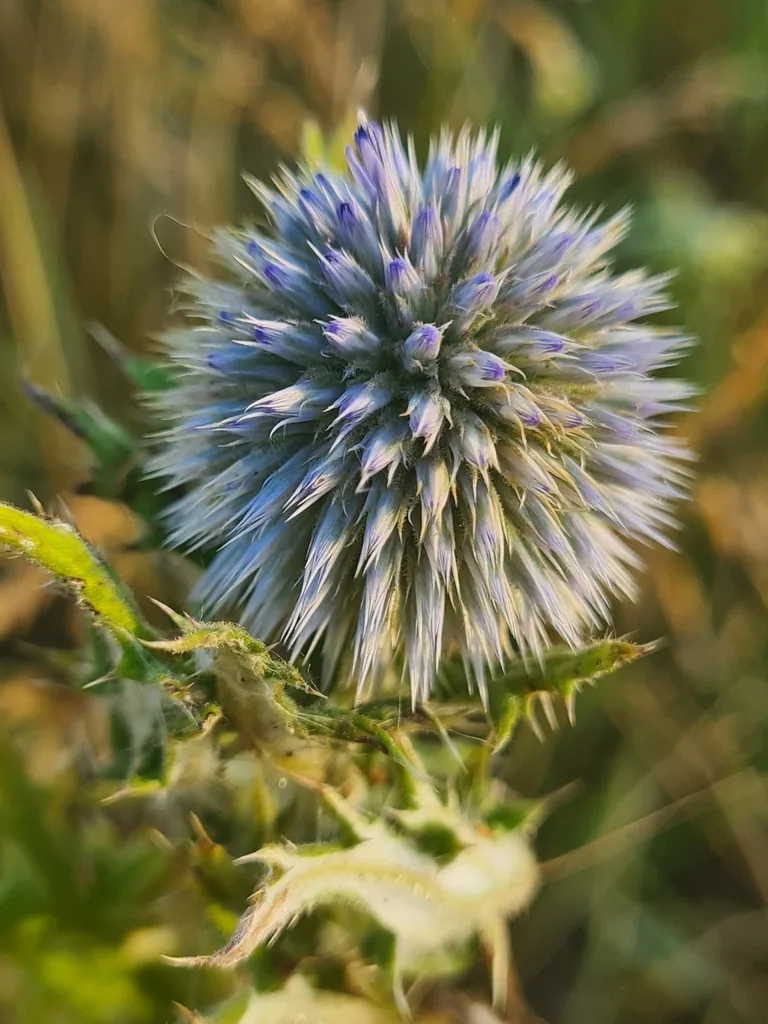
is a vigorous perennial growing to 2m in height from Eurasia. It has spiny, grey-green leaves and downy stems
— Echinops sphaerocephalus - Cambridge University Botanic Garden [6]
Overview
Glandular globe-thistle can grow up to 1.8 metres [6 ft] high. [3] It is introduced from Eurasia and is an occasional garden plant. [2] It is reported to prefer a sunny location. [1]
This record is incomplete: the sources we read do not cover every field yet.
Not yet covered by our sources: Watering, Hardiness, coldest zone, Hardiness, warmest zone, Pruning, Propagation
Great globethistle care
Measurements in square brackets are our conversion into the other unit system; the quoted text is unchanged.
How to water Great globethistle
Not stated in the sources we read.
How much light Great globethistle needs
Sunny location
What the sources say (1)
The plant prefers dry hard ground in a sunny location.How much cold Great globethistle can take
Hardiness, coldest zone
Not stated in the sources we read.
Hardiness, warmest zone
Not stated in the sources we read.
How to propagate Great globethistle
Not stated in the sources we read.
How to grow Great globethistle
The plant
Life cycle
perennial
What the sources say (1)
is a vigorous perennial growing to 2m in height from Eurasia. It has spiny, grey-green leaves and downy stemsFamily
Asteraceae
What the sources say (1)
A member of the Asteraceae (daisy family) the genus Echinops (globe thistle) contains approximately 120 species of annuals, biennials and perennials.Mature height
200 cm (2 m)
What the sources say (1)
is a vigorous perennial growing to 2m in height from Eurasia. It has spiny, grey-green leaves and downy stemsRemedies
Each remedy shows what official sources say about it; traditional remedies without an official source are marked as such. Harmful ones are listed so you know to avoid them.
Treating the plant
aphids
hand-picking into soapsuds or firm water spray Not verified
Traditional remedy, not verified by an official source.
How: Pick off the bugs and drop them into a bucket of soapsuds, or dislodge them with a firm spray of water.
neem oil Partly works
How: Apply organic neem oil to treat a persistent infestation.
To treat a persistent infestation, apply organic neem oil.
— gardenerspath.com [9] What the evidence says Neem oil is found in the seeds of the neem tree. The active component found in this biological pesticide reduces insect feeding, interferes with hormones
— extension.illinois.edu [10]
leaf miner
tolerate the damage and let natural enemies work Official source, not independently tested
How: The damage can be tolerated; leaf miners have natural enemies including parasitoid wasps.
Leaf miners can be part of a healthy balanced garden, most species will have natural enemies including parasitoid wasps.
— rhs.org.uk [11]
crown rot
remove and destroy rotting plants Not verified
Traditional remedy, not verified by an official source.
How: Remove and destroy plants rotting from the bottom up to avoid spreading the disease.
powdery mildew
remove affected foliage Not verified
Traditional remedy, not verified by an official source.
How: Remove affected foliage.
Getting rid of it
self-seeding
remove flower heads before seed set Not verified
Traditional remedy, not verified by an official source.
How: Remove all flower heads as they begin to fade, before they turn brown and set seed.
Calendar
Pruning
Not stated in the sources we read.
Months as given by the sources, which are mostly from the United States (northern hemisphere). In the southern hemisphere they shift by about six months.
Indicative values
Values from a secondary source, not checked word for word like the rest of this page. Use them as a starting point.
- Hours of sun
- 6-8 hoursIndicative value, adapt it to your climate · Secondary source
- Watering
- MinimumIndicative value, adapt it to your climate · Secondary source
- Drought tolerant
- yesIndicative value, adapt it to your climate · Secondary source
- Soil pH
- 6-7.5Indicative value, adapt it to your climate · Secondary source
- USDA hardiness zones
- 3-9 [winter low −40 to −1.1 °C (−40 to 30 °F)]Indicative value, adapt it to your climate · Secondary source
- Care level
- MediumIndicative value, adapt it to your climate · Secondary source
- Growth rate
- LowIndicative value, adapt it to your climate · Secondary source
- Pruning
- February, March, April, December, January, February, AugustIndicative value, adapt it to your climate · Secondary source
- Propagation
- Seed Propagation, Division, Root Cutting, Layering PropagationIndicative value, adapt it to your climate · Secondary source
Similar plants
- Echinops bannaticus Echinops bannaticus
- Globe Thistle Echinops ritro
- African Daisy Dimorphotheca pluvialis
- African Marigold Tagetes erecta
- Ageratum Ageratum houstonianum
- Alpine aster Aster alpinus
- Appalachian Blazing Star Liatris squarrulosa
- Appalachian Ironweed Vernonia glauca
Sources
Every value above is quoted from these documents. Links lead to the original publisher.
- Echinops sphaerocephalus page · missouriplants.com, consulted
- Echinops sphaerocephalus (greater globe-thistle): Go Botany · gobotany.nativeplanttrust.org, consulted
- · naturblick.museumfuernaturkunde.berlin, consulted
- great globethistle (Echinops sphaerocephalus) - bplant.org · bplant.org, consulted
- Search for species - Drüsenblättrige Kugeldistel (Echinops sphaerocephalus L.) · i-flora.com, consulted
- Echinops sphaerocephalus - Cambridge University Botanic Garden · botanic.cam.ac.uk, consulted
- How to Grow Echinops - Globe Thistle · harvesttotable.com, consulted
- Kugeldistel pflanzen & pflegen » So gelingt es! · gartenjournal.net, consulted
- gardenerspath.com · gardenerspath.com
- extension.illinois.edu · extension.illinois.edu
- rhs.org.uk · rhs.org.uk
Written by Emilio Marruso · last checked