
How to Grow and Care for Epimedium alpinum
Epimedium alpinum
Written by Emilio Marruso · last checked
At a glance
Alpine barrenwort is a calm friend for the shady corners of your garden, happy in partial shade or full shade. Give it humus-rich, fertile soil that drains well and stays dry to medium, and tidy it up in late winter. Once it settles in, you can divide it after flowering or in fall and enjoy new plants for free.
- Sun
Partial shade to full shade
- Water
Likes soil from dry to medium moist; never soggy
What the sources say (1)
Watering notes: Humus-rich, fertile, well-drained, dry to medium soil
Light: Partial shade. Soil: Humus rich, fertile, well-drained, dry to medium soil.
— Epimedium alpinum - ALPINE BARRENWORT [3] - Cold
Survives winters down to −30 °F (−34.4 °C)
Very hardy · USDA 4 · RHS H7 · Z4
What the sources say (4)
Hardiness, coldest zone: 4 [winter low −34.4 to −28.9 °C (−30 to −20 °F)]
Sunset zones: 1-9, 14-17. USDA zones: 4-9. Heat zones: 9-4.
— Epimedium alpinum - ALPINE BARRENWORT [3] Recommended Temperature Zone: USDA: 4-8 Sun Exposure: Shade to part sun
— Alpine's Epimedium (Epimedium alpinum) [4] Hardiness, warmest zone:
According to Rainy Side Gardeners: Sunset zones: 1-9, 14-17. USDA zones: 4-9. Heat zones: 9-4.
— Epimedium alpinum - ALPINE BARRENWORT [3] According to Desert-Tropicals: Recommended Temperature Zone: USDA: 4-8 Sun Exposure: Shade to part sun
— Alpine's Epimedium (Epimedium alpinum) [4] - Soil
Rich in humus, fertile and well-drained soil
What the sources say (1)
Watering notes: Humus-rich, fertile, well-drained, dry to medium soil
Light: Partial shade. Soil: Humus rich, fertile, well-drained, dry to medium soil.
— Epimedium alpinum - ALPINE BARRENWORT [3] - Pruning
Prune in late winter
What the sources say (1)
Pruning: Late winter
Pruning Methods: Shear plants back to the ground in late winter so spring flowers will not be hidden in the old foliage.
— Epimedium alpinum - ALPINE BARRENWORT [3] - Propagation
From seed, by division after flowering or in fall, or by cuttings in late summer
What the sources say (2)
Propagation: Seed; division (after flowering or in autumn); cuttings in late summer
| Propagation | seed in winter, germ. 3-12 months, 13-16°C division after flowering; cuttings in late summer
— Epimedium alpinum L. [2] Propagation Methods: Sow seed as soon as ripe, and place in cold frame. | Divide in autumn or after flowering.
— Epimedium alpinum - ALPINE BARRENWORT [3]
Overview
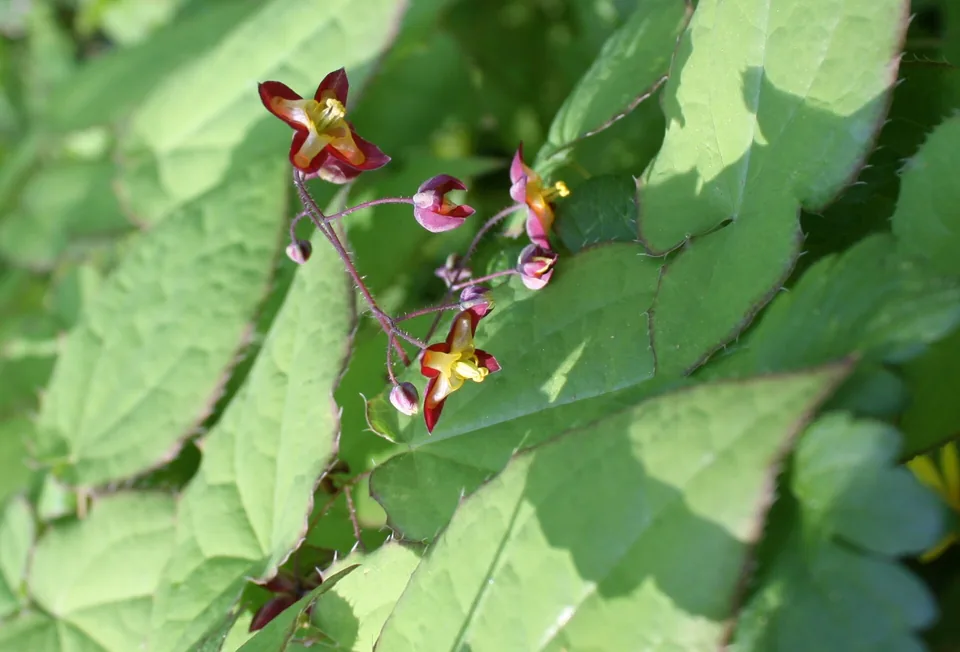
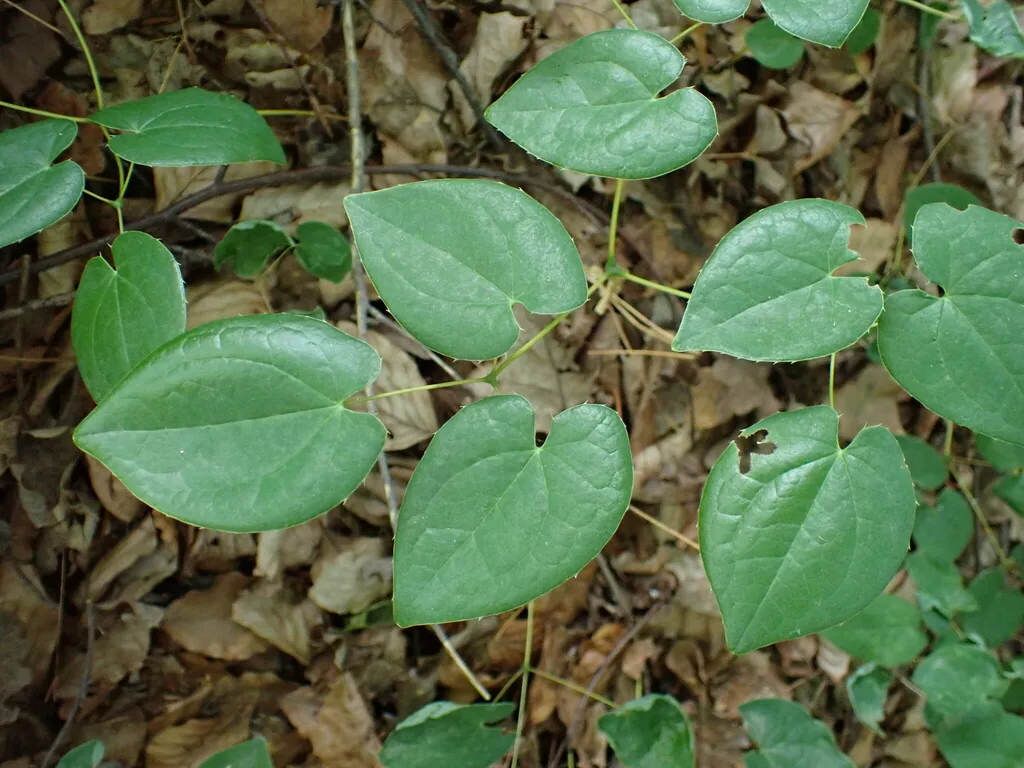
Epimedium alpinum is a rhizomatous perennial native to southern Europe that spreads faster than most other Epimedium species. [1] It is grown as a ground cover for dry shade, with red-sepalled, creamy-yellow flowers in mid to late spring. [3] Shearing the old foliage in late winter keeps the spring flowers visible. [3]
Epimedium alpinum care
How to water Epimedium alpinum
Watering
The sources disagree:
| Cultivation | cold, shady site with a humous, moist soil alpine house, moist, humous soil, shade
[2]
What the sources say (2)
Origin: Southern Europe
Growth Habits: Perennial, 6 to 9 inches tall (15 to 22.5 cm.), 0.75 to 1 feet in spread (22.5 to 30 cm.)
Flowers: Yellow or red flowers
Watering Needs: Moderate waterEpimedium alpinum is a rhizomatous perennial plant which spreads more rapidly than most other Epimedium species. The plant is native to southern Europe and is now present throughout the continent. Once established, it tolerates drought and heavy shade.Watering notes
Humus-rich, fertile, well-drained, dry to medium soil
What the sources say (1)
Light:
Partial shade.
Soil:
Humus rich, fertile, well-drained, dry to medium soil.How much light Epimedium alpinum needs
How much cold Epimedium alpinum can take
Hardiness, coldest zone
4 [winter low −34.4 to −28.9 °C (−30 to −20 °F)]
Hardiness, warmest zone
The sources give different values depending on region, zone or growing conditions.
What each source says
According to Rainy Side Gardeners: 4-9 [winter low −34.4 to −1.1 °C (−30 to 30 °F)]
According to Desert-Tropicals: 4-8 [winter low −34.4 to −6.7 °C (−30 to 20 °F)]
What the sources say (2)
According to Rainy Side Gardeners: Sunset zones: 1-9, 14-17.
USDA zones: 4-9.
Heat zones: 9-4.According to Desert-Tropicals: Recommended Temperature Zone:
USDA: 4-8
Sun Exposure: Shade to part sunHow to propagate Epimedium alpinum
Seed; division (after flowering or in autumn); cuttings in late summer
What the sources say (2)
| Propagation | seed in winter, germ. 3-12 months, 13-16°C
division after flowering; cuttings in late summerPropagation Methods:
Sow seed as soon as ripe, and place in cold frame. | Divide in autumn or after flowering.How to grow Epimedium alpinum
Roots
Root system
The sources give different values depending on region, zone or growing conditions.
What each source says
Epimedium in general (garden plants): Rhizomatous perennials
Epimedium in general (garden plants): Shallow roots that can compete with the roots of surrounding trees
What the sources say (2)
Epimedium in general (garden plants): Bishop's Hat is a group of herbaceous rhizomatous perennials in the barberry family.Epimedium in general (garden plants): Its shallow roots can even compete with the roots from surrounding trees without suffering any consequences.Heat and drought
Drought
The sources give different values depending on region, zone or growing conditions.
What each source says
Epimedium in general (garden plants): Established plants tolerate deep shade and drought
What the sources say (1)
Epimedium in general (garden plants): Deep shade and drought conditions are not an issue for established plants.Remedies
The sources we checked give no remedies for this plant.
Calendar
Sowing
The sources give different values depending on region, zone or growing conditions.
What each source says
According to Rock Garden Plants (flora.kadel.cz): Winter
According to Rainy Side Gardeners: As soon as ripe, in a cold frame
What the sources say (2)
According to Rock Garden Plants (flora.kadel.cz): | Propagation | seed in winter, germ. 3-12 months, 13-16°C
division after flowering; cuttings in late summerAccording to Rainy Side Gardeners: Propagation Methods:
Sow seed as soon as ripe, and place in cold frame. | Divide in autumn or after flowering.Pruning
Late winter
What the sources say (1)
Pruning Methods:
Shear plants back to the ground in late winter so spring flowers will not be hidden in the old foliage.Months as given by the sources, which are mostly from the United States (northern hemisphere). In the southern hemisphere they shift by about six months.
Similar plants
- Epimedium grandiflorum Epimedium grandiflorum
- Abies grandis Abies grandis
- Acanthus hungaricus Acanthus hungaricus
- Achlys triphylla Achlys triphylla
- Aconite Aconitum napellus
- Afghan Redbud Cercis griffithii
- African Blood Lily Scadoxus multiflorus
- African lily Dietes bicolor
Sources
Every value above is quoted from these documents. Links lead to the original publisher.
- Epimedium alpinum L. – neobiota.lu · neobiota.lu, consulted
- Epimedium alpinum L. · flora.kadel.cz, consulted
- Epimedium alpinum - ALPINE BARRENWORT · rainyside.com, consulted
- Alpine's Epimedium (Epimedium alpinum) · desert-tropicals.com, consulted
- plants.ces.ncsu.edu · plants.ces.ncsu.edu
Written by Emilio Marruso · last checked