
How to Grow and Care for Epimedium grandiflorum
Epimedium grandiflorum
Written by Emilio Marruso · last checked
At a glance
Epimedium is an easy plant to get started: give it regular water while it settles in, and once mature it gets by with little water, growing well, though more slowly, even in dry spots. It is happy in a container too, and you can make new plants by dividing it, from seed or from pieces of its underground stems.
- Water
Medium moisture; water regularly until it settles in, then it copes with little water
What the sources say (4)
Watering: Medium moisture; tolerates low water once mature
Uses : Containers, Ground Covers - Moisture : Medium Moisture - Maintenance : Moderate
— Longspur barrenwort - Fine Gardening [1] They need regular water as the plants establish but can tolerate low water situations once they are mature.
— How To Grow Barrenwort Plants: Learn About Barrenwort Care In Gardens | Gardening Know How [2] Watering notes: Regular water while the plants establish; grows well, although slower, in dry conditions
They need regular water as the plants establish but can tolerate low water situations once they are mature.
— How To Grow Barrenwort Plants: Learn About Barrenwort Care In Gardens | Gardening Know How [2] Care Thrives in full to partial shade with rich, well-drained soil, but will grow well (although slower) in dry conditions.
— Longspur barrenwort - Fine Gardening [1] - Cold
Survives winters down to −20 °F (−28.9 °C)
Very hardy · USDA 5 · RHS H7 · Z5
What the sources say (2)
Hardiness, coldest zone: 5 [winter low −28.9 to −23.3 °C (−20 to −10 °F)]
Genus : Epimedium - Zones : 5, 6, 7, 8, 9 - Plant Height : 6 to 12 inches
— Longspur barrenwort - Fine Gardening [1] Hardiness, warmest zone: 9 [winter low −6.7 to −1.1 °C (20 to 30 °F)]
Genus : Epimedium - Zones : 5, 6, 7, 8, 9 - Plant Height : 6 to 12 inches
— Longspur barrenwort - Fine Gardening [1] - Harvest
Young leaves and young plants can be eaten, but only cooked
- Pests
Watch for vine weevil; plants with mosaic virus must be pulled out
- Propagation
By division, seed or pieces of the underground stems
What the sources say (2)
Propagation: Division; seed; rhizome cuttings
Propagation Divide in autumn or after flowering. Root rhizome cuttings under glass in winter; plant out after danger of frost has passed.
— Longspur barrenwort - Fine Gardening [1] Seed - best sown in a cold frame as soon as it is ripe in late summer
— Epimedium grandiflorum - Useful Temperate Plants [3] - Sowing
Sow fresh seed in late summer in a cold frame; stored seed as early in the year as you can
What the sources say (2)
Sowing: Late summer, as soon as the seed is ripe (cold frame); stored seed as early as possible in the year (cold frame)
Seed - best sown in a cold frame as soon as it is ripe in late summer
— Epimedium grandiflorum - Useful Temperate Plants [3] Sow stored seed as early as possible in the year in a cold frame.
— Epimedium grandiflorum - Useful Temperate Plants [3] - Containers
Grows in containers too
What the sources say (1)
In containers: Yes
Plant Width : 6 to 12 inches - Uses : Containers, Ground Covers - Moisture : Medium Moisture
— Longspur barrenwort - Fine Gardening [1]
Overview
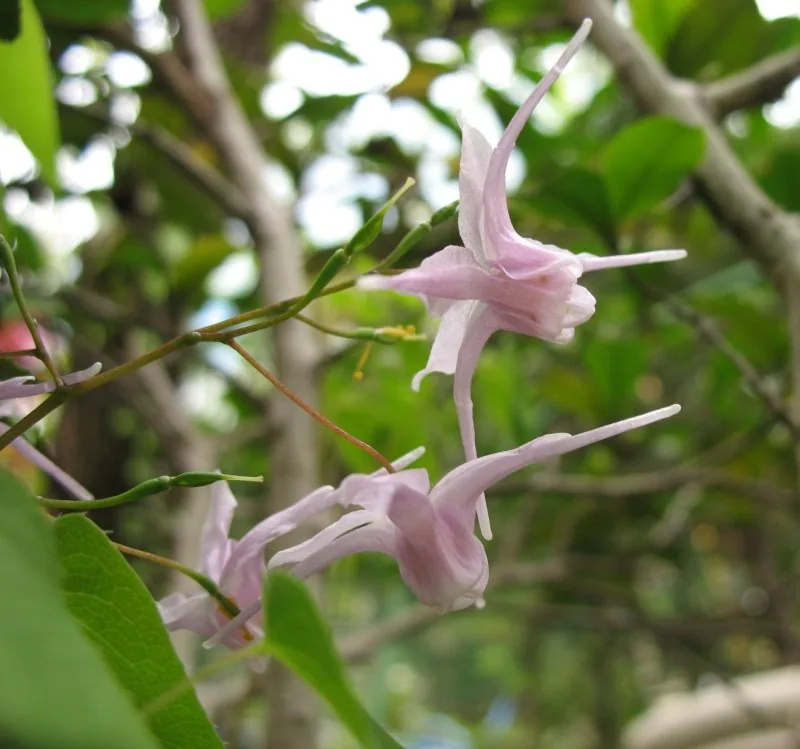
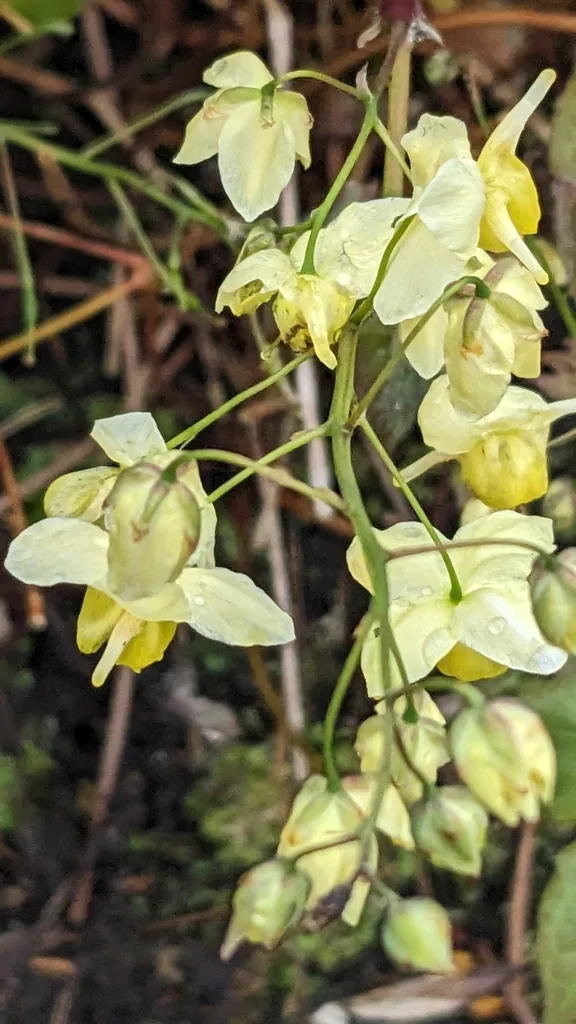
Longspur barrenwort is a clump-forming, deciduous, rhizomatous perennial with four-petaled flowers in mid and late spring. [1] It is propagated by division in autumn or after flowering. [1]
This record is incomplete: the sources we read do not cover every field yet.
Not yet covered by our sources: Light, Pruning
Epimedium grandiflorum care
How to water Epimedium grandiflorum
Watering
Medium moisture; tolerates low water once mature
What the sources say (2)
Uses :
Containers, Ground Covers
-
Moisture :
Medium Moisture
-
Maintenance :
ModerateThey need regular water as the plants establish but can tolerate low water situations once they are mature.Watering notes
Regular water while the plants establish; grows well, although slower, in dry conditions
What the sources say (2)
They need regular water as the plants establish but can tolerate low water situations once they are mature.Care Thrives in full to partial shade with rich, well-drained soil, but will grow well (although slower) in dry conditions.How much light Epimedium grandiflorum needs
Not stated in the sources we read.
How much cold Epimedium grandiflorum can take
Hardiness, coldest zone
5 [winter low −28.9 to −23.3 °C (−20 to −10 °F)]
What the sources say (1)
Genus :
Epimedium
-
Zones :
5, 6, 7, 8, 9
-
Plant Height :
6 to 12 inchesHardiness, warmest zone
9 [winter low −6.7 to −1.1 °C (20 to 30 °F)]
What the sources say (1)
Genus :
Epimedium
-
Zones :
5, 6, 7, 8, 9
-
Plant Height :
6 to 12 inchesWhere to grow Epimedium grandiflorum
Yes
What the sources say (1)
Plant Width :
6 to 12 inches
-
Uses :
Containers, Ground Covers
-
Moisture :
Medium MoistureHow to propagate Epimedium grandiflorum
Division; seed; rhizome cuttings
What the sources say (2)
Propagation Divide in autumn or after flowering. Root rhizome cuttings under glass in winter; plant out after danger of frost has passed.Seed - best sown in a cold frame as soon as it is ripe in late summerEpimedium grandiflorum pests and problems
Mosaic virus
Symptom: Mosaic virus can also be a problem
What to do: Requires plant removal
What the sources say (1)
The only major pests are vine weevils . Mosaic virus can also be a problem, which requires plant removal.
— How To Grow Barrenwort Plants: Learn About Barrenwort Care In Gardens | Gardening Know How [2] Vine weevil
Symptom: Vine weevil listed as a problem
What the sources say (1)
Problems Vine weevil and mosaic virus.
— Longspur barrenwort - Fine Gardening [1]
Remedies
The sources we checked give no remedies for this plant.
Calendar
Sowing
Late summer, as soon as the seed is ripe (cold frame); stored seed as early as possible in the year (cold frame)
Planting
The sources give different values depending on region, zone or growing conditions.
What each source says
seedlings (fonte: Plants for a Future): Mid to late summer
divisions (fonte: Plants for a Future): Spring
rhizomes started indoors in colder climates: After all danger of frost has passed
What the sources say (3)
seedlings (fonte: Plants for a Future): Plant them out in mid to late summerdivisions (fonte: Plants for a Future): grow them on in a cold frame until they are rooting well. Plant them out in the spring.rhizomes started indoors in colder climates: In colder climates you may choose to start rhizomes indoors and plant out after all danger of frost has passedPruning
Not stated in the sources we read.
Months as given by the sources, which are mostly from the United States (northern hemisphere). In the southern hemisphere they shift by about six months.
Edibility
Reported by the source, quoted verbatim. Do not eat a plant on the basis of this page alone: identification mistakes can be dangerous.
Edible Uses Young plant and young leaves - cooked
[3]
Indicative values
Values from a secondary source, not checked word for word like the rest of this page. Use them as a starting point.
- Life cycle
- Herbaceous PerennialIndicative value, adapt it to your climate · Secondary source
- Mature height
- 22.9-45.7 cm (0.75-1.5 ft)Indicative value, adapt it to your climate · Secondary source
- Light
- Part shade, full shadeIndicative value, adapt it to your climate · Secondary source
- Drought tolerant
- yesIndicative value, adapt it to your climate · Secondary source
- Soil pH
- 5.5-7Indicative value, adapt it to your climate · Secondary source
- Care level
- MediumIndicative value, adapt it to your climate · Secondary source
- Growth rate
- LowIndicative value, adapt it to your climate · Secondary source
- Pruning
- June, July, August, December, January, February, March, April, May, June, July, August, SeptemberIndicative value, adapt it to your climate · Secondary source
Similar plants
- Epimedium alpinum Epimedium alpinum
- Aaron's Beard Hypericum calycinum
- Abies grandis Abies grandis
- Abraham Trachystemon orientalis
- Abyssinian banana Ensete ventricosum
- Acacia longifolia Acacia longifolia
- Acacia retinodes Acacia retinodes
- Acanthus hungaricus Acanthus hungaricus
Sources
Every value above is quoted from these documents. Links lead to the original publisher.
- Longspur barrenwort - Fine Gardening · finegardening.com, consulted
- How To Grow Barrenwort Plants: Learn About Barrenwort Care In Gardens | Gardening Know How · gardeningknowhow.com, consulted
- Epimedium grandiflorum - Useful Temperate Plants · temperate.theferns.info, consulted
Written by Emilio Marruso · last checked