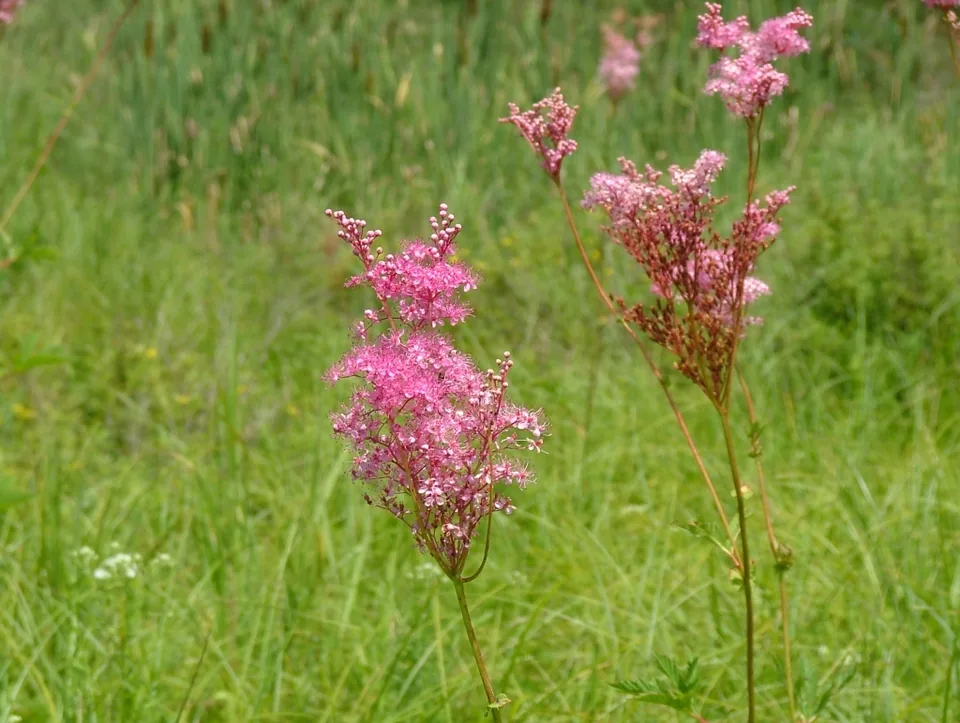
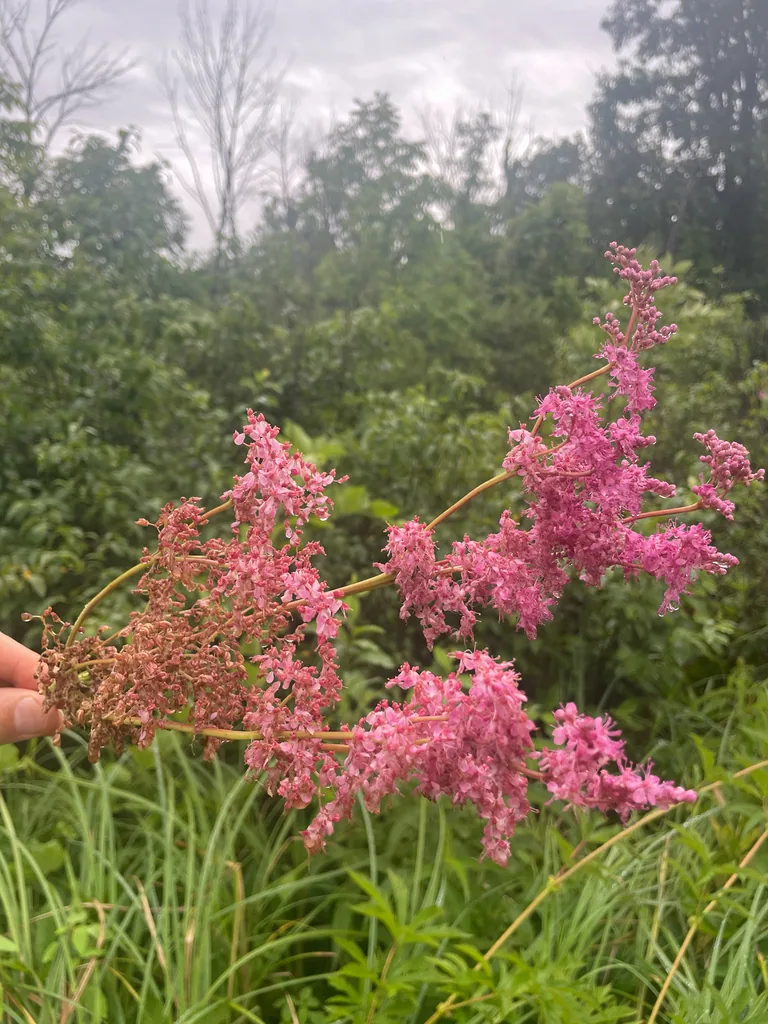

How to Grow and Care for Queen of the prairie
Filipendula rubra
Written by Emilio Marruso · last checked
At a glance
Queen of the prairie is happy anywhere from full sun to partial shade, as long as you give it regular water and a layer of mulch around its base in dry spells. Plant it in spring or early fall, or grow your own from seed sown in fall or spring. In full sun, just keep the soil moist all season long.
- Sun
Full sun to partial shade
- Water
Water regularly and mulch the base in dry spells; in full sun, keep the soil moist all season
What the sources say (2)
Watering: Regular watering is required; mulch around the base in dry periods
Plant Care : Regular watering is required. Mulch around the base in dry periods.
— Filipendula rubra | Queen of the Prairie Growing Guide [5] Watering notes: In full sun only if the soil stays reliably moist throughout the growing season
Succeeds in full sun only if the soil is reliably moist throughout the growing season
— Filipendula rubra - Useful Temperate Plants [1] - Cold
Survives winters down to −40 °F (−40 °C)
Very hardy · USDA 3 · RHS H7 · Z3
What the sources say (4)
Hardiness, coldest zone: 3 [winter low −40 to −34.4 °C (−40 to −30 °F)]
Growing Zone (USA / UK Hardiness) : USDA Zones: 3-9
— Filipendula rubra | Queen of the Prairie Growing Guide [5] Hardiness Zone: 3-8 Bloom Color: Pink ## Characteristics
— queen of the priarie Filipendula rubra from New England Wild Flower Society [4] Hardiness, warmest zone:
According to Native Plant Trust: Hardiness Zone: 3-8 Bloom Color: Pink ## Characteristics
— queen of the priarie Filipendula rubra from New England Wild Flower Society [4] According to Gardener's HQ (quick guide): Growing Zone (USA / UK Hardiness) : USDA Zones: 3-9
— Filipendula rubra | Queen of the Prairie Growing Guide [5] - Planting
Plant in spring or early fall
What the sources say (1)
Planting: Spring or early autumn
You can plant Filipendula rubra in the spring or early autumn.
— Filipendula rubra | Queen of the Prairie Growing Guide [5] - Sowing
Sow in fall in a cold frame, or in spring
Overview
A tall rhizomatous perennial of moist meadows and bogs, grown as an ornamental in moist soil. [1] It suits full sun to partial shade and consistently moist soil, and is propagated by seed or division. [5]
This record is incomplete: the sources we read do not cover every field yet.
Not yet covered by our sources: Pruning
Queen of the prairie care
How to water Queen of the prairie
Watering
Regular watering is required; mulch around the base in dry periods
What the sources say (1)
Plant Care : Regular watering is required. Mulch around the base in dry periods.Watering notes
In full sun only if the soil stays reliably moist throughout the growing season
What the sources say (1)
Succeeds in full sun only if the soil is reliably moist throughout the growing seasonHow much light Queen of the prairie needs
How much cold Queen of the prairie can take
Hardiness, coldest zone
3 [winter low −40 to −34.4 °C (−40 to −30 °F)]
Hardiness, warmest zone
The sources give different values depending on region, zone or growing conditions.
What each source says
According to Native Plant Trust: 8 [winter low −12.2 to −6.7 °C (10 to 20 °F)]
According to Gardener's HQ (quick guide): 9 [winter low −6.7 to −1.1 °C (20 to 30 °F)]
What the sources say (2)
According to Native Plant Trust: Hardiness Zone: 3-8
Bloom Color: Pink
## CharacteristicsAccording to Gardener's HQ (quick guide): Growing Zone (USA / UK Hardiness) : USDA Zones: 3-9How to propagate Queen of the prairie
The sources disagree:
Remedies
The sources we checked give no remedies for this plant.
Calendar
Planting
Spring or early autumn
What the sources say (1)
You can plant Filipendula rubra in the spring or early autumn.Pruning
Not stated in the sources we read.
Months as given by the sources, which are mostly from the United States (northern hemisphere). In the southern hemisphere they shift by about six months.
Indicative values
Values from a secondary source, not checked word for word like the rest of this page. Use them as a starting point.
- Life cycle
- Herbaceous PerennialIndicative value, adapt it to your climate · Secondary source
- Mature height
- 182.9-243.8 cm (6-8 ft)Indicative value, adapt it to your climate · Secondary source
- Hours of sun
- 6-8 hoursIndicative value, adapt it to your climate · Secondary source
- Soil pH
- 5.5-7Indicative value, adapt it to your climate · Secondary source
- Care level
- MediumIndicative value, adapt it to your climate · Secondary source
- Growth rate
- LowIndicative value, adapt it to your climate · Secondary source
- Pruning
- February, March, April, March, April, May, June, July, August, SeptemberIndicative value, adapt it to your climate · Secondary source
Similar plants
- Meadowsweet Filipendula ulmaria
- Abies grandis Abies grandis
- Abraham Trachystemon orientalis
- Abyssinian banana Ensete ventricosum
- Acacia longifolia Acacia longifolia
- Acanthus hungaricus Acanthus hungaricus
- Achlys triphylla Achlys triphylla
- Aconite Aconitum napellus
Sources
Every value above is quoted from these documents. Links lead to the original publisher.
- Filipendula rubra - Useful Temperate Plants · temperate.theferns.info, consulted
- Queen of the Prairie, Filipendula rubra (Hill) B.L.Rob · friendsofeloisebutler.org, consulted
- Filipendula rubra (prairie dropwort, queen-of-the-prairie): Go Botany · gobotany.nativeplanttrust.org, consulted
- queen of the priarie Filipendula rubra from New England Wild Flower Society · plantfinder.nativeplanttrust.org, consulted
- Filipendula rubra | Queen of the Prairie Growing Guide · gardenershq.com, consulted
- How to Grow Filipendula - Queen-Of-The-Prairie · harvesttotable.com, consulted
Written by Emilio Marruso · last checked