
How to Grow and Care for Prickly Heath
Gaultheria mucronata
Written by Emilio Marruso · last checked
Toxic to: People · Why
At a glance
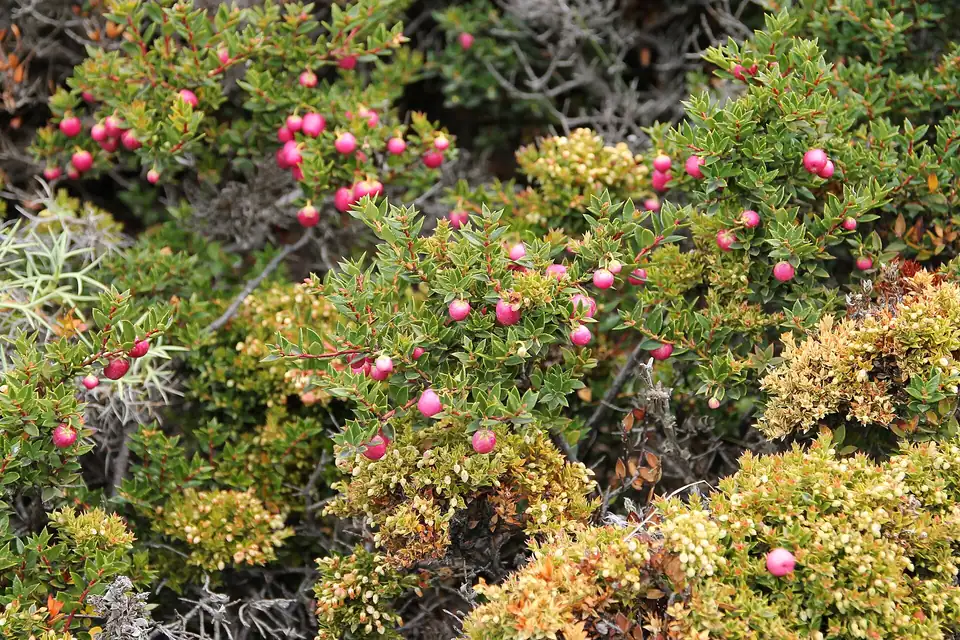
This plant shows off lilac-colored berries, and in some forms the fruit is even juicy. It asks for little pruning, only in mid to late spring if needed, and you can make new plants from seed, cuttings or rooted suckers. There are no known hazards to people, so it's a friendly plant to try in your garden.
- Cold
Survives winters down to 0 °F (−17.8 °C)
Hardy in very cold winters · USDA 7 · RHS H6 · Z7
What the sources say (2)
Hardiness, coldest zone: 7 [winter low −17.8 to −12.2 °C (0 to 10 °F)]
USDA zones: 7-9. Mature size: Height: 4 feet (1 m). Width: 4 feet (1 m).
— [5] Hardiness, warmest zone: 9 [winter low −6.7 to −1.1 °C (20 to 30 °F)]
USDA zones: 7-9. Mature size: Height: 4 feet (1 m). Width: 4 feet (1 m).
— [5] - Pruning
Prune only if needed, in mid to late spring
What the sources say (1)
Pruning: Mid to late spring, if necessary
Plant male and female bushes together to ensure a good crop of berries. Cut back plants in mid to late spring if necessary.
— Gaultheria mucronata | BBC Gardeners World Magazine [4] - Harvest
The lilac berries are edible but feel like foam; some forms are juicy
- Pests
Watch for powdery mildew, black mildew, leaf galls and fungal leaf spots
- Propagation
From seed, semi-ripe cuttings or rooted suckers
What the sources say (1)
Propagation: Seed, semi-ripe cuttings, rooted suckers
Sow seed in Autumn, winter over in cold frame. | Semi-ripe cuttings in summer. | Dig up rooted suckers in spring.
— [5] - Safety
No known hazards to people
Overview
Gaultheria mucronata is an evergreen shrub grown for its glossy dark green leaves and attractive berries. [4] It grows in moist, acidic, peaty soil and is propagated by seed, semi-ripe cuttings and rooted suckers. [5] Male and female plants are needed together for a good crop of berries. [4]
This record is incomplete: the sources we read do not cover every field yet.
Not yet covered by our sources: Watering, Light
Prickly Heath care
How to water Prickly Heath
Not stated in the sources we read.
How much light Prickly Heath needs
Not stated in the sources we read.
How much cold Prickly Heath can take
Hardiness, coldest zone
7 [winter low −17.8 to −12.2 °C (0 to 10 °F)]
What the sources say (1)
USDA zones: 7-9.
Mature size:
Height: 4 feet (1 m).
Width: 4 feet (1 m).Hardiness, warmest zone
9 [winter low −6.7 to −1.1 °C (20 to 30 °F)]
What the sources say (1)
USDA zones: 7-9.
Mature size:
Height: 4 feet (1 m).
Width: 4 feet (1 m).How to propagate Prickly Heath
Seed, semi-ripe cuttings, rooted suckers
What the sources say (1)
Sow seed in Autumn, winter over in cold frame. | Semi-ripe cuttings in summer. | Dig up rooted suckers in spring.Prickly Heath pests and problems
Powdery mildew, black mildew, leaf gall and fungal spots
What the sources say (1)
Powdery mildew, black mildew, leaf gall and fungal spots may be a problem.
— [5]
Remedies
The sources we checked give no remedies for this plant.
Is Prickly Heath poisonous?
Reported by the source, quoted verbatim. This is not medical or veterinary advice: if a person or an animal may have eaten this plant, contact a poison control centre or a veterinarian.
## Known Hazards None known ## Botanical References
[1]
Calendar
Pruning
Mid to late spring, if necessary
What the sources say (1)
Plant male and female bushes together to ensure a good crop of berries. Cut back plants in mid to late spring if necessary.Months as given by the sources, which are mostly from the United States (northern hemisphere). In the southern hemisphere they shift by about six months.
Edibility
Reported by the source, quoted verbatim. Do not eat a plant on the basis of this page alone: identification mistakes can be dangerous.
The lilac-coloured fruit does not look tremendously edible, and the texture is somewhat like polystyrene - but the fruit of some forms is juicy
[1]
Indicative values
Values from a secondary source, not checked word for word like the rest of this page. Use them as a starting point.
- Life cycle
- PerennialIndicative value, adapt it to your climate · Secondary source
- Light
- Filtered shade, Part sun/part shadeIndicative value, adapt it to your climate · Secondary source
- Watering
- AverageIndicative value, adapt it to your climate · Secondary source
- Soil
- Acidic, Well-drainedIndicative value, adapt it to your climate · Secondary source
- Soil pH
- 4.5-6Indicative value, adapt it to your climate · Secondary source
- Growth rate
- ModerateIndicative value, adapt it to your climate · Secondary source
- Pests
- Fungal leaf spot, Galls, Rabbit resistantIndicative value, adapt it to your climate · Secondary source
Similar plants
- Salal Gaultheria shallon
- Wintergreen Gaultheria procumbens
- Aaron's Beard Hypericum calycinum
- Abies grandis Abies grandis
- Abraham Trachystemon orientalis
- Abyssinian banana Ensete ventricosum
- Acacia longifolia Acacia longifolia
- Acacia retinodes Acacia retinodes
Sources
Every value above is quoted from these documents. Links lead to the original publisher.
- Gaultheria mucronata - Useful Temperate Plants · temperate.theferns.info, consulted
- Gaultheria mucronata Gaultheria mucronata - Trees and Shrubs Online · treesandshrubsonline.org, consulted
- Gaultheria mucronata • New Zealand Plant Conservation Network · nzpcn.org.nz, consulted
- Gaultheria mucronata | BBC Gardeners World Magazine · gardenersworld.com, consulted
- · rainyside.com, consulted
Written by Emilio Marruso · last checked