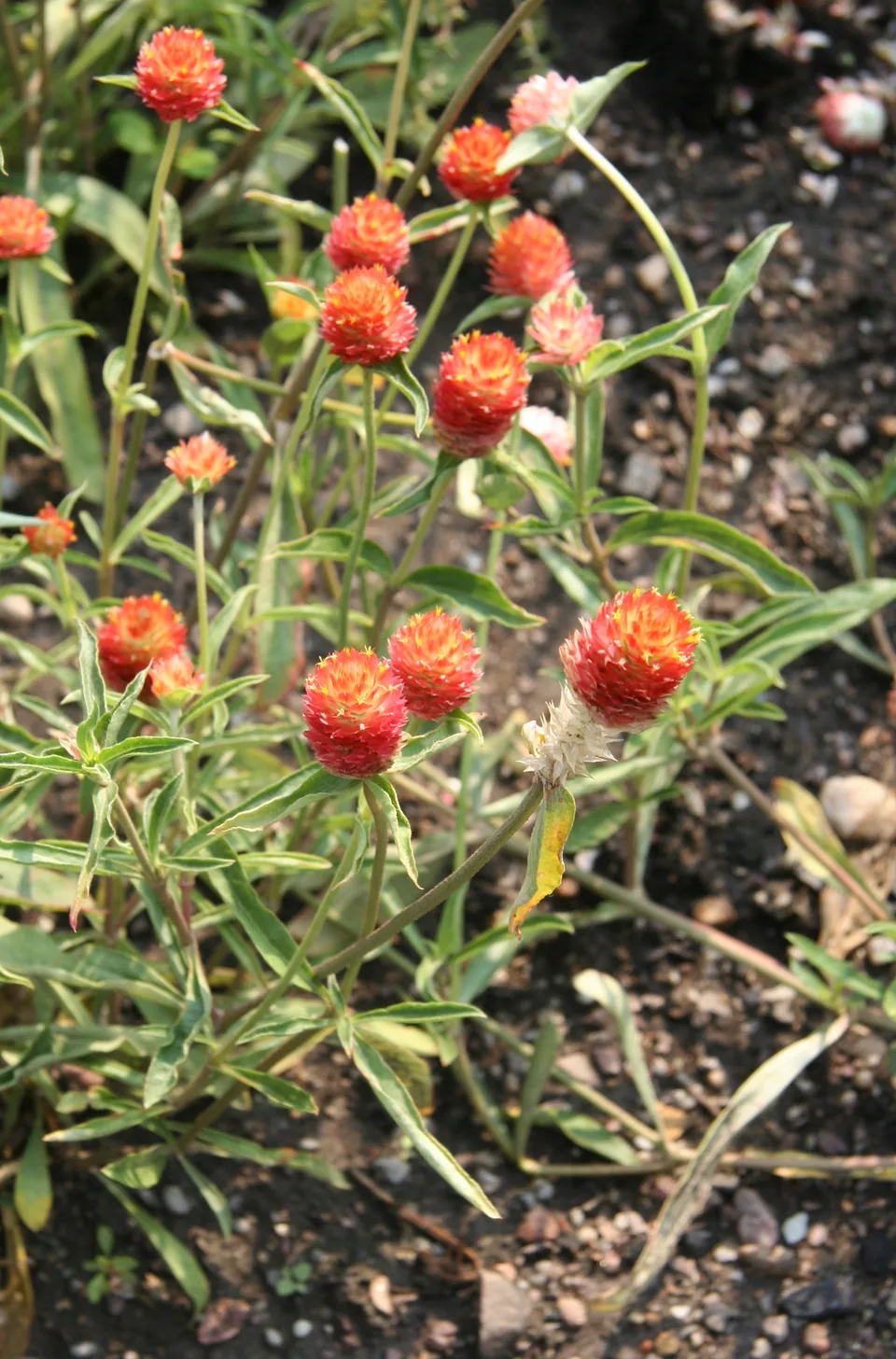

How to Grow and Care for Rio Grande globe amaranth
Gomphrena haageana
Written by Emilio Marruso · last checked
At a glance
This gomphrena is simple to grow from seed and happy anywhere from part sun to full sun. Sow it outdoors once all danger of frost has passed, or get a head start indoors 6–8 weeks before the last spring frost; you can even sow it in fall. It grows in containers too, so it fits a sunny patio as well as a garden bed.
- Sun
Part sun to full sun
What the sources say (1)
Light: Part sun to full sun
Sun Exposure: Part sun to full sun
— Rio Grande Globe Amaranth (Gomphrena haageana) [4] - Propagation
Grows from seed
What the sources say (1)
Propagation: Seed
Propagate by sowing seed at 60-65 degrees Fahrenheit in early spring.
— Gomphrena haageana - Native Plant Society of Texas [3] - Sowing
Sow outdoors after the last frost, indoors 6–8 weeks before it, or in fall
What the sources say (2)
Sowing: Outdoors after all danger of frost has passed, or indoors 6-8 weeks before the last spring frost; also over-sown in fall
Sow seeds outdoors after all danger of frost has passed, or indoors 6-8 weeks prior to the last spring frost.
— Gomphrena haageana - Native Plant Society of Texas [3] Over sow seed in the fall in well drained soils, as germination rate can be low.
— Gomphrena haageana - Native Plant Society of Texas [3] - Containers
Grows in containers too
What the sources say (1)
In containers: Yes
Works well in borders, rock gardens, cutting gardens, annual beds or containers.
— Gomphrena haageana - Native Plant Society of Texas [3]
Overview
Gomphrena haageana is a herbaceous perennial native to Texas that can act as an annual in cooler areas. [3] It is drought and heat tolerant and suited to borders, rock gardens and cutting gardens. [3] It is used for cut flower production alongside Gomphrena globosa. [2]
This record is incomplete: the sources we read do not cover every field yet.
Not yet covered by our sources: Hardiness, coldest zone, Hardiness, warmest zone, Pruning
Rio Grande globe amaranth care
How to water Rio Grande globe amaranth
The sources give different values depending on region, zone or growing conditions.
What each source says
According to Native Plant Society of Texas: Low
According to Desert-Tropicals: Regular water
How much light Rio Grande globe amaranth needs
Part sun to full sun
What the sources say (1)
Sun Exposure: Part sun to full sunHow much cold Rio Grande globe amaranth can take
Hardiness, coldest zone
Not stated in the sources we read.
Hardiness, warmest zone
Not stated in the sources we read.
Where to grow Rio Grande globe amaranth
Yes
What the sources say (1)
Works well in borders, rock gardens, cutting gardens, annual beds or containers.How to propagate Rio Grande globe amaranth
Seed
What the sources say (1)
Propagate by sowing seed at 60-65 degrees Fahrenheit in early spring.How to grow Rio Grande globe amaranth
The plant
Mature height
The sources give different values depending on region, zone or growing conditions.
What each source says
cultivar 'QIS' series (Carmine, Orange, Pink): 45.72-71.12 cm (18-28 in):
What the sources say (1)
cultivar 'QIS' series (Carmine, Orange, Pink): 45.72-71.12 cm (18-28 in): Cultivars like ‘QIS Carmine’, ‘QIS Orange’, and ‘QIS Pink’ are from G. haageana , and are also 18 to 28 inches in heightRemedies
The sources we checked give no remedies for this plant.
Calendar
Sowing
Outdoors after all danger of frost has passed, or indoors 6-8 weeks before the last spring frost; also over-sown in fall
What the sources say (2)
Sow seeds outdoors after all danger of frost has passed, or indoors 6-8 weeks prior to the last spring frost.Over sow seed in the fall in well drained soils, as germination rate can be low.Pruning
Not stated in the sources we read.
Months as given by the sources, which are mostly from the United States (northern hemisphere). In the southern hemisphere they shift by about six months.
Indicative values
Values from a secondary source, not checked word for word like the rest of this page. Use them as a starting point.
- Life cycle
- Herbaceous PerennialIndicative value, adapt it to your climate · Secondary source
- Drought tolerant
- yesIndicative value, adapt it to your climate · Secondary source
- Soil pH
- 6-7.5Indicative value, adapt it to your climate · Secondary source
- USDA hardiness zones
- 9-11 [winter low −6.7 to 10 °C (20 to 50 °F)]Indicative value, adapt it to your climate · Secondary source
- Care level
- MediumIndicative value, adapt it to your climate · Secondary source
- Growth rate
- LowIndicative value, adapt it to your climate · Secondary source
- Pruning
- February, March, April, June, July, AugustIndicative value, adapt it to your climate · Secondary source
Similar plants
- Globe Amaranth Gomphrena globosa
- Abies grandis Abies grandis
- Abraham Trachystemon orientalis
- Abyssinian banana Ensete ventricosum
- Acacia longifolia Acacia longifolia
- Acanthus hungaricus Acanthus hungaricus
- Achlys triphylla Achlys triphylla
- Aconite Aconitum napellus
Sources
Every value above is quoted from these documents. Links lead to the original publisher.
- How to Grow Gomphrena - Globe Amaranth · harvesttotable.com, consulted
- Gomphrena Cut Flower Production in Utah | USU · extension.usu.edu, consulted
- Gomphrena haageana - Native Plant Society of Texas · npsot.org, consulted
- Rio Grande Globe Amaranth (Gomphrena haageana) · desert-tropicals.com, consulted
Written by Emilio Marruso · last checked