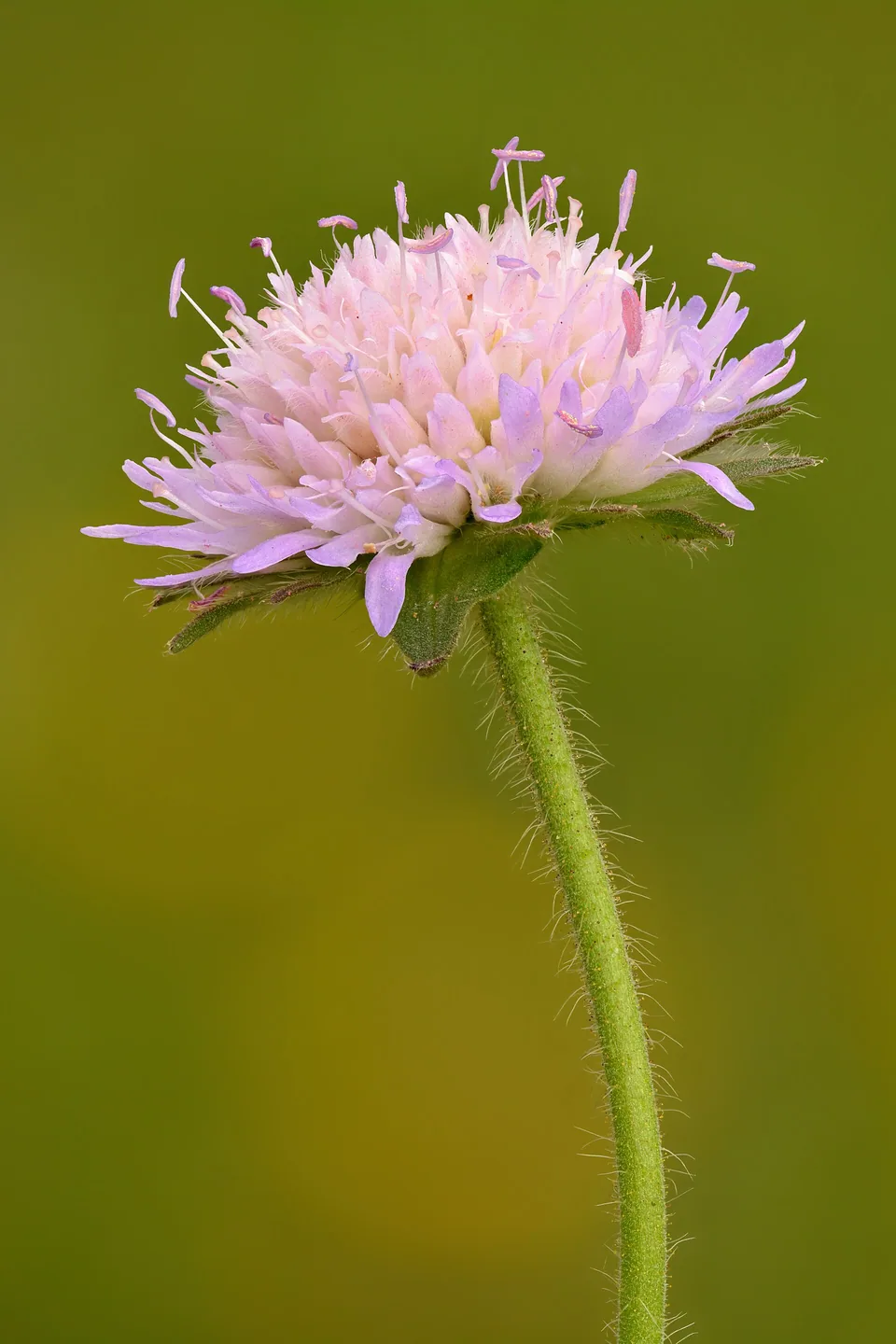
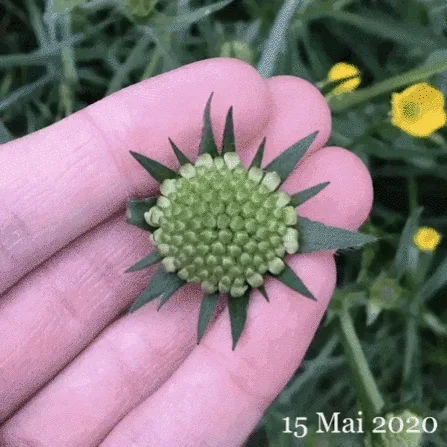

How to Grow and Care for Bluebuttons
Knautia arvensis
Written by Emilio Marruso · last checked
Toxic to: People · Why
At a glance
Field scabious is an easygoing perennial that grows 2–4 ft tall in full sun or partial shade. Sow it in spring or autumn, plant the seedlings out in summer, or divide the clumps in spring. It spreads readily, so cut the flowers before they set seed to keep it right where you want it.
- Sun
Full sun to partial shade
What the sources say (3)
Light: Full sun to partial shade
Grow Knautia arvensis in moist but well-drained soil in full sun to partial shade.
— Knautia arvensis (Field Scabious) | BBC Gardeners World Magazine [3] Grows well on chalky soils [7] . Prefers a sunny position [4] .
— Field Scabious (Knautia arvensis) — Practical Plants [6] sun; average to dry disturbed soil; roadsides, fields, open woods, landscapes
— Knautia arvensis (Field Scabious): Minnesota Wildflowers [4] - Cold
Survives winters down to −10 °F (−23.3 °C)
Very hardy · USDA 6 · RHS H7 · Z6
What the sources say (1)
Hardiness, coldest zone: 6 [winter low −23.3 to −17.8 °C (−10 to 0 °F)]
Water moderate Hardiness Zone 6+ Soil textures sandy, loamy, clay
— Field Scabious (Knautia arvensis) — Practical Plants [6] - Planting
Plant seedlings out in summer
What the sources say (1)
Planting: Summer (seedlings raised from seed)
prick the seedlings out into individual pots and plant them out in the summer.
— Field Scabious (Knautia arvensis) — Practical Plants [6] - Watch out
It can spread like a weed: cut or mow the flowers before they set seed
- Size
2 to 4 ft tall
What the sources say (1)
Mature height: 61-122 cm (2-4 ft)
It usually grows 2 to 4 feet tall and has a woody, branched taproot.
— Field Scabious (Knautia arvensis)- November 2014 - MSU Extension Invasive Plants | Montana State University [2] - Propagation
By seed, by dividing clumps in spring, or by cuttings from the base in late spring
What the sources say (3)
Propagation: Seed; division in spring; basal cuttings in late spring
Division in the spring. Basal cuttings in late spring.
— Field Scabious (Knautia arvensis) — Practical Plants [6] Basal cuttings in late spring. Harvest the shoots when they are about 10 - 15cm long with plenty of underground stem.
— Field Scabious (Knautia arvensis) — Practical Plants [6] Field scabious reproduces only by seed. It is a prolific seed producer, with each plant capable of producing up to 2,000 seeds
— Field Scabious (Knautia arvensis)- November 2014 - MSU Extension Invasive Plants | Montana State University [2] - Sowing
Sow in spring or autumn
What the sources say (1)
Sowing: Spring or autumn
Seed - sow spring or autumn in a cold frame.
— Field Scabious (Knautia arvensis) — Practical Plants [6] - Safety
No toxic effects reported for people
Overview
Field scabious is a perennial forb that can escape cultivation and become abundant in waste areas, roadsides, and forage or hay fields. [2] It reproduces only by seed, and one plant can produce up to 2,000 seeds. [2] It is also sold as a showy ornamental attractive to butterflies and bees, and it prefers a sunny, well-drained site. [2][3][6]
This record is incomplete: the sources we read do not cover every field yet.
Not yet covered by our sources: Hardiness, warmest zone
Bluebuttons care
How much light Bluebuttons needs
Full sun to partial shade
What the sources say (3)
Grow Knautia arvensis in moist but well-drained soil in full sun to partial shade.Grows well on chalky soils [7] . Prefers a sunny position [4] .sun; average to dry disturbed soil; roadsides, fields, open woods, landscapesHow much cold Bluebuttons can take
Hardiness, coldest zone
6 [winter low −23.3 to −17.8 °C (−10 to 0 °F)]
What the sources say (1)
Water
moderate
Hardiness
Zone 6+
Soil textures
sandy, loamy, clayHardiness, warmest zone
Not stated in the sources we read.
How to propagate Bluebuttons
Seed; division in spring; basal cuttings in late spring
What the sources say (3)
Division in the spring.
Basal cuttings in late spring.Basal cuttings in late spring. Harvest the shoots when they are about 10 - 15cm long with plenty of underground stem.Field scabious reproduces only by seed. It is a prolific seed producer, with each
plant capable of producing up to 2,000 seedsHow to grow Bluebuttons
The plant
Life cycle
perennial
What the sources say (1)
Field scabious, also known as blue buttons, is a perennial forb in the Dipsacaceae
(Teasel) family.Family
Dipsacaceae
What the sources say (1)
Field scabious, also known as blue buttons, is a perennial forb in the Dipsacaceae
(Teasel) family.Mature height
61-122 cm (2-4 ft)
What the sources say (1)
It usually grows 2 to 4 feet tall and has a woody, branched taproot.Bluebuttons pests and problems
Spread as a weed in pastures and hay fields
Symptom: Can decrease hay and forage production; difficult to eradicate once established.
What to do: Prevent flowers from setting seed by mowing or cultivation before seeds set.
What the sources say (2)
and that it can decrease hay and forage production. Cattle will eat field scabious early in the season
— Field Scabious (Knautia arvensis)- November 2014 - MSU Extension Invasive Plants | Montana State University [2] one important management strategy is to prevent the flowers from setting seed. This can be accomplished by mowing or cultivation before seeds set.
— Field Scabious (Knautia arvensis)- November 2014 - MSU Extension Invasive Plants | Montana State University [2]
Remedies
Each remedy shows what official sources say about it; traditional remedies without an official source are marked as such. Harmful ones are listed so you know to avoid them.
Getting rid of it
field scabious weed
mowing before seed set Works
How: Cut or mow plants before they set seed to prevent the establishment of new plants.
Cut or mow plants before they set seed to prevent the establishment of new plants.
— dnr.wisconsin.gov [9] What the evidence says one important management strategy is to prevent the flowers from setting seed. This can be accomplished by mowing or cultivation before seeds set.
— Field Scabious (Knautia arvensis)- November 2014 - MSU Extension Invasive Plants | Montana State University [2] hand pulling Partly works
How: Mowing or hand pulling prior to seed set can control seed production.
Mowing or hand pulling prior to seed set can control seed production,
— cariboord.ca [10] What the evidence says Pulling is seldom effective due to the difficulty in removing the long, branched roots.
— dnr.wisconsin.gov [9] tilling and cultivation Works
How: Infestations can be controlled by tilling and cultivation of other species.
Infestations can be controlled by tilling and cultivation of other species.
— dnr.wisconsin.gov [9] What the evidence says one important management strategy is to prevent the flowers from setting seed. This can be accomplished by mowing or cultivation before seeds set.
— Field Scabious (Knautia arvensis)- November 2014 - MSU Extension Invasive Plants | Montana State University [2]
Is Bluebuttons poisonous?
Reported by the source, quoted verbatim. This is not medical or veterinary advice: if a person or an animal may have eaten this plant, contact a poison control centre or a veterinarian.
Knautia ‘Arvensis’ has no toxic effects reported. No reported toxicity to:
[3]
Calendar
Sowing
Spring or autumn
What the sources say (1)
Seed - sow spring or autumn in a cold frame.Planting
Summer (seedlings raised from seed)
What the sources say (1)
prick the seedlings out into individual pots and plant them out in the summer.Months as given by the sources, which are mostly from the United States (northern hemisphere). In the southern hemisphere they shift by about six months.
Edibility
Reported by the source, quoted verbatim. Do not eat a plant on the basis of this page alone: identification mistakes can be dangerous.
Cattle will eat field scabious early in the season, but it is not palatable once flowering begins.
[2]
Indicative values
Values from a secondary source, not checked word for word like the rest of this page. Use them as a starting point.
- Hours of sun
- 6-8 hoursIndicative value, adapt it to your climate · Secondary source
- Watering
- MinimumIndicative value, adapt it to your climate · Secondary source
- Drought tolerant
- yesIndicative value, adapt it to your climate · Secondary source
- Soil pH
- 6-7.5Indicative value, adapt it to your climate · Secondary source
- Care level
- MediumIndicative value, adapt it to your climate · Secondary source
- Growth rate
- HighIndicative value, adapt it to your climate · Secondary source
- Pruning
- May, June, July, August, September, OctoberIndicative value, adapt it to your climate · Secondary source
- Pests
- Drought resistantIndicative value, adapt it to your climate · Secondary source
Similar plants
- Macedonian Scabious Knautia macedonica
- Wild Teasel Dipsacus fullonum
- Abies grandis Abies grandis
- Abraham Trachystemon orientalis
- Abyssinian banana Ensete ventricosum
- Acacia longifolia Acacia longifolia
- Acanthus hungaricus Acanthus hungaricus
- Achlys triphylla Achlys triphylla
Sources
Every value above is quoted from these documents. Links lead to the original publisher.
- Pagina 60 - Flora of the Southern Carnic Alps · dryades.units.it, consulted
- Field Scabious (Knautia arvensis)- November 2014 - MSU Extension Invasive Plants | Montana State University · montana.edu, consulted
- Knautia arvensis (Field Scabious) | BBC Gardeners World Magazine · gardenersworld.com, consulted
- Knautia arvensis (Field Scabious): Minnesota Wildflowers · minnesotawildflowers.info, consulted
- Field scabious - Invasive Species Council of British Columbia · bcinvasives.ca, consulted
- Field Scabious (Knautia arvensis) — Practical Plants · practicalplants.org, consulted
- How to Grow Knautia - Blue Buttons · harvesttotable.com, consulted
- How to Grow Knautia Pincushion Flowers | Gardener’s Path · gardenerspath.com, consulted
- dnr.wisconsin.gov · dnr.wisconsin.gov
- cariboord.ca · cariboord.ca
Written by Emilio Marruso · last checked