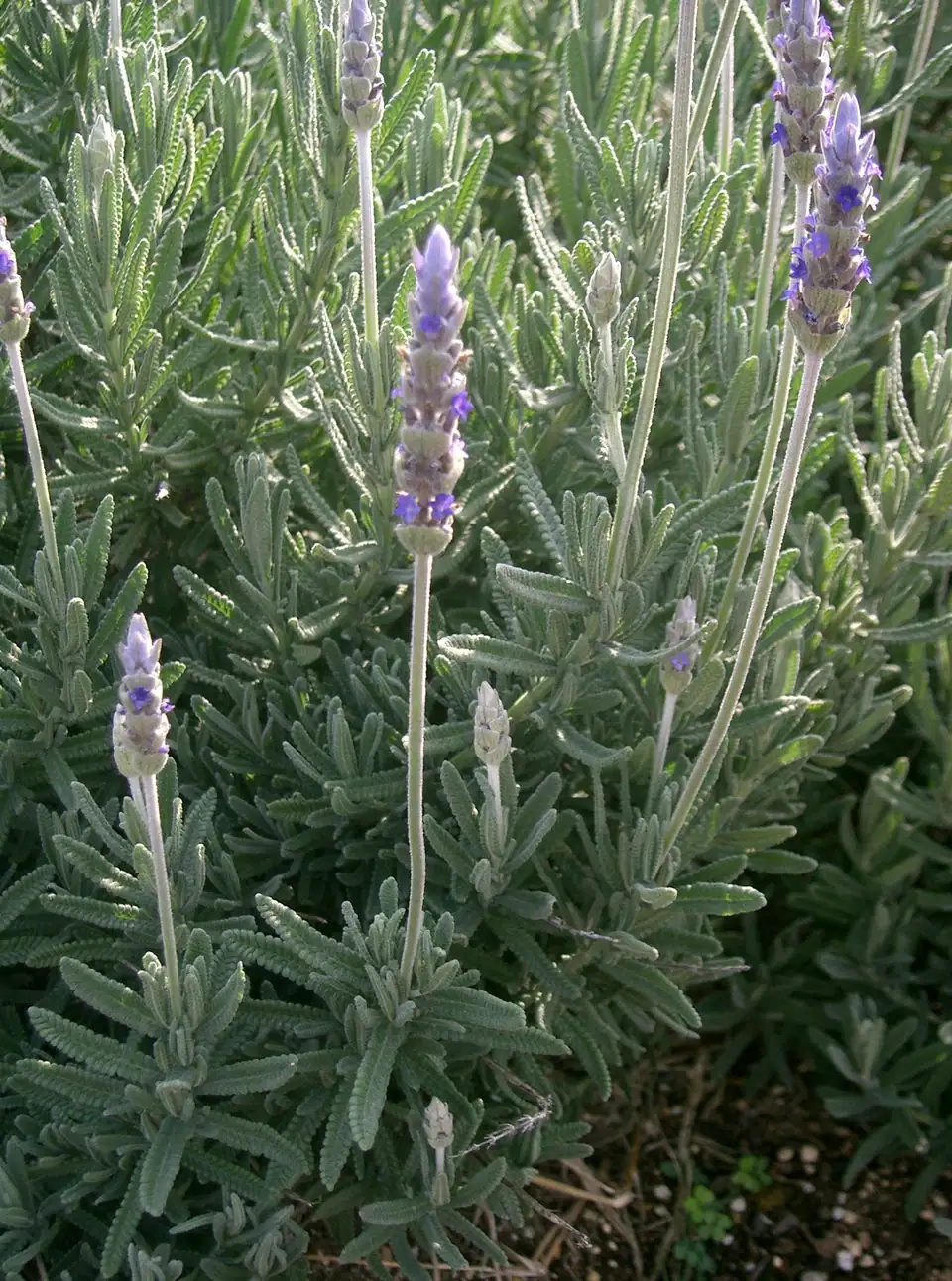
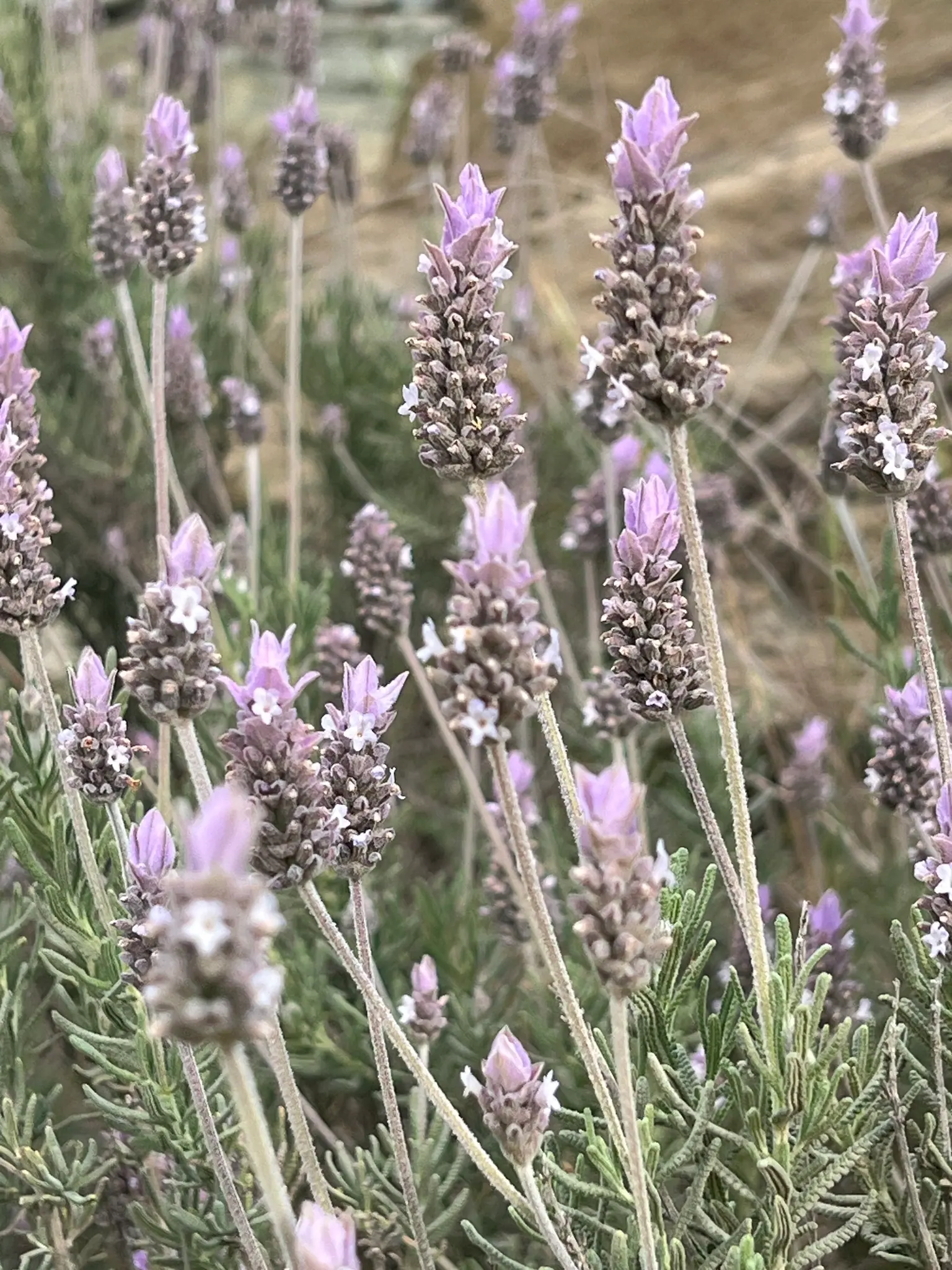

How to Grow and Care for French lavender
Lavandula dentata
Written by Emilio Marruso · last checked
At a glance
This lavender asks for little and loves the sun: give it full sun and poor soil, and it thrives with hardly any feeding. Water young plants deeply in dry spells for their first two or three years, and it grows happily in a container too. Just keep it away from winter wet, which it strongly dislikes.
- Sun
Full sun
What the sources say (1)
Light: Full sun
This lavender prefers full sun and will tolerate most soil types but grows best in normal to sandy alkaline (pH 7 to 7.5) soil.
— Lavandula dentata [4] - Water
Water young plants deeply in dry spells for their first 2–3 years; avoid winter wet
What the sources say (2)
Watering notes: Young plants need thorough watering during dry periods for the first two or three years; plants strongly dislike winter wet
Young plants require thorough watering during dry periods over the first two or three years and mulching helps to conserve moisture and suppress weeds.
— Lavandula dentata [4] strongly dislikes the winter wet and cold of more temperate situations
— Lavandula dentata - Useful Temperate Plants [2] - Cold
Survives winters down to 20 °F (−6.7 °C)
Hardy in average winters · USDA 9 · RHS H4 · Z9
What the sources say (1)
Hardiness, coldest zone: 9 [winter low −6.7 to −1.1 °C (20 to 30 °F)]
Hardiness Zone 9+
— Lavandula dentata — Practical Plants [3] - Feeding
Likes poor soil; if growth is slow, feed once early in the season, never while it flowers
What the sources say (5)
When: Before planting, only if needed; if growth is slow, once in the early growing season; never during flower development
If necessary, incorporate a balanced fertilizer such as 10-10-10 at a rate of 1/2 to 1 pound per 100 square feet (244 to 488 g per 10 sq m) prior to planting.
— [7] If plants seem slow to develop, side-dress with 10-10-10 once during the early growing season to encourage growth. Avoid fertilizing during flower development.
— [7] How often: Only if needed: a single side-dressing early in the growing season
If plants seem slow to develop, side-dress with 10-10-10 once during the early growing season to encourage growth. Avoid fertilizing during flower development.
— [7] Avoid: Excess nitrogen and fertilizing during flower development; prefers soils of low fertility
Lavenders grow best in full sun in well-drained gravelly soils with low fertility. Excessive nitrogen encourages soft, succulent growth that is low in oils.
— [7] If plants seem slow to develop, side-dress with 10-10-10 once during the early growing season to encourage growth. Avoid fertilizing during flower development.
— [7] - Watch out
Hates winter wet and cold: in rainy climates, protect it from rain in winter
What the sources say (2)
Watering notes: Young plants need thorough watering during dry periods for the first two or three years; plants strongly dislike winter wet
Young plants require thorough watering during dry periods over the first two or three years and mulching helps to conserve moisture and suppress weeds.
— Lavandula dentata [4] strongly dislikes the winter wet and cold of more temperate situations
— Lavandula dentata - Useful Temperate Plants [2] - Propagation
From seed, half-ripe cuttings with a heel, or layering
What the sources say (1)
Propagation: Seed; half-ripe cuttings with a heel; layering
Cuttings of half-ripe wood 7 - 10cm with a heel, July/August in a frame.
— Lavandula dentata — Practical Plants [3] - Sowing
Sow in spring in a greenhouse
What the sources say (1)
Sowing: Spring, in a greenhouse
Seed - sow spring in a greenhouse and only just cover the seed
— Lavandula dentata - Useful Temperate Plants [2] - Containers
Grows in containers too
What the sources say (1)
In containers: Yes
A good plant suitable for warm gardens and containers in frost-free areas.
— Lavandula dentata [4]
Overview
Lavandula dentata is an evergreen aromatic shrub of the Mediterranean region used as an ornamental in gardens. [6][1] It prefers full sun and well-drained soil, and needs a sheltered sunny position and protection in frosty weather in cooler climates. [4][1]
This record is incomplete: the sources we read do not cover every field yet.
Not yet covered by our sources: Watering, Hardiness, warmest zone, Pruning
French lavender care
How to water French lavender
Watering
Not stated in the sources we read.
Watering notes
Young plants need thorough watering during dry periods for the first two or three years; plants strongly dislike winter wet
What the sources say (2)
Young plants require thorough watering during dry periods over the first two or three years and mulching helps to conserve moisture and suppress weeds.strongly dislikes the winter wet and cold of more temperate situationsHow much light French lavender needs
Full sun
What the sources say (1)
This lavender prefers full sun and will tolerate most soil types but grows best in normal to sandy alkaline (pH 7 to 7.5) soil.How much cold French lavender can take
Hardiness, coldest zone
9 [winter low −6.7 to −1.1 °C (20 to 30 °F)]
What the sources say (1)
Hardiness
Zone 9+Hardiness, warmest zone
Not stated in the sources we read.
Where to grow French lavender
Yes
What the sources say (1)
A good plant suitable for warm gardens and containers in frost-free areas.How to propagate French lavender
Seed; half-ripe cuttings with a heel; layering
What the sources say (1)
Cuttings of half-ripe wood 7 - 10cm with a heel, July/August in a frame.How to grow French lavender
Fertilizing
When
Before planting, only if needed; if growth is slow, once in the early growing season; never during flower development
What the sources say (2)
If necessary, incorporate a balanced fertilizer such as 10-10-10 at a rate of 1/2 to 1 pound per 100 square feet (244 to 488 g per 10 sq m) prior to planting.If plants seem slow to develop, side-dress with 10-10-10 once during the early growing season to encourage growth. Avoid fertilizing during flower development.How often
Only if needed: a single side-dressing early in the growing season
What the sources say (1)
If plants seem slow to develop, side-dress with 10-10-10 once during the early growing season to encourage growth. Avoid fertilizing during flower development.Mineral fertilizers
Balanced 10-10-10, 24.4-48.8 g/m² worked into the soil before planting if needed; one 10-10-10 side-dressing early in the season if plants are slow
What the sources say (2)
If necessary, incorporate a balanced fertilizer such as 10-10-10 at a rate of 1/2 to 1 pound per 100 square feet (244 to 488 g per 10 sq m) prior to planting.If plants seem slow to develop, side-dress with 10-10-10 once during the early growing season to encourage growth. Avoid fertilizing during flower development.Avoid
Excess nitrogen and fertilizing during flower development; prefers soils of low fertility
What the sources say (2)
Lavenders grow best in full sun in well-drained gravelly soils with low fertility. Excessive nitrogen encourages soft, succulent growth that is low in oils.If plants seem slow to develop, side-dress with 10-10-10 once during the early growing season to encourage growth. Avoid fertilizing during flower development.Signs of excess
Soft, succulent growth low in oils; plants break apart in the center
What the sources say (1)
Excessive nitrogen encourages soft, succulent growth that is low in oils. Plants tend to break apart in the center under high fertility,French lavender pests and problems
Winter wet and cold
Symptom: The plant strongly dislikes the winter wet and cold of more temperate situations.
What to do: Plants will normally require winter protection, especially from rain, when grown outdoors in moister climates.
What the sources say (1)
Plants will normally require winter protection, especially from rain, when grown outdoors in moister climates
— Lavandula dentata - Useful Temperate Plants [2]
Remedies
Each remedy shows what official sources say about it; traditional remedies without an official source are marked as such. Harmful ones are listed so you know to avoid them.
Treating the plant
aphids and mealybugs
spraying off with a sharp stream of water Not verified
Traditional remedy, not verified by an official source.
How: These bugs can generally be sprayed off the plant with a sharp stream of water
Calendar
Sowing
Spring, in a greenhouse
What the sources say (1)
Seed - sow spring in a greenhouse and only just cover the seedPlanting
The sources give different values depending on region, zone or growing conditions.
What each source says
Auckland Botanic Gardens: After autumn rains
According to Useful Temperate Plants (Temperate Plants Database): Late spring, after the last expected frosts
What the sources say (2)
Auckland Botanic Gardens: plant after autumn rains as the soil is moist and warm and allows plants to become established before winter.According to Useful Temperate Plants (Temperate Plants Database): planting them out in late spring after the last expected frosts.Pruning
The sources give different values depending on region, zone or growing conditions.
What each source says
Auckland Botanic Gardens: November
According to Useful Temperate Plants (Temperate Plants Database): Spring (not in autumn)
What the sources say (2)
Auckland Botanic Gardens: prune in November to promote summer flowering.According to Useful Temperate Plants (Temperate Plants Database): Any trimming of the plant is best done in spring and should not be done in the autumnMonths as given by the sources, which are mostly from the United States (northern hemisphere). In the southern hemisphere they shift by about six months.
Similar plants
- Lavender Lavandula angustifolia
- Spanish Lavender Lavandula stoechas
- Lavandula multifida Lavandula multifida
- Abies grandis Abies grandis
- Abraham Trachystemon orientalis
- Abyssinian banana Ensete ventricosum
- Acacia longifolia Acacia longifolia
- Acanthus hungaricus Acanthus hungaricus
Sources
Every value above is quoted from these documents. Links lead to the original publisher.
- Lavandula dentata - Trees and Shrubs Online · treesandshrubsonline.org, consulted
- Lavandula dentata - Useful Temperate Plants · temperate.theferns.info, consulted
- Lavandula dentata — Practical Plants · practicalplants.org, consulted
- Lavandula dentata · aucklandbotanicgardens.co.nz, consulted
- Flora of New Zealand | Taxon Profile | Lavandula dentata · nzflora.info, consulted
- Cantueso. Parques, jardines e infraestructura verde. Medioambiente y sostenibilidad. Ayuntamiento de Zaragoza · zaragoza.es, consulted
- ccfruitandnuts.ucanr.edu · ccfruitandnuts.ucanr.edu
Written by Emilio Marruso · last checked