
How to Grow and Care for Twinflower
Linnaea borealis
Written by Emilio Marruso · last checked
At a glance
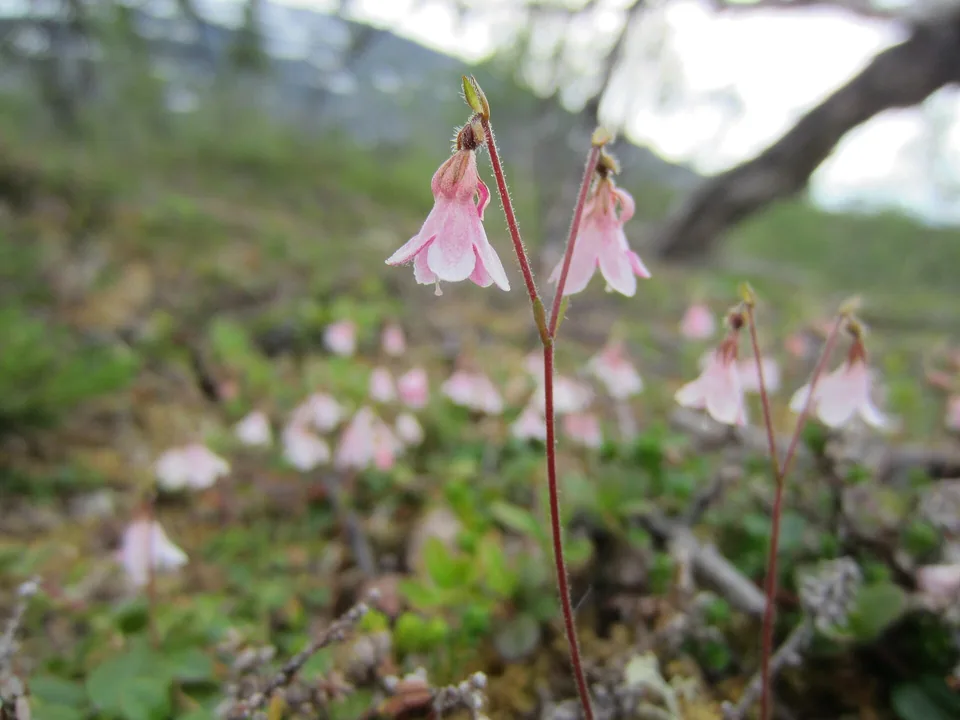
Twinflower is a tiny ground hugger, just 4 inches tall, made for the shady corners of your garden. Give it partial to full shade and acidic soil, and never let it dry out, since its shallow roots dry quickly. Plant it in late spring or early summer, and later you can divide its rooted runners to share or spread it.
- Sun
Partial shade to full shade
- Water
Never let it dry out: its shallow roots dry quickly
What the sources say (1)
Watering notes: Shallow roots dry out quickly; the plant will not tolerate drying out
it has very shallow roots that dry out quickly. It will not tolerate wind or drying out
— Twinflower - Gardening at USask - College of Agriculture and Bioresources | University of Saskatchewan [1] - Cold
Survives winters down to −50 °F (−45.6 °C)
Very hardy · USDA 2 · RHS H7 · Z2
What the sources say (1)
Hardiness, coldest zone: 2 [winter low −45.6 to −40 °C (−50 to −40 °F)]
USDA Hardiness Zone  2
— Linnaea borealis - Trees and Shrubs Online [5] - Soil
Acidic soil, pH 5–6
- Spacing
2 ft between plants
What the sources say (1)
Spacing: 60 cm (60cm)
Plants should be spaced about 60cm apart each way
— Linnaea borealis - Useful Temperate Plants [4] - Planting
Plant in late spring or early summer, after the last frosts
What the sources say (1)
Planting: Late spring or early summer, after the last expected frosts
Plant them out into their permanent positions in late spring or early summer, after the last expected frosts.
— Linnaea borealis - Useful Temperate Plants [4] - Size
Only 4 in tall
What the sources say (1)
Mature height: 10.2 cm (4 in)
The loosely matted plants are semi-woody and evergreen with leafy stems that creep over the surface of the ground from long runners. Maximum height is around 4 inches.
— Twinflower [3] - Propagation
Divide the rooted runners, or use cuttings, layering or seed
- Sowing
Sow in fall, or in spring after 60 days in the cold
Overview
Twinflower is a low evergreen creeping subshrub of cool northern woodlands that is rarely cultivated. [1] It can be propagated by division of rooted runners, cuttings or seed, but is slow to establish. [6][1]
This record is incomplete: the sources we read do not cover every field yet.
Not yet covered by our sources: Watering, Hardiness, warmest zone, Pruning
Twinflower care
How to water Twinflower
Watering
Not stated in the sources we read.
Watering notes
Shallow roots dry out quickly; the plant will not tolerate drying out
What the sources say (1)
it has very shallow roots that dry out quickly. It will not tolerate wind or drying outHow much light Twinflower needs
How much cold Twinflower can take
Hardiness, coldest zone
2 [winter low −45.6 to −40 °C (−50 to −40 °F)]
What the sources say (1)
USDA Hardiness Zone  2Hardiness, warmest zone
Not stated in the sources we read.
Best soil for Twinflower
Soil pH, minimum
5
What the sources say (1)
Sandy , acid soil (pH 5 to 6)Soil pH, maximum
6
What the sources say (1)
Sandy , acid soil (pH 5 to 6)Where to grow Twinflower
60 cm (60cm)
What the sources say (1)
Plants should be spaced about 60cm apart each wayHow to propagate Twinflower
How to grow Twinflower
The plant
Mature height
10.2 cm (4 in)
What the sources say (1)
The loosely matted plants are semi-woody and evergreen with leafy stems that creep over the surface of the ground from long runners. Maximum height is around 4 inches.Remedies
The sources we checked give no remedies for this plant.
Calendar
Sowing
Autumn
What each source says
spring sowing: Spring, after 60 days cold stratification
Planting
Late spring or early summer, after the last expected frosts
What the sources say (1)
Plant them out into their permanent positions in late spring or early summer, after the last expected frosts.Pruning
Not stated in the sources we read.
Months as given by the sources, which are mostly from the United States (northern hemisphere). In the southern hemisphere they shift by about six months.
Indicative values
Values from a secondary source, not checked word for word like the rest of this page. Use them as a starting point.
- Life cycle
- PerennialIndicative value, adapt it to your climate · Secondary source
- Watering
- MinimumIndicative value, adapt it to your climate · Secondary source
- Soil
- Acidic, Well-drainedIndicative value, adapt it to your climate · Secondary source
- Growth rate
- LowIndicative value, adapt it to your climate · Secondary source
- Pruning
- February, March, April, February, March, AprilIndicative value, adapt it to your climate · Secondary source
- Pests
- Pest resistant, Disease resistant, Drought resistantIndicative value, adapt it to your climate · Secondary source
Similar plants
- Abies grandis Abies grandis
- Abraham Trachystemon orientalis
- Acanthus hungaricus Acanthus hungaricus
- Achlys triphylla Achlys triphylla
- Aconite Aconitum napellus
- Afghan Redbud Cercis griffithii
- African Blood Lily Scadoxus multiflorus
- African lily Dietes bicolor
Sources
Every value above is quoted from these documents. Links lead to the original publisher.
- Twinflower - Gardening at USask - College of Agriculture and Bioresources | University of Saskatchewan · gardening.usask.ca, consulted
- Linnaea borealis (Twinflower): Minnesota Wildflowers · minnesotawildflowers.info, consulted
- Twinflower · fs.usda.gov, consulted
- Linnaea borealis - Useful Temperate Plants · temperate.theferns.info, consulted
- Linnaea borealis - Trees and Shrubs Online · treesandshrubsonline.org, consulted
- Linnaea borealis Twinflower · depts.washington.edu, consulted
- Caprifoliaceae (Linnaea) — Reforestation, Nurseries and Genetics Resources · rngr.net, consulted
Written by Emilio Marruso · last checked