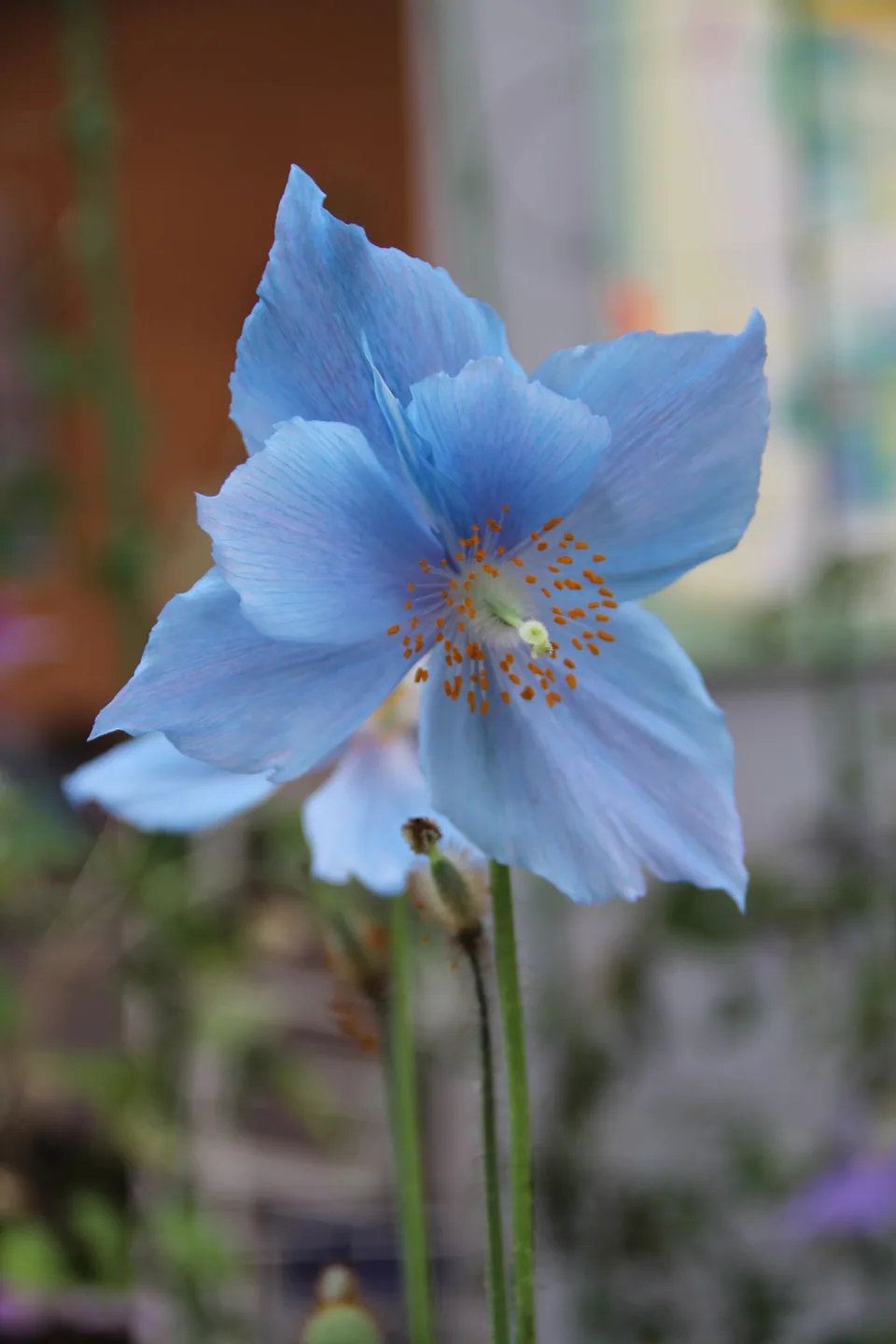
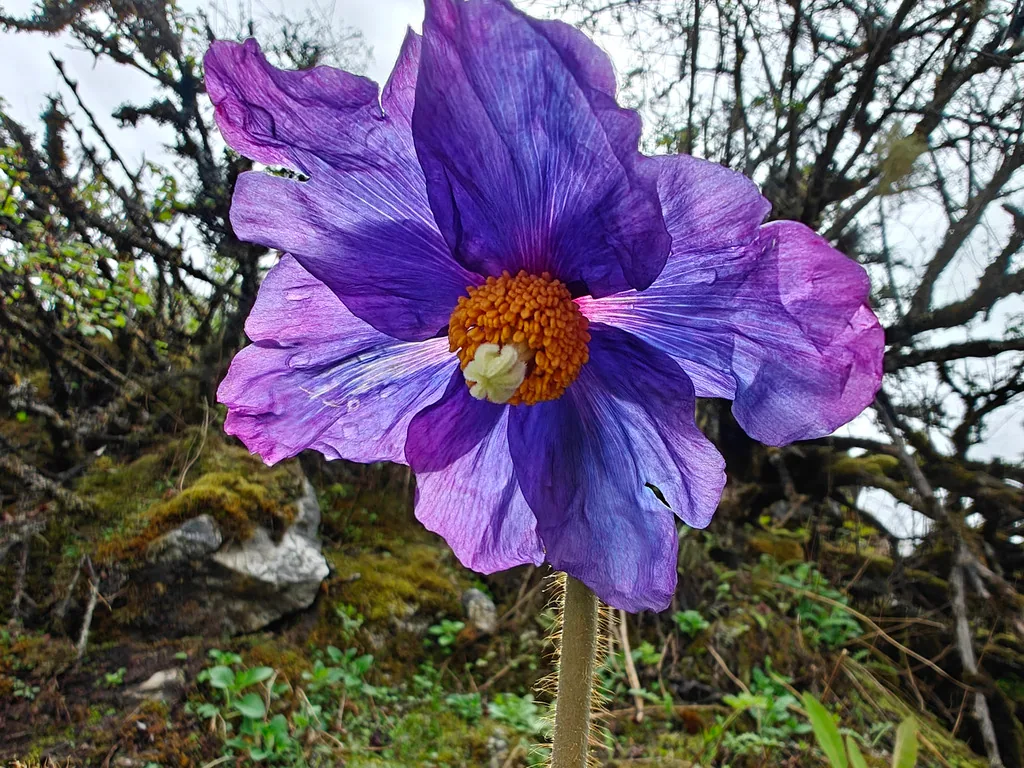

How to Grow and Care for Meconopsis grandis
Meconopsis grandis
Written by Emilio Marruso · last checked
At a glance
This perennial is made for the shady corners of your garden: it loves dappled to partial shade and soil that stays consistently moist, followed by a drier rest in winter. Cut it back once flowering has finished, and share it with friends by dividing it in spring or fall. Its seeds can even be roasted or pickled.
- Sun
Dappled shade to partial shade
What the sources say (3)
Light: Dappled shade to partial shade
At rbge experience has shown that growing Meconopsis in moist soils with slight dappled shade gives the best results.
— S i b ba l d i a : The Journal of Botanic Garden Horticulture, No. 8 [1] Shade tolerance partial shade
— Blue Poppy (Meconopsis grandis) — Practical Plants [3] Grow Meconopsis grandis in dappled partly shaded conditions.
— Blue Poppy (Meconopsis grandis) Growing & Care Guide for Gardeners [4] - Water
Keep the soil always moist, but drier in winter so the roots don't rot
What the sources say (3)
Watering: Keep the soil consistently moist
Requires consistent moisture and protection from strong winds.
— Blue Poppy (Meconopsis grandis) Growing & Care Guide for Gardeners [4] Do not over water but ensure soil remains moist.
— Blue Poppy (Meconopsis grandis) Growing & Care Guide for Gardeners [4] Watering notes: Soil needs to be dry in the winter to prevent crown and root-rot
Soil needs to be dry in the winter to prevent crown and root-rot.
— Blue Poppy (Meconopsis grandis) Growing & Care Guide for Gardeners [4] - Cold
Survives winters down to −20 °F (−28.9 °C)
Very hardy · USDA 5 · RHS H7 · Z5
What the sources say (3)
Hardiness, coldest zone: 5 [winter low −28.9 to −23.3 °C (−20 to −10 °F)]
Hardiness Zone 5+
— Blue Poppy (Meconopsis grandis) — Practical Plants [3] They are able to grow in zones 5–7.
— Blue Poppy (Meconopsis grandis) Growing & Care Guide for Gardeners [4] USDA Hardiness Zone: 5 to 8
— Meconopsis grandis ( Himalayan Poppy ) - Professional Gardening Tips [6] - Soil
Slightly acidic to neutral soil, pH 6.5–7
- Pruning
Cut it back after flowering has finished
What the sources say (1)
Pruning: After flowering has finished (cut back)
Once flowering has finished cut-back.
— Blue Poppy (Meconopsis grandis) Growing & Care Guide for Gardeners [4] - Harvest
The seeds can be roasted or pickled
- Pests
Slugs, snails and downy mildew, usually not serious; keep the soil well drained and dry in winter
- Propagation
From seed, or by dividing the plant in spring or fall
What the sources say (2)
Propagation: Seed; division in spring or autumn
Division in spring or autumn
— Meconopsis grandis - Useful Temperate Plants [2] Seed should be sown on top of seed compost and then very lightly sprinkled with further seed compost.
— S i b ba l d i a : The Journal of Botanic Garden Horticulture, No. 8 [1]
Overview
Meconopsis grandis does best in moist soil with slight dappled shade, according to the Royal Botanic Garden Edinburgh. [1] It needs well-drained, fertile soil; leaf mould is the best organic matter and grit is added to heavy soil. [1] It is propagated by seed or by division in spring or autumn. [2][4]
This record is incomplete: the sources we read do not cover every field yet.
Not yet covered by our sources: Hardiness, warmest zone
Meconopsis grandis care
How to water Meconopsis grandis
Watering
Keep the soil consistently moist
Watering notes
Soil needs to be dry in the winter to prevent crown and root-rot
What the sources say (1)
Soil needs to be dry in the winter to prevent crown and root-rot.How much light Meconopsis grandis needs
Dappled shade to partial shade
What the sources say (3)
At rbge experience has shown that growing Meconopsis in moist soils with slight dappled shade gives the best results.Shade tolerance
partial shadeGrow Meconopsis grandis in dappled partly shaded conditions.How much cold Meconopsis grandis can take
Hardiness, coldest zone
5 [winter low −28.9 to −23.3 °C (−20 to −10 °F)]
What the sources say (3)
Hardiness
Zone 5+They are able to grow in zones 5–7.USDA Hardiness Zone:
5 to 8Hardiness, warmest zone
Not stated in the sources we read.
Best soil for Meconopsis grandis
Soil pH, minimum
6.5
What the sources say (1)
pH Range:
6.5 to 7Soil pH, maximum
7
What the sources say (1)
pH Range:
6.5 to 7Where to grow Meconopsis grandis
The sources give different values depending on region, zone or growing conditions.
What each source says
According to Royal Botanic Garden Edinburgh: 30-40 cm (300-400 mm)
According to Gardener's HQ: 120-180 cm (48-72 in)
What the sources say (2)
According to Royal Botanic Garden Edinburgh: The planting distance should be about 300–400mm.According to Gardener's HQ: Space about 120 to 180 cm (48–72 inches) apart.How to propagate Meconopsis grandis
Seed; division in spring or autumn
How to grow Meconopsis grandis
The plant
Life cycle
perennial
What the sources say (1)
Robust, clump-forming, herbaceous perennial to 1.2m tall in flower, but as little as 35cm on occasion, with an extensive fibrous root system, overwintering as a solitary rufous-bristled bud at ground levelMeconopsis grandis pests and problems
Slugs, snails and downy mildew
Symptom: Not usually severe problems.
What to do: Keep soil dry in winter and well drained to avoid crown and root rot.
What the sources say (1)
Meconopsis grandis is susceptible to slugs, snails, and downy mildew, but these are not usually severe problems.
— Blue Poppy (Meconopsis grandis) Growing & Care Guide for Gardeners [4]
Remedies
Each remedy shows what official sources say about it; traditional remedies without an official source are marked as such. Harmful ones are listed so you know to avoid them.
Treating the plant
slugs and snails
hand-picking eggs and adults Not verified
Traditional remedy, not verified by an official source.
How: Patrol for and destroy eggs and adults during dusk and dawn in spring.
beer traps Not verified
Traditional remedy, not verified by an official source.
How: Set out beer traps from late spring through fall.
downy mildew
remove infected leaves Not verified
Traditional remedy, not verified by an official source.
How: Use disease free plants, space them for air circulation, remove and discard infected leaves or even entire plants.
crown rot
keep soil dry in winter Not verified
Traditional remedy, not verified by an official source.
How: Soil needs to be dry in winter to prevent crown and root rot; do not over water.
Calendar
Sowing
The sources give different values depending on region, zone or growing conditions.
What each source says
According to Royal Botanic Garden Edinburgh: December to March
According to Plants For A Future (Useful Temperate Plants): As soon as ripe, late summer
According to Gardener's HQ: Winter or spring
What the sources say (3)
According to Royal Botanic Garden Edinburgh: the best time for sowing it is December to March.According to Plants For A Future (Useful Temperate Plants): Seed - best sown in a cold frame as soon as it is ripe in late summer.According to Gardener's HQ: in the winter or spring.Planting
The sources give different values depending on region, zone or growing conditions.
What each source says
According to Backyard Gardener: Early fall
What the sources say (2)
According to Backyard Gardener: Plant in early fall so that roots have time to establish.seedlings should be pricked out into either plug trays or individual pots. For best results it is better to only pot them on once and then plant out in September.Pruning
After flowering has finished (cut back)
What the sources say (1)
Once flowering has finished cut-back.Months as given by the sources, which are mostly from the United States (northern hemisphere). In the southern hemisphere they shift by about six months.
Edibility
Reported by the source, quoted verbatim. Do not eat a plant on the basis of this page alone: identification mistakes can be dangerous.
Seed - roasted and pickled
[2]
Indicative values
Values from a secondary source, not checked word for word like the rest of this page. Use them as a starting point.
- Mature height
- 61-121.9 cm (2-4 ft)Indicative value, adapt it to your climate · Secondary source
- Care level
- MediumIndicative value, adapt it to your climate · Secondary source
- Growth rate
- LowIndicative value, adapt it to your climate · Secondary source
Similar plants
- Abies grandis Abies grandis
- Acanthus hungaricus Acanthus hungaricus
- Achlys triphylla Achlys triphylla
- Aconite Aconitum napellus
- Afghan Redbud Cercis griffithii
- African Blood Lily Scadoxus multiflorus
- African lily Dietes bicolor
- African Living Rock Pleiospilos bolusii
Sources
Every value above is quoted from these documents. Links lead to the original publisher.
- S i b ba l d i a : The Journal of Botanic Garden Horticulture, No. 8 · journals.rbge.org.uk, consulted
- Meconopsis grandis - Useful Temperate Plants · temperate.theferns.info, consulted
- Blue Poppy (Meconopsis grandis) — Practical Plants · practicalplants.org, consulted
- Blue Poppy (Meconopsis grandis) Growing & Care Guide for Gardeners · gardenershq.com, consulted
- How to Grow Himalayan Blue Poppies | Gardener’s Path · gardenerspath.com, consulted
- Meconopsis grandis ( Himalayan Poppy ) - Professional Gardening Tips · backyardgardener.com, consulted
Written by Emilio Marruso · last checked