
How to Grow and Care for Deergrass
Muhlenbergia rigens
Written by Emilio Marruso · last checked
At a glance
This perennial grass asks for very little: plenty of sun and low water. It copes with soil that floods from time to time, as long as it drains well the rest of the year, and with its seedheads it grows over 3 feet tall. Its seeds can even be ground into a powder and eaten as a mush, a porridge or in bread.
- Sun
Sun
- Water
Needs little water
What the sources say (1)
Watering: Low water use
Water Use: Low Light Requirement: Sun Soil Moisture: Moist
— Lady Bird Johnson Wildflower Center - The University of Texas at Austin [2] - Soil
Handles soil that floods now and then, if it drains well the rest of the time
What the sources say (2)
Watering notes: Tolerates periodic inundation of the soil if the ground is free-draining at other times; seasonally wet to dry soils
Plants can tolerate periodic inundation of the soil, so long as the ground is free-draining at other times
— Muhlenbergia rigens - Useful Temperate Plants [3] Soil Moisture: Moist CaCO3 Tolerance: None Soil Description: Seasonally wet to dry soils.
— Lady Bird Johnson Wildflower Center - The University of Texas at Austin [2] - Planting
Plant out in summer; small seedlings wait in a greenhouse until late spring next year
What the sources say (4)
Planting: Summer, or late spring of the following year for seedlings grown on through their first winter in a greenhouse
seedlings grown large enough: plant them out in the summer if they have grown sufficiently
— Muhlenbergia rigens - Useful Temperate Plants [3] otherwise: Otherwise, grow them on in a greenhouse for their first winter and plant them out in late spring of the following year.
— Muhlenbergia rigens - Useful Temperate Plants [3] plant them out in the summer if they have grown sufficiently
— Muhlenbergia rigens - Useful Temperate Plants [3] Otherwise, grow them on in a greenhouse for their first winter and plant them out in late spring of the following year.
— Muhlenbergia rigens - Useful Temperate Plants [3] - Harvest
The seeds can be ground and eaten as a mush, porridge or bread
- Size
Over 3 ft tall with its seedheads
What the sources say (1)
Mature height: >91.44 (36 in [91 cm]), with seedheads
Height with Seedheads Greater than 36 inches Seedhead Structure Branched - contracted
— Muhlenbergia rigens - deergrass | Yavapai County Native and Naturalized Plants [1] - Propagation
From seed, or divide the clump in spring
What the sources say (3)
Propagation: Seed; division in spring
Description: Sow seed. Seed Treatment: No treatment is necessary.
— Lady Bird Johnson Wildflower Center - The University of Texas at Austin [2] Division in spring. Larger divisions can be planted out direct into their permanent positions.
— Muhlenbergia rigens - Useful Temperate Plants [3] Seed - sow spring in a greenhouse and only just cover the seed.
— Muhlenbergia rigens - Useful Temperate Plants [3] - Sowing
Sow in spring in a greenhouse
What the sources say (1)
Sowing: Spring (in a greenhouse)
Seed - sow spring in a greenhouse and only just cover the seed.
— Muhlenbergia rigens - Useful Temperate Plants [3]
Overview
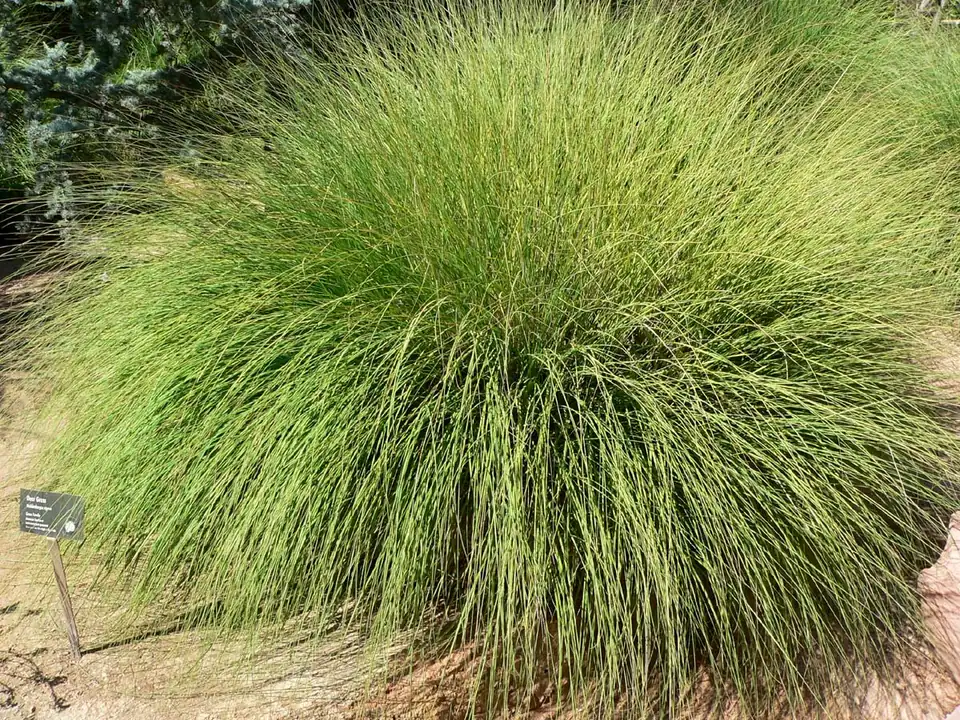
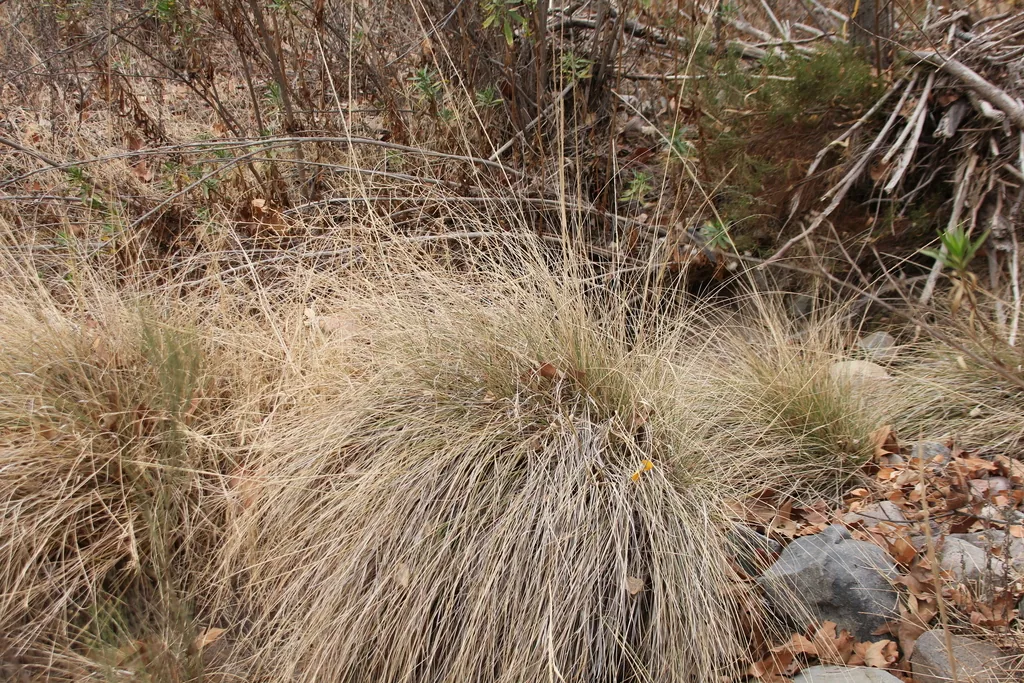
Muhlenbergia rigens is a tall, stiffly erect perennial bunchgrass native to the southwestern United States. [1] It grows in sandy washes, gravelly canyon bottoms and along small streams. [1] In cultivation it needs a sunny position and a well-drained soil, and established plants are fairly drought tolerant. [3][2]
This record is incomplete: the sources we read do not cover every field yet.
Not yet covered by our sources: Hardiness, coldest zone, Hardiness, warmest zone, Pruning
Deergrass care
How to water Deergrass
Watering
Low water use
What the sources say (1)
Water Use: Low
Light Requirement: Sun
Soil Moisture: MoistWatering notes
Tolerates periodic inundation of the soil if the ground is free-draining at other times; seasonally wet to dry soils
What the sources say (2)
Plants can tolerate periodic inundation of the soil, so long as the ground is free-draining at other timesSoil Moisture: Moist
CaCO3 Tolerance: None
Soil Description: Seasonally wet to dry soils.How much light Deergrass needs
How much cold Deergrass can take
Hardiness, coldest zone
Not stated in the sources we read.
Hardiness, warmest zone
Not stated in the sources we read.
How to propagate Deergrass
Seed; division in spring
What the sources say (3)
Description: Sow seed.
Seed Treatment: No treatment is necessary.Division in spring. Larger divisions can be planted out direct into their permanent positions.Seed - sow spring in a greenhouse and only just cover the seed.How to grow Deergrass
The plant
Life cycle
perennial
What the sources say (1)
Tufted perennial grass without rhizomes; narrow seedheads, dense or spikelike 3 to 24 inches long; branches flowered from base; awnlessFamily
Poaceae
What the sources say (1)
Scientific Family
Poaceae
Synonyms
Epicampes rigens, Muhlenbergia marshii, Muhlenbergia mundulaMature height
>91.44 (36 in [91 cm]), with seedheads
What the sources say (1)
Height with Seedheads
Greater than 36 inches
Seedhead Structure
Branched - contractedRemedies
The sources we checked give no remedies for this plant.
Calendar
Sowing
Spring (in a greenhouse)
What the sources say (1)
Seed - sow spring in a greenhouse and only just cover the seed.Planting
Summer, or late spring of the following year for seedlings grown on through their first winter in a greenhouse
What each source says
seedlings grown large enough: Summer
otherwise: Late spring of the following year
What the sources say (4)
seedlings grown large enough: plant them out in the summer if they have grown sufficientlyotherwise: Otherwise, grow them on in a greenhouse for their first winter and plant them out in late spring of the following year.plant them out in the summer if they have grown sufficientlyOtherwise, grow them on in a greenhouse for their first winter and plant them out in late spring of the following year.Pruning
Not stated in the sources we read.
Months as given by the sources, which are mostly from the United States (northern hemisphere). In the southern hemisphere they shift by about six months.
Edibility
Reported by the source, quoted verbatim. Do not eat a plant on the basis of this page alone: identification mistakes can be dangerous.
Seed - ground into a pwder and eaten as a mush, or mixed with other ground seeds and used to make a porrige or bread
[3]
Indicative values
Values from a secondary source, not checked word for word like the rest of this page. Use them as a starting point.
- Hours of sun
- 6-8 hoursIndicative value, adapt it to your climate · Secondary source
- Drought tolerant
- yesIndicative value, adapt it to your climate · Secondary source
- Soil pH
- 6-8Indicative value, adapt it to your climate · Secondary source
- USDA hardiness zones
- 6-9 [winter low −23.3 to −1.1 °C (−10 to 30 °F)]Indicative value, adapt it to your climate · Secondary source
- Care level
- MediumIndicative value, adapt it to your climate · Secondary source
- Growth rate
- LowIndicative value, adapt it to your climate · Secondary source
- Pruning
- March, April, May, March, April, May, MayIndicative value, adapt it to your climate · Secondary source
Similar plants
- Muhly Grass Muhlenbergia capillaris
- African lovegrass Eragrostis curvula
- Amur silvergrass Miscanthus sacchariflorus
- Aristida purpurea Aristida purpurea
- Autumn Moor Grass Sesleria autumnalis
- Bamboo Phyllostachys aurea
- Beaked Panicgrass Coleataenia anceps
- Bermuda grass Cynodon dactylon
Sources
Every value above is quoted from these documents. Links lead to the original publisher.
- Muhlenbergia rigens - deergrass | Yavapai County Native and Naturalized Plants · yavapaiplants.extension.arizona.edu, consulted
- Lady Bird Johnson Wildflower Center - The University of Texas at Austin · wildflower.org, consulted
- Muhlenbergia rigens - Useful Temperate Plants · temperate.theferns.info, consulted
- How to Grow Muhlenbergia · harvesttotable.com, consulted
Written by Emilio Marruso · last checked