
How to Grow and Care for Nutmeg
Myristica fragrans
Written by Emilio Marruso · last checked
Toxic to: People · Why
At a glance
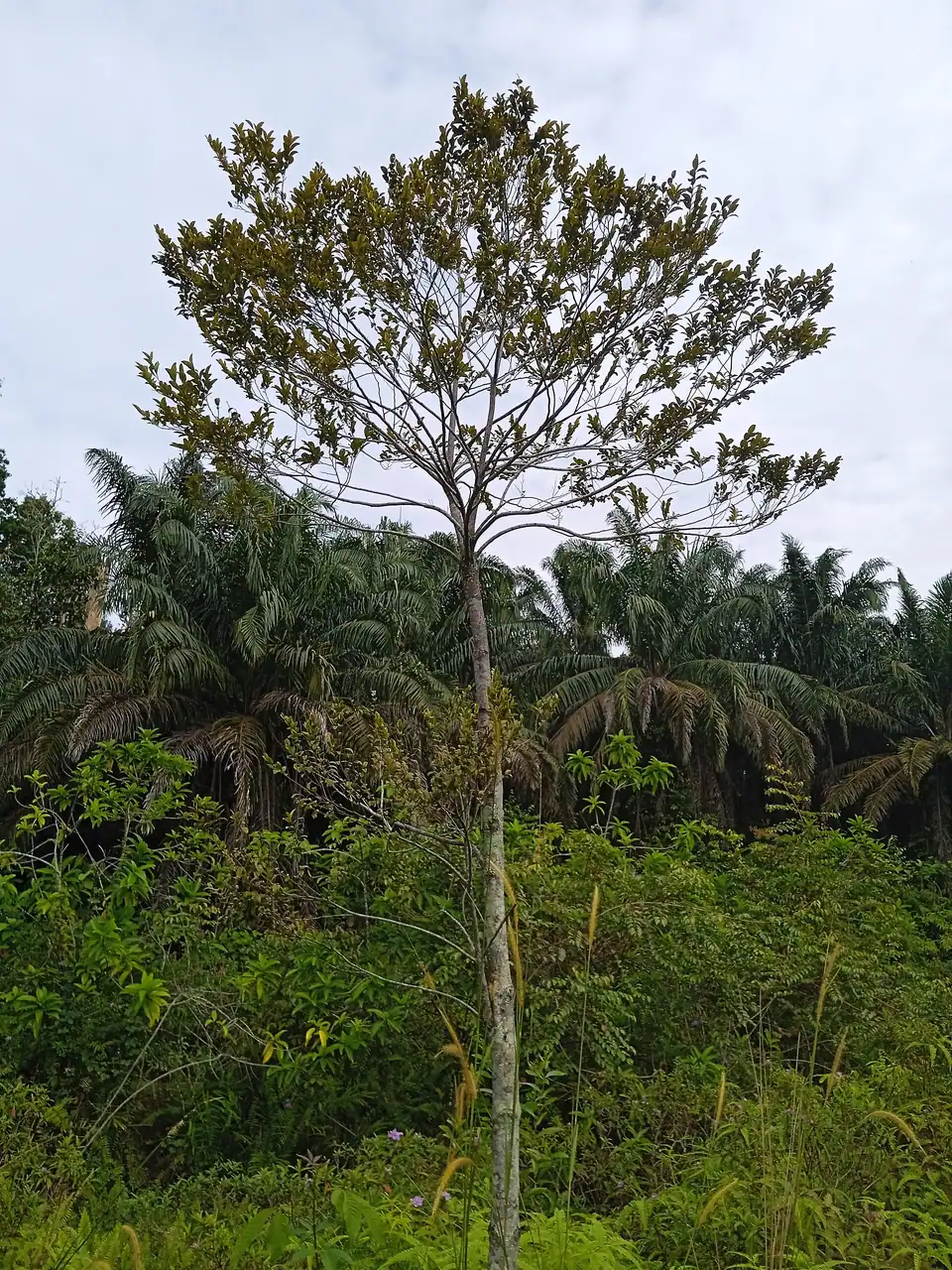
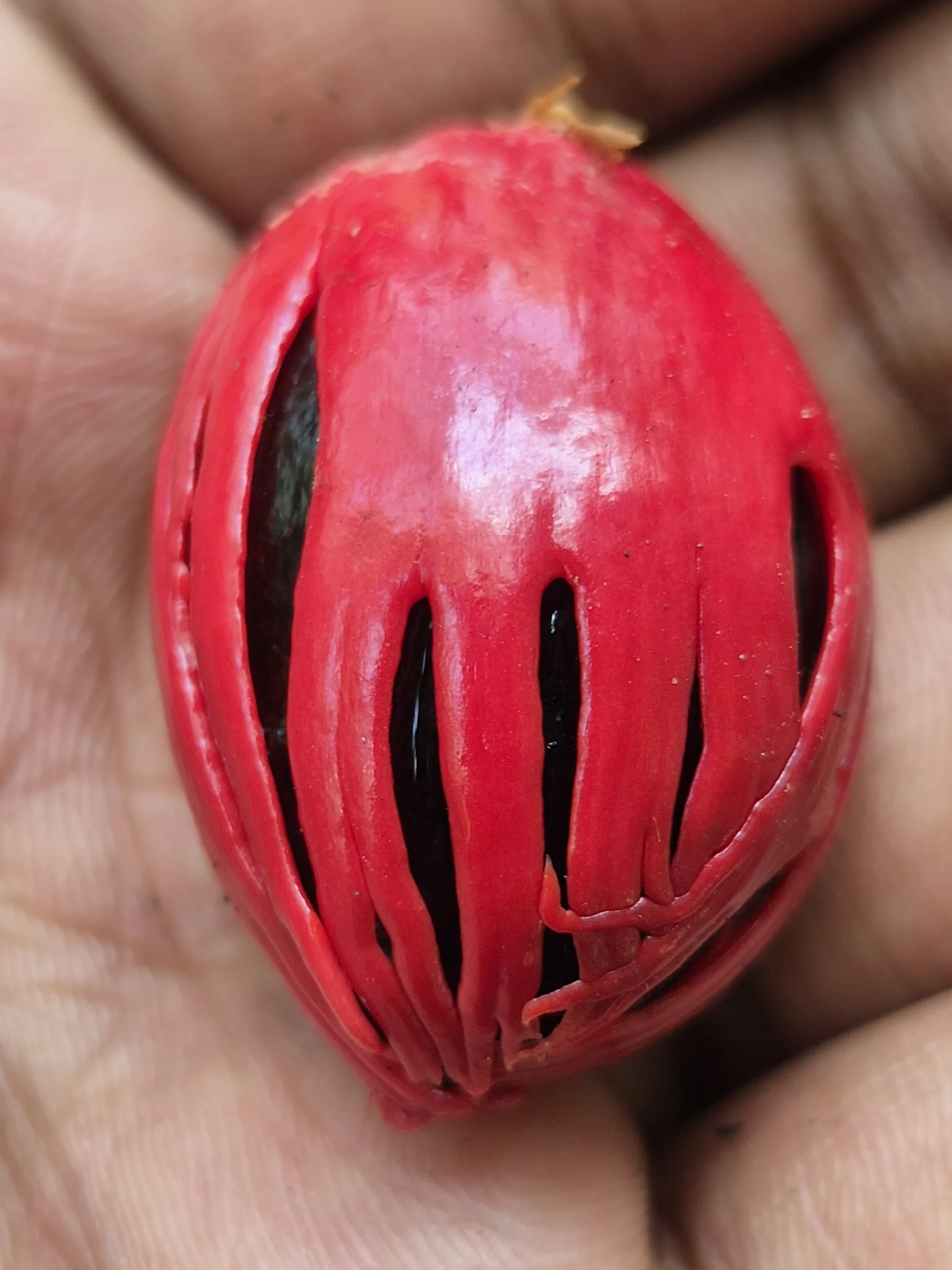
Nutmeg is a tree that gives you two spices at once: the seed is nutmeg and its covering is mace, while the yellow fruit makes jams, jellies and syrups. Give young trees shade, well-draining soil and some dry spells so they can flower. A tree grafted from a female tree can start fruiting in just 3 years.
- Sun
Shade for young trees; protect from strong afternoon sun
What the sources say (2)
Light: Shade for young trees; protection from strong afternoon sun
The trees love heat but should be protected from strong afternoon sun and also require some shelter from wind.
— Nutmeg | Diseases and Pests, Description, Uses, Propagation [1] Nutmeg trees should be planted in an area with adequate shade to protect the young trees while they establish.
— Nutmeg | Diseases and Pests, Description, Uses, Propagation [1] - Water
Needs dry spells to flower
What the sources say (1)
Watering notes: Tolerates a range of soils provided they are well draining; requires dry periods to flower
Nutmeg is a tropical plant and requires dry periods to flower. It will grow best at temperatures between 20 and 30°C (68–86°F) and can tolerate a range of soils provided that the are well draining.
— Nutmeg | Diseases and Pests, Description, Uses, Propagation [1] - Soil
Many soils work if they drain well; pH 5.5–7.5
What the sources say (3)
Watering notes: Tolerates a range of soils provided they are well draining; requires dry periods to flower
Nutmeg is a tropical plant and requires dry periods to flower. It will grow best at temperatures between 20 and 30°C (68–86°F) and can tolerate a range of soils provided that the are well draining.
— Nutmeg | Diseases and Pests, Description, Uses, Propagation [1] Soil pH, minimum: 5.5
Trees will grow optimally in a deep loamy sand rich in organic matter with a pH between 5.5 and 7.5.
— Nutmeg | Diseases and Pests, Description, Uses, Propagation [1] Soil pH, maximum: 7.5
Trees will grow optimally in a deep loamy sand rich in organic matter with a pH between 5.5 and 7.5.
— Nutmeg | Diseases and Pests, Description, Uses, Propagation [1] - Spacing
At home, plant a male and a female tree at least 33 ft apart
What the sources say (3)
Spacing: 1000 cm (10 x 10 m / 33 x 33 ft)
commercial production, seeds planted: Seeds are commonly planted 6 × 6 m (20 × 20 ft) apart and thinned when required.
— Nutmeg | Diseases and Pests, Description, Uses, Propagation [1] home garden, male and female tree: In the home garden a male and female tree are required for fruit production and they should be spaced at least 10 m (33 ft) apart.
— Nutmeg | Diseases and Pests, Description, Uses, Propagation [1] A spacing of 10 × 10 m (33 × 33 ft) is desirable for fully grown trees.
— Nutmeg | Diseases and Pests, Description, Uses, Propagation [1] - Feeding
Compost or manure in the planting hole; feed adult trees with manure in two doses
What the sources say (6)
When: At planting, with manure in the planting pit
adult trees, plantation crop in India: K 960 g for adult trees in two splits June - July, September - October.
— [3] Composted manure is worked into the soil and the trees are set in the holes.
— Nutmeg | Diseases and Pests, Description, Uses, Propagation [1] Plant 12 - 18 months old seedlings in pits of 60 cm x 60 cm x 60 cm size and filled up with equal parts of forest soil and cattle manure.
— [3] Natural fertilizers: Composted or cattle manure in the planting pit; farmyard manure 15 kg [33.1 lb] per tree in the first year and 50 kg [110.2 lb] per adult tree
Composted manure is worked into the soil and the trees are set in the holes.
— Nutmeg | Diseases and Pests, Description, Uses, Propagation [1] Plant 12 - 18 months old seedlings in pits of 60 cm x 60 cm x 60 cm size and filled up with equal parts of forest soil and cattle manure.
— [3] Apply FYM 15 kg, N 20 g, P 20 g, K 60 g per tree during first year and FYM 50 kg, N 300 g, P 300 g, K 960 g for adult trees in two splits
— [3] - Harvest
Pick fruits once they open; grafted trees fruit after 3 years. Seed and covering are spices
What the sources say (3)
Harvest: When the fruits are open
Fruits are harvested when they are open by using a blade attached to the end of a long pole.
— Nutmeg | Diseases and Pests, Description, Uses, Propagation [1] How to harvest: Open fruits are cut from the tree with a blade on a long pole, dropping into a basket
Fruits are harvested when they are open by using a blade attached to the end of a long pole.
— Nutmeg | Diseases and Pests, Description, Uses, Propagation [1] Years to first fruit: 3 (trees grafted from a female tree)
Trees that are grafted from a female tree will start producing in 3 years and will reach maximum production in 15 to 25 years.
— Nutmeg - UF/IFAS Extension Leon County [2] - Pests
Leaf spot with holes in the leaves, thread blight and cocoa weevil
What the sources say (3)
Pests: cocoa weevil
Cocoa weevils are potentially devastating post-harvest pests; larvae bore into the kernels to feed and pupate
— Nutmeg | Diseases and Pests, Description, Uses, Propagation [1] Diseases: leaf spot (shot hole), thread blight
Sunken spots with yellow halo on foliage; center of spots dry out and drop from plant resulting in holes in the leaves (shot hole)
— Nutmeg | Diseases and Pests, Description, Uses, Propagation [1] Fungus causes two different types of thread blight; the first type appears as fine white hyphae which aggregate to form threads arranged in a fan shape along the underside of leaves
— Nutmeg | Diseases and Pests, Description, Uses, Propagation [1] - Size
Up to 25 ft wide
What the sources say (1)
Mature width: up to 762 cm (25 ft)
The tree on which this fruit is grown can get up to 70 feet tall and as wide as 25 feet at maturity.
— Nutmeg - UF/IFAS Extension Leon County [2] - Propagation
From seed, air layering or grafting
What the sources say (2)
Propagation: Seed; marcotting; grafting
Nutmeg trees can also be grown from marcotted material. Vigorous branches are selected from female trees.
— Nutmeg | Diseases and Pests, Description, Uses, Propagation [1] Trees can be grown from seed or the more common practice is to reproduce by graft.
— Nutmeg - UF/IFAS Extension Leon County [2] - Sowing
Sow right after harvest; seeds take 5 weeks or more to sprout
What the sources say (3)
Sowing: Immediately after harvest
Seeds should be planted immediately harvest. They should not be allowed to dry out prior to planting.
— Nutmeg | Diseases and Pests, Description, Uses, Propagation [1] To grow from seed, planting must be done shortly after harvesting because they have very low viability.
— Nutmeg - UF/IFAS Extension Leon County [2] Days to germination: upwards of 35 (5 weeks)
Strangely enough, these seeds take a long time to germinate, sometimes upwards of 5 weeks.
— Nutmeg - UF/IFAS Extension Leon County [2] - Safety
Large amounts can cause hallucinations and vomiting; normal kitchen use is safe
Overview
Nutmeg is a tropical evergreen tree grown for its seeds, which are used as spices, and its aril, which is sold as mace. [1] It grows best in well-draining soil rich in organic matter, with shade for young trees and shelter from strong afternoon sun and wind. [1] Trees raised from seed do not flower for several years and are either male or female, so grafted or marcotted trees from female plants are used. [2][1]
This record is incomplete: the sources we read do not cover every field yet.
Not yet covered by our sources: Watering
Nutmeg care
How to water Nutmeg
Watering
Not stated in the sources we read.
Watering notes
Tolerates a range of soils provided they are well draining; requires dry periods to flower
What the sources say (1)
Nutmeg is a tropical plant and requires dry periods to flower. It will grow best at temperatures between 20 and 30°C (68–86°F) and can tolerate a range of soils provided that the are well draining.How much light Nutmeg needs
Shade for young trees; protection from strong afternoon sun
What the sources say (2)
The trees love heat but should be protected from strong afternoon sun and also require some shelter from wind.Nutmeg trees should be planted in an area with adequate shade to protect the young trees while they establish.Best soil for Nutmeg
Soil pH, minimum
5.5
What the sources say (1)
Trees will grow optimally in a deep loamy sand rich in organic matter with a pH between 5.5 and 7.5.Soil pH, maximum
7.5
What the sources say (1)
Trees will grow optimally in a deep loamy sand rich in organic matter with a pH between 5.5 and 7.5.Where to grow Nutmeg
1000 cm (10 x 10 m / 33 x 33 ft)
What each source says
commercial production, seeds planted: 600 cm (6 x 6 m / 20 x 20 ft)
home garden, male and female tree: at least 1000 cm (10 m / 33 ft)
What the sources say (3)
commercial production, seeds planted: Seeds are commonly planted 6 × 6 m (20 × 20 ft) apart and thinned when required.home garden, male and female tree: In the home garden a male and female tree are required for fruit production and they should be spaced at least 10 m (33 ft) apart.A spacing of 10 × 10 m (33 × 33 ft) is desirable for fully grown trees.How to propagate Nutmeg
Seed; marcotting; grafting
What the sources say (2)
Nutmeg trees can also be grown from marcotted material. Vigorous branches are selected from female trees.Trees can be grown from seed or the more common practice is to reproduce by graft.How to grow Nutmeg
The plant
Family
Myristicaceae
What the sources say (1)
Nutmeg, Myristica fragrans , is a tropical evergreen tree in the family Myristicaceae grown for its seeds which are used as spices.Mature height
Mature width
up to 762 cm (25 ft)
What the sources say (1)
The tree on which this fruit is grown can get up to 70 feet tall and as wide as 25 feet at maturity.Years to first fruit
3 (trees grafted from a female tree)
What the sources say (1)
Trees that are grafted from a female tree will start producing in 3 years and will reach maximum production in 15 to 25 years.Sowing and growth
Days to germination
upwards of 35 (5 weeks)
What the sources say (1)
Strangely enough, these seeds take a long time to germinate, sometimes upwards of 5 weeks.Harvest and storage
How to harvest
Open fruits are cut from the tree with a blade on a long pole, dropping into a basket
What the sources say (1)
Fruits are harvested when they are open by using a blade attached to the end of a long pole.Pests and diseases
Pests
cocoa weevil
What the sources say (1)
Cocoa weevils are potentially devastating post-harvest pests; larvae bore into the kernels to feed and pupateDiseases
leaf spot (shot hole), thread blight
What the sources say (2)
Sunken spots with yellow halo on foliage; center of spots dry out and drop from plant resulting in holes in the leaves (shot hole)Fungus causes two different types of thread blight; the first type appears as fine white hyphae which aggregate to form threads arranged in a fan shape along the underside of leavesFertilizing
When
At planting, with manure in the planting pit
What each source says
adult trees, plantation crop in India: In two split applications: June–July and September–October
What the sources say (3)
adult trees, plantation crop in India: K 960 g for adult trees in two splits June - July, September - October.Composted manure is worked into the soil and the trees are set in the holes.Plant 12 - 18 months old seedlings in pits of 60 cm x 60 cm x 60 cm size and filled up with equal parts of forest soil and cattle manure.How often
The sources give different values depending on region, zone or growing conditions.
What each source says
adult trees, plantation crop in India: Twice a year, in two split applications
What the sources say (1)
adult trees, plantation crop in India: K 960 g for adult trees in two splits June - July, September - October.Natural fertilizers
Composted or cattle manure in the planting pit; farmyard manure 15 kg [33.1 lb] per tree in the first year and 50 kg [110.2 lb] per adult tree
What the sources say (3)
Composted manure is worked into the soil and the trees are set in the holes.Plant 12 - 18 months old seedlings in pits of 60 cm x 60 cm x 60 cm size and filled up with equal parts of forest soil and cattle manure.Apply FYM 15 kg, N 20 g, P 20 g, K 60 g per tree during first year and FYM 50 kg, N 300 g, P 300 g, K 960 g for adult trees in two splitsMineral fertilizers
N 20 g, P 20 g and K 60 g per tree in the first year; N 300 g, P 300 g and K 960 g per adult tree, split in two applications
What the sources say (1)
Apply FYM 15 kg, N 20 g, P 20 g, K 60 g per tree during first year and FYM 50 kg, N 300 g, P 300 g, K 960 g for adult trees in two splitsNutmeg pests and problems
Leaf spot (shot hole)
Symptom: Sunken spots with yellow halo on foliage; center of spots dry out and drop from plant resulting in holes in the leaves (shot hole)
What to do: Application of 1% Bordeaux mixture can help to control the disease
What the sources say (2)
Sunken spots with yellow halo on foliage; center of spots dry out and drop from plant resulting in holes in the leaves (shot hole)
— Nutmeg | Diseases and Pests, Description, Uses, Propagation [1] Application of 1% Bordeaux mixture can help to control the disease
— Nutmeg | Diseases and Pests, Description, Uses, Propagation [1] Thread blight
Symptom: Fine white hyphae forming threads in a fan shape along the underside of leaves, or silk-like black threads forming an irregular network on stems and leaves
What to do: If infection is severe it can be treated with 1% Bordeaux mixture; avoid shading plants and follow good sanitary practices to limit spread
What the sources say (2)
If infection is severe it can be treated with 1% Bordeaux mixture; avoid shading plants and follow good sanitary practices to limit spread
— Nutmeg | Diseases and Pests, Description, Uses, Propagation [1] Fungi survive on dried leaves; disease emergence is favored by heavy shading of plants
— Nutmeg | Diseases and Pests, Description, Uses, Propagation [1] Cocoa weevil
Symptom: Circular bore holes on nut shells where adult has emerged; kernel destroyed by tunneling or completely hollowed out
What to do: The primary method of controlling the cocoa weevil is through the use of fumigants on the stored nuts
What the sources say (2)
Circular bore holes on nut shells where adult has emerged; kernel destroyed by tunneling or completely hollowed out
— Nutmeg | Diseases and Pests, Description, Uses, Propagation [1] The primary method of controlling the cocoa weevil is through the use of fumigants on the stored nuts
— Nutmeg | Diseases and Pests, Description, Uses, Propagation [1]
Remedies
Each remedy shows what official sources say about it; traditional remedies without an official source are marked as such. Harmful ones are listed so you know to avoid them.
Treating the plant
leaf fall and fruit rot
removing fallen leaves and fruits Not verified
Traditional remedy, not verified by an official source.
How: Remove and destroy all fallen leaves and fruits.
leaf fall and anthracnose
pseudomonas fluorescens spray Not verified
Traditional remedy, not verified by an official source.
How: Spray Pseudomonas fluorescens (20g/l) at monthly intervals during onset of monsoon.
leaf fall
trichoderma-enriched cowdung Not verified
Traditional remedy, not verified by an official source.
How: Add trichoderma enriched cowdung as basal dose at the rate of 5-10 kg per tree
die back and fruit rot
bordeaux mixture spray Not verified
Traditional remedy, not verified by an official source.
How: Spraying 1% Bordeaux mixture at regular intervals during the rainy season to prevent disease incidence.
Is Nutmeg poisonous?
Reported by the source, quoted verbatim. This is not medical or veterinary advice: if a person or an animal may have eaten this plant, contact a poison control centre or a veterinarian.
Myristicin can cause hallucinations, vomiting; epileptic symptoms and large dosages can cause death. These effects will not be induced, however, even with generous culinary usage.
[2]
Calendar
Sowing
Immediately after harvest
What the sources say (2)
Seeds should be planted immediately harvest. They should not be allowed to dry out prior to planting.To grow from seed, planting must be done shortly after harvesting because they have very low viability.Harvest
When the fruits are open
What the sources say (1)
Fruits are harvested when they are open by using a blade attached to the end of a long pole.Months as given by the sources, which are mostly from the United States (northern hemisphere). In the southern hemisphere they shift by about six months.
Edibility
Reported by the source, quoted verbatim. Do not eat a plant on the basis of this page alone: identification mistakes can be dangerous.
Indicative values
Values from a secondary source, not checked word for word like the rest of this page. Use them as a starting point.
- Life cycle
- PerennialIndicative value, adapt it to your climate · Secondary source
- Hours of sun
- 6-8 hoursIndicative value, adapt it to your climate · Secondary source
- Watering
- AverageIndicative value, adapt it to your climate · Secondary source
- USDA hardiness zones
- 11-12 [winter low 4.4 to 15.6 °C (40 to 60 °F)]Indicative value, adapt it to your climate · Secondary source
- Care level
- MediumIndicative value, adapt it to your climate · Secondary source
- Growth rate
- LowIndicative value, adapt it to your climate · Secondary source
- Pruning
- March, April, May, June, JulyIndicative value, adapt it to your climate · Secondary source
Similar plants
- Afghan Cherry Prunus jacquemontii
- Aji Capsicum chinense
- Alaska blueberry Vaccinium ovalifolium
- Alexanders Smyrnium olusatrum
- Algerita Mahonia trifoliolata
- Allegheny Serviceberry Amelanchier laevis
- American chestnut Castanea dentata
- American pepper Schinus molle
Sources
Every value above is quoted from these documents. Links lead to the original publisher.
- Nutmeg | Diseases and Pests, Description, Uses, Propagation · plantvillage.psu.edu, consulted
- Nutmeg - UF/IFAS Extension Leon County · blogs.ifas.ufl.edu, consulted
- agritech.tnau.ac.in · agritech.tnau.ac.in
Written by Emilio Marruso · last checked