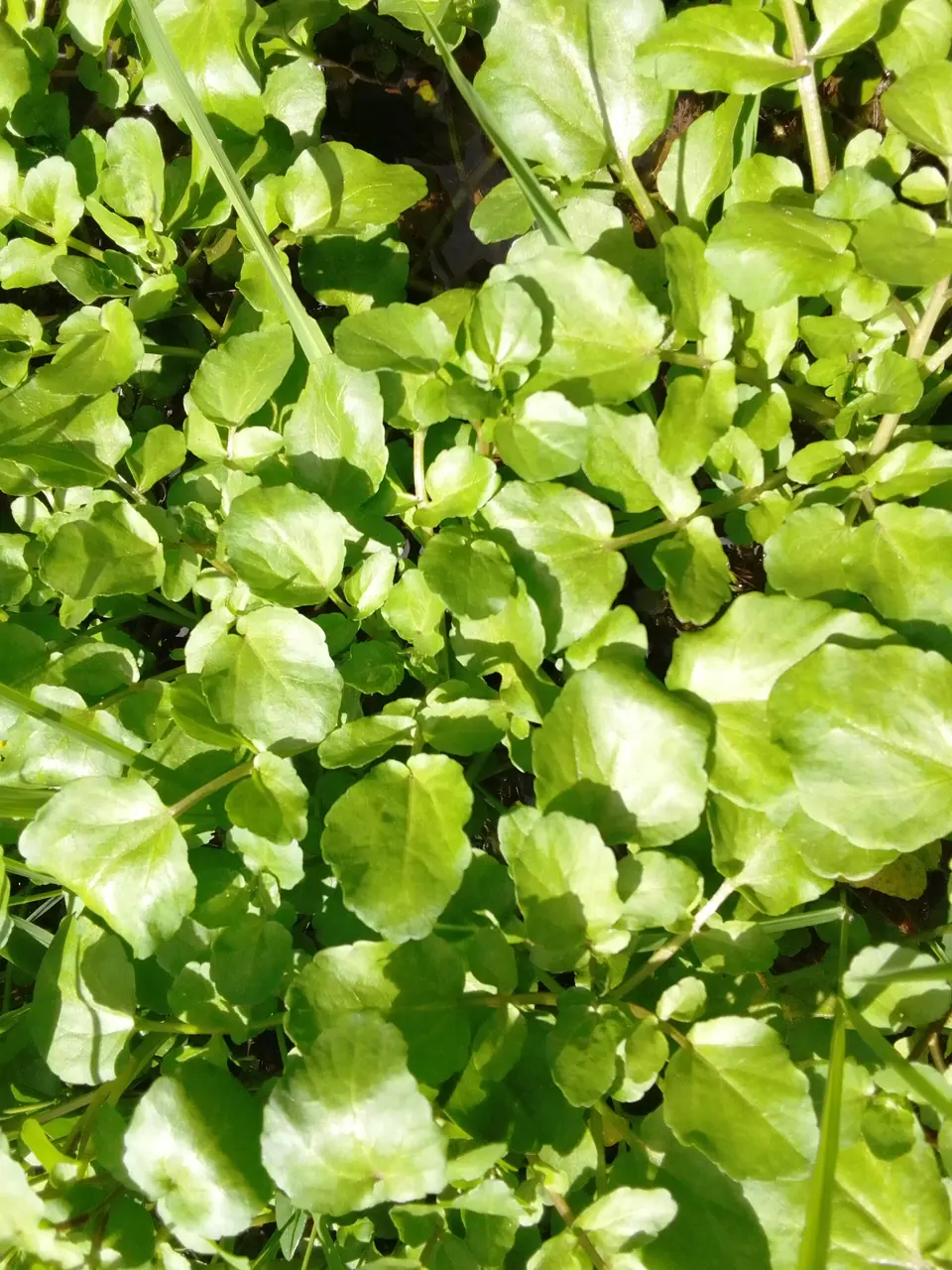
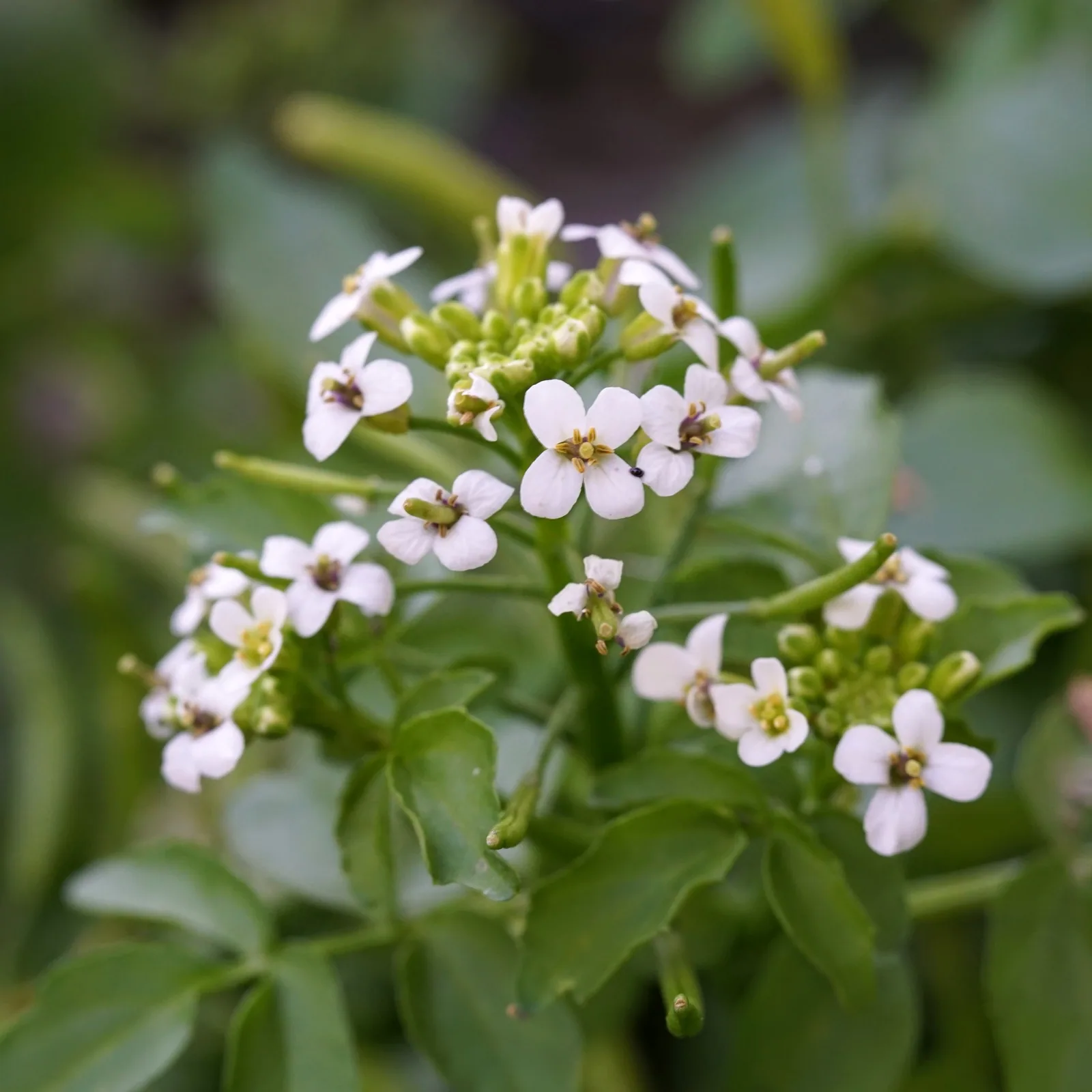
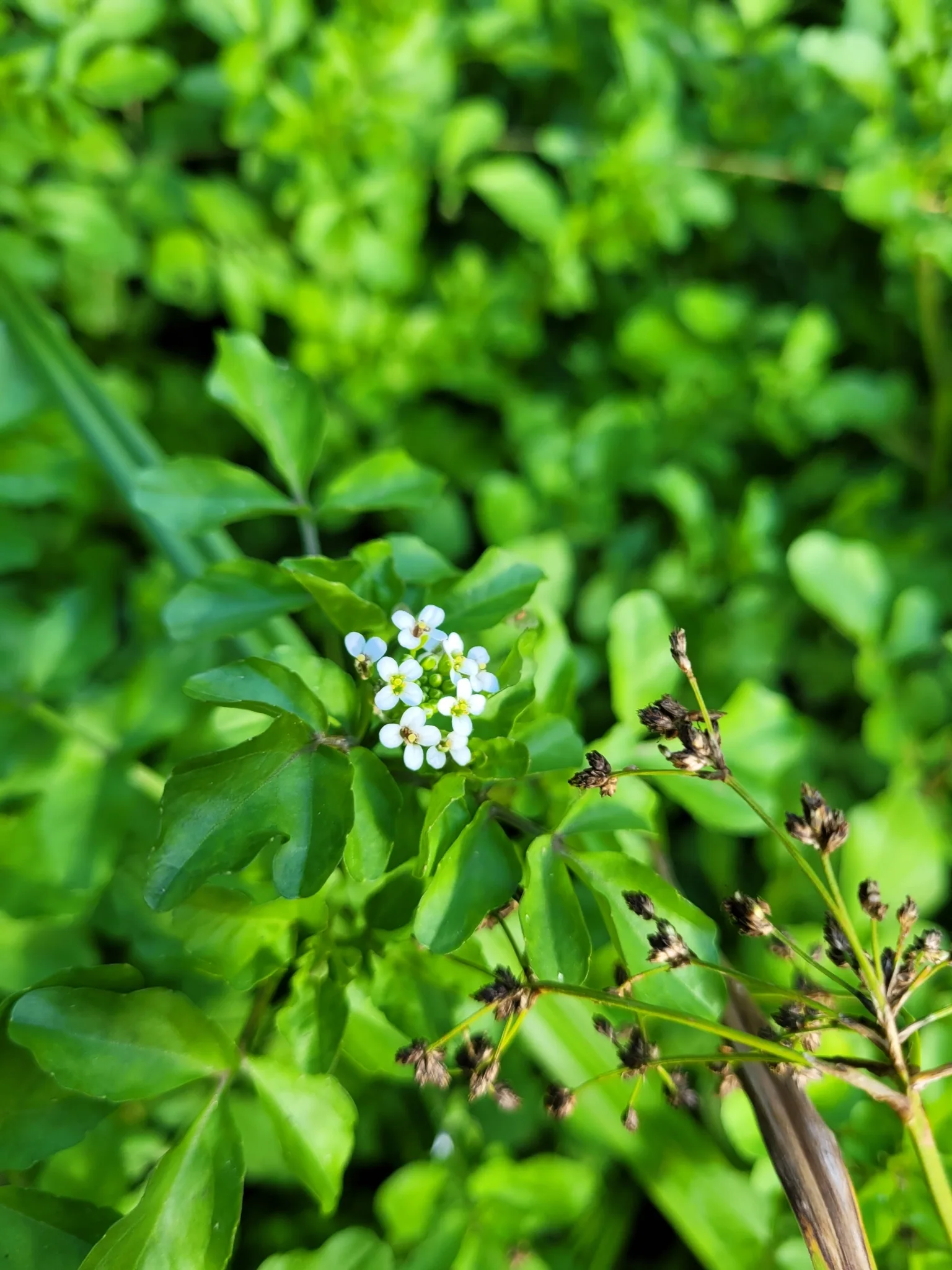

How to Grow and Care for Watercress
Nasturtium officinale
Written by Emilio Marruso · last checked
At a glance
Watercress is a perennial grown for its peppery leaves and young stems, perfect for salads and as a garnish. Keep its bed moist, but never covered with water, and you can start picking 3 weeks after the seedlings appear. Just cut the tops, gather them into bunches and enjoy something fresh and lively from your own garden.
- Water
Keep the bed moist, but never covered with water
What the sources say (1)
Watering: Keep the plant bed moist, but not covered with water
Keep the plant bed moist, but not covered with water
— HS684 [2] - Spacing
6 in between plants
What the sources say (1)
Spacing: 15.2 cm (6 in)
In the final stand, allow 6 inches between plants
— HS684 [2] - Feeding
At planting, mix 1 cup of garden fertilizer into each 25 sq ft of soil
What the sources say (2)
When: At the start, mixed into the planting soil
One must learn by trial and error how to fertilize water-cress. Start out by mixing 1 cup of garden fertilizer into 25 square feet of planting soil.
— HS684 [2] Mineral fertilizers: 237 mL of garden fertilizer mixed into 2.32 m² of planting soil; the right amount is found by trial and error
One must learn by trial and error how to fertilize water-cress. Start out by mixing 1 cup of garden fertilizer into 25 square feet of planting soil.
— HS684 [2] - Harvest
Ready 3 weeks after seedlings appear: cut the tops 6 in down and eat leaves and young stems
What the sources say (2)
Harvest: About 3 weeks after the seedlings appear
About 3 weeks after the seedlings appear, the plants are ready to harvest
— HS684 [2] How to harvest: Cut the tops of the plants about 15 cm (6 in) below the tips and gather them into bunches
To harvest, cut the tops of the plants about 6 inches below the tips. Gather them into bunches as they are cut.
— HS684 [2] - Propagation
Grow it from seeds or cuttings
What the sources say (1)
Propagation: Seeds; cuttings
Watercress can be grown from either seeds or cuttings
— HS684 [2]
Overview
Watercress is a perennial grown for its pungent leaves and young stems, used in salads and as a garnish. [2] It does best in a moderately cool climate and can be grown from seeds or cuttings. [2]
This record is incomplete: the sources we read do not cover every field yet.
Not yet covered by our sources: Light, Sowing / Planting
Watercress care
How to water Watercress
Keep the plant bed moist, but not covered with water
What the sources say (1)
Keep the plant bed moist, but not covered with waterHow much light Watercress needs
Not stated in the sources we read.
Where to grow Watercress
15.2 cm (6 in)
What the sources say (1)
In the final stand, allow 6 inches between plantsHow to propagate Watercress
Seeds; cuttings
What the sources say (1)
Watercress can be grown from either seeds or cuttingsHow to grow Watercress
The plant
Life cycle
perennial
What the sources say (1)
Watercress is a perennial plant grown for the pungent leaves and young stems, which are widely used for garnishing and in salads.Sowing and growth
Days to maturity
About 3 weeks after the seedlings appear
What the sources say (1)
About 3 weeks after the seedlings appear, the plants are ready to harvest.Harvest and storage
How to harvest
Cut the tops of the plants about 15 cm (6 in) below the tips and gather them into bunches
What the sources say (1)
To harvest, cut the tops of the plants about 6 inches below the tips. Gather them into bunches as they are cut.Storage
Wash with clean water and keep in plastic bags in the refrigerator crisper; sprinkling periodically keeps them fresh for about a week
What the sources say (1)
Thoroughly wash with clean water and place them into plastic bags to keep in the refrigerator crisper until used. Periodic sprinkling helps keep them fresh for about a week.Fertilizing
When
At the start, mixed into the planting soil
What the sources say (1)
One must learn by trial and error how to fertilize water-cress. Start out by mixing 1 cup of garden fertilizer into 25 square feet of planting soil.Mineral fertilizers
237 mL of garden fertilizer mixed into 2.32 m² of planting soil; the right amount is found by trial and error
What the sources say (1)
One must learn by trial and error how to fertilize water-cress. Start out by mixing 1 cup of garden fertilizer into 25 square feet of planting soil.Remedies
Each remedy shows what official sources say about it; traditional remedies without an official source are marked as such. Harmful ones are listed so you know to avoid them.
Treating the plant
flea beetles
submerging the crop for 2 hours Not verified
Traditional remedy, not verified by an official source.
How: Submerge the crop for about 2 hours so the beetles float off, then skim them from the water surface.
radish trap crop Not verified
Traditional remedy, not verified by an official source.
How: Use trap crops such as radish to lure the flea beetles away from the watercress.
vacuuming the foliage Not verified
Traditional remedy, not verified by an official source.
How: Vacuum the beetles off the foliage on small plantings, repeating frequently to avoid reinfestation.
mustard beetle
flooding the beds for 2 hours Not verified
Traditional remedy, not verified by an official source.
How: Flood the cropping beds for about 2 hours so the beetles float off, then skim them off the water.
crook root
flushing with large volumes of water Not verified
Traditional remedy, not verified by an official source.
How: Purge the watercress with large volumes of water to wash away the viable spores.
aphids
lettuce or nasturtium trap crops Not verified
Traditional remedy, not verified by an official source.
How: Use trap crops such as lettuce or bedding nasturtiums to draw aphids away from the edible crop.
damping off
washing and disinfecting seed trays Not verified
Traditional remedy, not verified by an official source.
How: Wash and disinfect seed trays and keep compost and water free from sources of infection.
Getting rid of it
invasive spread
hand pulling or raking Official source, not independently tested
Cutting or pulling the plant by hand or with equipment such as rakes or cutting blades could break it into fragments, allowing it to further spread.
— cms.unl.edu [3] How: Cutting or pulling by hand or with rakes or blades; contact the state wildlife agency for appropriate removal methods.
Cutting or pulling the plant by hand or with equipment such as rakes or cutting blades could break it into fragments, allowing it to further spread.
— cms.unl.edu [3]
Calendar
Sowing
Not stated in the sources we read.
Planting
Not stated in the sources we read.
Harvest
About 3 weeks after the seedlings appear
What the sources say (1)
About 3 weeks after the seedlings appear, the plants are ready to harvestMonths as given by the sources, which are mostly from the United States (northern hemisphere). In the southern hemisphere they shift by about six months.
Edibility
Reported by the source, quoted verbatim. Do not eat a plant on the basis of this page alone: identification mistakes can be dangerous.
Watercress is a perennial plant grown for the pungent leaves and young stems, which are widely used for garnishing and in salads
[2]
Similar plants
- Onerow yellowcress Nasturtium microphyllum
- Abyssinian banana Ensete ventricosum
- Agretti Soda inermis
- Aji Capsicum chinense
- Alexanders Smyrnium olusatrum
- Allium senescens Allium senescens
- Allium triquetrum Allium triquetrum
- Alpine dock Rumex alpinus
Sources
Every value above is quoted from these documents. Links lead to the original publisher.
- Tropaeolum majus (Brunnenkress, Common Nasturtium, Garden Nasturtium, Indian Cress, Mexican Cress, Nasturtium, Nose-Tweaker, Nose-Twister, Peruvian Cress, Watercress) | North Carolina Extension Gardener Plant Toolbox · plants.ces.ncsu.edu, consulted
- HS684 · edis.ifas.ufl.edu, consulted
- cms.unl.edu · cms.unl.edu
Written by Emilio Marruso · last checked